Yes, properly cooked chicken is safe to eat even when bird flu is circulating. The CDC, WHO, USDA, FDA, and EFSA all agree on this: cooking poultry to an internal temperature of 165°F (74°C) kills avian influenza viruses, and no human bird flu infection has ever been linked to eating properly cooked poultry or poultry products. The risk, where it exists, comes from direct contact with infected live or dead birds, not from eating a well-cooked chicken dinner.
Is It Safe to Eat Chicken With Bird Flu?

Maya Chen
24 Apr 2026
What bird flu actually is and how it does (and doesn't) spread to people
Avian influenza, commonly called bird flu, is caused by influenza A viruses that primarily infect birds. Highly pathogenic strains like H5N1 can devastate poultry flocks and, in rare cases, infect people. But the key word there is rare. When humans have been infected, the exposure route has almost always been direct, prolonged contact with infected live or dead birds, their droppings, or heavily contaminated environments like live bird markets or poultry farms.
The first confirmed U.S. human H5N1 case, reported in April 2022, involved a worker who was depopulating a flock of birds presumed to be infected. That's a very different scenario from picking up a package of chicken thighs at the grocery store. The investigations that follow human cases consistently focus on exposure context, meaning contact with animals or contaminated environments, not on what the person ate.
EFSA reviewed the available evidence and found no convincing data that avian influenza can be transmitted to humans through consuming contaminated food. That conclusion holds across multiple strain variants and multiple decades of research. So while bird flu is genuinely serious for birds and occasionally for people in close animal contact, it does not behave like a typical foodborne illness.
The straight food-safety answer during a bird flu outbreak
During an active bird flu outbreak, whether it's affecting backyard flocks in your region or making national headlines, the food safety guidance from every major health authority stays the same: poultry and eggs that are properly handled and thoroughly cooked are safe to eat. The WHO specifically states that animal products, including meat and eggs, can be safely consumed from areas with active animal outbreaks, provided they are properly prepared. The USDA is equally direct: poultry and eggs that are properly prepared and cooked are safe to eat.
What changes during a major outbreak is not whether you can eat chicken, but how carefully you pay attention to the handling and cooking steps that should already be part of your routine. In food industries, bird flu outbreaks are typically linked to contamination risks during handling, processing, and processing-area hygiene rather than to properly cooked products handling and cooking steps. Think of it less as a new set of rules and more as a good reminder to do the basics well.
Cooked vs. raw or undercooked: this is where the real distinction lives
Here's where it gets practical. The reason all the guidance converges on 165°F (74°C) is that heat inactivates influenza viruses reliably. A chicken breast cooked to that temperature doesn't harbor live virus. Full stop. The CDC confirms that cooking poultry and poultry products to the appropriate internal temperature kills avian influenza A viruses, and the FDA specifies 165°F as the target for all poultry.
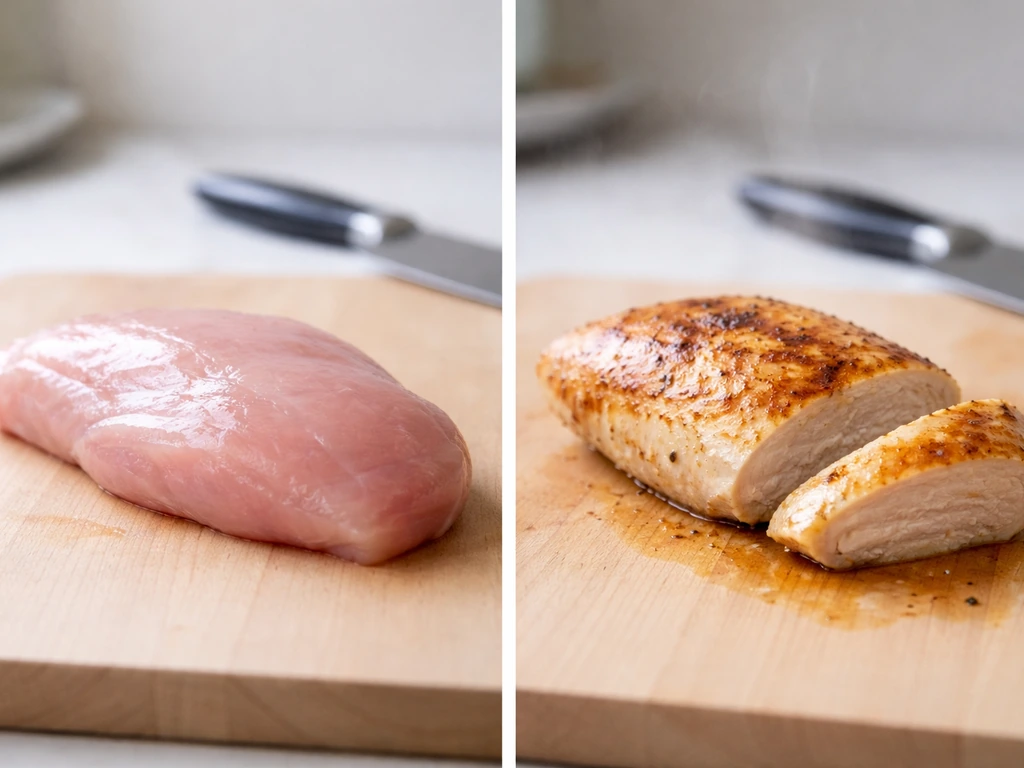
Raw or undercooked poultry is a different story. The UK Food Standards Agency notes that poultry not thoroughly cooked or properly handled could carry residual contamination, and that cross-contamination during slaughter can't be entirely excluded. That's not a reason to panic, but it is the reason why the guidance says cook, don't just warm. Pink chicken, partially thawed chicken cooked quickly on the outside, or juices from raw poultry dripping onto a cutting board are the scenarios where risk, however small, could creep in.
The same logic applies to eggs. Raw or runny eggs (think undercooked eggs with liquid yolks) carry a theoretical risk during outbreaks. The fix is the same: cook eggs until both the yolk and white are firm, or use pasteurized egg products when a recipe calls for raw eggs.
| Chicken preparation | Bird flu risk level | What to do |
|---|---|---|
| Properly cooked to 165°F (74°C) | Effectively zero | Eat normally, verify temp with thermometer |
| Undercooked or pink poultry | Low but not eliminated | Keep cooking until internal temp reaches 165°F |
| Raw poultry (handling) | Low, mainly via contact | Use safe handling practices, wash hands thoroughly |
| Raw eggs or runny yolks | Very low but theoretically possible | Cook fully or use pasteurized egg products |
| Properly cooked eggs | Effectively zero | Safe to eat |
How bird flu could theoretically reach your kitchen (and why it rarely does)
The pathway from a bird flu outbreak on a farm to your kitchen involves several layers of protection that dramatically reduce risk. USDA FSIS veterinarians are present at all federal livestock slaughter facilities, and the U.S. regulatory system includes multiple safeguards designed to prevent infected birds from entering the food supply in the first place. Birds that show signs of disease do not pass inspection.
That said, no system is perfect, and it helps to understand the theoretical contamination routes. On farms, avian influenza spreads through contaminated manure, equipment, egg crates, and even clothing and footwear. During processing, cross-contamination between birds is possible, which is exactly why thorough cooking remains the essential final safety step. The UK FSA notes this explicitly: cross-contamination during slaughter cannot be fully excluded, which is one reason why cooking to temperature matters even when the upstream system is working well.
For people who keep backyard chickens, the calculus is slightly different. If your flock has been exposed to or confirmed to have HPAI, you should follow USDA APHIS guidance for your situation and consult your state veterinarian before consuming eggs or birds from that flock. If you are wondering about whether to stop feeding backyard birds during bird flu, start with the same idea of minimizing direct contact and contamination. The question of whether chickens with bird flu are safe to eat is genuinely more complicated than the commercial supply question, and it warrants separate, specific guidance.
Safe kitchen habits: the practical steps that actually reduce risk
The FDA's food safety framework breaks down into four actions: Clean, Separate, Cook, and Chill. These four steps cover the realistic risk points for raw poultry in your kitchen, whether or not bird flu is in the news.
Thawing chicken safely
There are three safe ways to thaw poultry: in the refrigerator, in cold water (changing the water every 30 minutes), or in the microwave immediately before cooking. Thawing on the counter at room temperature is not safe regardless of bird flu, because it allows the outer surface to enter the bacterial growth temperature zone while the inside is still frozen. If you thaw in the microwave, cook immediately afterward.
Preventing cross-contamination
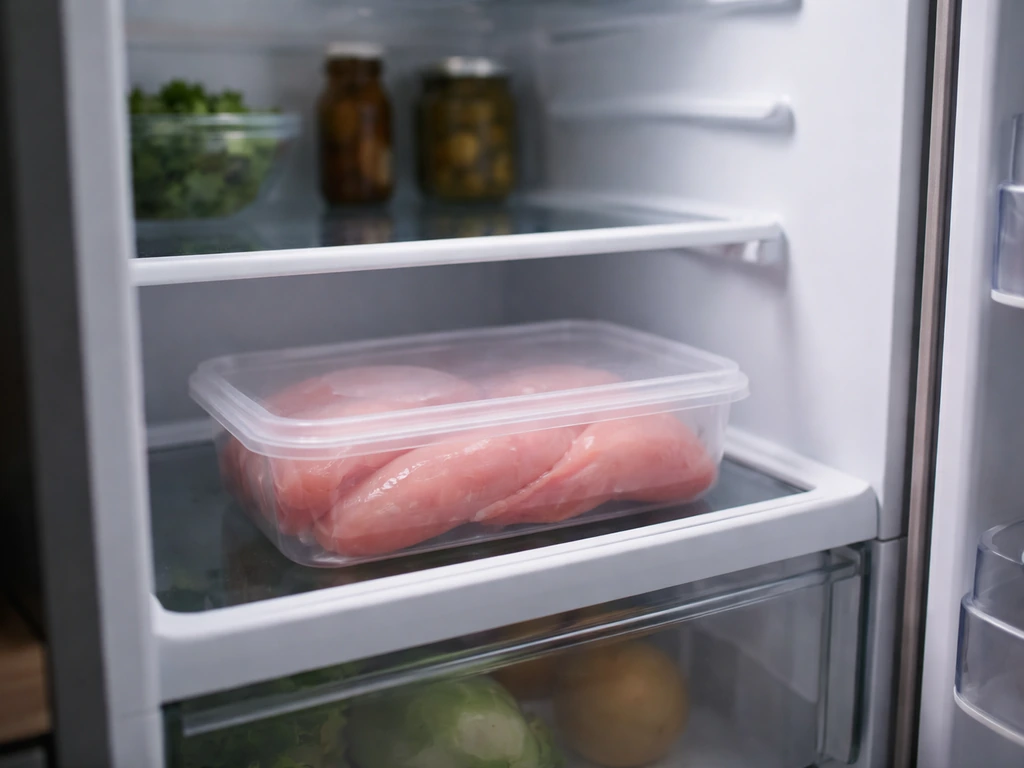
Raw poultry juices are the main cross-contamination risk in the home kitchen. Keep raw chicken separated from ready-to-eat foods in the refrigerator (store it on the lowest shelf in a sealed container or bag). Use separate cutting boards for raw poultry and produce. Use separate cutting boards for raw poultry and ready-to-eat foods to prevent cross-contamination through shared equipment separate cutting boards for raw poultry and produce. Wash your hands with soap and water before and after handling raw chicken, and sanitize surfaces and utensils that contacted raw meat before using them for anything else. The CDC specifically calls out separating raw and cooked foods as a key bird flu food safety step.
Cooking to the right temperature
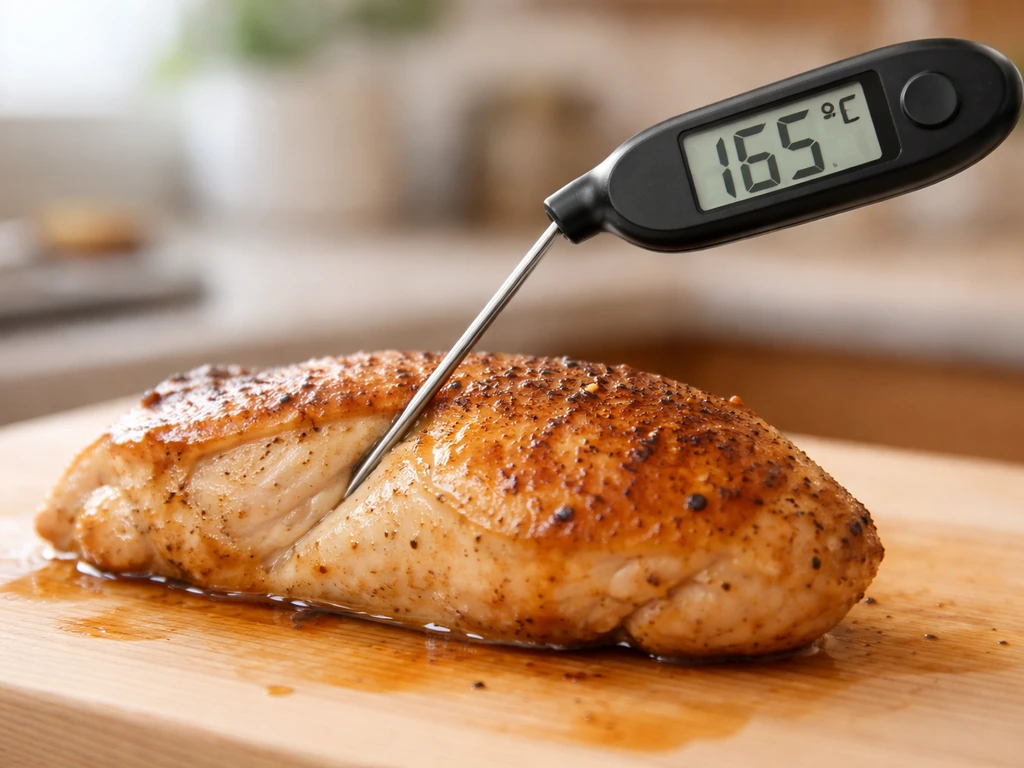
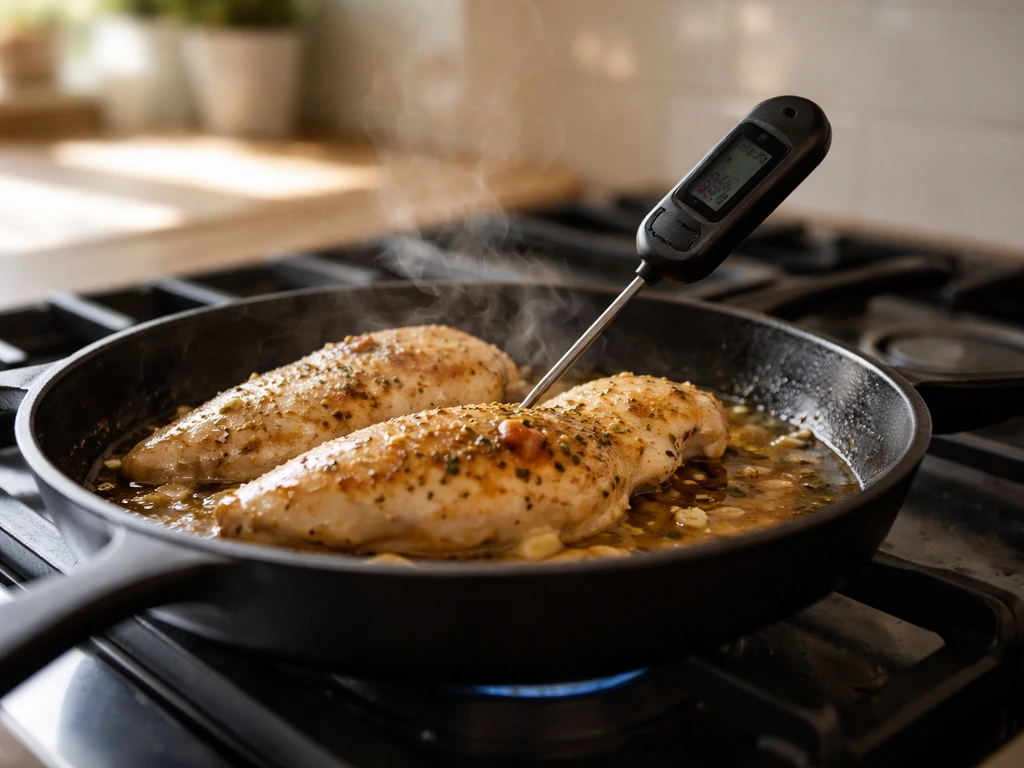
The only reliable way to know your chicken is cooked to 165°F is to use a food thermometer. The FDA says to cook all poultry to a minimum internal temperature of 165°F (74°C) and to use a food thermometer by testing in multiple areas to know your chicken is cooked to 165°F. Color is not a reliable indicator. Insert the thermometer into the thickest part of the meat, away from bone. For a whole bird, check the thigh. For pieces, check the thickest section. If you're cooking eggs in the microwave, heat to at least 165°F throughout and let them stand covered for two minutes before serving, which allows residual heat to complete the job.
Chilling leftovers promptly
Refrigerate cooked chicken within two hours of cooking (one hour if the ambient temperature is above 90°F). Keep your refrigerator at or below 40°F. Leftovers reheated should also reach 165°F internally before eating.
If you're higher-risk or genuinely unsure: when to be extra cautious
For most people eating commercially sourced chicken in 2026, following the cooking and handling steps above is sufficient. But some situations call for extra caution or a conversation with a healthcare provider.
- Immunocompromised individuals (people on chemotherapy, organ transplant recipients, or those with conditions affecting immune function) should be especially rigorous about cooking temperatures and avoiding any raw or undercooked poultry or eggs.
- Pregnant people are generally advised to be more careful about food safety across the board. The FDA's food safety guidance for pregnant women specifically highlights 165°F as the safe cooking temperature for poultry and avoiding raw or undercooked eggs.
- People with direct exposure to potentially infected birds, such as farmworkers, live bird market visitors, or backyard poultry keepers near a confirmed outbreak, are in a different risk category than a typical consumer. If you've had that kind of exposure and develop flu-like symptoms within 10 days, seek medical evaluation promptly.
- If you source chicken from a local farm or raise your own birds and there's a known or suspected outbreak in your area, contact your state's department of agriculture or a veterinarian before consuming birds or eggs from that flock.
The WHO advises people who work with or have contact with potentially infected poultry or contaminated environments to practice strict hand hygiene and avoid raw eggs and meat. That's sound advice for anyone who isn't sure about the health status of their birds. For everyone else buying chicken at a retailer, the commercial supply chain's inspection system plus thorough cooking at home puts the risk at effectively zero.
It's also worth noting that if bird flu is prompting you to rethink your relationship with backyard birds more broadly, questions about feeding wild birds or using bird feeders during outbreaks are related issues worth considering separately. The risk profile for wild bird contact is distinct from food safety, but both come down to understanding your actual exposure and acting accordingly. The risk profile for wild bird contact is distinct from food safety, but the general question "is it safe to feed birds because of bird flu" is still a related consideration during outbreaks. When outbreaks happen, people also look for bird feeder alternatives because feeding wild birds can increase exposure to contaminated droppings.
Bottom line: if you cook your chicken to 165°F, handle raw poultry with basic hygiene, and aren't in direct contact with infected birds, eating chicken during a bird flu outbreak carries no meaningful added risk. The science on this is consistent across more than two decades of H5N1 research and every credible food safety authority. Cook it properly, and you're fine.
FAQ
If I’m buying pre-cooked chicken during a bird flu outbreak, do I still need to cook it to 165°F?
For food safety, “safe” depends on doneness, not the label. Chicken products that are fully cooked and packaged (for example, rotisserie chicken) are safest when they are heated through to a temperature that indicates the center is hot, and refrigerated promptly after purchase. If the product was meant to be served cold, follow the package instructions and do not leave it out beyond typical food-safe time limits.
Does safe thawing (like refrigerator thawing) make undercooked chicken less of a risk?
Yes, you can reduce risk, but you still need correct temperature cooking. Thawing in the fridge keeps the chicken out of the bacterial growth range, but bird flu concern remains about what happens after thawing, like cross-contamination and undercooking. Once thawed, handle raw meat the same way (separate utensils, handwashing) and cook to 165°F.
Can I eat chicken if it was only warmed after being undercooked earlier?
Avoid it. If you have to “re-warm,” warm only as a final step after proper refrigeration and within time limits, and reheat leftovers until the center reaches 165°F. Reheating partially cooked chicken that never reached 165°F in the first place is not the same as finishing it safely unless the final internal temperature requirement is met.
What if I or someone at home is sick, does that change how I should handle chicken during bird flu?
If a family member is sick, the decision is mainly about illness management and food handling hygiene, not bird flu transmission through food. Still, if the sick person handled raw poultry, clean and sanitize surfaces and wash hands thoroughly. If there is concern the illness could be related to exposure to infected birds, follow local public health guidance for exposure and monitor symptoms rather than changing cooking targets.
Should people with high-risk jobs (like poultry workers) follow the same kitchen rules?
For people with high exposure risk, like farm workers or people working in facilities with infected birds, the main added precaution is to avoid handling potentially contaminated animals without strict protective hygiene. Healthcare providers may advise additional measures for raw egg products or for symptom monitoring, especially if someone had significant direct contact with poultry or contaminated environments.
Does marinating chicken make it safe during a bird flu outbreak?
Yes, but only with proper cooking. You can use marinades or sauces, but do not assume a marinade “kills everything.” Cook the chicken to 165°F, and if you plan to use marinade as a sauce, boil it first if it touched raw chicken. Also, keep marinade covered and away from ready-to-eat foods.
What should I do if raw chicken juices touch ready-to-eat foods in my fridge?
If you get raw chicken juices on food you plan to eat without further cooking, that food should be discarded. Cross-contamination is the practical risk in the home, because cooking is what inactivates the virus. For example, if raw juices contact salad greens or fruit, rinsing is not a reliable substitute for preventing contamination.
My chicken looks cooked, but I don’t have a thermometer. Is it okay to go by color?
Do it the same way you’d cook during any foodborne illness concern. Use a thermometer to confirm 165°F in the thickest part, and allow resting briefly, because temperature continues to rise slightly. Color and “how it looks” are not dependable, especially for thick cuts or uneven heating in some ovens.
Can I cut vegetables on the same cutting board after cooking the chicken?
Use separate prep steps to avoid spreading contamination, because the virus concern is tied to potential contamination on surfaces and hands. Cut raw chicken first on the designated board, then wash hands and change to clean utensils before cutting produce. If the same cutting board is used, sanitize it thoroughly between tasks.
Can I partially cook chicken and finish it later during a bird flu outbreak?
Yes, but it’s still limited. If you remove chicken from the heat before it reaches 165°F and then “finish” it by holding, the center may remain too cool. The only reliable check is final internal temperature. For safety, make sure the chicken reaches and stays at 165°F internally before serving or storing.
How many times can I reheat leftover chicken during an outbreak?
Reheating should be treated as cooking again for safety. Heat leftovers until they reach 165°F throughout, then serve promptly. Also, don’t reheat multiple times, and keep leftovers refrigerated within the recommended time window after the initial cooking.
If my backyard chickens might have HPAI, is cooking eggs at home enough?
If your backyard flock has suspected or confirmed HPAI, follow USDA APHIS and your state veterinarian instructions for disposal and testing, because the guidance for backyard birds can include restrictions beyond “cook it more.” For home eggs, you may be told not to consume eggs at all, or to use only specific handling and cooking practices depending on your situation.
Next Article
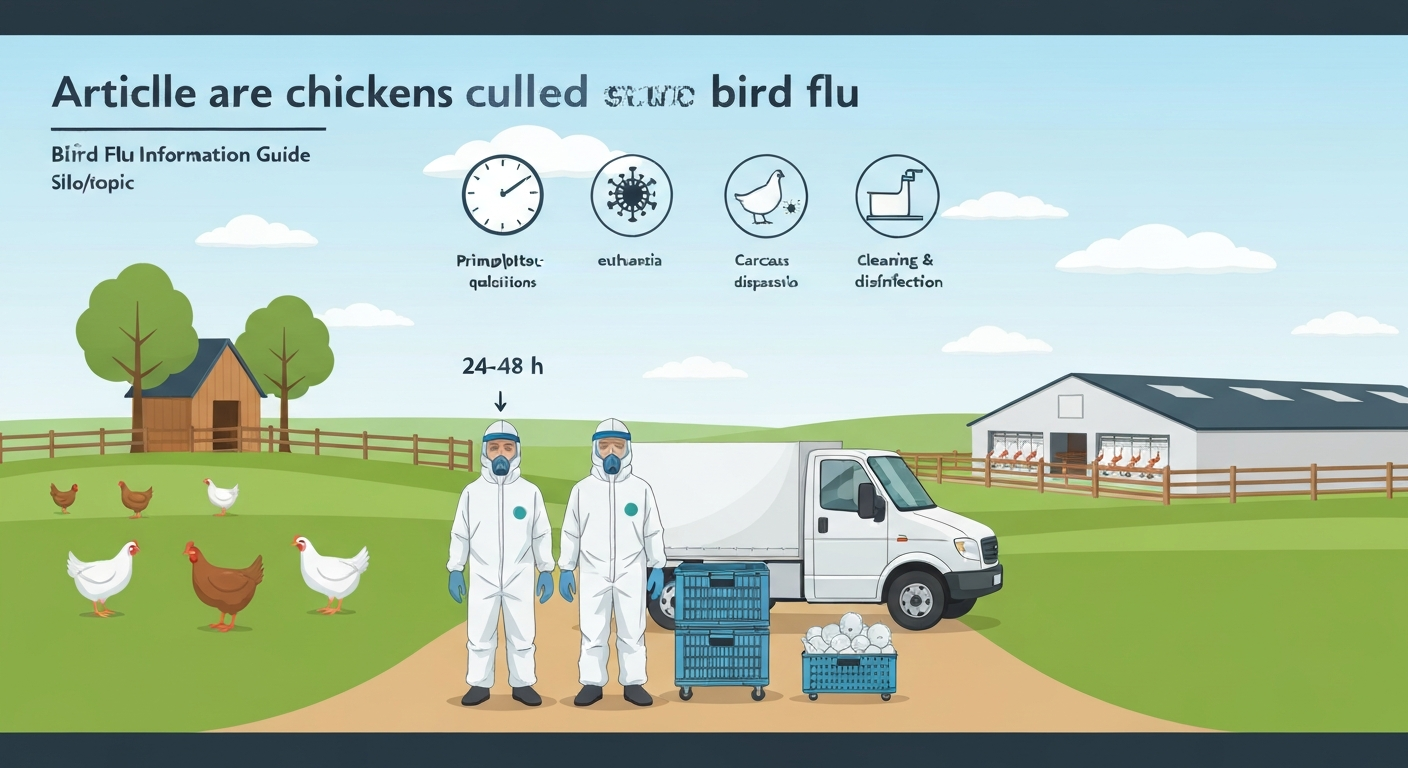
How Are Chickens Culled Bird Flu: Methods, Reasons & Steps
How are chickens culled during bird flu: why it’s done, humane methods, disposal, biosecurity, and next steps