
Yes, certain Lysol products can kill avian influenza virus on surfaces, but it depends on the specific product, the active ingredient listed on the label, and whether you use it correctly. Lysol Disinfectant Spray (EPA Reg. No. Pine-Sol is not an EPA-registered disinfectant label for bird flu viruses, so you should rely on products that have explicit influenza A claims instead does Pine Sol kill bird flu.
Does Lysol Kill Bird Flu? Spray and Wipes Explained

Maya Chen
5 May 2026
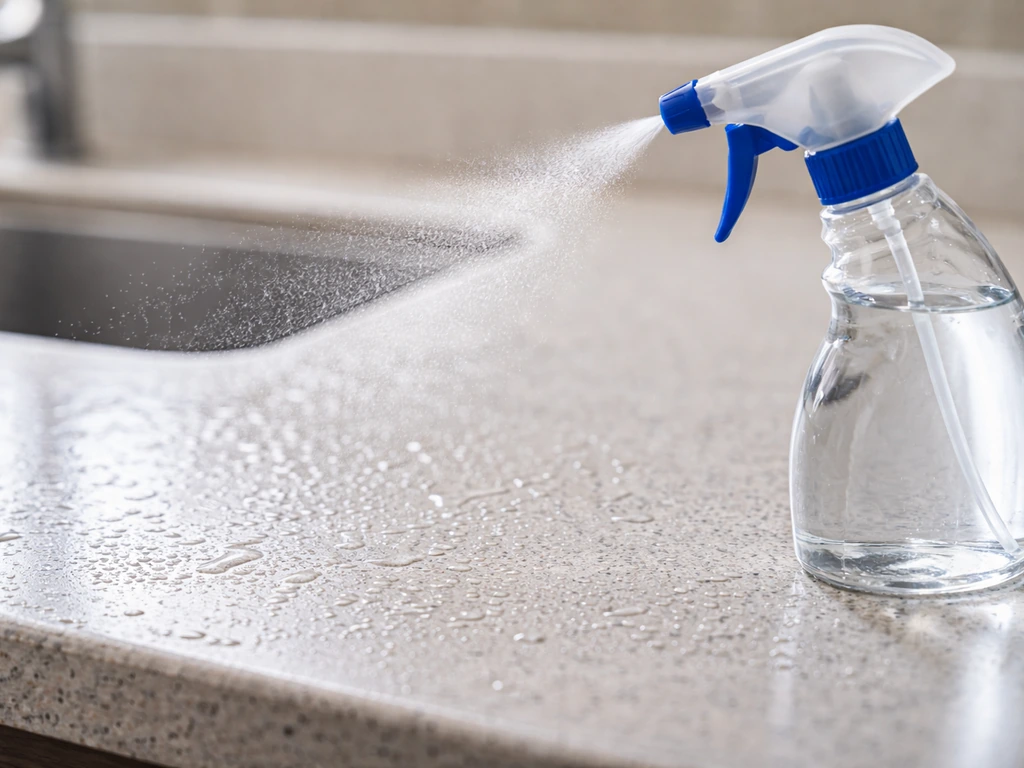
777-99) carries an explicit label claim for Avian Influenza A (H5N1) and kills Influenza A virus in 30 seconds on hard, non-porous surfaces. EPA's List M PDF of registered antimicrobial products with avian influenza label claims includes Lysol products such as Lysol Disinfectant Spray (EPA Reg. No. 777-99) and Lysol Brand II Disinfecting Wipes (EPA Reg.
No. 777-114) [Lysol Disinfectant Spray (EPA Reg. No. 777-99) carries an explicit label claim for Avian Influenza A (H5N1)](https://www.
epa. gov/sites/default/files/2020-03/documents/2018. 10. 01.
listm__0. pdf). Lysol Disinfecting Wipes kill Influenza A (H1N1) with a 4-minute wet contact time, and some professional wipe variants carry broader EPA-registered virus claims. So the short version: Lysol spray is your stronger, better-documented bet for bird flu specifically, and wipes can work if you keep the surface visibly wet long enough.
Lysol spray vs. bird flu: what the evidence actually shows
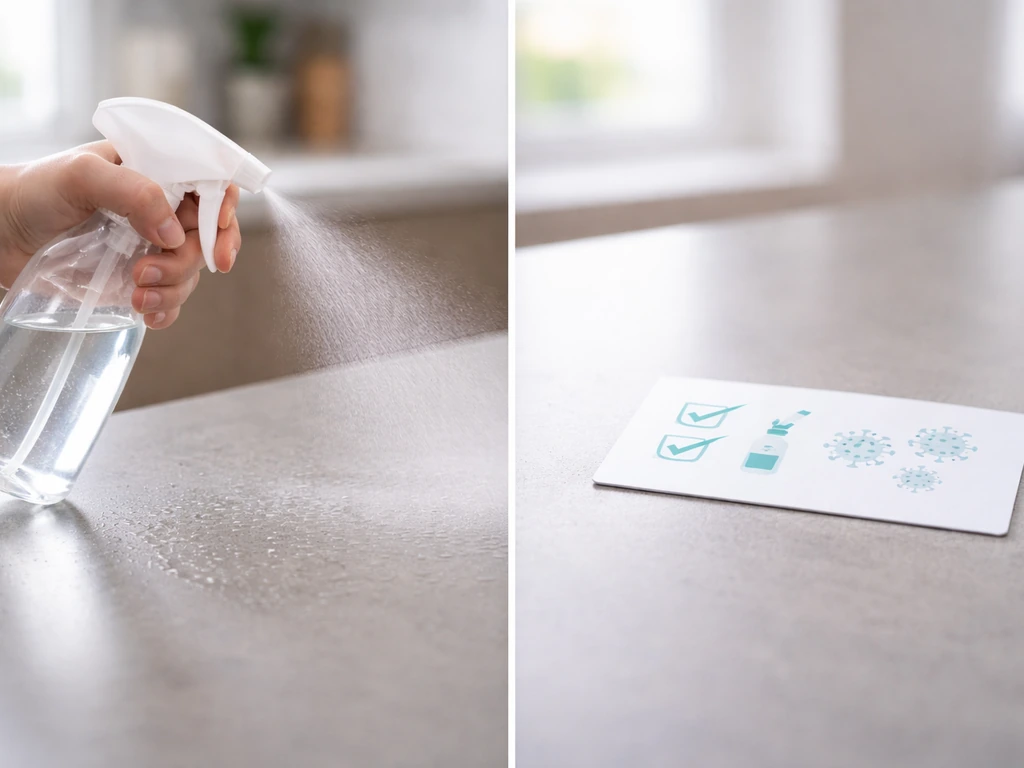
Avian influenza viruses, including the H5N1 and H5N2 strains that have been circulating in wild birds and poultry in recent years, are enveloped viruses. That matters because enveloped viruses are actually easier to inactivate with disinfectants than non-enveloped viruses like norovirus. The lipid (fatty) outer shell is vulnerable to the quaternary ammonium compounds and ethanol that most Lysol products use as active ingredients.
Lysol Disinfectant Spray's EPA master label (Reg. No. 777-99) blank" rel="noopener noreferrer">specifically lists Avian Influenza A (H5N1) as one of the pathogens the product is registered to kill. The spray achieves this on hard, non-porous surfaces with a 30-second contact time, meaning the surface needs to stay visibly wet for that full 30 seconds. That is one of the fastest contact times for any disinfectant product in this category, which makes the spray practical for quick surface disinfection around areas where you've handled birds or bird droppings.
The key phrase on any EPA-registered disinfectant is the 'kills' claim paired with a specific virus name. If your Lysol spray can says Influenza A on the active claims panel and the EPA registration number matches, you're working with a product that has been independently tested for virus inactivation, not just one making a marketing claim. Always check the label on the can you're holding, because Lysol sells multiple spray variants and the formulations differ.
Lysol wipes vs. bird flu: does the label claim match the actual risk
Lysol Disinfecting Wipes are useful but come with a catch: contact time. The standard consumer wipe (like the Crisp Linen 35-count product) is labeled to kill Influenza A (H1N1) on hard, non-porous surfaces when the surface is allowed to remain wet for 4 minutes. That is a much longer dwell time than most people give a wipe. For bird flu specifically, the key point is whether your wipe SKU has an EPA label claim for avian influenza, since many consumer wipes are only tested against different influenza strains contact time. Most of us swipe a surface and consider it done. That is not how it works, and it's why wipes underperform in practice compared to spray.
The consumer wipe line's label claims center on Influenza A broadly, which includes H1N1, but not all consumer wipe SKUs carry an explicit H5N1 claim the way the spray does. Professional-grade Lysol wipe variants (such as Lysol Brand II Professional Disinfecting Wipes, which have their own EPA registration) may carry extended virus claim lists, so if you're disinfecting a barn, coop, or area with known exposure to infected birds, it is worth checking the professional product's label directly on the EPA registration database.
For household use after casual contact, the standard wipes can be a reasonable option as long as you wipe, re-wet if necessary, and wait the full 4 minutes before wiping dry. For higher-risk situations, the spray is the more reliable choice because the claim set is more specific to avian influenza strains.
| Product | Relevant Virus Claim | Contact Time | Best Use Case |
|---|---|---|---|
| Lysol Disinfectant Spray (EPA 777-99) | Avian Influenza A (H5N1) explicitly listed | 30 seconds | Hard surfaces, quick application, known or suspected bird exposure |
| Lysol Disinfecting Wipes (consumer) | Influenza A (H1N1) on hard non-porous surfaces | 4 minutes wet | Smaller surfaces, lower-risk casual contact cleanup |
| Lysol Brand II Professional Wipes | Extended EPA virus claim list (check label) | Per label | Larger areas, commercial or agricultural settings |
How to actually disinfect correctly (contact time, wet surface, pre-cleaning)
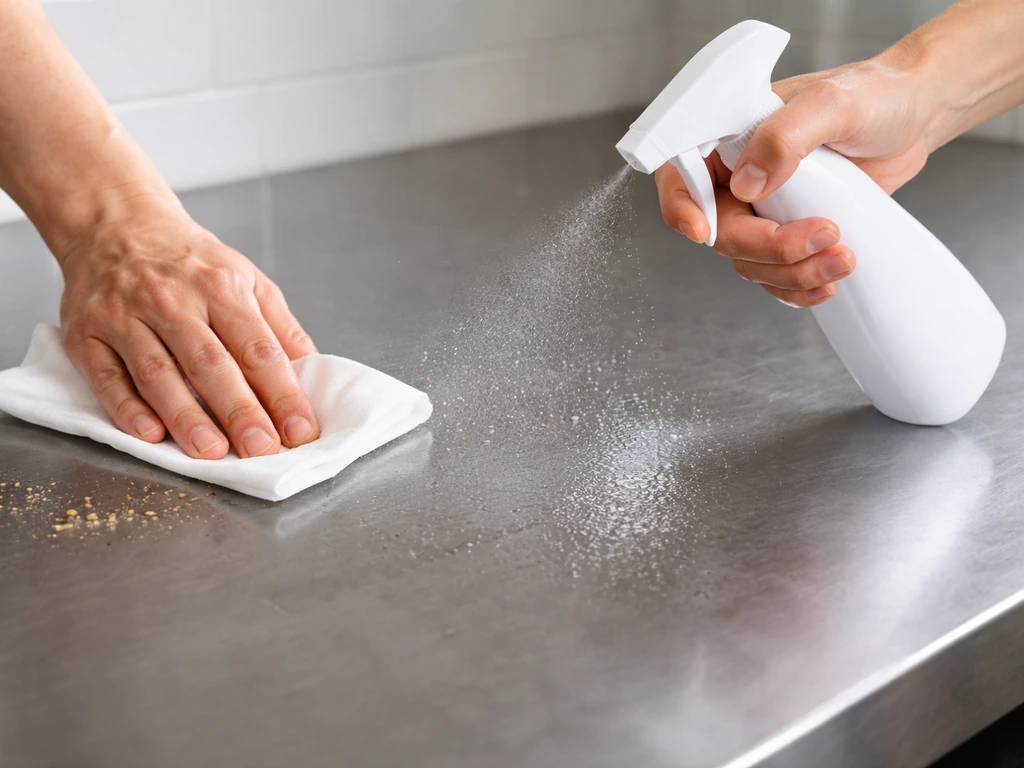
Using any disinfectant correctly has three non-negotiable steps, and skipping any one of them significantly reduces how well it works. Here is how to do it right.
- Clean first, then disinfect. Disinfectants do not work well through organic matter like feces, mud, feathers, or dirt. If a surface has visible contamination, clean it with soap and water, rinse it, and let it dry (or leave it just damp) before applying disinfectant. Bird droppings in particular can shelter virus particles from the active ingredient.
- Apply enough product to keep the surface visibly wet for the full contact time. For Lysol spray, that is 30 seconds. For Lysol wipes, that is 4 minutes. If the surface dries out before that time is up, either re-apply or accept that the contact time was insufficient.
- Let it air dry. Do not wipe off the disinfectant immediately after applying it. The wet contact time is the active disinfection period. Wiping it away early cuts the process short.
- Focus on high-touch hard, non-porous surfaces. Lysol's label claims apply specifically to hard, non-porous surfaces like countertops, door handles, sink faucets, boot soles, and crates. Porous surfaces like fabric, wood, or soil require different approaches and are not covered by these standard label claims.
One practical note: if you are cleaning footwear or equipment that has been in a chicken coop, a contaminated area, or near sick or dead birds, rinse off visible debris with a hose first, then apply disinfectant spray generously and wait the full contact time before handling the item further.
Where surface disinfection actually fits in bird flu risk (and what it cannot solve)
Surface disinfection is genuinely useful, but it is only one piece of bird flu exposure risk, and it is not the highest-risk piece. Microban products are not a substitute for the kinds of verified, influenza-specific disinfection steps described on product labels. The primary transmission routes for avian influenza in humans are direct contact with infected birds or their secretions, and inhalation of contaminated aerosols or dust in environments with sick or dead birds. Fomite transmission (virus on surfaces that you then touch and transfer to your eyes, nose, or mouth) is a secondary concern, not the leading driver of human infections.
That means you should not rely on wiping down a countertop as your main protective measure if you have had close, direct contact with sick poultry or have been in a heavily contaminated environment. Hand hygiene (thorough handwashing with soap and water for at least 20 seconds) is arguably more immediately important than surface disinfection in most household scenarios.
It is also worth noting that food safety is a separate concern from surface disinfection. Properly cooked poultry and eggs are safe regardless of surface contamination, because the virus is heat-sensitive. Disinfecting your kitchen counter after handling raw poultry is still good food safety practice, but the cooking process itself eliminates the virus. Other disinfectant options like bleach solutions and hydrogen peroxide also inactivate influenza A viruses effectively, and comparing active ingredients can be useful if Lysol products are unavailable.
Hydrogen peroxide can inactivate influenza viruses, but whether it will kill bird flu depends on the concentration and the product’s label contact time. If you are trying to figure out what disinfectant kills bird flu, the safest answer is to match the product’s label claim for avian influenza A and use the required wet contact time active ingredients can be useful. Does hypochlorous acid kill bird flu?
It can inactivate influenza viruses when used correctly, but you should still confirm the product label claim for influenza A and follow the required contact time. Bleach can inactivate influenza A viruses, but you should still follow the product label and use the correct concentration and contact time does bleach kill bird flu.
Safety guidance for using Lysol at home around kids, pets, and shared spaces
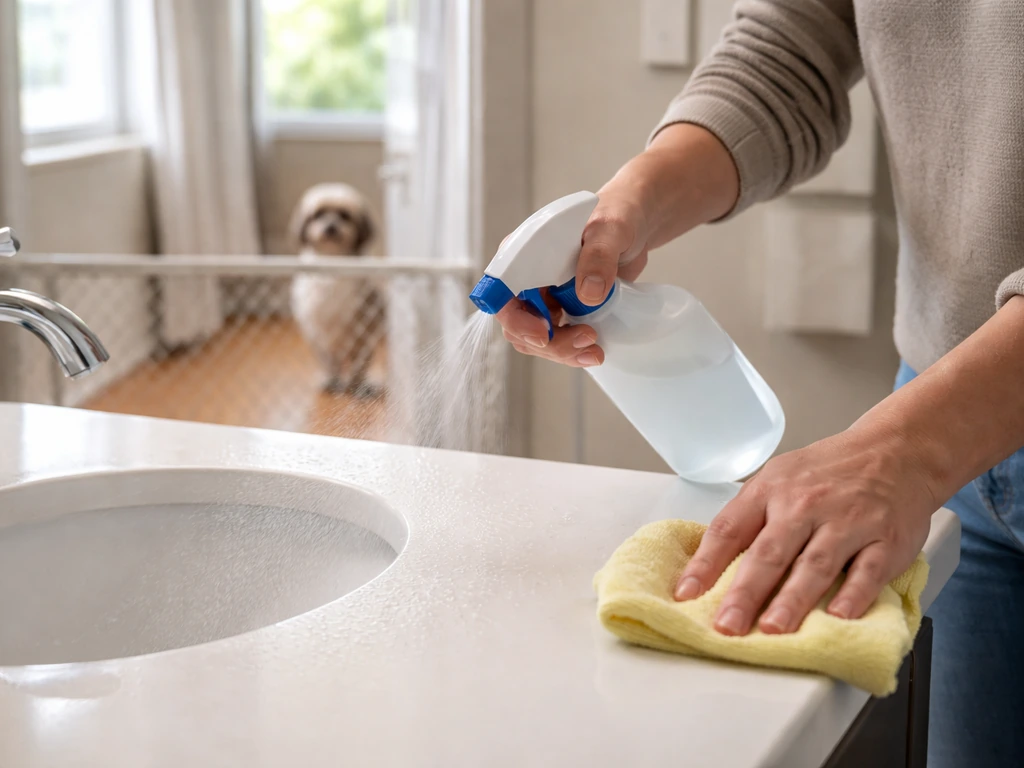
Lysol products are safe for household use when used as directed, but 'as directed' includes some important precautions that matter more when you are disinfecting more aggressively than usual.
- Ventilate the space. Open windows or run a fan when using Lysol spray in an enclosed area. The aerosol can irritate airways, especially in people with asthma or respiratory sensitivities.
- Keep children and pets out of the area while you are applying disinfectant and until surfaces are dry. This is especially important for floors and low surfaces that kids or pets contact directly.
- Wear gloves when you are handling materials that may be contaminated with bird droppings or secretions before disinfecting. Nitrile gloves work well and are inexpensive.
- If you are cleaning up after significant bird contact (dead birds, sick poultry, or a heavily fouled area), add eye protection and consider a properly fitted N95 respirator to reduce inhalation risk, which matters more than surface disinfection in that scenario.
- Never mix Lysol products with bleach or other cleaners. Lysol spray and wipes contain quaternary ammonium compounds; mixing with bleach or acids can release toxic fumes. Use one product, let it do its job, and do not combine disinfectants thinking it will work faster.
- Store Lysol products out of reach of children and away from heat sources. The spray is flammable.
How to verify your product label and when to call the authorities instead of cleaning yourself
Not every Lysol product carries the same virus claims, so verification matters. The most reliable way to confirm whether your specific product is registered to kill avian influenza is to look up the EPA Registration Number printed on the label in EPA's online pesticide database (EPA.gov, under 'Pesticide Product and Label System'). Search the registration number and pull the master label PDF to see the full pathogen claim list. For Lysol Disinfectant Spray, look for EPA Reg. No. 777-99 and confirm that Avian Influenza A is listed. For wipes, check the specific registration number on the product you have.
You can also cross-reference products against EPA's List Q (formerly List H), which is EPA's compiled list of disinfectants registered for use against influenza A including avian strains. If your product is on that list, you have an EPA-verified claim for influenza A inactivation.
Know when to stop and make a call instead of cleaning yourself. If you find a dead wild bird and are not sure whether it is a normal mortality event or potentially part of a larger die-off, contact your state wildlife agency or USDA APHIS before handling it. If you are a poultry keeper and birds in your flock are sick or dying in numbers, call your state veterinarian or USDA APHIS immediately. DIY disinfection is appropriate for incidental exposure and general hygiene, but a potential flock-level infection or a cluster of dead wild birds is a reportable animal health event that requires professional response, not just a bottle of Lysol.
For people who had direct contact with a sick or dead bird and are now experiencing fever, respiratory symptoms, or eye irritation, the right step is to call your healthcare provider and mention the bird contact specifically. Surface disinfection is still worth doing, but it is secondary to getting medical guidance quickly. Avian influenza in humans is rare, and the vast majority of people who encounter wild birds or even handle poultry never develop illness, but early reporting gives public health teams the information they need to track any emerging risk.
FAQ
Does every Lysol spray or wipe kill bird flu (H5N1)?
No. Only specific Lysol SKUs with an EPA-verified “kills” claim for Avian Influenza A (for example H5N1) should be treated as reliable for bird flu. Check the active-ingredient panel and the exact pathogen list on your can or package, since formulations differ across products.
If the label only says “Influenza A,” is that good enough for bird flu?
It might be, but not automatically. “Influenza A” can include multiple strains, and bird flu work is strongest when the label explicitly includes an avian or H5N1 claim. If your product does not list avian influenza by name on the disinfectant claim section, do not assume it matches bird-flu performance.
How long do I need to keep the surface wet when using Lysol wipes?
For the standard consumer wipe line, the label generally requires a full wet contact time (often 4 minutes) before you wipe dry. If the surface dries early, re-wet and restart the clock. Quick swipes without dwell time usually reduce effectiveness.
Do I need to remove all dirt first before using Lysol on bird-dropping messes?
Yes. Visible debris can block disinfectant contact, so rinse or remove soiling first, then apply Lysol generously and follow the required contact time. This is especially important for outdoor areas, porous-looking surfaces, and heavy droppings.
Can I disinfect porous materials with Lysol for bird flu?
Usually not as effectively. Lysol’s strongest claims are for hard, non-porous surfaces, and porous materials may not stay wet long enough for the label contact time. For items that absorb fluids (fabric, untreated wood), focus on proper removal and washing or disposal guidance rather than expecting the same results.
What’s the difference between “disinfectant spray” and “disinfecting wipes” for bird flu?
The main difference is dwell time control. Sprays often allow a more uniform wet layer for the label’s shorter contact time, while wipes depend on how thoroughly you keep the area visibly wet for the full dwell period. If you cannot reliably maintain wetness, spray is typically the better choice.
Is it safe to use Lysol on food areas after handling raw poultry or birds?
You should still use safe food-handling steps. Cleaning and disinfecting the surface can be helpful, but cooked poultry and eggs are protected by heat, and disinfectants must be used as directed on the label. Avoid cross-contamination, let surfaces dry properly, and do not apply disinfectant in ways that leave residues where food will be placed without following label instructions.
Can Lysol be used on shoes or equipment after visiting a coop or barn?
Yes, but treat it like a decontamination workflow. Rinse off debris first, then apply spray so the surface stays visibly wet for the label contact time. Let it dry or follow the label’s next-step guidance before bringing items back into living spaces.
If I used Lysol but wiped it dry immediately, did I “mess it up”?
Likely, yes, for effectiveness. If you removed it before the label contact time, the disinfectant may not have had enough contact to inactivate influenza A. Re-apply and keep the surface wet for the full required dwell time, unless the label specifically says otherwise.
Does Lysol replace handwashing or PPE for poultry exposure?
No. The article’s exposure-risk point matters, and hand hygiene is usually more important for most household scenarios. If you have direct exposure to sick or dead birds, use appropriate gloves or other protective measures, then wash hands thoroughly with soap and water for the recommended duration.
What should I do if I find dead wild birds or my flock is sick, even if I disinfect?
Disinfection is not a substitute for reporting and veterinary/public health guidance. Contact your state wildlife agency or USDA APHIS for clusters of dead wild birds, and call a state veterinarian or USDA APHIS promptly if multiple birds in your flock are sick or dying. Continue cleaning only within that guidance framework.
How can I confirm that the exact Lysol product I have is registered for avian influenza?
Use the EPA registration number printed on your label, then match it to the product’s master label in EPA’s pesticide database. Look for the exact pathogen claim wording (avian influenza A such as H5N1) and the listed wet contact time for the surface type you are disinfecting.
If Lysol is unavailable, what’s the safest way to choose another disinfectant for bird flu?
Choose a disinfectant with an explicit influenza A or avian influenza claim on its label, and follow the required wet contact time and surface type conditions. Don’t rely only on active ingredients without confirming the label’s specific “kills” claim and dwell time for influenza A.
Next Articles
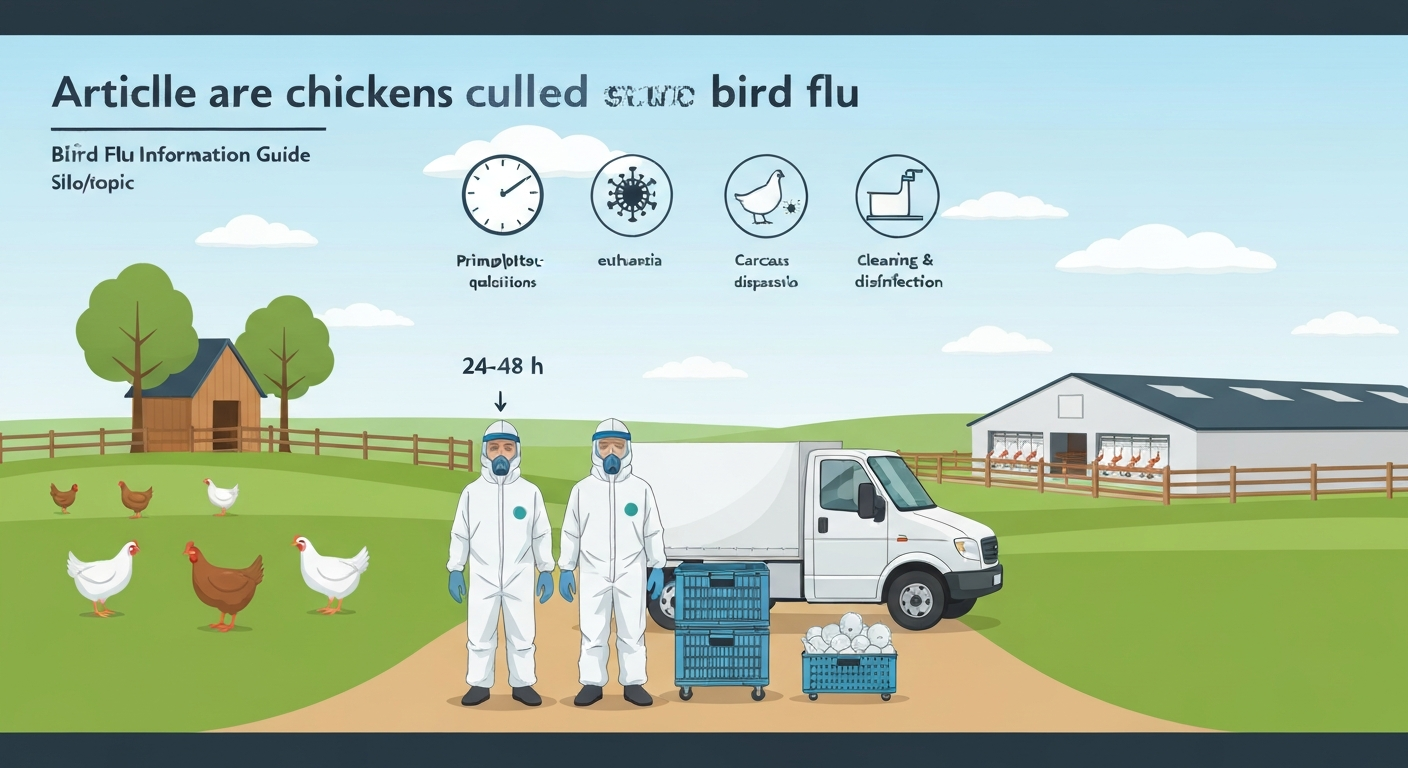
How Are Chickens Culled Bird Flu: Methods, Reasons & Steps
How are chickens culled during bird flu: why it’s done, humane methods, disposal, biosecurity, and next steps
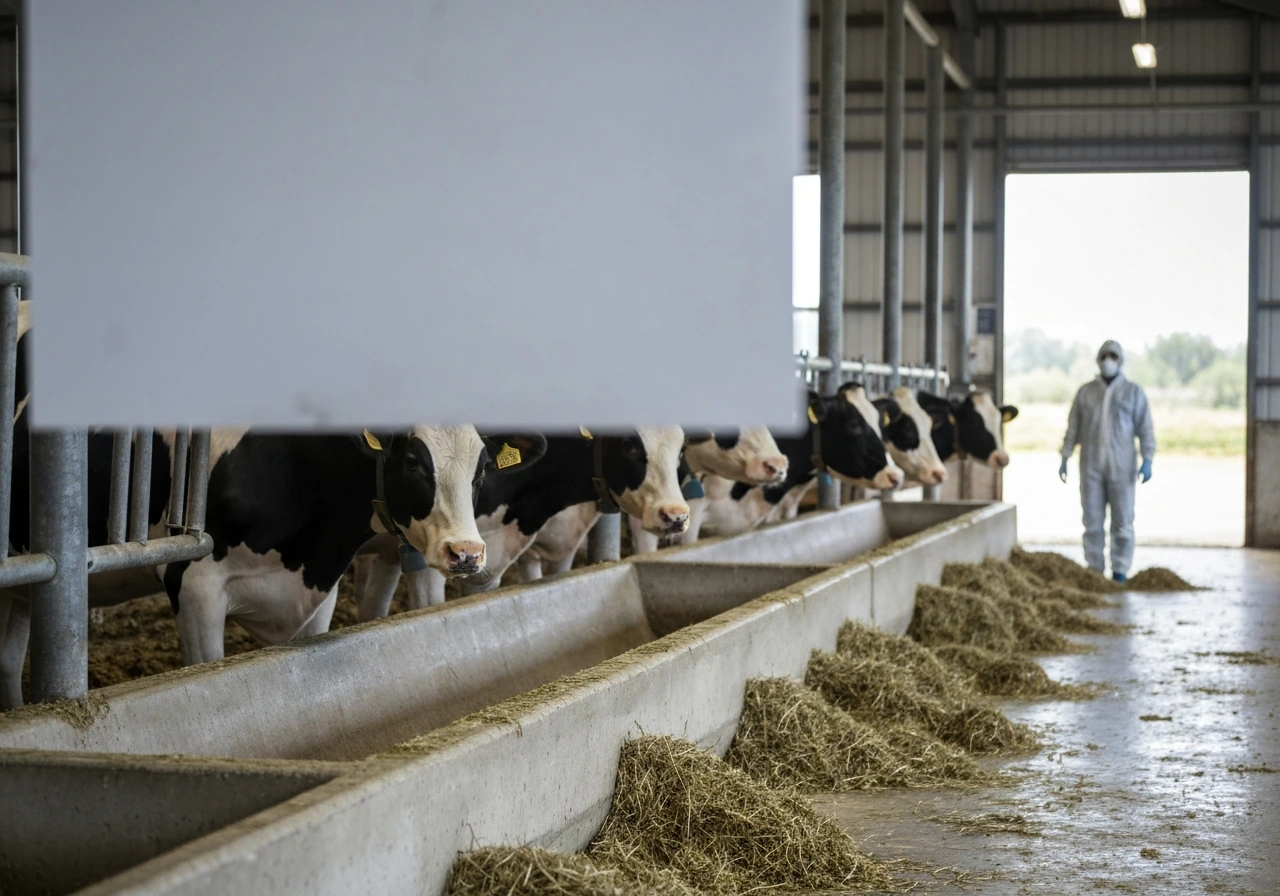
Do Cows With Bird Flu Have to Be Killed? What Happens
Explains whether cows with bird flu must be killed, and what happens for confirmed vs suspected cases, isolation and nex
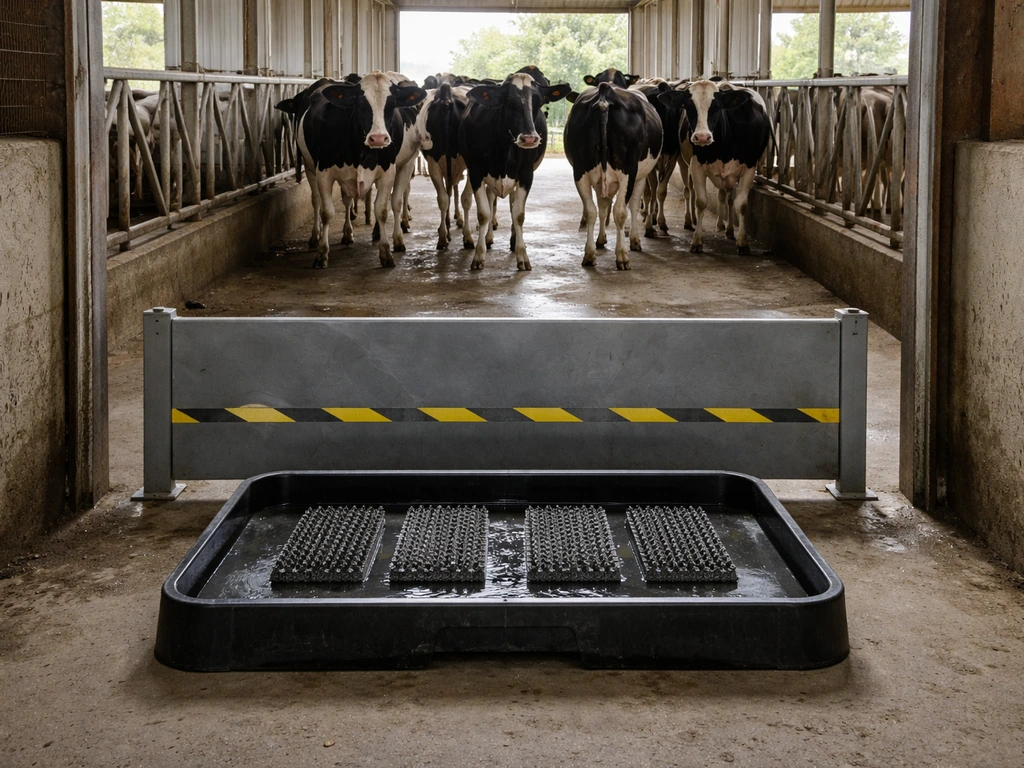
Does Bird Flu Kill Cows? What’s Known and What to Do
Can bird flu infect and kill cows? What’s known, mortality risk, symptoms, and farm biosecurity steps to take now.