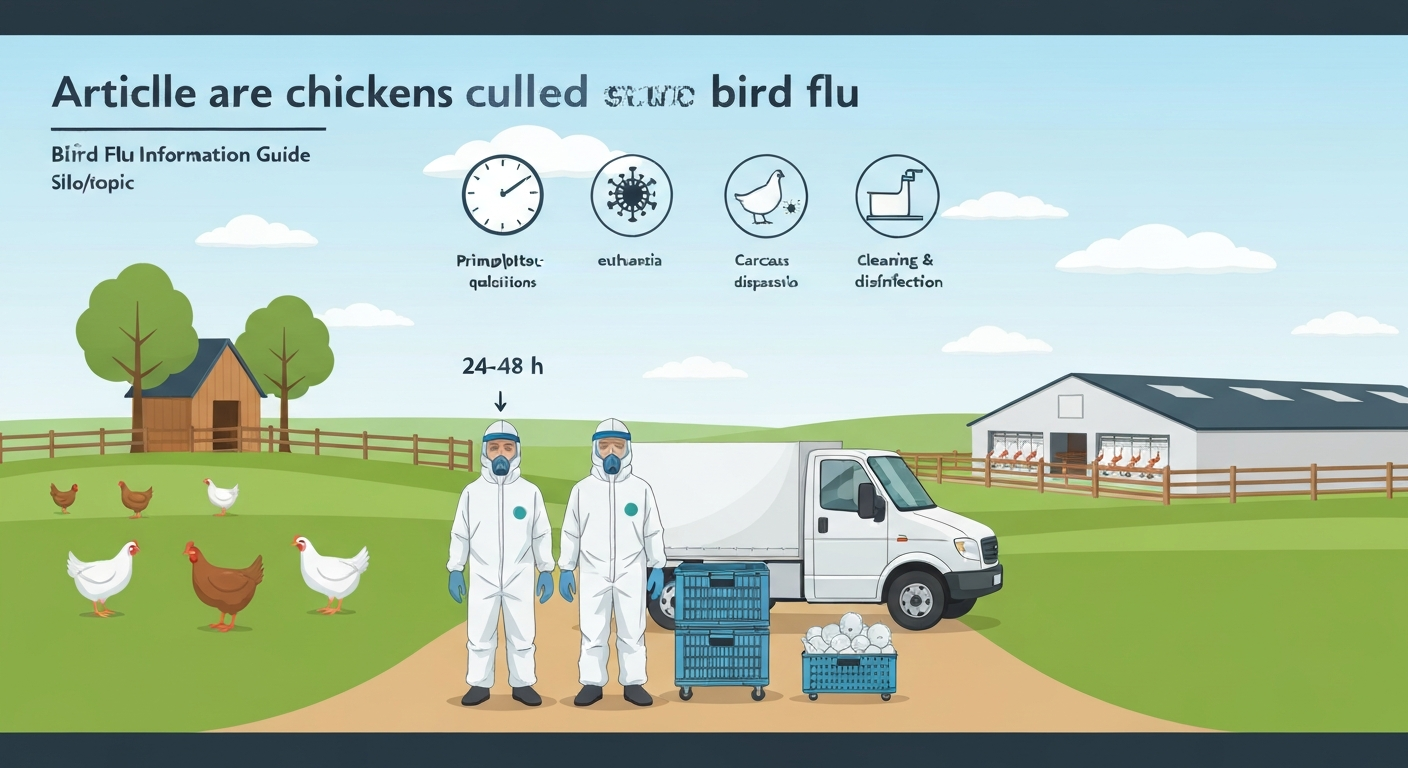
Yes, eggs are safe to eat during a bird flu outbreak, provided they are properly cooked and handled. That is the consistent position of the CDC, FDA, WHO, EFSA, and FAO, and it is backed by decades of epidemiological data showing no confirmed cases of human H5N1 infection from eating properly prepared eggs or poultry. If you are buying eggs from a grocery store, a farmer's market, or even a backyard flock, you do not need to stop eating eggs. You do need to pay attention to how you cook and handle them, which is what this guide is for.
Are Eggs Safe to Eat With Bird Flu? Practical Guidance

Maya Chen
18 Apr 2026
How bird flu actually spreads (and why eggs are not the main concern)
Bird flu spreads to humans almost entirely through direct, close contact with infected live birds, their droppings, or contaminated environments. The WHO, ECDC, and EFSA all point to contact with infected poultry as the dominant route of human infection. Eating food, including eggs, has never been confirmed as a meaningful route of transmission in humans. The FAO has assessed the risk of acquiring H5N1 through food as negligible, especially when standard cooking and pasteurization practices are applied.
That said, risk assessors do note that the avian influenza virus has been isolated from the interior of eggs laid by infected hens, so the theoretical exposure route through eggs exists. The important distinction is between a theoretical or modeled risk and an actual documented one. The 2010 interagency risk assessment by U.S. federal agencies found no compelling epidemiological evidence linking shell eggs or egg products to human HPAI illness, even while acknowledging the virus can be present in egg material. Food safety for eggs, then, is about closing that theoretical gap with proper cooking, not about avoiding eggs altogether.
Which eggs to choose: store-bought, local, organic, and farm eggs

The FDA is clear that eggs in the retail market are safe to eat. The supply chain has multiple safeguards working in your favor: infected flocks develop rapid, obvious symptoms, they are quickly depopulated and removed from production, and commercial eggs go through testing and inspection programs. The likelihood that eggs from an infected flock reach retail shelves is low, and the FDA's joint risk assessment with USDA-FSIS confirms the overall risk from consuming commercial shell eggs is low.
Organic, cage-free, and pasture-raised eggs carry the same food safety profile as conventional store-bought eggs when it comes to bird flu. The label describes how the hens are raised, not whether they were exposed to wild birds. In fact, pasture-raised hens that spend time outdoors may have somewhat more exposure to wild bird droppings, which is worth noting, but it does not make those eggs unsafe to eat. The same cooking rules apply across all egg types.
Local and farm-direct eggs are where people get the most anxious, and reasonably so, since you may know less about the flock's health status. If you buy eggs directly from a small farm or backyard flock, here is what to think about: Are the birds showing any signs of illness, like sudden death, respiratory distress, or a sharp drop in egg production?
If the farm has had a confirmed or suspected outbreak, you should not use those eggs, and the farm should not be selling them. If the birds appear healthy and the farmer has not flagged any issues, the cooking guidance below applies, and your risk remains low. If you keep your own backyard flock and there is an active outbreak in your region, monitor your birds closely and follow your state agriculture department's advisories.
How cooking and prep change the risk
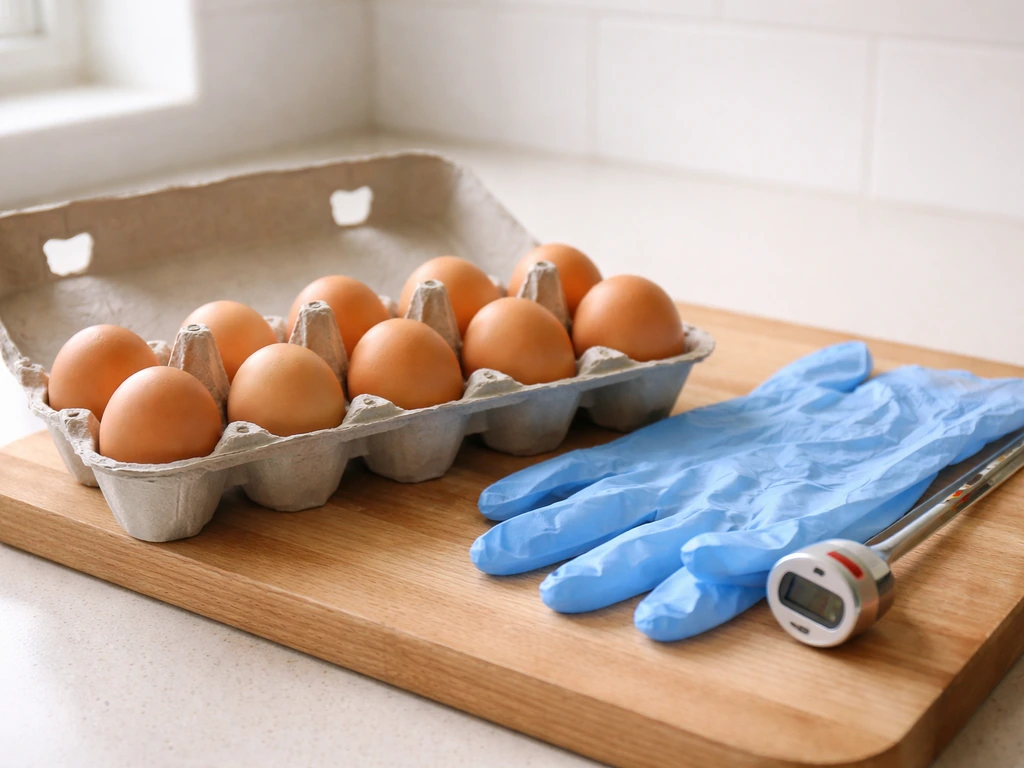
This is where preparation genuinely matters. The CDC recommends cooking eggs and poultry to an internal temperature of 165°F (74°C), which kills avian influenza A viruses. Heat lethality modeling shows that at 165°F, the log10 reduction in virus is extraordinarily high, in the range of tens to hundreds of log cycles depending on modeling assumptions. In practical terms, a fully cooked egg is a safe egg. The question is what happens below that threshold.
| Preparation Style | Approximate Internal Temp | Bird Flu Risk Level | Notes |
|---|---|---|---|
| Raw egg (in smoothies, Caesar dressing, cookie dough) | Uncooked | Highest theoretical risk | Avoid as a precaution; BfR and CDC advise against raw eggs during outbreaks |
| Sunny-side up / over-easy (runny yolk) | Below 165°F | Low but not eliminated | Yolk may not reach safe temp; higher risk than fully cooked |
| Soft-boiled / poached | Varies; yolk often under 165°F | Low but not eliminated | White may be safe, runny yolk less so |
| Omelette (fully cooked through) | Typically reaches 165°F | Very low | Safe if cooked until no liquid egg remains |
| Scrambled (fully set) | Typically reaches 165°F | Very low | Safe if eggs are fully set, not wet/runny |
| Hard-boiled / fully cooked | 165°F or above | Negligible | Recommended method during active outbreak concern |
The pattern is straightforward: the more fully cooked the egg, the lower the risk. Raw eggs carry the highest theoretical concern, though even here no human infections from egg consumption have been confirmed. Runny yolks in sunny-side up, over-easy, or soft-boiled eggs may not reach the 165°F threshold, which is why the CDC advises cooking eggs all the way through. If you are generally healthy and buying commercially produced eggs, the risk of eating a runny yolk is very low in absolute terms. But if you want to eliminate even the theoretical risk, cook yolks fully.
Egg whites on their own are not a special case. They follow the same rules: raw egg white carries a theoretical risk; cooked egg white does not. Cross-contamination during prep is also worth thinking about. If you crack raw eggs and then touch food that will not be cooked (like a salad or bread), that is a kitchen hygiene issue worth addressing regardless of bird flu. Cross-contamination during prep is also worth thinking about, and it is relevant when you are wondering are eggs affected by bird flu. Wash hands and surfaces after handling raw eggs.
Pasteurized eggs, liquid eggs, and egg beaters

Pasteurized shell eggs and liquid egg products like liquid eggs and egg beaters add an extra layer of safety because they have been heat-treated before you ever open them. In-shell pasteurization involves holding eggs at around 133°F for 53 minutes or similar time-temperature profiles that are sufficient to reduce HPAI virus to negligible levels using surrogate lethality data. Liquid egg products are pasteurized at higher temperatures as part of commercial processing. So if you are making something that calls for raw or lightly cooked eggs, such as homemade aioli, mousse, or lightly scrambled eggs, using pasteurized versions meaningfully reduces any theoretical risk.
Egg beaters and similar products are typically made from pasteurized liquid egg whites and are safe for all cooking applications. They do not change the basic cooking guidance, but they do give you an added buffer when you want to cook eggs soft or use them in applications where full cooking is difficult. For everyday fully cooked egg dishes, regular commercial eggs are fine.
Do you need to stop eating eggs or throw them out?
Almost certainly not. The guidance from every major public health agency, including the CDC, FDA, FAO, and EFSA, is that people do not need to stop eating eggs because of bird flu. If you are wondering whether bird flu affects eggs, the main takeaway is that properly cooked eggs are safe and the risk from eating them is negligible. There is no evidence that commercially distributed eggs pose a meaningful risk, and the overall foodborne transmission risk is negligible. That said, here is a quick decision checklist to help you think through your specific situation.
- Are your eggs from a commercial retailer (grocery store, warehouse club, online grocer)? You do not need to throw them out. Cook them properly and continue eating them.
- Are your eggs from a local farm or farmer's market? If the farm has not reported any flock illness or outbreak, cook and eat normally. If the farm is under an advisory or had a suspected or confirmed case, do not use those eggs.
- Do you keep backyard chickens? Monitor your flock for signs of illness. If birds appear healthy, eggs are fine to eat when fully cooked. If birds are sick or you suspect exposure, contact your state agriculture department before eating those eggs.
- Are your eggs past their use-by date or improperly stored? Discard them, but that is standard food safety, not bird flu specific.
- Do you have immunocompromising conditions, are you pregnant, or are you at elevated risk? Stick to fully cooked eggs (hard-boiled, fully set scrambled, fully cooked omelette) and consider using pasteurized eggs for any soft-cooked preparations.
At home, the practical steps are simple: cook eggs to 165°F internal temperature, wash hands after handling raw eggs, avoid cross-contaminating ready-to-eat foods with raw egg, and store eggs in the refrigerator. Follow these steps to cook eggs thoroughly and reduce your risk during a bird flu outbreak. You do not need special equipment or a thermometer for every egg. Fully set scrambled eggs, a firm omelette, or a hard-boiled egg consistently hit safe temperatures. Yes, a properly cooked omelette is not known to cause bird flu in people. These are habits worth having in any flu season, not just during a bird flu outbreak.
Where to check current guidance and outbreak updates

Public health guidance can shift as outbreaks evolve, so it is worth knowing where to look for up-to-date information rather than relying on social media or news headlines, which tend to sensationalize.
- CDC (cdc.gov): The CDC's bird flu page is updated regularly with case counts, food safety guidance, and recommendations for the general public and for people with occupational exposure.
- FDA (fda.gov): The FDA maintains a Q&A on egg safety during HPAI outbreaks, including guidance for consumers and the food industry.
- USDA-APHIS (aphis.usda.gov): This is the primary source for tracking which states and flocks have confirmed HPAI cases, updated frequently during active outbreaks.
- Your state department of agriculture: For local flock advisories, backyard poultry guidance, and state-specific outbreak information.
- WHO (who.int): For international H5N1 situation reports and global food safety guidance.
If a specific advisory is issued in your area, for example a regional alert about eggs from a particular farm or producer, that takes priority over general guidance. Otherwise, the standing recommendation from all agencies is consistent: properly cooked eggs from commercially distributed flocks are safe to eat. Check the USDA-APHIS map if you want to know whether your state has active confirmed cases, and follow your state ag department if you raise birds or buy locally.
The bottom line has not changed in decades of bird flu research: the virus spreads through contact with infected birds, not through eating cooked eggs. Cooking is the reliable kill step, and a fully cooked egg eliminates the theoretical risk entirely. If you take nothing else from this guide, take this: keep buying eggs, cook them through, and wash your hands. That is genuinely all most people need to do.
FAQ
What if I like runny yolks, are soft-boiled eggs still safe with bird flu concerns?
For the highest safety margin, cook until the egg is fully set (no runny yolk or translucent whites). If you do not use a thermometer, aim for firm scrambled eggs, an omelet that is cooked through, and hard-boiled eggs. For recipes that traditionally leave yolks runny, use pasteurized eggs or choose a fully cooked alternative (for example, hard-boiled yolks or fully set scramble).
Are pasteurized eggs safer if I want to make something like aioli, mousse, or lightly cooked eggs?
Yes for pasteurized eggs and pasteurized liquid egg products. Pasteurization adds a heat step before you cook, so it reduces the theoretical risk even if a recipe uses lower cooking temperatures. However, you should still practice kitchen hygiene and avoid serving undercooked eggs to higher-risk groups if a thermometer-free fully cooked option is available.
Does refrigerating eggs reduce bird-flu risk, or do I still need to cook them fully?
The main risk reduction comes from heat and avoiding contamination. A fridge will not “kill” avian influenza, so it is not a substitute for cooking. Use refrigeration as a freshness and bacteria-safety tool, store eggs at safe refrigerator temperatures, and discard eggs that are cracked, leaking, or have been left out too long.
What should I do if I buy farm-direct eggs from a producer with possible exposure?
Eggs from a known, active, or suspected outbreak flock should not be used. If you get eggs from a local seller, check whether they have been instructed to stop distribution and whether there are region-specific advisories tied to a specific producer. In the absence of an advisory, general agency guidance applies, but producer-specific alerts should override general reassurance.
Is cross-contamination a bigger issue than the virus itself when preparing eggs?
If you crack eggs and then handle ready-to-eat foods with the same hands or utensils, you can spread raw egg contaminants. Wash hands with soap and water after handling raw eggs, sanitize counters and tools that contacted raw egg, and keep raw eggs away from items like salad, bread, or fruit during prep.
Are egg whites alone treated differently than whole eggs?
Yes. If you are cooking only egg whites, treat them the same as whole eggs: cook until the whites are firm and fully set, and avoid serving raw or runny uncooked egg whites. Cooked egg white does not require a different approach for bird-flu-related safety.
Do common cooking methods like baking or frying reliably reduce the risk, even without precise timing?
Not typically. Most in-home cooking methods (scrambling until firm, baking fully set casseroles, boiling hard) reliably reach lethal temperatures in the parts you eat. The practical gap is with foods that are intentionally undercooked or partially cooked. If you are unsure, use a thermometer and check the thickest part, or choose a fully cooked method.
Should people at higher risk (pregnant, elderly, immunocompromised) change how they eat eggs during bird flu alerts?
If you are immunocompromised, pregnant, very young, or elderly, you may want to be extra conservative by avoiding runny yolks and using pasteurized eggs for any recipe that involves raw or lightly cooked eggs. The virus risk from properly cooked eggs remains very low, but prioritizing fully cooked foods and pasteurized ingredients adds an extra safety buffer.
How do pasteurized-in-shell eggs compare to pasteurized liquid eggs for bird-flu safety?
Shell egg pasteurization and liquid-egg pasteurization are different processes but both aim to reduce risk before you open the product. If your goal is to use eggs in raw or lightly cooked applications, choose pasteurized labeled products rather than relying on “clean handling” alone.
What decision should I follow if local guidance conflicts with general advice during an outbreak?
If there is a local advisory tied to a specific supplier, product batch, or farm, follow that. Otherwise, rely on the general guidance to cook eggs thoroughly (and maintain hygiene). Do not base decisions on headlines alone, because risk can be different by location and by whether a specific producer is under restriction.