For most backyard birders, you do not need to stop feeding wild birds right now. The U.S. Fish & Wildlife Service notes that feeders are unlikely to meaningfully increase the spread of avian influenza because the songbirds and small perching birds that typically visit feeders are not commonly infected with H5N1. That said, 'unlikely' is not the same as 'zero risk,' and there are specific situations where pausing, reducing congregation, or switching to feeder-free alternatives is the genuinely smart call. This guide walks you through exactly how to think about it.
Should I Stop Feeding Birds Because of Bird Flu?

Maya Chen
17 May 2026
How bird flu actually spreads at feeders
Avian influenza spreads through infected birds' saliva, mucus, and feces. The blank" rel="noopener noreferrer">primary route among waterbirds is fecal-oral: virus particles shed into water or food are picked up by the next bird that drinks or eats from the same spot. At a backyard feeder or birdbath, this creates two main transmission opportunities: direct bird-to-bird contact when birds crowd together, and environmental contamination on feeder surfaces, in standing water, or in shed feathers.
The environmental persistence angle matters more than most people realize. Research has shown H5N1 can survive in detached feathers stored at cold temperatures (around 4°C) for up to roughly 120 days. A birdbath or damp feeder tray in cool weather is a reasonable stand-in for that environment. This doesn't mean your feeder is a biohazard, but it does explain why routine cleaning is not optional hygiene theater. It genuinely reduces risk.
The risk profile is quite different for wild songbirds versus waterfowl and shorebirds. Ducks, geese, gulls, and birds of prey are the main reservoir and amplifier species for highly pathogenic avian influenza (HPAI). If your feeder attracts mostly chickadees, finches, and sparrows, your baseline risk is lower than if you live near a pond and regularly see Canada geese or mallards stopping by. Migratory waterfowl are the ones actively moving the virus across regions, and their saliva and droppings on shared water sources are the more plausible exposure scenario.
Who actually faces elevated risk here
The CDC's clearest risk language centers on close, prolonged, unprotected contact with infected birds or contaminated surfaces. For a typical backyard birder who watches birds from a window or walks past a feeder once a day, that threshold is rarely met. The picture changes in a few specific situations.
- You keep a backyard flock of chickens, ducks, or other poultry alongside wild-bird feeders. Wild birds can introduce virus to your domestic birds, which then amplifies risk for everyone in close contact with those animals.
- Your yard regularly attracts waterfowl, shorebirds, or raptors rather than typical feeder species.
- Someone in your household is immunocompromised, elderly with serious underlying conditions, or otherwise at higher health risk from respiratory infections generally.
- You have dogs, cats, or other pets that actively investigate bird droppings, dead birds, or contaminated water sources.
- Your local or state health agency has issued an active HPAI advisory for wild birds in your county or region.
If none of those situations apply, your personal risk from casual backyard bird feeding remains very low. If one or more apply, you should either temporarily pause feeders or move to the mitigation steps below with more seriousness.
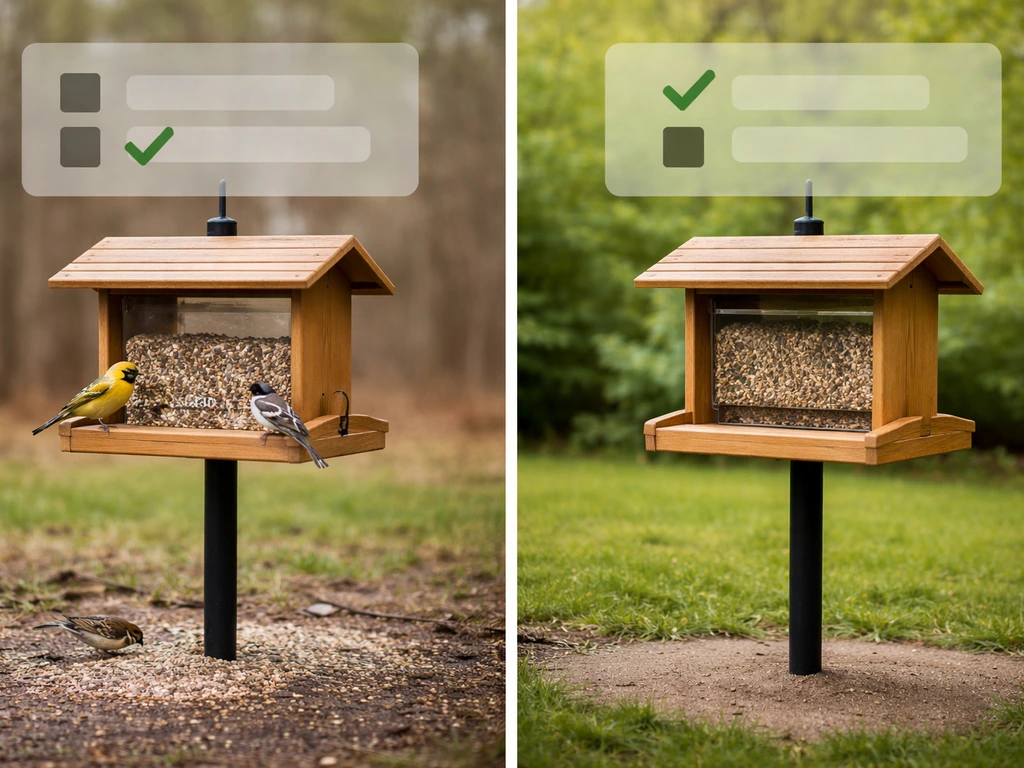
When feeding is probably fine, and when it's worth pausing
Check your local outbreak signals first
Before making any decision, spend five minutes checking your state wildlife agency or state department of agriculture website for current HPAI detections in wild birds. States like New York monitor through dedicated wildlife health programs, and many state fish and wildlife agencies post county-level data. If your county has recent confirmed detections in wild bird populations, treat that as an active signal and either pause or tighten your hygiene protocol.
If there are no recent local detections, you are not in peak waterfowl migration season, and your yard attracts typical small songbirds, continuing to feed with the hygiene steps below is reasonable. If spring migration is active (April through May is peak in much of North America) or fall migration is underway (September through November), the volume of potentially infected birds moving through increases, and this is a logical time to reduce feeder congregation even if there is no specific local alert.
How long to pause if you decide to stop
There is no universally fixed pause period in federal guidance because outbreak intensity varies by location and time. A practical approach: pause for the duration of any active state or local advisory, plus at least two weeks after it is lifted. Follow your state wildlife or public health agency's update page. If you see dead or visibly sick wild birds near your feeders, report them to your local wildlife authority and hold off on feeding until you have guidance. Do not handle dead birds with bare hands.
Mitigation steps if you keep feeding
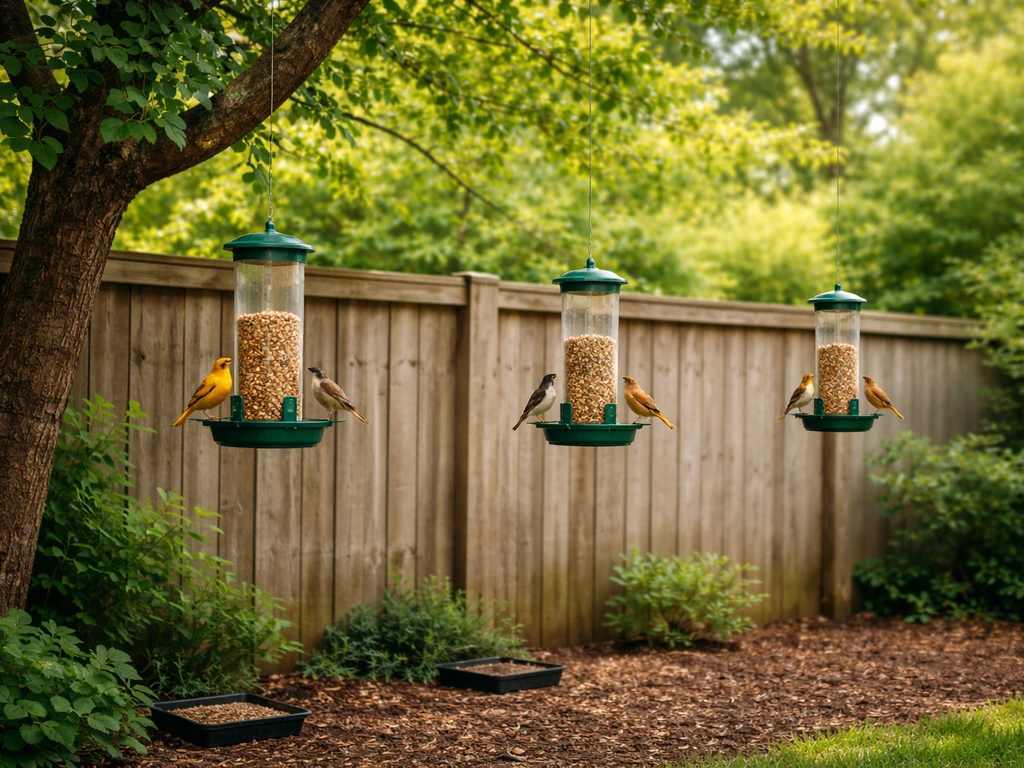
If you continue feeding, the goal is to reduce the number of birds crowding together at any single point and to keep surfaces as clean as possible. Some practical adjustments:
- Use multiple smaller feeders spread across your yard instead of one large feeder that draws a crowd.
- Remove or reduce feeders that attract waterfowl specifically (platform feeders with cracked corn, bread, etc.).
- Empty and refresh birdbath water daily during active migration or outbreak periods.
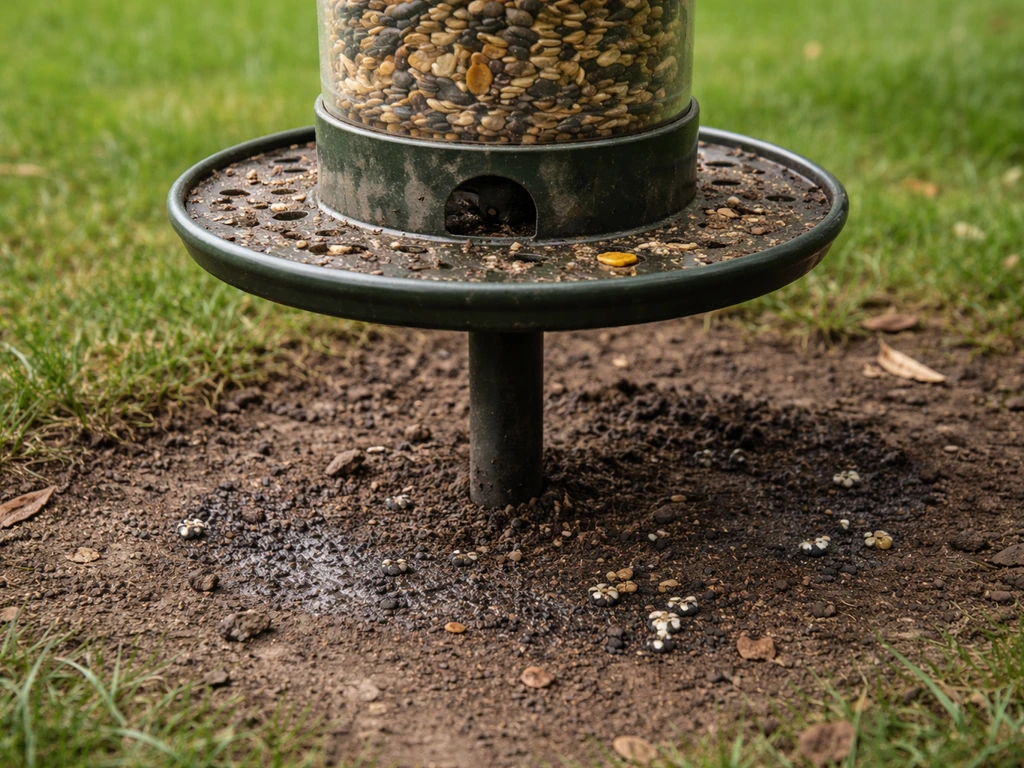
- Avoid ground feeding, which concentrates birds and droppings in the same spot.
- Wear gloves when handling feeders and wash hands thoroughly after.
Feeder-free alternatives that still bring birds to your yard
If you decide a full feeder break is the right call for your situation, you do not have to give up watching birds entirely. Several states, including Massachusetts, have actively promoted a shift from supplemental feeders to habitat-based approaches, and the wildlife benefit is genuinely comparable or better.
- Native plants: Berry-producing shrubs like winterberry, serviceberry, and native viburnums attract far more species than feeders, with zero congregation risk around a single contamination point.
- Brush piles: A loose pile of branches in a corner of your yard gives songbirds shelter and foraging habitat.
- Bird houses and nest boxes: These support breeding populations of cavity-nesting species like wrens, bluebirds, and chickadees.
- Fresh moving water: A dripper or fountain attachment on a shallow birdbath attracts birds very effectively. The movement also deters mosquitoes. Change the water daily regardless.
- Leave seed heads standing: If you garden, resist the urge to deadhead everything in fall. Coneflowers, black-eyed Susans, and ornamental grasses hold seeds that finches and sparrows forage through winter.
These alternatives also address the concern that supplemental feeding can create artificial bird congregation in ways that are not ideal for disease transmission more broadly, not just bird flu. If you want to explore these approaches in depth, the topic of feeder alternatives during avian flu outbreaks is worth its own deep dive.
How to clean your feeders, birdbaths, and dishes properly
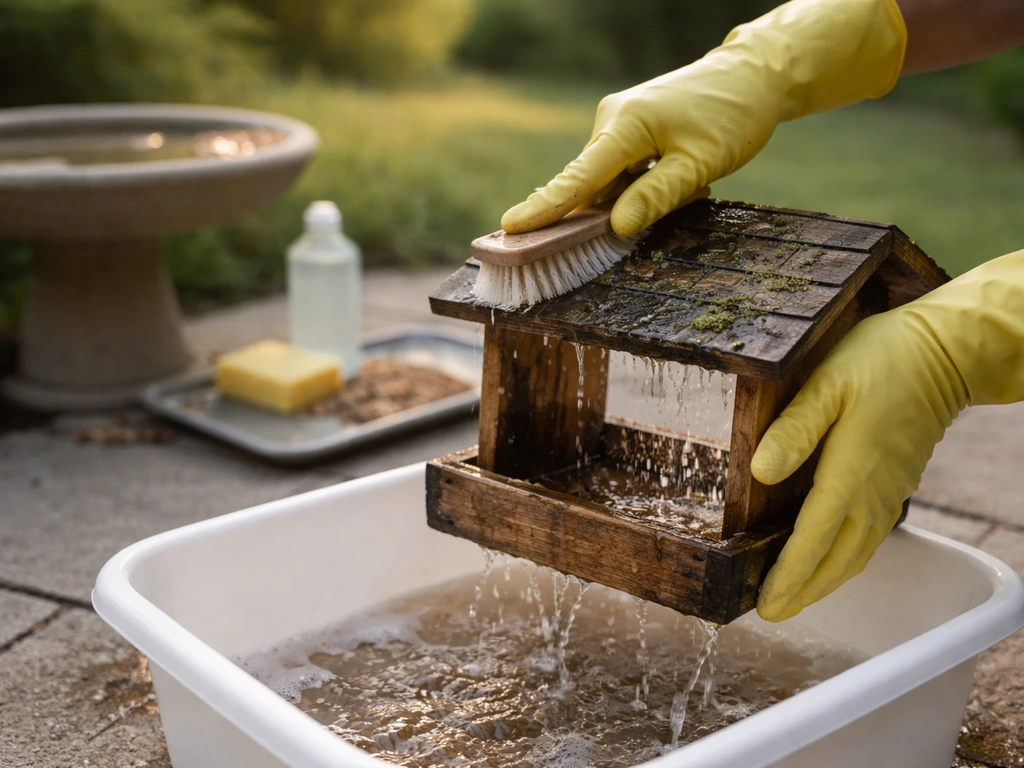
Cleaning feeders and birdbaths is one of the highest-impact things you can do whether or not you pause feeding. Iowa DNR's wildlife guidance recommends cleaning bird feeders and waterers with a 10% bleach solution (roughly one part household bleach to nine parts water) approximately once a month under normal conditions, and scrubbing birdbaths at least once a week. During an active HPAI period, move to weekly feeder cleaning and daily birdbath water changes at minimum.
- Empty the feeder completely and discard old, wet, or clumped seed.
- Scrub all surfaces with a stiff brush and hot soapy water to remove debris and droppings.
- Soak in a 10% bleach solution for at least 10 minutes.
- Rinse thoroughly with clean water and allow to dry completely before refilling. Wet feeders accelerate mold and bacterial growth.
- For birdbaths: scrub with the bleach solution, rinse well, and refill with fresh water.
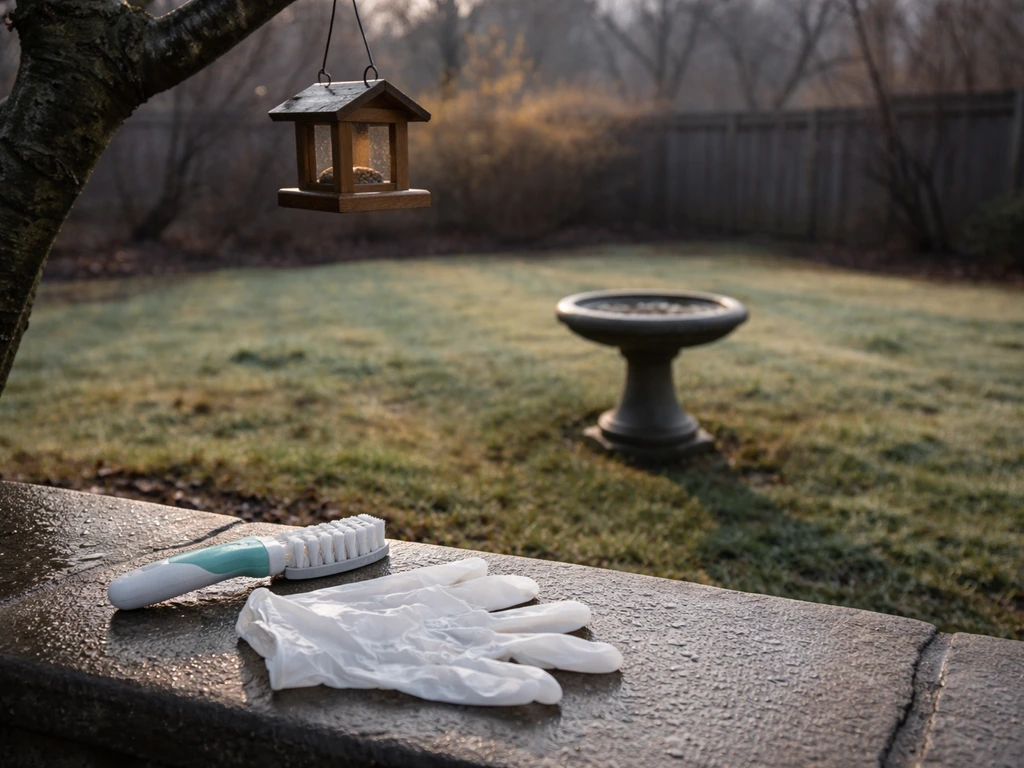
- Wear disposable gloves during the process. Wash your hands with soap and water for at least 20 seconds after.
Do not clean feeders indoors or near kitchen surfaces. Do the work outside, and do not dump contaminated rinse water near areas where pets or children play.
Protecting yourself, your household, and your pets
Your personal risk at the feeder
The CDC is consistent on this point: human infections are linked to close, prolonged, unprotected contact with infected birds or heavily contaminated environments, not to casual proximity. Refilling a bird feeder without touching birds, dead animals, or obviously contaminated material, followed by thorough handwashing, carries minimal personal risk for most people. The risk goes up when you are handling sick or dead birds with bare hands, cleaning up heavy droppings without gloves, or letting contaminated material contact your eyes, nose, or mouth.
Pets are a real consideration
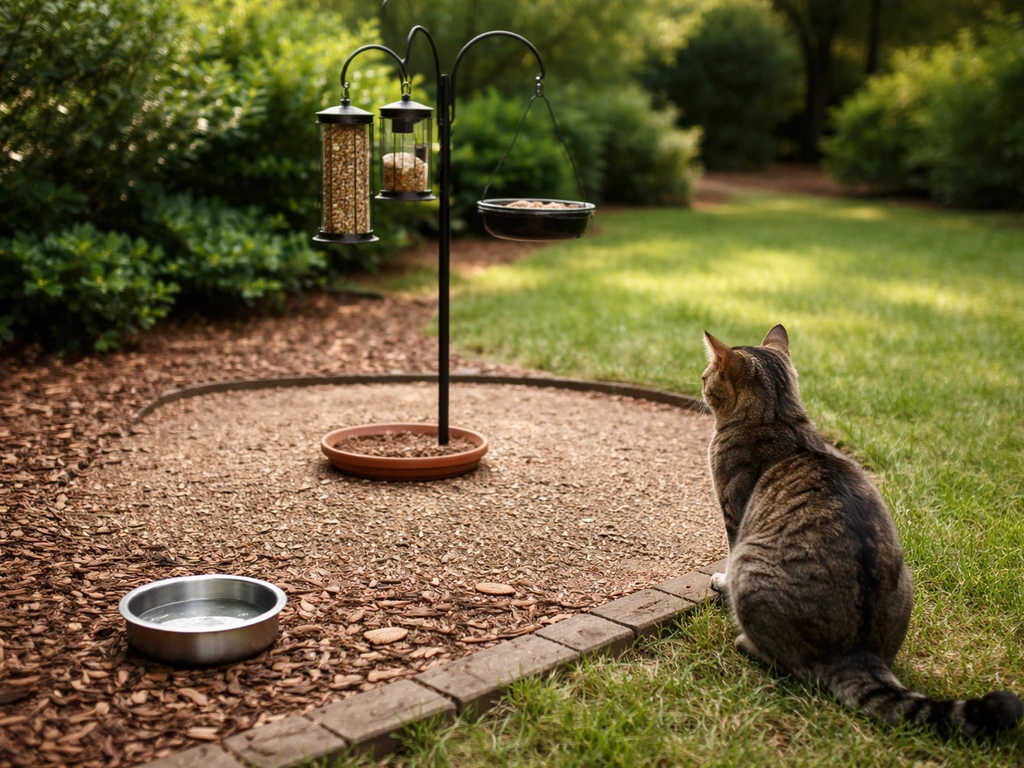
Cats and dogs that roam outdoors can pick up contaminated material from bird droppings, dead birds, or contaminated water. Cats in particular have shown susceptibility to H5N1 infection. If your cat goes outside unsupervised or your dog regularly investigates bird feeding areas and standing water, that is a meaningful secondary exposure pathway. During active outbreak periods, consider keeping cats indoors and supervising dogs in areas with active bird activity.
Food safety: this is a separate question
Feeding wild birds has nothing to do with the safety of chicken or eggs you buy at the store. In food industries, bird flu outbreaks are driven by how the virus enters processing spaces and how quickly contaminated materials are contained what causes bird flu outbreaks in food industries.
Separately, the question of whether is chicken meat affected by bird flu depends on how meat is handled and cooked, not on backyard feeder exposure chicken meat and bird flu. Those are entirely separate questions. The CDC and WHO both emphasize that properly cooked poultry and eggs are safe to eat. Human infection risk from poultry products comes from handling raw, contaminated meat without hygiene precautions, not from eating properly cooked food.
If you have concerns about food safety and bird flu specifically, that is a distinct topic worth reading separately. If you are asking, “is it safe to feed birds because of bird flu,” this guide’s feeding-focused risk and hygiene steps are the practical starting point bird flu specifically.
When to contact public health or wildlife authorities
- You find multiple dead wild birds in or near your yard: report to your state wildlife agency, not to the CDC. They track this and can test birds.
- You or someone in your household develops fever, respiratory symptoms, or eye irritation after direct contact with a sick or dead bird: contact your doctor and mention the bird exposure specifically.
- You keep backyard poultry and notice sudden illness or death in your flock: contact your state veterinarian or USDA APHIS immediately. This is treated as a reportable disease event.
- Your local health department issues a specific advisory for your area: follow it, even if it conflicts with federal general guidance, because local outbreak context matters.
The bottom line for today
If you are a typical backyard birder with a feeder attracting songbirds, no local HPAI advisory, and no backyard poultry, you can keep feeding with good hygiene habits and a sensible awareness of what's happening in your region. If you have a backyard flock, live near waterfowl habitat, have vulnerable people or free-roaming pets in your household, or your state wildlife agency is flagging active detections nearby, a temporary feeder break combined with habitat-based alternatives is the more cautious and defensible choice. Either way, the single most useful thing you can do today is check your state wildlife agency's current HPAI status page, then clean your feeder with a bleach solution whether or not you decide to keep it running.
FAQ
If I see mostly songbirds at my feeder, should I still stop feeding because of bird flu?
Not usually. If your feeder visitors look healthy and you do not have dead birds or a state advisory nearby, the article’s low risk framing applies. The key exception is if you are seeing congregation around one water source (a puddled birdbath, uncovered tray, or narrow feeder area), because crowding increases direct bird-to-bird contact even when songbirds are involved.
Is it safer to stop the birdbath but keep the feeder running during H5N1 concerns?
If you decide to reduce risk, switch one variable at a time. For example, pause only the water component (birdbath and feeder tray) first, since standing water can act as a persistence environment. Then keep feeding dry seed with strict cleaning and handwashing, if your local detections and season still look low risk.
Can I just add fresh water or seed instead of emptying and cleaning?
Yes, because contamination can be spread by handling. Wear disposable gloves when cleaning and avoid rinsing residues into lawn areas where kids or pets play. Also, don’t “top off” an old birdbath or tray without changing the water, emptying it, and scrubbing the surface.
How do I adjust my cleaning routine if there is an active local HPAI advisory but no sick birds at my house?
Use the cleaning schedule as a risk-management lever, not a guess. If you have any active local advisory, increase frequency to weekly feeder cleaning and at least daily birdbath water changes, and do not delay when weather is cool because persistence in the environment can be longer.
After using a bleach solution, should I let the feeder dry before refilling?
After you clean, let surfaces fully air dry before refilling, because damp wet residue can recontaminate quickly. If you use bleach, mix fresh solution for each session and ensure the area is well ventilated if you are preparing it outdoors.
What if larger birds like ducks or geese keep showing up at my yard feeders or water?
If a feeder is attracting waterfowl or shorebirds (ducks, geese, gulls, wading birds), the baseline risk shifts and you should pause or switch quickly. Even a single recurring visit by larger birds can mean the environmental contamination route is more plausible than with small perching birds only.
What should I do if I find dead or sick birds around my feeders?
If you discover dead birds near the feeder, do not handle them with bare hands. Report them to your local wildlife authority, keep people and pets away from the area, and pause feeding until you get instructions. Also, avoid sweeping or spraying indoors, because stirring dust can spread residues.
How exactly can I reduce bird congregation without completely stopping feeding?
Yes, but do it strategically. If you cannot pause entirely, reduce congregation by using fewer feeders, spacing them out, and choosing designs that discourage heavy crowding at one point. The goal is to lower how many birds share the same surface and how long contaminated material remains on it.
If I stop feeding, how long should the break last in a practical, backyard-friendly way?
It depends on what you mean by “stop.” If your goal is to lower H5N1 exposure risk, your practical options are pausing feeders, pausing waterers, or switching to habitat-based approaches, especially during migration windows or any active advisory. A short pause (as described in the article’s decision logic) is often enough when local alerts are time-limited.
How concerned should I be about cats and dogs if I keep feeding wild birds?
Yes, pets are a real secondary pathway. Keep cats indoors during active outbreak periods, and supervise dogs so they do not investigate droppings, dead birds, or standing water near your feeding area. Also, wash your hands after handling pets that roam near the feeders.
Does the advice about safe chicken and eggs apply to backyard feeder risk?
Do not rely on cooking or food safety measures to solve the backyard-bird question, they are different pathways. Properly cooked poultry and eggs are safe for human consumption, but your decision about feeders is about preventing exposure during handling, cleaning, and contact with contaminated environments.
What changes if I have backyard chickens or other domestic birds?
If you have backyard poultry, free-ranging birds add complexity because you can increase the chance of contact between your flock and wild infected birds. In that case, the more cautious approach is a temporary feeder break plus habitat alternatives, and you should also follow your state guidance for protecting domestic flocks during HPAI detections.
Next Article
Is It Safe to Eat Chicken With Bird Flu?
Bird flu usually isn’t a risk from properly cooked chicken; learn safe handling, thawing, cooking temps, and when to ask