
The U.S. does not routinely vaccinate commercial chickens against bird flu primarily because of a combination of trade economics, scientific limitations, and regulatory policy. Under international rules, countries that vaccinate their poultry risk losing their disease-free status with major trading partners, which can shut down billions of dollars in poultry exports almost overnight. On top of that, available vaccines don't offer perfect protection, can mask infections in ways that make surveillance harder, and face enormous logistical hurdles across an industry that raises roughly 9 billion meat chickens a year. Instead, USDA policy centers on rapid detection, culling infected flocks, movement controls, and biosecurity, with emergency vaccination kept as a contingency tool for situations where stamping out alone can't keep pace with an outbreak.
Why the US Doesn’t Vaccinate Chickens Against Bird Flu

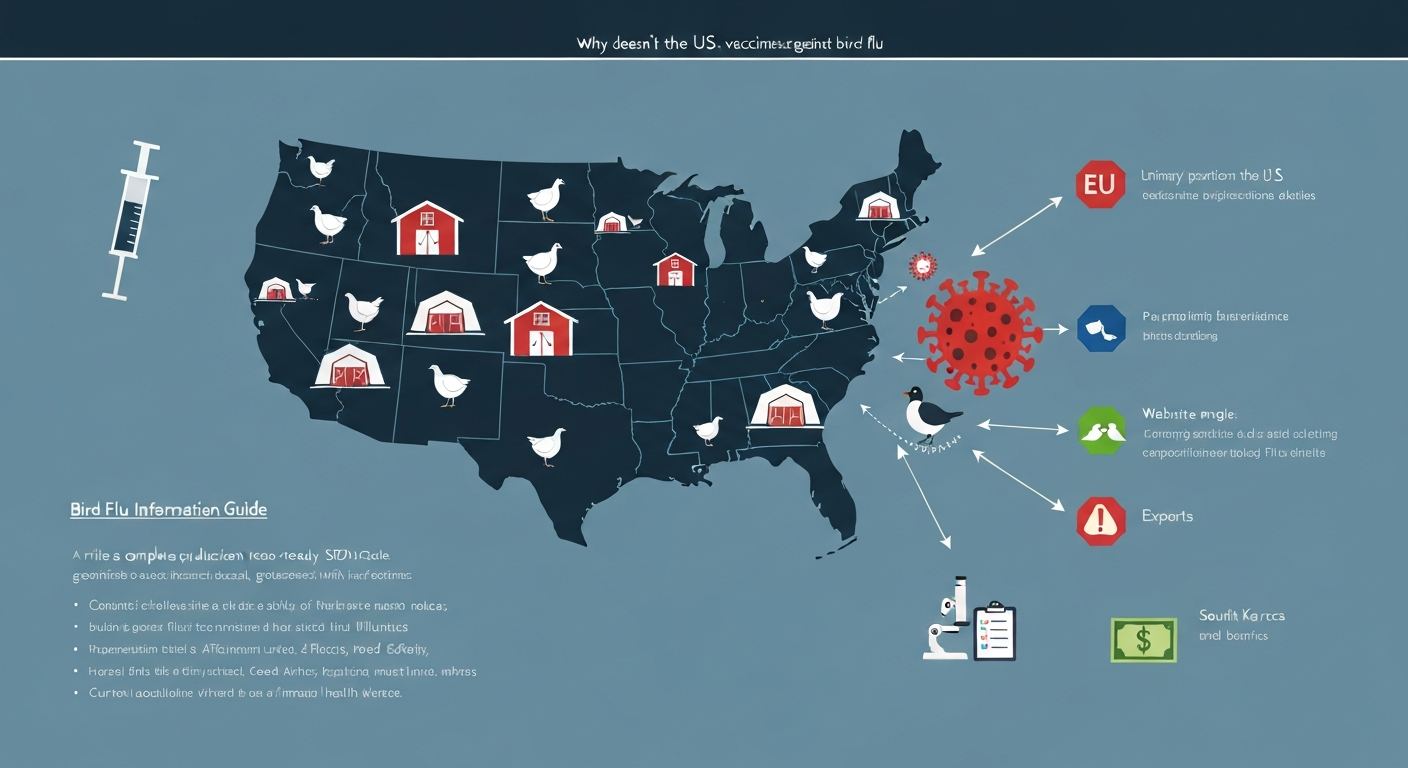
The quick take: three reasons in plain language
If you only have a minute, here's the core of it. First, vaccinating poultry can trigger import bans from countries like Japan, South Korea, the EU, and others that treat vaccination zones differently from disease-free zones, and the U.S. exports roughly $5 billion in poultry products annually. Second, the science is genuinely complicated: the H5N1 and related H5Nx viruses that cause highly pathogenic avian influenza (HPAI) drift antigenically over time, meaning vaccines matched to last year's strain can underperform against this year's circulating virus. Third, getting a vaccine into hundreds of millions of birds, keeping it cold, verifying coverage, and maintaining the surveillance needed to reassure trading partners is operationally enormous. None of these barriers are insurmountable, and the calculus is actively being reconsidered as outbreaks grow larger and more costly, but they are all real.
Why vaccines don't just solve the problem
Antigenic change and vaccine match
Modern H5 vaccines, including inactivated whole-virus formulations and vectored vaccines (HVT-vectored, fowlpox-vectored, and virus-like particle platforms), can dramatically cut mortality and reduce viral shedding when they are well matched to the circulating strain. That last part matters enormously. HPAI H5N1 and its closely related H5Nx descendants, particularly the clade 2.3.4.4b lineage now circulating globally, accumulate mutations in the hemagglutinin protein over time. Those mutations change the antigenic profile of the virus, so a vaccine developed against a strain from two or three years ago can offer significantly weaker protection against the current variant. Documented examples from Egypt, China, Mexico, and Indonesia all show that widespread vaccination with a mismatched vaccine has not only failed to control outbreaks but in some cases appears to have created selection pressure that accelerated antigenic drift, producing escape variants that were even harder to control. That is a serious risk the U.S. would need to actively manage.
Sterilizing immunity and silent infections
Even a well-matched vaccine rarely provides what immunologists call sterilizing immunity, meaning it prevents infection entirely. Vaccinated birds can still become infected and shed virus, just at lower levels and without the catastrophic mortality that makes HPAI so visible. That sounds like a good thing, and in animal welfare terms it is, but it creates a surveillance nightmare. A flock with subclinical vaccinated birds can harbor and spread infection without the obvious die-off that normally triggers an investigation. EFSA's 2023 and 2024 scientific opinions on poultry vaccination describe this clearly: without intensified PCR testing and validated DIVA serology, you can lose your ability to detect low-prevalence infection in vaccinated flocks. You end up trading visible outbreaks for invisible ones, which is a genuinely difficult tradeoff.
Coverage requirements
Population-level control through vaccination typically requires sustained coverage of roughly 70 to 90 percent of birds, depending on species, production type, and vaccine effectiveness. Epidemiological reviews and EFSA assessments indicate that population-level control of HPAI typically requires sustained vaccination coverage of roughly 70–90% of birds to substantially reduce transmission and avoid prolonged circulation and increased risk of antigenic selection (Avian Influenza Clade 2.3.4.4b: Global Impact and Summary Analysis of Vaccine Trials (review, 2025)). Falling below that threshold doesn't just reduce protection proportionally; it can actually prolong virus circulation by keeping enough susceptible birds in the population to sustain transmission while reducing the clinical signal that would normally prompt a response. Getting to and sustaining 70 to 90 percent coverage across the entire U.S. commercial poultry sector is not a simple ask.
DIVA testing: the surveillance problem no one talks about enough
DIVA stands for Differentiating Infected from Vaccinated Animals. It refers to strategies, usually specific serological tests or companion diagnostic assays, that let you tell apart birds that have responded to a vaccine from birds that have been naturally infected. This matters because regulators and trading partners need to know whether a vaccinated flock is truly free of circulating virus or is simply masking an ongoing infection. DIVA-compatible approaches include using vaccines based on the hemagglutinin antigen while testing for antibodies to the nucleoprotein (NP), since NP antibodies are typically produced during natural infection but not by some vaccine platforms. Heterologous neuraminidase approaches and dedicated marker vaccines with companion tests also exist.
The problem is that DIVA tests, while promising in laboratory conditions, face real performance limitations in the field. Their sensitivity and specificity depend heavily on the vaccine type, how well it matches the circulating strain, the sampling intensity applied, and the diagnostic capacity of the labs processing the samples. EFSA's Part 2 opinion emphasizes that effective DIVA surveillance requires establishment-level sampling schemes with clearly defined performance targets, and that detecting low-prevalence infection in a vaccinated population demands substantially more samples than conventional passive surveillance. That means more cost, more infrastructure, and more trained personnel, and it must be maintained consistently over time to satisfy WOAH and bilateral trading partner requirements. The U.S. surveillance system would need significant expansion to credibly support a national vaccination program.
The logistics are genuinely staggering
It helps to sit with the scale for a moment. The United States raises approximately 9 billion broiler chickens per year, plus hundreds of millions of laying hens and turkeys. Different production systems, from large integrated broiler companies with millions of birds in controlled houses to small backyard flocks, require entirely different vaccine delivery methods. Inactivated vaccines require individual intramuscular or subcutaneous injection, meaning trained personnel must physically handle each bird. Some vectored vaccines can be delivered in ovo at the hatchery or via spray at one day of age, which is more scalable, but each platform has specific cold chain requirements, handling protocols, and timing constraints. Multiple-dose schedules for some platforms add another layer of complexity.
Beyond the farms themselves, wild birds are a permanent and uncontrollable reservoir for HPAI. Even a perfectly executed vaccination program in commercial poultry doesn't eliminate reintroduction risk from migratory waterfowl, which are the primary source of repeated incursions into U.S. flocks. That means vaccination would need to be a sustained, continuously updated program, not a one-time intervention, and the logistical burden would never fully go away. USDA's NAHEMS Appendix C on vaccination explicitly lists cold chain management, trained vaccinators, biosecure delivery, identification and recordkeeping, and traceability as operational requirements that must all be met before emergency vaccination can function effectively.
What U.S. policy actually says
USDA's Animal and Plant Health Inspection Service (APHIS) has been clear and consistent: routine vaccination of commercial poultry for HPAI is not current policy. The primary control strategy is stamping out (rapid depopulation of infected and exposed flocks), movement controls to prevent spread, and mandatory biosecurity measures backed by federal indemnity for producers who lose birds to culling. Indemnity regulations have been updated several times, most recently in a December 2024 final rule, and payment is conditioned on producers meeting biosecurity plan and premises inspection requirements.
That said, APHIS has explicitly preserved emergency vaccination as a contingency. The HPAI Response Plan and NAHEMS Appendix C lay out two main strategies: suppressive vaccination (targeting birds at immediate risk around infected premises to reduce spread) and protective vaccination (broader pre-emptive vaccination of at-risk populations). Decision factors for activating emergency vaccination include available vaccine supply and antigenic match to the circulating strain, epidemiological trajectory of the outbreak, whether surveillance capacity can support DIVA monitoring, logistical feasibility, indemnity and compensation implications, and, critically, economic and trade considerations. The trade considerations are not secondary; they are listed as a core decision factor alongside the science.
Trade and export: why this is the biggest practical barrier
The World Organisation for Animal Health (WOAH, formerly OIE) sets the international standards for poultry disease status and trade. Under WOAH rules, countries can vaccinate and still be recognized as trading safely, but only if they implement rigorous surveillance demonstrating absence of active infection, use appropriate zoning or compartmentalization, and report vaccination use and results transparently. In theory, vaccination should not automatically be a trade barrier under WOAH standards or the WTO's SPS Agreement, which requires that trade restrictions be science-based and proportionate.
In practice, major import markets frequently act more conservatively. EU regulations have historically required exporting countries or zones to be HPAI-free for at least 12 months before certain poultry commodity trade can resume, with specific surveillance and zone-size requirements. Asian markets including Japan and South Korea have been quick to impose import bans on a regional or national basis when HPAI is detected, and the presence of vaccination programs in the exporting country tends to extend, not shorten, the recovery period for market access. The U.S. learned this directly during the 2014 to 2016 outbreak, when dozens of trading partners imposed restrictions and market recovery took years. Introducing routine vaccination without the full WOAH and bilateral trade architecture in place could, in the short term, cost more in lost export revenue than the culling losses it prevents.
What other countries are doing, and what that tells us
Several countries do vaccinate commercial poultry against HPAI, and their experiences are instructive. France and the Netherlands launched emergency vaccination programs in 2022 to 2023 using DIVA-compatible vectored vaccines, primarily in ducks and some turkey flocks, targeting the then-dominant clade 2.3.4.4b H5N1 strain. Early results showed meaningful reductions in flock mortality and outbreak frequency, though sustained surveillance to satisfy WOAH and EU exit criteria remains a work in progress. China has maintained large-scale H5 vaccination programs for many years, but this has coincided with continued endemic circulation, significant antigenic drift, and repeated spillover events, illustrating the risks of high-volume but imperfectly matched vaccination. Egypt's long-running H5N1 vaccination program has faced similar challenges with drift variants emerging under vaccination pressure.
Canada and Mexico, the U.S.'s closest neighbors and NAFTA/USMCA partners, take approaches worth comparing. Canada has faced significant HPAI outbreaks and has primarily relied on the same stamping-out and biosecurity framework as the U.S., reflecting similar trade exposure concerns. Mexico has historically had a different HPAI situation, with H7N3 low-pathogenicity strains more prevalent and a different regulatory context. For more detail on Mexico's situation and why it has largely avoided widespread H5N1 outbreaks, see why doesn't mexico have bird flu. For specific examples of Mexico's response, see has Mexico killed chickens for bird flu, which documents past culling actions and regulatory responses. The topic of what countries vaccinate their chickens against bird flu and the specific situations in Canada and Mexico are worth exploring in depth if you want to understand how North American approaches compare to those in Europe and Asia. If you want specifics on Canadian actions during outbreaks, see the related explainer on whether Canada has killed chickens with bird flu for details and timelines has Canada killed chickens with bird flu.
Pros and cons at a glance
| Factor | Case for vaccinating | Case against vaccinating (current U.S. context) |
|---|---|---|
| Animal welfare | Dramatically reduces mortality and suffering in infected flocks | Subclinical infections in vaccinated flocks may delay detection and prolong suffering at population level |
| Flock losses | Could reduce the scale of depopulations (170+ million birds lost in recent U.S. outbreaks) | Requires sustained, high-coverage program; partial coverage may not prevent losses |
| Surveillance | Reduces clinical signal, potentially easier to manage visually | Masks infection, requires expensive DIVA testing to maintain outbreak detection capability |
| Viral evolution | Reduces total viral replication and shedding per flock | Risk of vaccine-driven antigenic drift if coverage is low or match is poor (documented in Egypt, China) |
| Trade and exports | Long-term could normalize if WOAH exit criteria are met | Near-term risk of market access loss; major buyers impose restrictions on vaccinating countries |
| Logistics | Hatchery-delivered vectored vaccines reduce on-farm labor | Cold chain, training, recordkeeping, and DIVA surveillance at scale are operationally demanding |
| Public health | Fewer infected flocks may reduce human exposure risk | Subclinical infections in vaccinated birds could increase undetected zoonotic exposure opportunities |
| Cost | Could reduce indemnity and depopulation costs in severe outbreaks | Vaccine procurement, delivery, DIVA surveillance infrastructure represents large upfront and ongoing investment |
Research and future options changing this picture
The situation is not static. Several developments are shifting the cost-benefit calculation. Improved mRNA-based and broadly cross-reactive vaccine platforms are in development and may offer better antigenic breadth against drifted strains, reducing the mismatch problem. More sensitive and field-practical DIVA assays are being refined, which could eventually make DIVA-compatible surveillance programs tractable at the scale the U.S. would need. There is also active work on gene-editing approaches that would make chickens inherently resistant to HPAI infection by modifying the ANP32A gene, removing the need for vaccination entirely, though regulatory and commercial pathways for gene-edited poultry in the U.S. food supply remain complex. Each of these research directions could meaningfully alter the practical or political feasibility of routine vaccination in the coming years.
As outbreaks become more frequent, longer-lasting, and economically devastating, the pressure to reconsider the vaccination calculus is real. USDA and industry groups are actively reviewing the emergency vaccination frameworks and the conditions under which a shift in policy might be warranted. The threshold question isn't whether vaccination can work scientifically; it's whether the combination of trade protections, surveillance infrastructure, vaccine supply, and logistical capacity can be assembled fast enough and reliably enough to justify the risk of losing market access during the transition.
What this means if you raise chickens or buy poultry
For backyard and small-scale flock owners
There is currently no licensed, commercially available HPAI vaccine for backyard poultry in the U.S., and USDA does not recommend it outside of officially sanctioned programs. The most effective thing you can do is apply strict biosecurity: keep your flock away from wild birds and their droppings, limit visitor access to your birds, change clothing and footwear before and after contact with your flock, and report any sudden unexplained deaths or illness to your state veterinarian immediately. Early reporting is the backbone of the stamping-out system, and it protects neighboring flocks.
For consumers concerned about food safety
Properly cooked poultry and eggs are safe to eat regardless of HPAI outbreak status. HPAI virus is inactivated at standard cooking temperatures (165°F or 74°C for poultry). Infected birds are removed from the food supply through USDA inspection and the depopulation process before they reach the market. The absence of routine vaccination does not change food safety outcomes for consumers.
Decision triggers: when would the U.S. actually vaccinate?
- Stamping out is outpaced by outbreak spread and depopulation resources are overwhelmed
- A well-matched, DIVA-compatible vaccine is available in sufficient supply to deploy rapidly
- Surveillance infrastructure can support the intensified DIVA testing required by WOAH and trading partners
- Key trading partners have been engaged and trade protection measures are in place or negotiated
- Epidemiological modeling shows vaccination will reduce total transmission more than continued culling alone
None of those conditions are permanently out of reach, and APHIS maintains the legal and operational authority to deploy emergency vaccination when they are met. The current policy isn't a philosophical rejection of vaccines; it's a judgment that the full package of conditions required to make vaccination work well, and safely from a trade perspective, hasn't been assembled yet at the scale the U.S. industry demands. For another relevant comparison, see what countries vaccinate chickens against bird flu.
FAQ
Short answer: Why doesn't the United States routinely vaccinate chickens against bird flu (HPAI)?
The U.S. does not use routine vaccination because current policy favors stamping‑out (depopulation), biosecurity and movement controls as the primary way to stop outbreaks. Scientific and operational limits—uncertain vaccine match/effectiveness against rapidly changing H5 variants, the risk of masked (subclinical) infections, imperfect DIVA testing, logistical challenges vaccinating millions of birds, and trade/export consequences—mean routine vaccination would complicate surveillance and market access. Emergency (targeted) vaccination is a contingency tool and can be deployed under incident‑specific plans when stamping‑out and other measures are insufficient.
Scientifically, when does vaccination help and when does it fail?
Well‑matched vaccines can strongly reduce mortality and lower viral shedding, protecting individual birds and reducing transmission if coverage is high. But vaccines are less effective or can fail when the circulating virus is antigenically different from the vaccine strain. Partial or patchy coverage and antigenic mismatch increase the risk of silent/subclinical infection and can select for antigenic‑escape variants. In short: vaccine effectiveness depends on antigenic match, high population coverage, and robust surveillance to detect remaining infection.
What is DIVA and why is it important for vaccination programs?
DIVA = Differentiating Infected from Vaccinated Animals. DIVA-compatible strategies pair marker vaccines or distinct antigens with companion tests (e.g., NP‑ELISA, heterologous NA assays) so authorities can tell whether antibodies are from vaccination or infection. DIVA is essential to maintain surveillance sensitivity in vaccinated populations; without reliable DIVA testing, low‑level circulation can go unnoticed and block regaining disease‑free status for trade.
What practical and logistical barriers prevent routine vaccination in the U.S.?
Key barriers: procuring vaccines that match circulating strains quickly; maintaining cold chains and distribution for millions of birds; training and deploying biosecure vaccinators; delivering appropriate vaccine types (inactivated IM vs vectored/hatchery vaccines) for different systems; recordkeeping/ID and traceability across complex supply chains; and scaling surveillance and laboratory capacity needed after vaccination.
How do trade and export rules influence the vaccination decision?
International standards (WOAH) allow vaccination but require documented surveillance and exit strategies to restore or retain HPAI‑free status for trade. Many importing markets (and EU rules historically) expect long disease‑free periods or strict surveillance before accepting exports. If a country vaccinates without meeting WOAH/market criteria, trading partners may restrict imports, causing economic losses—an important consideration for large U.S. poultry exporters.
What is current U.S. policy on using vaccination in an outbreak?
USDA APHIS does not authorize routine prophylactic vaccination but includes emergency vaccination as a contingency in HPAI response plans (NAHEMS Appendix C and the HPAI Response Plan). Emergency vaccination (protective or suppressive) may be used when stamping‑out and biosecurity cannot control spread or when resources are overwhelmed. Deployment decisions consider vaccine match/availability, epidemiology, surveillance capacity, logistics, indemnity/compensation, and trade implications.

See whether Canada has bird flu now, plus current human cases and bird detections, and how to check updates safely.
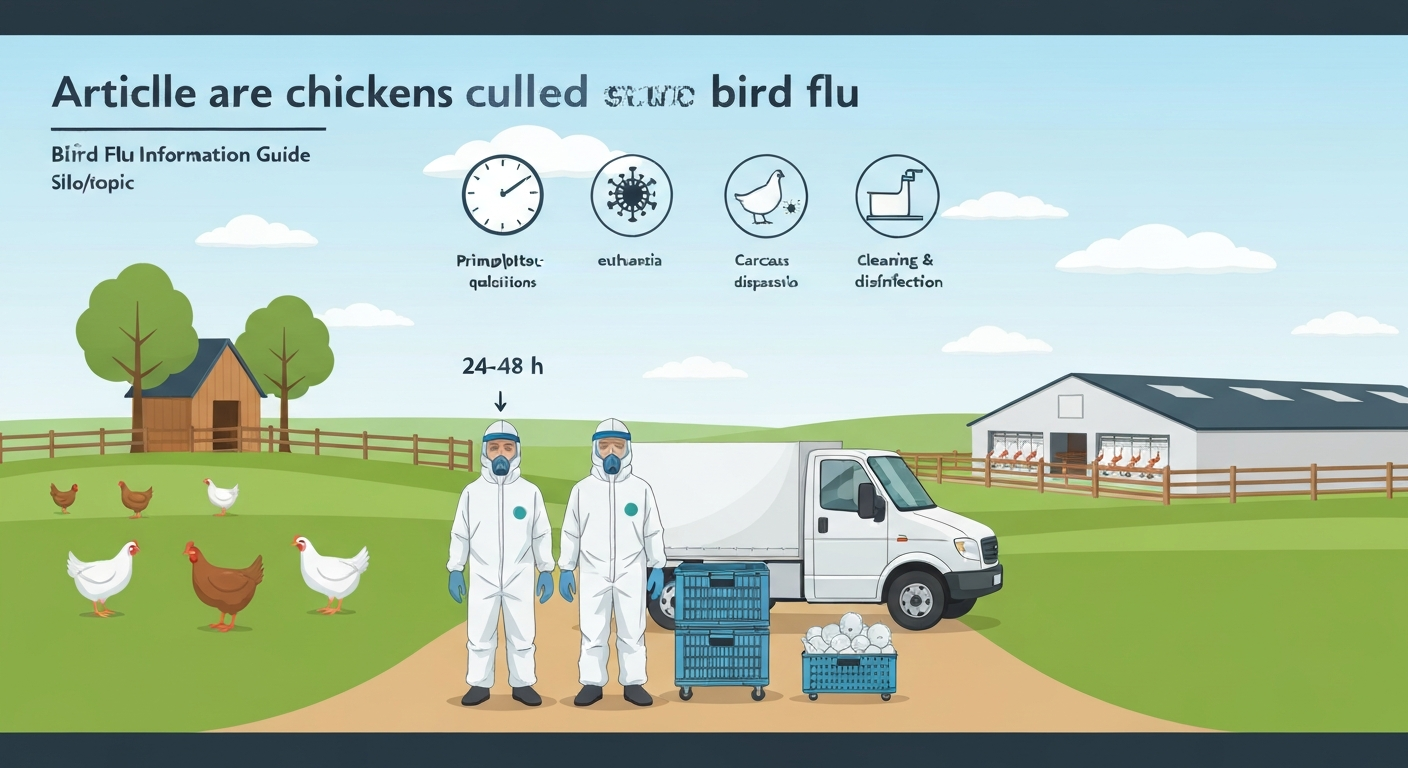
How are chickens culled during bird flu: why it’s done, humane methods, disposal, biosecurity, and next steps
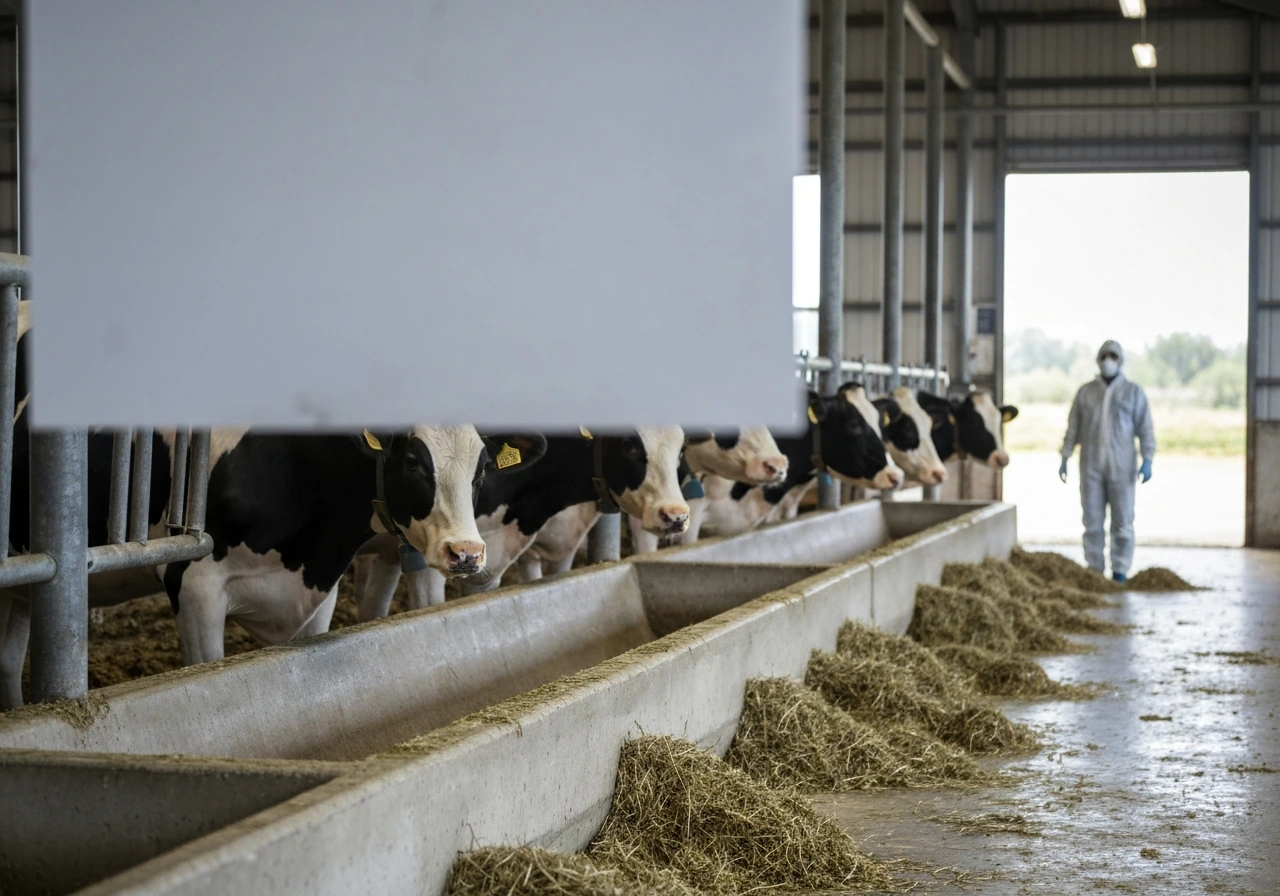
Explains whether cows with bird flu must be killed, and what happens for confirmed vs suspected cases, isolation and nex