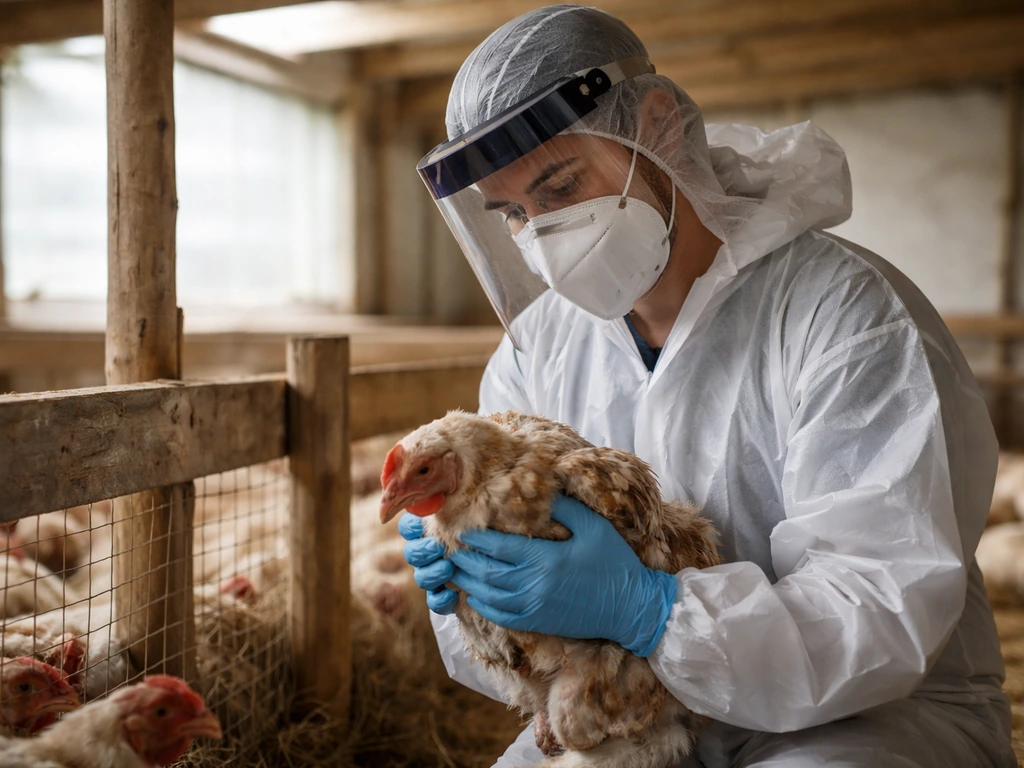
If you've had direct contact with sick or dead birds, been on an infected farm, or handled poultry in the last 10 days and you're now developing symptoms, call your state or local health department first, not your regular doctor's office. They're the ones who authorize bird flu (influenza A H5) testing, coordinate with public health labs, and can get you evaluated the same day. Your healthcare provider is the second call, but the health department is the faster, more direct route to getting an actual H5 test rather than a standard flu swab.
Where to Get Tested for Bird Flu: Human and Animal Options

Maya Chen
28 Jun 2026
When bird flu testing is actually available (and who qualifies)
Bird flu testing for humans is not available on demand the way a COVID test or standard flu test is. It's targeted, meaning it's offered based on specific exposure criteria and clinical symptoms. The CDC's current framework says testing is indicated when someone develops signs of acute respiratory illness or conjunctivitis (red, irritated eyes with discharge) within 10 days of a high-risk exposure. That 10-day window is the key number to keep in mind.
High-risk exposure means close, direct contact with infected or potentially infected animals. That includes: handling sick or dead poultry or wild birds, working on or visiting a farm with a confirmed HPAI outbreak, direct contact with infected dairy cattle, or being in an environment contaminated with infected animal material (droppings, secretions, surfaces). Simply eating properly cooked poultry or eggs doesn't qualify, and neither does casual outdoor exposure with no direct animal contact.
There's one important nuance: you don't have to be symptomatic to be considered for testing. If your exposure risk is high enough, state or local health departments can offer testing as part of an active public health investigation even if you feel fine. But that's typically their call to make, not something you request at a clinic walk-in.
Human testing pathways: who to contact first and how to request it
The clearest path to an H5 test follows this order: health department first, then your healthcare provider, then emergency services if symptoms are severe. Here's what each step looks like in practice.
Step 1: Call your state or local health department
This is the most important call you can make. State and local health departments are responsible for investigating potential human H5N1 cases, and CDC guidance requires them to notify the CDC within 24 hours of identifying a case under investigation. They have the protocols, the authority to arrange public health lab testing, and often the fastest turnaround. When you call, tell them: the date of your last exposure, what the exposure was (dead bird, farm visit, poultry handling, etc.), and what symptoms you have right now. They'll tell you whether you meet criteria for evaluation and testing, and they may send someone to you or direct you to a specific clinic.
Step 2: Contact your primary care provider or urgent care
Call ahead before showing up anywhere in person. If you have respiratory symptoms or conjunctivitis, let the clinic know before you walk in so they can prepare isolation precautions. Your provider can collect specimens and order an influenza A test, but here's something important to understand: most standard rapid flu tests used in clinics can't distinguish H5 avian influenza from regular seasonal influenza A. A positive influenza A result from a clinic test will then trigger public health subtyping at a state lab. So the clinical test is a gateway, not the final word. Your clinician should also be contacting the state health department directly if they suspect a novel influenza A virus.
Step 3: Emergency care (for severe symptoms)
If you develop severe shortness of breath, difficulty breathing, or rapidly worsening illness, go to the emergency department or call emergency services. Mention your exposure history immediately so the clinical team can apply the right precautions from the moment you arrive. Suspected H5N1 cases with severe disease are placed in airborne infection isolation rooms (AIIRs) with airborne and contact precautions plus eye protection, so giving that exposure history upfront matters.
What to say when you call
Whether you're calling a health department or a clinic, lead with the exposure, not the symptoms. Say something like: 'I had direct contact with (sick/dead birds / a poultry farm with a reported outbreak / infected cattle) on (date), and I've been developing (symptoms) since (date). I'm calling to find out if I should be evaluated and tested for avian influenza. If you are wondering specifically how to test for bird flu in dogs after a high-risk exposure, the same public health reporting and specimen-collection pathway applies for evaluating suspected cases testing for avian influenza. ' That framing puts the relevant clinical and epidemiological context front and center and avoids you being triaged as a standard flu case.
Exposure checklist: figure out your actual risk before you call
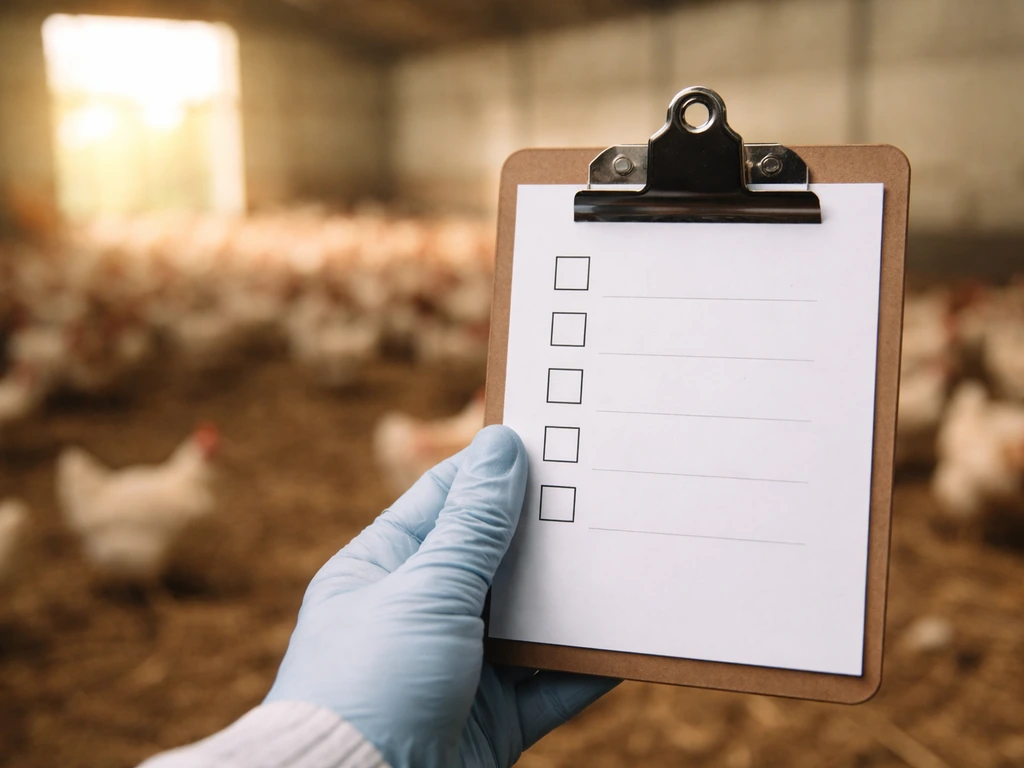
Not every bird encounter warrants testing. Running through this checklist first will help you give accurate information and avoid unnecessary alarm, which also helps the health system direct resources where they're needed most.
- Did you have direct physical contact with live or dead birds (wild or domestic) in the last 10 days?
- Were those birds sick, dead for unknown reasons, or part of a flock with a confirmed or suspected HPAI outbreak?
- Did you visit a farm, live bird market, or poultry processing facility with a known or possible H5N1 outbreak?
- Did you have unprotected contact (no gloves, no mask) with potentially infected animal droppings, secretions, or surfaces?
- Have you had close contact with dairy cattle, particularly in a herd with a confirmed or suspected H5N1 infection?
- Did you handle raw poultry or birds from an area with active outbreaks without standard hygiene precautions?
- Are you now experiencing any of these symptoms: cough, sore throat, fever (measured or felt), shortness of breath, difficulty breathing, or red/irritated/discharging eyes?
If you answered yes to one or more of the first six questions AND you have any of the symptoms in the last point, you should contact your health department today. A r/H5N1AvianFlu discussion summarizing Illinois guidance similarly advises that if you develop flu-like symptoms or eye redness after exposure to sick or dead birds, you should notify your local health department immediately contact your health department today. If you answered yes to the exposure questions but have no symptoms, contact the health department anyway so they can determine whether monitoring is appropriate. If your only concern is that you briefly saw a dead bird outdoors, ate poultry, or had no direct animal contact, testing is very unlikely to be recommended for you.
What testing actually involves
If you do meet the criteria, here's what the testing process looks like from the moment specimens are collected to when results come back.
Specimen collection
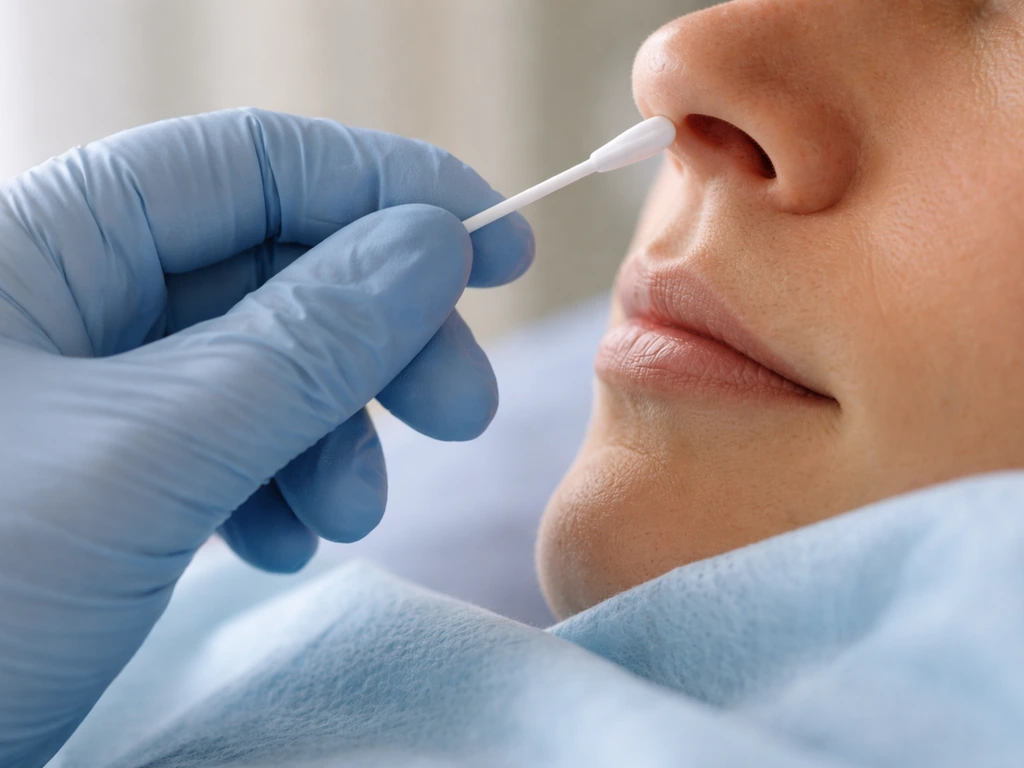
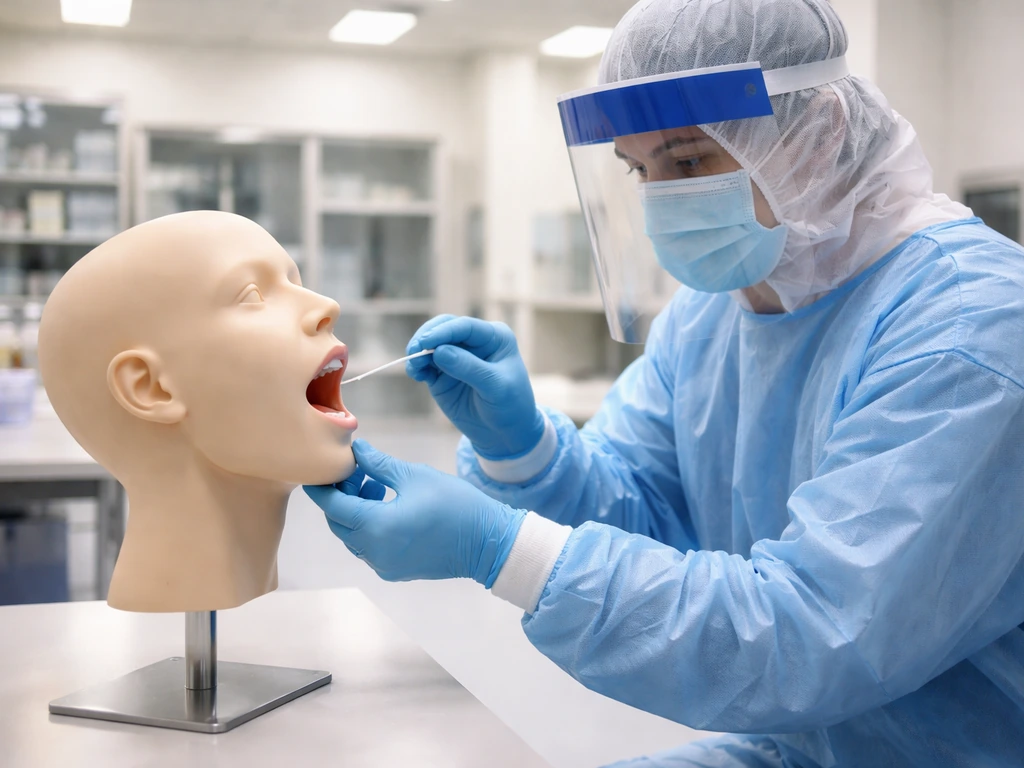
For most people with respiratory symptoms, the standard collection is a nasopharyngeal swab (a swab that goes into the nasal passage toward the back of the throat) placed in viral transport media. If you also have conjunctivitis symptoms (eye redness, discharge), current CDC guidance calls for three separate specimens: a conjunctival swab from the affected eye, a nasopharyngeal swab, and a combined nasal plus oropharyngeal (throat) swab, each in their own separate tube of viral transport media. The reason for separate tubes is to avoid cross-contamination and to maximize detection sensitivity. Collecting specimens as early as possible after symptom onset gives the best results.
The two-stage testing process
Bird flu testing happens in two stages. The first is initial influenza A testing at the clinical or state lab level, typically using RT-PCR (reverse transcription polymerase chain reaction), which is the molecular method used to detect influenza virus genetic material. If that test comes back positive or inconclusive for influenza A(H5), the specimens go to the CDC Influenza Division for confirmatory subtyping. This is standard protocol, and it's the reason a negative rapid flu swab from a clinic is not the same as a definitive H5-negative result. Confirmatory testing at CDC is the gold standard.
Turnaround times
Turnaround varies depending on where you are and which lab processes the specimen. State public health labs using CDC-protocol rRT-PCR typically report results within 48 business hours of receiving the specimen. That means from collection to initial result, you might be looking at two to four days depending on transport time. Confirmatory testing at CDC adds additional time. This is why the isolation guidance while you wait matters so much.
What to do while you wait for results
If testing is indicated and you're waiting for results, CDC guidance is clear: isolate away from other people as much as possible, including household members, until you test negative for influenza A(H5) or until you've recovered. This isn't just precautionary bureaucracy. H5N1 can cause severe disease, and reducing potential transmission during that window is how public health investigators protect close contacts.
Practically, this means sleeping in a separate room if possible, avoiding shared bathrooms when you can, wearing a mask if you must be around others, and not going to work, school, or public places. Your close contacts should also be monitoring themselves for symptoms for 10 days from their last exposure to you during your potentially infectious period.
When to escalate immediately
Seek emergency care right away if you develop any of these while waiting for results: severe or worsening shortness of breath, inability to catch your breath, high fever that isn't responding to treatment, confusion or altered mental state, or lips/fingertips turning bluish. Bird flu can progress to severe respiratory illness quickly in some cases, and this is not a situation to wait out at home.
Ask about antivirals
When you speak with your healthcare provider, ask about oseltamivir (Tamiflu). CDC guidance supports early antiviral treatment for suspected H5N1 cases, and treatment is most effective when started promptly. You don't have to wait for a confirmed result. Some people who've been identified as high-risk exposed contacts are even offered post-exposure prophylaxis while monitoring.
Sick or dead birds: where to report and how it connects to human risk
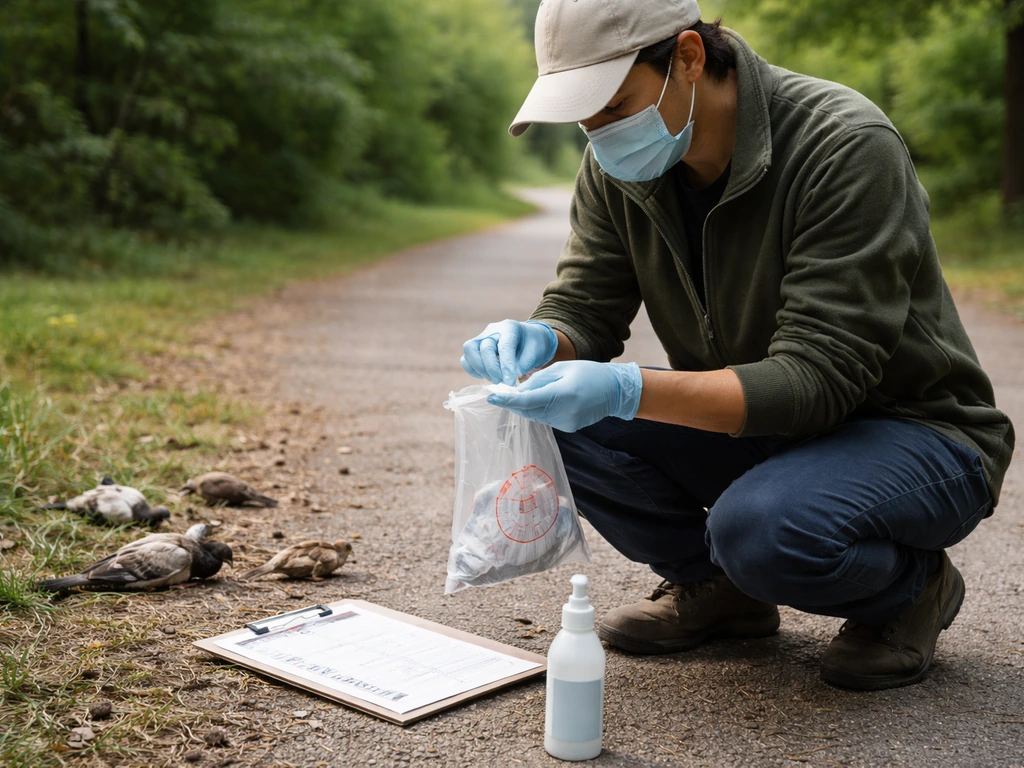
If your concern started with finding sick or dead birds rather than your own symptoms, the reporting chain is a bit different but equally important. Animal testing and human testing are separate systems that share information, and reporting a bird die-off is one of the ways public health officials identify exposure risks for humans in an area.
For wild birds: Report unusual mortality (multiple sick or dead birds, especially waterfowl like ducks, geese, or swans, or raptors) to your state wildlife management agency. The U.S. Fish and Wildlife Service directs people to state wildlife agencies for this, as state policies vary. Your state agency will collect and test birds as part of ongoing HPAI surveillance.
For domestic poultry or backyard flocks: Report sick or dying birds immediately by calling USDA Veterinary Services toll-free at 1-866-536-7593. This is the number NIOSH and CDC both recommend for poultry workers and flock owners. USDA APHIS handles diagnosed or suspected reportable animal diseases through Area Veterinarians in Charge and state animal health officials.
Once a bird or flock tests positive, public health officials use that confirmation to identify and contact people who may have been exposed. If you were in contact with a bird that has since been reported as positive, you should expect a call from your local health department. But if you haven't been contacted and you know you had exposure, don't wait. Call them.
As a practical note on personal safety: don't handle sick or dead birds with your bare hands. If you've already done so, wash your hands thoroughly with soap and water, avoid touching your face, and note the date and circumstances of the contact. That information will be important if symptoms develop. More detail on what to watch for in birds is covered separately in the signs a bird has avian flu topic.
Finding the right local resources (and what to do if you're overseas)
Knowing who to call is half the battle. Here's a practical step-by-step for finding the right contact today, whether you're in the U.S. or abroad.
In the United States
- Find your state health department: Search '[your state] department of health avian influenza' or go to cdc.gov and use their state health department directory. Most state health departments have a 24/7 emergency line separate from their main number.
- Find your local/county health department: If you can't reach the state level, your county or city health department often has its own epidemiology team. Search '[your county] health department' for the direct line.
- For poultry or livestock concerns: Call USDA APHIS at 1-866-536-7593.
- For wild bird reports: Contact your state fish and wildlife or natural resources agency.
- If you need a healthcare provider and don't have one: Urgent care clinics can collect specimens, but tell them upfront about your exposure and that you need avian influenza testing coordinated with the state lab. They will need to loop in the health department.
- For general CDC guidance: Visit cdc.gov/bird-flu or call the CDC public inquiry line at 1-800-CDC-INFO (1-800-232-4636).
If you're outside the United States
Contact the national or regional public health authority in the country where you are. Most countries with active bird flu surveillance have a reporting line specifically for zoonotic disease exposure. WHO regional offices (there are six globally, including the Western Pacific, Southeast Asia, and African regions) maintain updated country-level guidance. If you're a U.S. citizen traveling abroad, the U.S. Embassy or Consulate in that country can help you locate appropriate medical facilities. The WHO fact sheet on avian and other zoonotic influenza is a useful starting point for understanding what national systems should be doing.
A quick checklist to minimize delays when you call
- Date and location of your last exposure to sick/dead birds or potentially infected animals
- Type of animal involved (wild bird species if known, backyard poultry, commercial flock, dairy cattle, etc.)
- What you were doing (handling birds, cleaning a coop, visiting a farm, etc.) and whether you used PPE
- Date symptoms started and a description of all current symptoms
- Whether you've already had any flu testing done and what the result was
- Your vaccination status (seasonal flu vaccine doesn't protect against H5N1, but it's relevant background)
- Any medications you're currently taking, particularly antivirals
Having this ready before you call cuts the time spent on the phone and helps the health department categorize your case quickly. The faster they can confirm your risk level, the faster you get routed to the right testing pathway. If you're also trying to understand whether at-home testing is an option, the short answer for now is that no validated home test for H5 avian influenza exists for public use, though that's worth checking as guidance evolves.
FAQ
I went to urgent care and had a flu test that was negative. Should I still contact someone about where to get tested for bird flu?
If you already visited an urgent care or had a standard flu swab, call your state or local health department anyway if you had high-risk exposure in the prior 10 days and symptoms started within that window. A negative rapid flu test does not rule out H5, and the health department can coordinate the correct specimen type and confirmatory subtyping if influenza A(H5) is still a possibility.
Can I get bird flu testing even if I feel fine after a high-risk bird or animal exposure?
If you are asymptomatic but had a high-risk exposure, you can still contact the health department. They may decide on monitoring, document the exposure for surveillance, and in some situations arrange testing or offer prophylaxis based on how recent the exposure was and what type of animal contact occurred (for example, direct contact with infected dairy cattle vs brief contact with poultry).
If I’m sick and worried about bird flu right now, do I go to the ER or call the health department first?
Yes, but it depends on which part of the response is needed. If your goal is to be directed to the testing pathway, start with the health department. If your symptoms are severe or rapidly worsening, go to the emergency department immediately and tell triage about the exposure history so they can apply airborne and contact precautions where appropriate.
What details should I provide when I call or when I’m being evaluated for testing?
When specimens are collected, you should ask the clinician to document the exact exposure details (date, type of contact, and whether there was contact with animal secretions, droppings, or sick animals). Those specifics help public health teams determine whether the case meets criteria and whether additional specimen sites, like separate eye and throat samples, are needed.
How soon after symptoms begin do I need to be tested for bird flu?
Specimen collection timing matters. If possible, aim for testing as soon as you can after symptom onset, because earlier sampling generally improves detection. If you are too late for the initial window, still call the health department, since they can advise based on your current symptoms and exposure timeline.
What should my household or close contacts do while I wait for bird flu test results?
Household members and close contacts typically should monitor for 10 days from their last exposure to you during your potentially infectious period, but they may also get specific instructions from the health department. Ask who counts as a close contact in your situation, especially if you shared a room, used a bathroom together, or had prolonged contact without masking.
What if I live in crowded housing and cannot fully isolate while waiting for results?
If you cannot isolate at home, ask the health department what they recommend for your specific housing situation. They may provide guidance on mask use, limiting shared airspace, or arranging an alternative plan, because the goal is to reduce contact with others until test results come back.
What should I do if my bird flu test result is negative?
If your test comes back “negative for influenza A(H5)” or “negative influenza A,” you should still follow the advice given at the time of collection and confirm whether any follow-up is recommended. If symptoms worsen or new symptoms appear, contact the health department again, because clinical status and exposure details can change the risk assessment.
Who should I call if the situation started with sick or dead birds, and how does that affect human testing decisions?
For suspected animal exposures, reporting routes are separate but coordinated. If you found sick or dead wild birds, report to your state wildlife agency. If you have domestic poultry or a backyard flock, report to USDA Veterinary Services. Keep the case number or your notes, because public health teams may use the confirmed animal results to identify potential human exposure.
Is there an at-home test I can use to find out where to get tested for bird flu?
No, at-home testing is not considered a validated option for public use for H5 avian influenza. If you see marketed “bird flu home tests,” treat them as unreliable for clinical decision-making and instead go through the health department-directed pathway.
Next Article
How to Diagnose Bird Flu: Signs, Suspicion, and Testing
Learn how to diagnose bird flu by spotting suspicious bird signs, documenting cases, reducing risk, and getting lab-conf