
Yes, pasteurization kills bird flu virus in milk and egg products under standard commercial conditions. The heat treatments used in dairy and egg processing are effective at inactivating avian influenza A viruses, including H5N1. You do not need to avoid commercially pasteurized milk or pasteurized egg products out of bird flu concern. What you should avoid is raw milk and raw or undercooked eggs, because those carry a genuine, unmitigated risk.
Does Pasteurization Kill Bird Flu? Milk and Eggs Guide

Maya Chen
25 Apr 2026
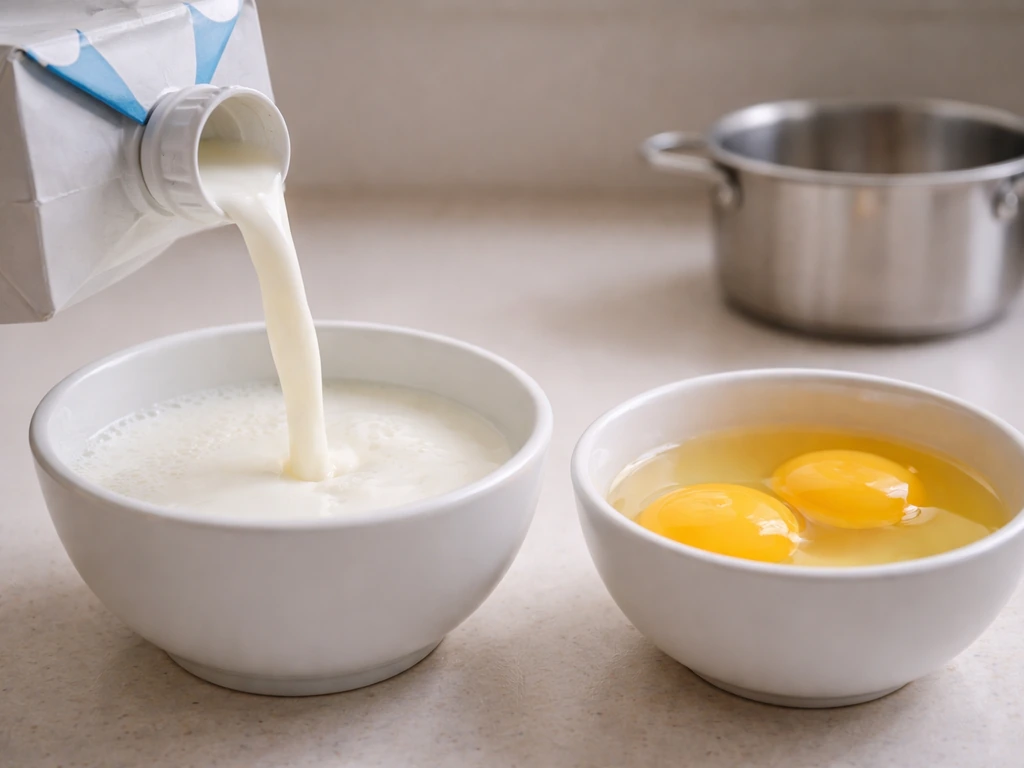
What 'bird flu' actually means here (and which viruses matter for food safety)
Bird flu is a shorthand term for avian influenza, a group of influenza A viruses that primarily circulate in birds. For food safety purposes, the strains that matter most are the ones that have caused documented human infections: H5, H6, H7, H9, and H10 subtypes, according to the CDC. The one generating the most concern right now is highly pathogenic avian influenza H5N1, which has been detected in dairy cattle herds and poultry across the United States and other countries.
When you read a headline about bird flu in milk or eggs, it is almost always referring to HPAI H5N1. This virus is heat-sensitive, which is important context for everything that follows. It is not like a bacterial spore that can survive boiling. Influenza viruses are enveloped viruses, meaning they have an outer lipid layer that is relatively fragile when exposed to heat.
How pasteurization works and what it does to viruses

Pasteurization is not cooking. It is a controlled heat treatment designed to reduce or eliminate pathogens without fully cooking the food. The FDA defines it as heating every particle of a milk or milk product in properly designed equipment to specific time and temperature combinations. The most widely used method for milk is High Temperature Short Time (HTST) pasteurization: 72°C (161°F) for 15 seconds. Other methods go higher, such as Ultra High Temperature (UHT) processing at 135°C or more.
At those temperatures, enveloped viruses like influenza A fall apart. Heat denatures the proteins the virus needs to infect cells and disrupts the lipid envelope. The virus does not need to be 'cooked away' in the culinary sense; it just needs to be heated long enough that its structure collapses and it loses the ability to replicate. This is why pasteurization is such a practical tool against respiratory viruses that happen to end up in animal products.
One important distinction to keep in mind: detecting viral RNA via a PCR test is not the same as detecting infectious virus. After pasteurization, you can sometimes find genetic fragments of a virus, but genetic fragments cannot infect you. What matters for safety is whether infectious, live virus survives the process. That distinction shapes how we interpret the research.
Does pasteurization kill bird flu in milk?
The evidence strongly supports yes. Research published in peer-reviewed journals and highlighted by the NIH and NIAID found that infectious H5N1 in raw milk declines rapidly with heat treatment at 63°C and 72°C, the two temperatures most commonly used in commercial dairy pasteurization. A separate analysis published in Emerging Infectious Diseases found that commercial pasteurization and homogenization likely contribute together to viral inactivation, and that store-bought milk consistently shows no viable (infectious) virus.
There is one nuance worth understanding. The NIH study noted that at 72°C for exactly 15 seconds, if initial viral levels in raw milk were extremely high, a relatively small but detectable quantity of infectious virus could theoretically remain. This is a lab finding from a spiked-milk experiment with virus loads far higher than what would typically be encountered in real-world raw milk from infected cows. It does not mean that commercially pasteurized milk is unsafe; it means that dose and exact equipment calibration matter at the margins, which is exactly why the FDA sets strict requirements for dairy processing equipment and timer controls.
The CDC's practical guidance is clear: always choose pasteurized milk and products made from it. That is the actionable takeaway. The agency also acknowledges that it does not yet know with certainty whether avian influenza can be transmitted to people through consumption of raw milk, but it specifically flags raw milk as the concern, not pasteurized milk.
What about raw milk?
Raw milk is unpasteurized milk, and both the WHO and CDC explicitly advise against consuming it during avian influenza outbreaks. The WHO's prevention guidance for avian influenza specifically lists avoiding the consumption of raw milk as a food safety measure. The FAO's risk assessment reached the same conclusion: the foodborne transmission risk of H5N1 is negligible for properly handled and pasteurized products, and strongly encourages sticking to pasteurized milk. If you are drinking raw milk right now, bird flu is one more reason to stop.
Does pasteurization kill bird flu in eggs?

Yes, pasteurization effectively inactivates avian influenza viruses in egg products. Peer-reviewed research specifically evaluated U.S. Department of Agriculture egg pasteurization processes and found they are effective at inactivating high-pathogenicity avian influenza virus in processed egg products. USDA APHIS has also published approved heat-treatment parameters for whole egg blends, such as 60°C for 188 seconds or 61.1°C for 94 seconds, which are designed to achieve viral inactivation.
Pasteurized egg products (liquid whole eggs, egg whites, yolks sold in cartons) have gone through these processes and are considered pathogen-free by the USDA and FDA. The FDA and CDC both recommend substituting pasteurized eggs or pasteurized egg products in any recipe that calls for raw or undercooked eggs.
For example, FDA substitution guidance says to use pasteurized eggs or egg products instead of raw shell eggs in items like Caesar salad, hollandaise or béarnaise, mayonnaise, eggnog, ice cream, and egg-fortified beverages that are not thoroughly cooked substituting pasteurized eggs or pasteurized egg products in any recipe that calls for raw or undercooked eggs.
If you are making Caesar salad dressing, hollandaise, homemade mayonnaise, or homemade ice cream, pasteurized eggs are the safer option regardless of bird flu; they were already the safer option because of Salmonella.
Raw eggs versus pasteurized eggs: what the difference actually means
A shell egg sold in a grocery store is not pasteurized unless the carton explicitly says so. Most shell eggs are not pasteurized, and the FDA and CDC both advise against eating them raw or undercooked. A pasteurized shell egg looks identical to a regular one but has been heat-treated in a warm water bath at a carefully controlled temperature sufficient to kill pathogens inside the egg without cooking it. You can use them in any recipe that would otherwise require a raw egg.
The FDA and USDA's joint risk assessment found no evidence that avian influenza can be transmitted to humans through properly prepared food. That assessment covers both poultry and eggs. 'Properly prepared' means the egg has either been pasteurized or cooked to an appropriate internal temperature (more on that in the next section).
Can bird flu survive pasteurization? What the evidence actually implies

Under real commercial conditions, infectious H5N1 does not survive pasteurization in milk or egg products. The lab experiments suggesting marginal survival used artificially high viral loads and very precise timing conditions that do not reflect commercial processing. Multiple peer-reviewed studies, using readouts for infectious virus rather than just RNA detection, consistently find that standard pasteurization temperatures effectively inactivate influenza A viruses including H5 and H7 subtypes.
The key word in the question is 'infectious.' Some studies have detected viral RNA in pasteurized products, and that has occasionally been reported in headlines as if it means live virus survived. It does not. Genetic material, especially fragmented RNA, can persist after the virus itself has been destroyed. It cannot infect you. What matters is whether the virus can still replicate and cause infection, and the evidence consistently shows it cannot after proper pasteurization.
Variables that affect experimental outcomes include the viral strain, whether the virus is cell-free or cell-associated in the test matrix, the starting viral load, and assay methodology. These details explain why different studies sometimes report slightly different results. They do not change the practical conclusion for commercial pasteurized products.
How this compares to other food safety methods
Pasteurization is one point on a spectrum of heat-based food safety approaches. Cooking is the most reliable because it uses higher temperatures for longer periods; the CDC notes that cooking poultry and eggs to blank" rel="noopener noreferrer">appropriate internal temperatures kills avian influenza A viruses. Ultra-pasteurization goes even further than standard HTST, applying higher heat and achieving a longer shelf life.
Ultra pasteurization also uses higher heat than standard pasteurization, which is why it further reduces the chance of infectious viruses in dairy Ultra-pasteurization. Freeze-drying and high pressure processing (HPP) are separate technologies with their own profiles for inactivating viruses, and they work through different mechanisms than heat. High pressure processing is a different technology from pasteurization, and it can also be used to inactivate viruses high pressure processing (HPP).
The practical point is that pasteurization sits comfortably in the range where avian influenza is inactivated, and it has a long track record against enveloped viruses. Freeze-drying is not the same as heat pasteurization, so it is not the key method for inactivating bird flu in dairy or egg products freeze-drying and bird flu. It is not a borderline case.
What to do right now: practical steps for milk and eggs

Here is how to think about your actual food choices today:
- Buy commercially pasteurized milk. This applies to all milk types including whole, 2%, skim, and cream. If the label says pasteurized, you are covered.
- Avoid raw milk and raw milk products (unpasteurized cheese, kefir, butter made from raw cream). The CDC and WHO both flag raw milk as a risk, and the uncertainty around bird flu transmission through raw milk is a reason to avoid it, not a reason to wait for more data.
- Cook eggs fully when possible. Cook whites and yolks until firm, or use a food thermometer to reach 74°C (165°F) in egg-containing dishes.
- Use pasteurized eggs or pasteurized liquid egg products in any recipe that calls for raw or undercooked eggs. These are available at most grocery stores and are labeled as pasteurized.
- Do not eat runny fried eggs, soft-scrambled eggs, or lightly cooked eggs if you are in a high-risk group (pregnant, elderly, immunocompromised), not just because of bird flu, but because of Salmonella.
- For microwave cooking of egg-containing foods, heat to at least 74°C (165°F) in all parts of the food, and allow standing time so heat distributes evenly.
How worried should you actually be?
The FAO's risk assessment concluded that the foodborne transmission risk of H5N1 is negligible for properly handled, pasteurized products. That is a strong reassurance. The CDC has found no evidence of sustained human-to-human transmission of H5N1, and the agency's primary risk focus for most people is occupational exposure (working directly with infected poultry or dairy cattle), not eating pasteurized food.
If you are buying pasteurized milk from a store and cooking your eggs, you are doing what every major food safety agency recommends. The precautions are not complicated, and they are not new; they are the same food safety habits that apply to Salmonella, Listeria, and other pathogens. Bird flu does not change the rules, it just reinforces why the rules exist.
| Food Item | Risk Level (Pasteurized/Properly Cooked) | Risk Level (Raw/Undercooked) | Recommended Action |
|---|---|---|---|
| Commercially pasteurized milk | Negligible | N/A | Buy and consume normally |
| Raw (unpasteurized) milk | N/A | Unknown but flagged by CDC/WHO | Avoid during bird flu activity |
| Pasteurized egg products (cartons) | Negligible | N/A | Use for raw-egg recipes |
| Pasteurized shell eggs | Negligible | N/A | Use when recipe calls for raw eggs |
| Standard shell eggs, fully cooked | Negligible | N/A | Cook whites and yolks firm |
| Standard shell eggs, raw or undercooked | N/A | Present (Salmonella + possible bird flu) | Substitute pasteurized eggs |
The bottom line is straightforward: pasteurization is doing its job. Avian influenza A viruses, including H5N1, are reliably inactivated by standard commercial dairy and egg pasteurization processes. The research backs this up, and every major food safety authority, including the CDC, WHO, FAO, FDA, and USDA, points you in the same direction: pasteurized products are safe, and raw or undercooked animal products are where the risk lives.
FAQ
Does pasteurization kill bird flu in breast milk or other human milk products?
The article focuses on dairy and egg processing. For human milk, the key decision is whether the milk was handled using a validated pasteurization or thermal process used in healthcare settings. If you are using expressed milk for a vulnerable infant, follow your clinician’s instructions for the specific pasteurization method, because effectiveness depends on the exact temperatures and time and on proper storage before and after treatment.
If viral RNA can be detected after pasteurization, why doesn’t that mean I’m at risk?
Detection of RNA indicates fragments of genetic material may remain, but infectious virus requires an intact, functioning viral structure to enter cells and replicate. Pasteurization aims to destroy that infectious capability, so PCR positives alone do not equate to a viable infection risk. This is why headlines can sound alarming even when food safety outcomes are reassuring.
What about egg dishes that use “pasteurized” eggs, but I still eat them runny (like sunny-side up)?
Use of pasteurized eggs reduces pathogen risk, but it does not guarantee safety if the dish is undercooked. If you want the lowest risk for any foodborne virus, cook the egg until it reaches a properly set texture throughout rather than relying on pasteurized status alone. Runny centers increase the chance that any surviving microbes, including non-bird-flu pathogens, remain viable.
Can I rely on pasteurized milk for drinks like smoothies, where I might add it cold and not heat it further?
Yes for bird-flu-specific risk, because pasteurization is designed to inactivate infectious virus. However, you still should handle the product hygienically after purchase (refrigeration, clean utensils, and quick use), since contamination can occur after pasteurization even if the original product was treated appropriately.
Is ultra-pasteurized milk safer than standard HTST milk for bird flu?
Ultra-pasteurization uses higher heat than standard HTST and further reduces the likelihood of surviving infectious microbes. For bird flu specifically, standard pasteurization already targets enveloped viruses effectively, so ultra-pasteurization is more of a “belt and suspenders” choice than a necessity for protection.
Does boiling raw milk at home make it safe from bird flu?
Home boiling can inactivate influenza viruses, but it is not as controlled as commercial pasteurization, and uneven heating is possible in real kitchens and batches. The practical guidance from food safety authorities is to avoid raw milk. If you can’t verify proper pasteurization, switching to commercially pasteurized milk is the more reliable approach.
Are pasteurized egg products in cartons safe even if the carton is left out for a while?
Temperature control after pasteurization still matters. If the product is kept too warm for too long, bacteria can grow even when viruses are inactivated. Follow label storage instructions and discard if the product has been unrefrigerated beyond what the label allows.
What if the label says “pasteurized,” but it’s a different wording like “cultured,” “fermented,” or “Aseptic”?
The safety depends on whether the product has actually undergone a heat process that matches pasteurization or an equivalent validated thermal treatment. “Cultured” or “fermented” describes bacteria added after processing, it does not automatically mean pasteurized. “Aseptic” products are typically heat-treated and sealed, but you should still follow the specific label guidance for storage and handling.
Do I need to avoid pasteurized dairy if I live near an outbreak or handle raw poultry at home?
No, there is no need to avoid properly pasteurized milk or pasteurized egg products for bird-flu concern. The bigger home-risk issues are preventing cross-contamination from raw poultry to ready-to-eat foods, washing hands and surfaces, and cooking eggs and poultry thoroughly, because raw animal products are the main source of risk.
Is high pressure processing (HPP) or freeze-drying effective against bird flu compared with pasteurization?
HPP is a different technology than pasteurization, and it can inactivate viruses through pressure-based mechanisms, not by heating every particle to a set temperature-time profile. Freeze-drying does not replace heat pasteurization as a virus-killing step. If your goal is bird-flu risk reduction, the relevant comparison is the specific validated treatment used for that product.
Next Articles
Does Cooking Kill Bird Flu Virus in Chicken or Meat?
Yes, proper cooking kills bird flu virus in chicken and meat, but only with safe temperatures and no cross contamination
How Are Chickens Culled Bird Flu: Methods, Reasons & Steps
How are chickens culled during bird flu: why it’s done, humane methods, disposal, biosecurity, and next steps
Do Cows With Bird Flu Have to Be Killed? What Happens
Explains whether cows with bird flu must be killed, and what happens for confirmed vs suspected cases, isolation and nex