<a data-article-id="BD36F916-F613-4AE3-AB05-1456DCFF4F07">Yes, cooking eggs kills bird flu</a>. The avian influenza virus is heat-sensitive, and reaching an internal temperature of 165°F (74°C) inactivates it completely. Both the CDC and FDA are clear on this: properly cooked eggs carry no risk of transmitting avian influenza to humans. If you cook your eggs all the way through, bird flu is not a concern on your plate. If you are asking, “are eggs affected by bird flu,” the practical answer is that thorough cooking to 165°F (74°C) inactivates the virus.
Does Cooking Eggs Kill Bird Flu? Boiling Temps Explained

Maya Chen
20 Apr 2026
The food-safety reality: can you cook bird flu out of eggs?
The short answer is yes, and the science behind it is straightforward. Avian influenza A viruses, including the H5N1 strain that has drawn the most attention, are fragile in the face of heat. They cannot survive the temperatures that thorough cooking produces inside an egg. The FDA has stated explicitly that there is no evidence avian influenza virus can be transmitted to humans through properly prepared food. That word "properly" is doing real work in that sentence, and it comes down to two things: cooking to the right temperature and avoiding cross-contamination.
The worry that bird flu could somehow survive cooking, or that you need to "cook it out" as if it were a stubborn chemical residue, misunderstands how viruses work. A virus is not a toxin that lingers after heat exposure. Once the protein structures that make it infectious are denatured by heat, it is inactivated. It cannot replicate, it cannot infect, and it poses no risk. Cooking does not just reduce the risk, it eliminates it, provided the internal temperature is reached throughout the egg.
Does cooking method and doneness actually matter?
Yes, and this is where practical choices make a real difference. Not all egg preparations get every part of the egg to 165°F (74°C), and that gap is what separates a safe egg from a potentially risky one when bird flu is in the picture.
Hard-boiled eggs
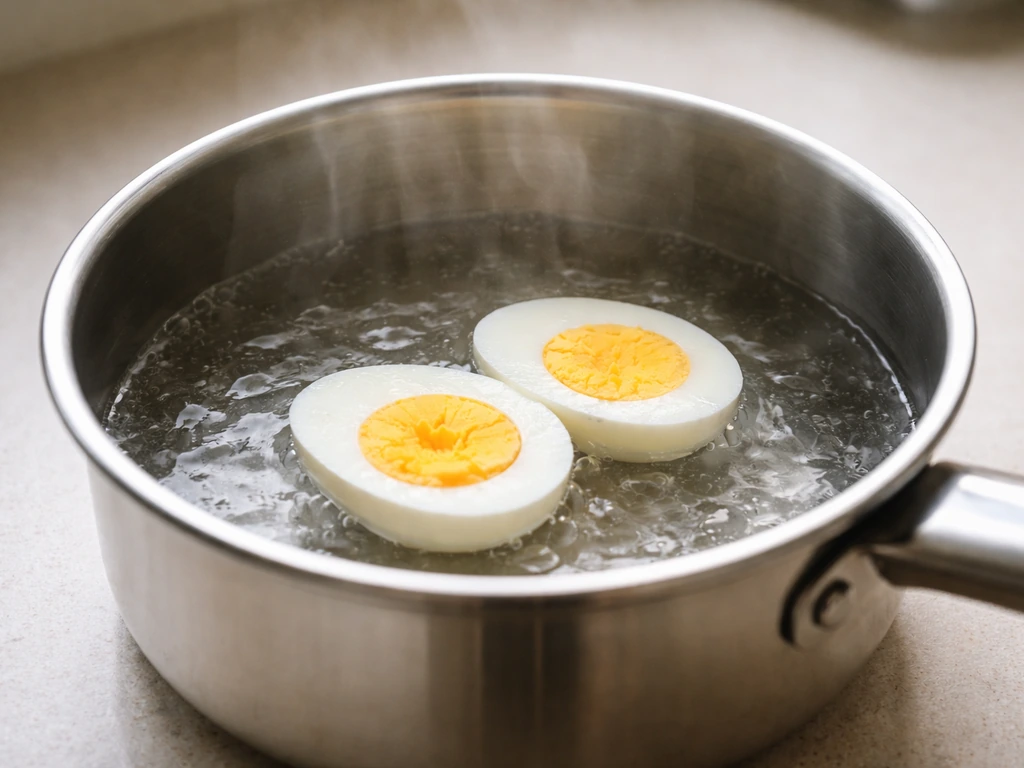
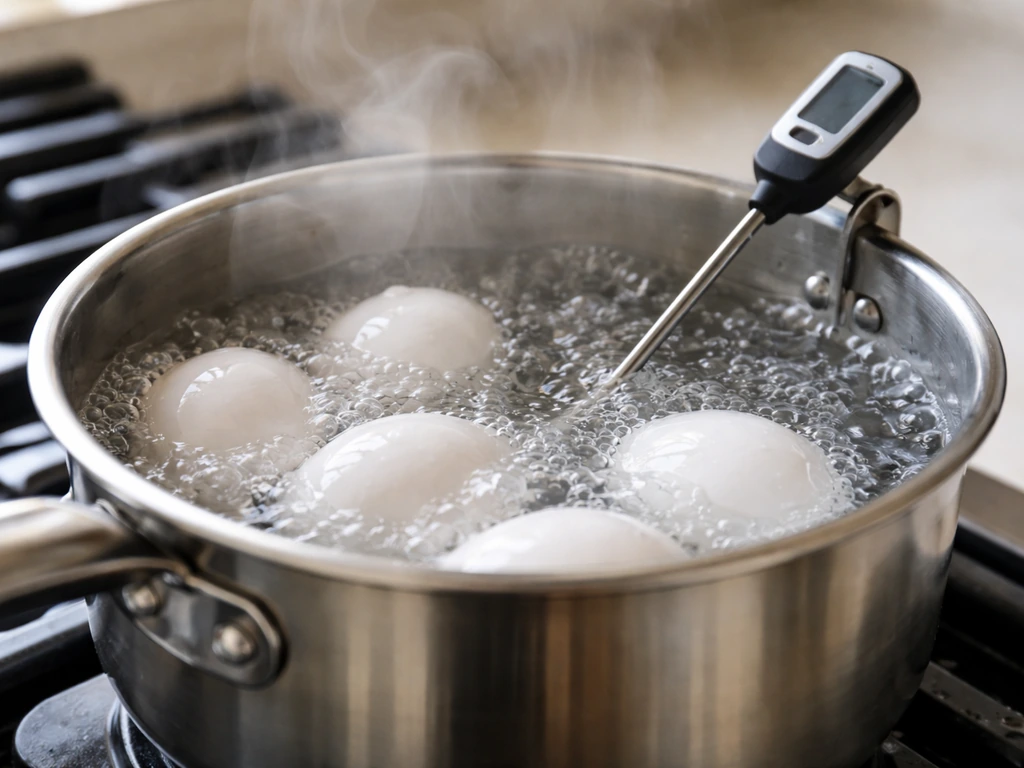
Hard-boiled eggs are one of the safest preparations from a bird flu standpoint. Boiling water sits at 212°F (100°C), which is well above the 165°F threshold. As long as the egg is boiled long enough for the center to set fully, the internal temperature easily clears the safety target. A hard-boiled egg with a fully set yolk and white has been thoroughly heat-treated throughout. There is no meaningful bird flu risk in a properly hard-boiled egg.
Soft-boiled, poached, and fried eggs (sunny side up)
These are where the risk calculus shifts slightly. A runny or soft yolk, a barely-set white, or a poached egg where the center stays cool means the internal temperature may not have reached 165°F throughout. During an active bird flu outbreak, use cooking methods that reach 165°F (74°C) throughout the egg and avoid runny centers. During normal times, a soft-boiled egg carries minimal food-safety risk for most healthy adults. During an active bird flu outbreak, the CDC and FDA both recommend cooking eggs all the way through. If you are in a high-risk category or simply want to be cautious, a fully cooked egg is the straightforward solution.
Scrambled eggs and omelettes
Scrambled eggs cooked until no liquid remains and omelettes cooked through to the center are generally safe because the egg reaches sufficient temperature throughout. The concern arises with very lightly scrambled eggs or omelettes that are intentionally left soft or undercooked in the center. If you are cooking an omelette and the inside is still wet and cool to the touch, it has not reached the safety threshold. In general, an omelette can be safe from bird flu as long as it is cooked through to 165°F (74°C) in the center and not left runny. Cooking it another minute or two fully resolves the issue.
Microwaved eggs
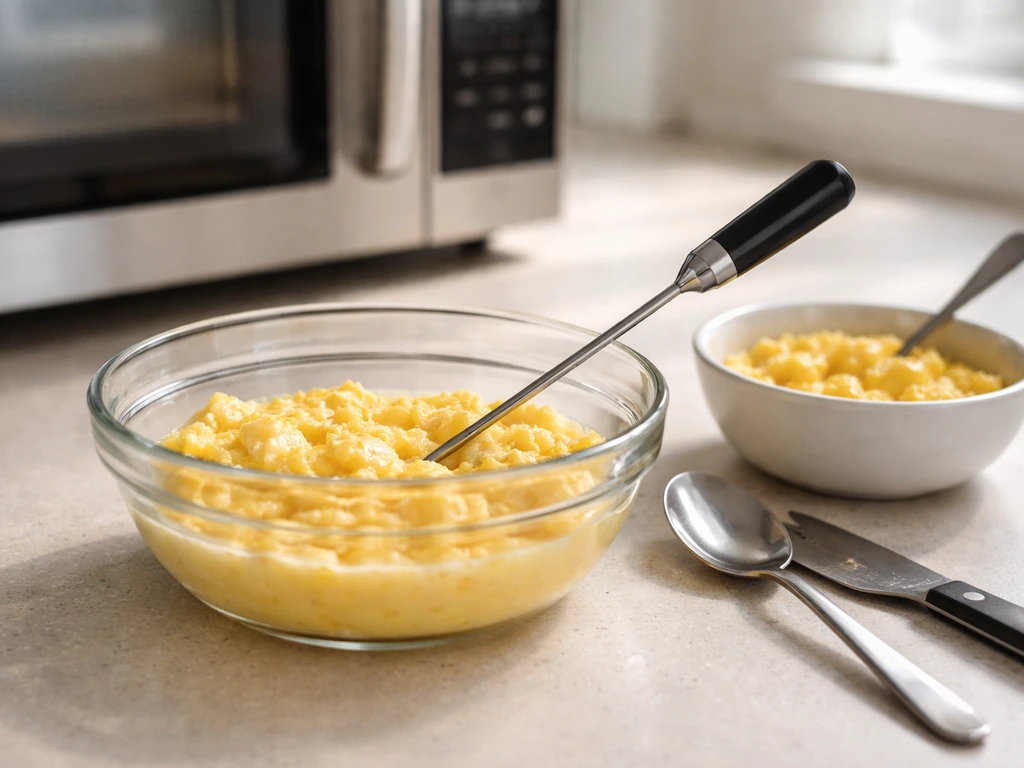
Microwaves heat unevenly, which is why the FDA specifically addresses this method. For eggs prepared in a microwave, the guidance is to reach at least 74°C (165°F) in all parts of the food, and then allow a 2-minute covered stand time before eating. The stand time matters because it lets heat redistribute through the food so any cool spots can equalize. Do not rely on appearance alone with microwaved eggs.
| Cooking Method | Reaches 165°F Throughout? | Safe During Avian Flu Concerns? |
|---|---|---|
| Hard-boiled (fully set) | Yes | Yes |
| Soft-boiled (runny yolk) | Not always | Use caution; cook fully to be safe |
| Poached (runny center) | Not always | Use caution; cook fully to be safe |
| Fried, sunny side up | Not always | Use caution; flip and cook through |
| Fried, over hard | Yes | Yes |
| Scrambled (fully cooked) | Yes | Yes |
| Omelette (fully cooked through) | Yes | Yes |
| Microwaved (with stand time) | Yes, if done correctly | Yes, follow FDA stand-time guidance |
| Raw or barely cooked | No | Not recommended during outbreak concerns |
How long to boil eggs to kill bird flu
The key number is reaching 165°F (74°C) at the center of the egg. Boiling water does this job quickly because the water temperature is so far above the threshold. To give you a practical sense of what this means in real terms, research on avian influenza H5N1 shows the virus is inactivated rapidly at temperatures of 60°C and above, with complete inactivation occurring in seconds at 72°C or higher. Boiling water at 100°C (212°F) is far beyond that range.
For pasteurization of commercial egg products, the WOAH (World Organisation for Animal Health) cites combinations like holding whole egg blends at 61.1°C for 94 seconds to fully inactivate high-pathogenicity avian influenza viruses. That is a very low bar compared to what home boiling achieves. When you boil an egg at home, you are applying far more heat for far longer than what is technically required for inactivation.
In practical terms, here is what boiling times mean for doneness and safety:
| Boil Time (from boiling water) | Result | Safe from Bird Flu? |
|---|---|---|
| Less than 5 minutes | Runny white and yolk | Internal temp may not reach 165°F throughout |
| 6 minutes | Set white, soft/runny yolk | Yolk center may not fully reach threshold |
| 9 to 10 minutes | Fully set white, firm yolk (hard-boiled) | Yes, fully safe |
| 12+ minutes | Fully hard-boiled throughout | Yes, fully safe |
If your priority is eliminating any bird flu risk, aim for a fully hard-boiled egg at 9 to 12 minutes from the point the water is boiling. This is not guesswork, it is just physics: you are applying 212°F to an egg long enough for the heat to penetrate completely to the center.
Can a boiled egg give you bird flu? What about after cooking?
A properly boiled egg cannot give you bird flu. The CDC is direct about this: no one in the United States has been documented to have gotten infected with avian influenza A viruses from eating properly handled and cooked poultry or egg products. The cases where uncooked or raw poultry products were implicated as exposure sources involved consumption of raw blood or uncooked meat, primarily in Southeast Asia, not cooked food.
Once an egg is thoroughly cooked to 165°F (74°C) throughout, any avian influenza virus that may have been present is inactivated. The cooked egg itself is not a transmission risk. The risk after cooking comes from a different source: cross-contamination. If raw egg or raw poultry juices come into contact with a cooked egg, a cutting board, a utensil, or a surface that then touches ready-to-eat food, that contact can reintroduce risk. This is why both the FDA and USDA emphasize the "CLEAN, SEPARATE, COOK, and CHILL" framework, not because cooked eggs are dangerous, but because kitchen habits around raw eggs matter.
To put this plainly: a boiled egg sitting on your plate is safe. A boiled egg that you peeled on the same unwashed surface where you cracked raw eggs is a different situation. The cooking step solved one problem; cross-contamination is the other problem to manage.
What to actually do: practical steps for egg safety during bird flu concerns
If you are buying eggs from a grocery store in the US during an avian influenza outbreak, the supply chain already includes multiple layers of protection. Eggs from commercially infected flocks are removed from the food supply, and pasteurized egg products have undergone heat treatment that achieves more than a 5-log reduction (meaning a 99.999% reduction) in high-pathogenicity avian influenza virus. Your grocery store egg is starting from a very low-risk baseline.
That said, here are the concrete habits that eliminate any residual concern:
- Cook eggs to 165°F (74°C) internal temperature throughout. For boiled eggs, that means a fully hard-boiled egg. For scrambled or fried eggs, cook until no liquid or translucent areas remain.
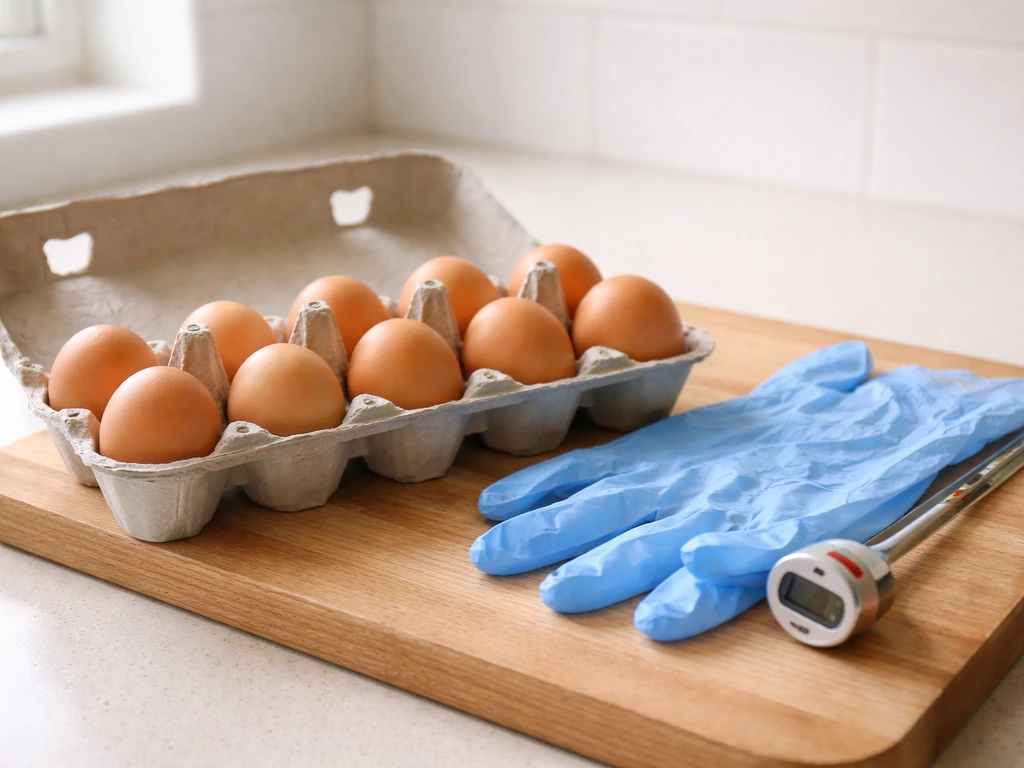
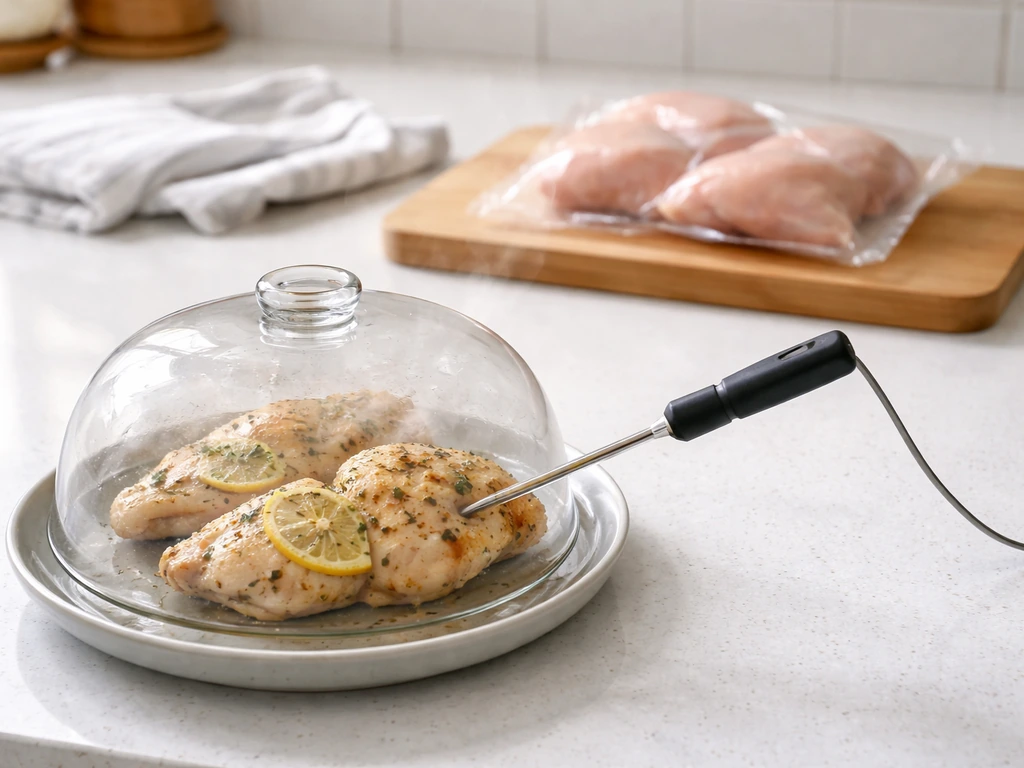
- Use a food thermometer if you want certainty, especially for dishes where doneness is hard to judge visually, like a thick frittata or a microwaved egg dish.
- Wash your hands with soap and water after handling raw eggs, before touching anything else.
- Keep raw eggs and raw poultry separate from ready-to-eat foods. Use different cutting boards, or wash and sanitize between uses.
- Wash any surface, utensil, or dish that contacted raw egg before using it with cooked food.
- Refrigerate eggs promptly and do not leave cracked raw eggs sitting out.
- Avoid eating raw or undercooked eggs in any form, including runny yolks, homemade mayo, or raw cookie dough, when avian influenza activity is elevated in your region.
- If you keep backyard chickens, follow current biosecurity guidance from your state agriculture department, and be especially careful about hygiene when collecting eggs from birds that may have had exposure to wild birds.
It is also worth knowing that avian influenza is primarily a disease concern for birds and, in limited cases, for people with direct and prolonged contact with infected birds, not for people eating properly cooked food. The food-safety risk from eggs is real but manageable, and cooking is the single most effective control available to you. Questions about whether eggs look different during an outbreak, whether all eggs are affected, and how to handle eggs from backyard flocks involve a few extra layers of consideration worth exploring if those situations apply to you. If you are wondering what bird flu eggs look like during an outbreak, the safest approach is to focus on proper cooking and hygiene rather than appearance what eggs look different during an outbreak.
The bottom line is this: cook your eggs thoroughly, keep raw and cooked foods separate, and you have done everything the science and public health guidance asks of you. A properly cooked egg is a safe egg, full stop.
FAQ
After I cook eggs, can bird flu “come back” if I reheat them or leave them out?
No. The virus is inactivated by reaching the 74°C (165°F) internal temperature, but it cannot reverse-heat after cooking. What can still create risk is raw egg or raw poultry juices contacting the cooked egg or other ready-to-eat foods, so focus on clean hands, utensils, and surfaces after handling raw eggs.
Does reheating a fully cooked egg reintroduce bird flu risk?
If the egg is fully cooked to 74°C (165°F) throughout, reheating it is still fine from a bird flu standpoint. The bigger issue with leftovers is time and temperature for general food safety, so refrigerate promptly, reheat until steaming hot, and don’t let cooked eggs sit at room temperature for extended periods.
How can I tell my egg reached 165°F if I do not use a food thermometer?
A thermometer is the most reliable way to confirm safety, but it is not the only approach. If you do not measure, follow proven doneness cues, such as hard-boiling until the yolk and white are fully set, or cooking scrambled eggs until there is no remaining liquid center. Avoid “runny by design” preparations when bird flu caution is your goal.
Should I wash eggs during a bird flu outbreak before cooking?
You should not wash eggs before cooking. Washing can spread bacteria around the shell and increase contamination risk on your counters and hands. Cook the egg thoroughly instead, and use a clean surface and utensils to prevent cross-contamination.
What’s the correct way to cook eggs in a microwave for bird flu safety?
If a microwave is used, do not rely on appearance. Heat so all parts reach 74°C (165°F), then cover and allow the recommended stand time so colder spots equalize. If you cut into the egg and see liquid center, it likely was not heated through and should be cooked longer.
Are soft-boiled eggs or runny yolks safe during an active bird flu concern?
A runny yolk is the practical warning sign. Even if the edges look done, the center may stay below the 74°C threshold, especially for large eggs or thick omelettes. If you want bird-flu-avoidance cooking, choose fully cooked yolks and whites, or add more cooking time until the center is not wet or cool.
What cross-contamination mistakes most often create problems with cooked eggs?
Yes, contamination can be the issue even with cooked eggs. For example, cracking raw eggs into a bowl that previously held raw eggs, using the same spatula for raw and cooked food, or using a previously used cutting board without washing can transfer material to ready-to-eat items. Wash with soap and water, then sanitize, before touching cooked foods.
If I buy store eggs, do I still need to worry about bird flu at home?
Not usually. Most grocery-store eggs in the US go through sorting and food-safety controls, and commercially processed, pasteurized egg products are treated to reduce pathogen risk. The key exception is handling after purchase, where raw eggs can contaminate counters, hands, and other foods if hygiene steps are skipped.
Is a hard-boiled egg still safe after peeling, especially if I peeled it soon after handling raw eggs?
For hard-boiled eggs, peeling can increase contamination risk because the shell and surrounding surfaces may carry raw residues. If you want to be extra cautious, peel after refrigerating briefly (which can reduce mess), keep hands and peelers clean, and avoid peeling directly on surfaces that were used for raw eggs.