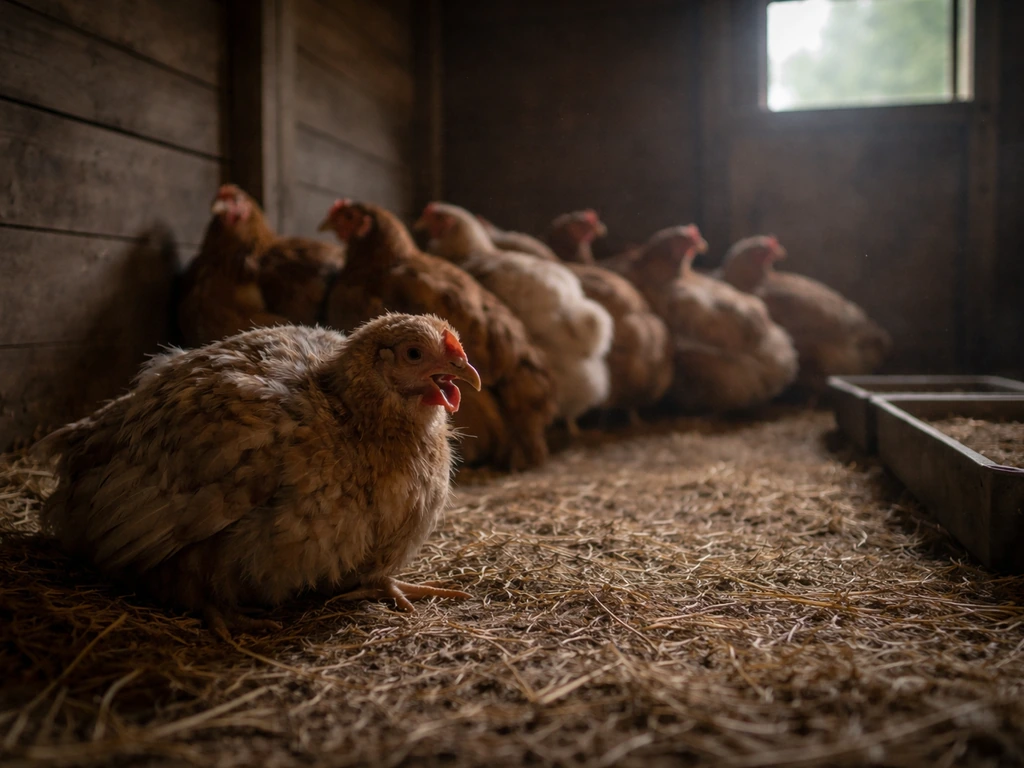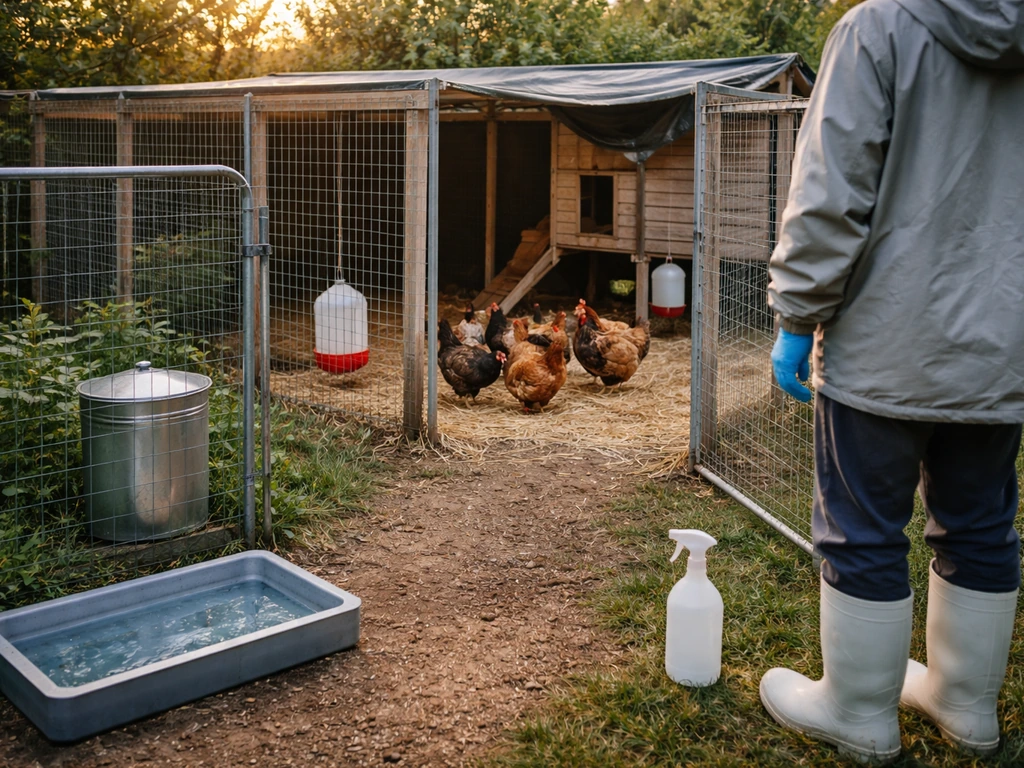
Chickens are killed during bird flu outbreaks because there is currently no practical way to treat or vaccinate an entire flock fast enough to stop a highly contagious virus from spreading. If you are wondering what bird flu does to chickens, the key issue is that the virus can spread extremely fast and cause severe illness and death in infected flocks.
Why Do They Kill Chickens With Bird Flu? What Happens

Maya Chen
6 May 2026
Culling, which means humanely euthanizing all birds in an infected or exposed flock, is the fastest and most reliable way to break the chain of transmission before the virus jumps to neighboring farms, wild birds, or potentially people. It is not a punishment, and it is not done carelessly. It is a calculated public and animal health decision backed by decades of outbreak science.
Why culling is the go-to response in bird flu outbreaks
Highly pathogenic avian influenza (HPAI) spreads with alarming speed through poultry. A single infected bird can shed enormous quantities of virus through its saliva, nasal secretions, and feces. In a commercial barn housing tens or hundreds of thousands of birds, that means the virus can move through the entire flock within days. Every hour the infected flock stays alive is an hour more for the virus to shed into the environment, infect wild birds that carry it elsewhere, or contaminate equipment, clothing, and vehicles that then move it to the next farm.
The World Organisation for Animal Health (WOAH) puts it plainly: when avian influenza infection is detected in poultry, a policy of culling infected animals and those in close contact is normally used to rapidly contain, control, and eradicate the disease. The USDA APHIS goes a step further, stating that the only way to stop the disease is to depopulate all affected and exposed poultry. These are not bureaucratic preferences. They reflect what outbreak responders have learned from repeated HPAI events globally, including the massive H5N1 and H5N2 outbreaks that have cost billions of dollars and tens of millions of birds.
Think of it like a fire in a building. You do not treat the smoke, you cut off the fuel. Culling eliminates the source of virus amplification before it becomes an uncontrollable regional or national emergency.
What actually happens to infected and at-risk flocks
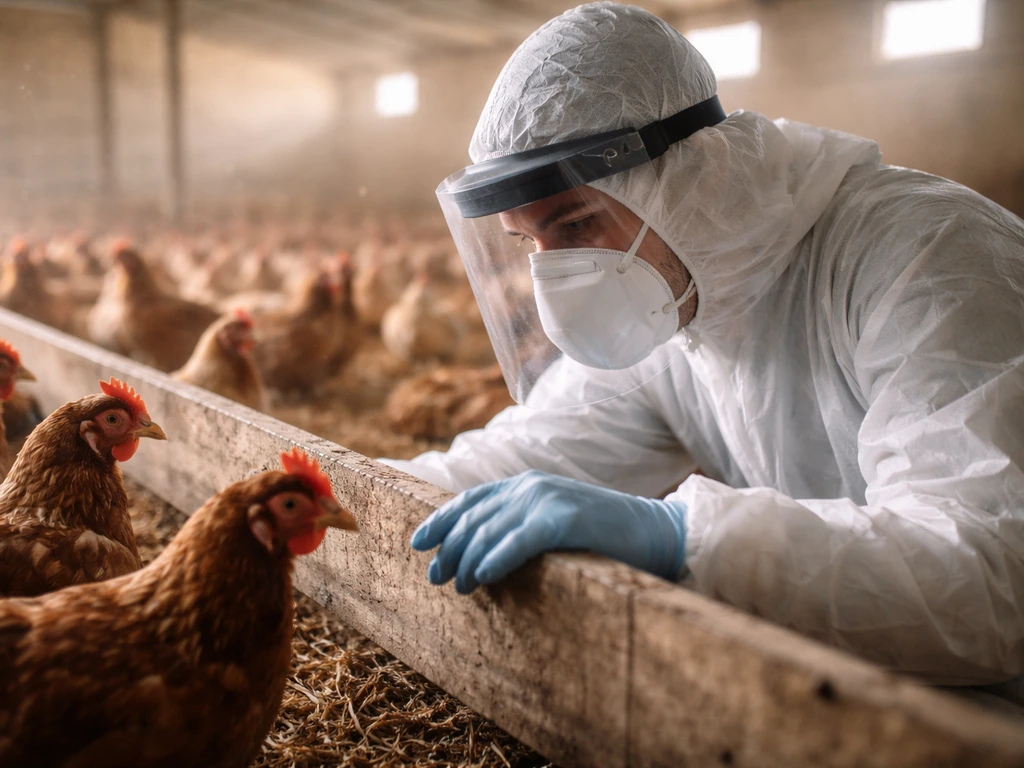
When bird flu is confirmed or strongly suspected on a premises, the response follows a fairly consistent process. USDA APHIS’s “Control Area Release” documentation lays out control-area concepts and release processes tied to containing HPAI within defined structures like infected, buffer, and surveillance areas. Understanding this from start to finish can help farmers and backyard flock owners know what to expect if they ever find themselves in this situation.
- Suspicion and initial report: A farmer, veterinarian, or backyard owner notices unusual signs in birds and contacts their state veterinarian or USDA APHIS. A veterinarian collects samples for laboratory testing.
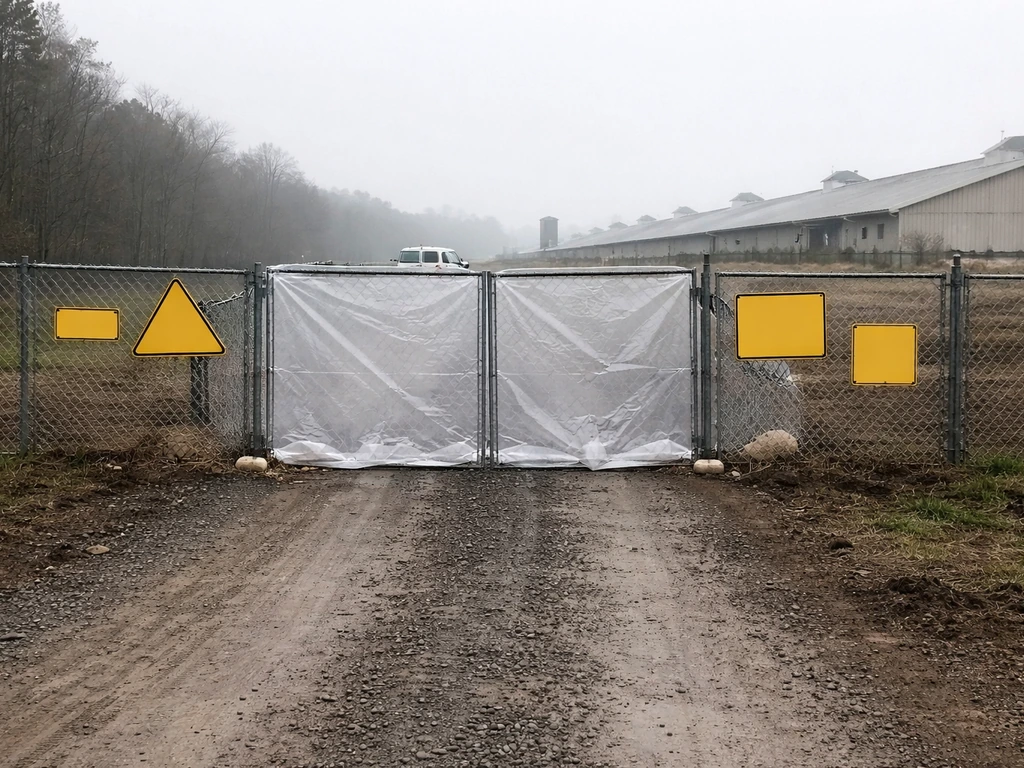
- Premises quarantine: While waiting for results, the affected premises is placed under a standstill order. No birds, eggs, equipment, or people move on or off without authorization. This alone can slow spread dramatically.
- Confirmation and response team deployment: If HPAI is confirmed, a state-federal response team mobilizes quickly, often within 24 hours. Their job is to depopulate the flock and manage the site.
- Depopulation: Trained responders humanely euthanize all birds on the premises using approved methods (described below).
- Carcass disposal: All birds, eggs, litter, manure, and contaminated materials are disposed of on-site or transported in sealed containers. Common methods include composting on-site, burial, incineration, or landfill disposal, chosen based on flock size, location, and regulations.
- Cleaning and disinfection: The premises undergoes thorough cleaning and disinfection before any restocking is considered. This can take weeks.
- Surveillance zone establishment: A control zone (typically 10 kilometers around the infected site) is established. Flocks within this zone are monitored closely and may be tested proactively.
- Indemnity and recovery: In the U.S., farmers are typically compensated for the market value of birds and eggs lost to HPAI under USDA indemnity programs, which helps encourage prompt reporting rather than hiding outbreaks.
How chickens are actually euthanized during a bird flu response
This is one of the harder parts of the topic to discuss, but people deserve a clear answer. Depopulation is carried out by trained animal health emergency responders, not by the farm owner alone, and methods are chosen to be as fast and humane as possible given the scale of the operation.
For floor-raised birds (broilers, turkeys, and many backyard chickens), water-based foam is a common method. USDA APHIS response goals guidance includes “MASS DEPOPULATION AND EUTHANASIA” and describes carbon dioxide and [water-based foam](https://direct. aphis. usda.
gov/sites/default/files/responsegoals_2. pdf) as primary depopulation methods, with conditional guidance for when to use them. The foam is applied to the floor of the housing unit and rapidly fills the space, causing birds to lose consciousness quickly through oxygen deprivation. For caged birds, carbon dioxide (CO2) gas is frequently used, filling the housing space to induce rapid unconsciousness.
Both methods are recognized as humane when applied correctly and are preferred because they can handle large numbers of birds efficiently without prolonged distress. In smaller flocks, other AVMA-approved methods may be used by attending veterinarians.
The USDA APHIS carcass management framework frames the entire response around speed and containment: dispose of contaminated and potentially contaminated materials as soon as possible while protecting the environment, the workers involved, and the broader community. The goal is to close down the outbreak site quickly, completely, and safely.
Do chickens with bird flu have to be killed? Are there alternatives?
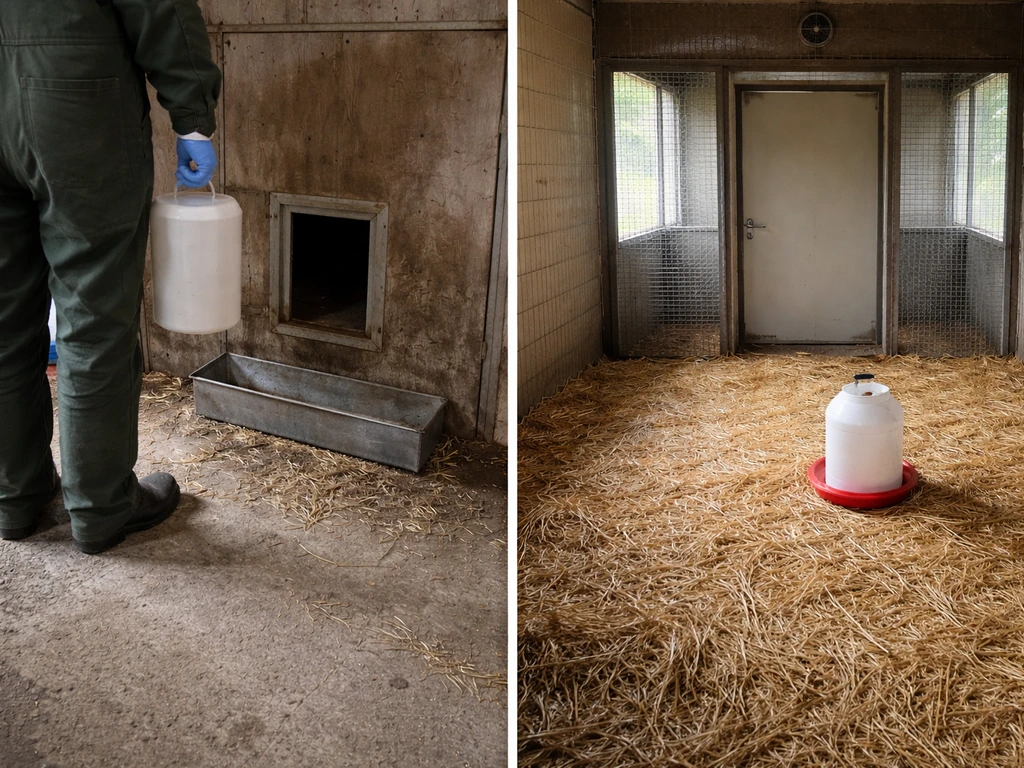
It is a fair question and one that many backyard flock owners ask with genuine distress. The honest answer is: for highly pathogenic strains like H5N1 or H5N2, culling is almost always required, and treatment is not a realistic option in the field. For cows, avian influenza itself is not the typical concern, but authorities will use the same public health logic if any animal tests positive or if there is a high-risk exposure cows with bird flu.
Here is why. There are no approved antiviral treatments for avian influenza in poultry. Antivirals like oseltamivir (Tamiflu) exist for human use but are not licensed, practical, or even ethical to administer to an entire commercial flock of 100,000 birds. Vaccination programs do exist and are used in some countries, but they are a preventive tool applied before exposure, not a cure. Vaccinating a flock that is already infected does not stop the birds from spreading the virus, and it can actually make it harder to detect infected birds through routine testing, a problem called DIVA (Differentiating Infected from Vaccinated Animals).
For low pathogenic avian influenza (LPAI), authorities sometimes have more flexibility. Some LPAI strains can be managed with strict quarantine, movement controls, and enhanced monitoring rather than full depopulation. But HPAI is a different situation entirely. The virus is too dangerous, too fast-moving, and too capable of mutating or spreading to wild birds and, in rare cases, to humans to leave it running through a live flock. Because bird flu spreads quickly, public health guidance typically focuses on controlling and containing outbreaks rather than keeping infected chickens alive keep my chickens in.
It is also worth noting that infected chickens with HPAI suffer severely. The disease can cause neurological symptoms, respiratory distress, hemorrhaging, and sudden death in chickens, sometimes killing the majority of a flock within 48 hours. HPAI can also affect other animals besides chickens, but the public health response focuses on stopping the virus from spreading through infected and at-risk flocks.
How fast bird flu can kill chickens depends on the strain and how quickly the disease spreads through the flock, but deaths can occur within days or even 48 hours for severe cases how fast does bird flu kill chickens. Bird flu can cause severe disease in chickens, including respiratory distress, bleeding, and neurological signs, which is why outbreaks often end in depopulation bird flu do to chickens.
In highly pathogenic bird flu outbreaks, chickens can die quickly, and that is one reason culling is used to stop the spread does bird flu kill chickens. Leaving birds alive is not humane in a HPAI scenario. Culling, done properly, ends that suffering quickly while stopping the outbreak.
How to recognize bird flu in your chickens
You cannot diagnose bird flu just by looking at your birds, and many of these signs can appear with other diseases too. But knowing what to watch for is the difference between catching an outbreak early and letting it spread. Any sudden, unexplained illness or death spike in your flock deserves a call to your veterinarian immediately.
- Sudden and rapid death, sometimes with no obvious prior illness
- Severe drop in egg production, often overnight
- Swollen or discolored head, comb, wattles, and legs (purple or blue discoloration)
- Nasal discharge, coughing, sneezing, or difficulty breathing
- Neurological signs: twisted neck, inability to stand, loss of coordination, tremors
- Diarrhea, often watery or green
- Lethargy, huddling, or birds sitting with eyes closed when they would normally be active
- Soft or misshapen eggs, or a complete stop in laying
HPAI tends to hit hard and fast. A flock that looked fine on Monday morning can be in serious trouble by Wednesday. If you see multiple birds showing these signs at once, or you find several unexplained dead birds in a short period, treat it as an emergency. Do not wait to see if things improve on their own.
What farmers and backyard owners should do right now
Whether you have five backyard hens or a commercial flock of thousands, the practical steps are similar, just scaled differently. The most important thing is: do not wait, and do not try to handle a suspected bird flu situation on your own.
If you suspect bird flu in your flock
- Stop all movement immediately. Do not move birds, eggs, equipment, or bedding off the premises until you have spoken to a vet or animal health official.
- Call your veterinarian or your state veterinarian's emergency line right away. In the U.S., you can also call USDA APHIS at 1-866-536-7593.
- Isolate sick birds from healthy ones if you can do so safely, but prioritize your own biosecurity first.
- Change your clothes and wash your hands thoroughly after any contact with birds. Remove footwear before entering the house.
- Do not cull birds yourself before getting official guidance. Unauthorized disposal can complicate testing and may violate state regulations.
- Write down what you have observed: number of sick birds, number of deaths, timeline, any recent new birds or visitors to the property.
Ongoing biosecurity to reduce your risk
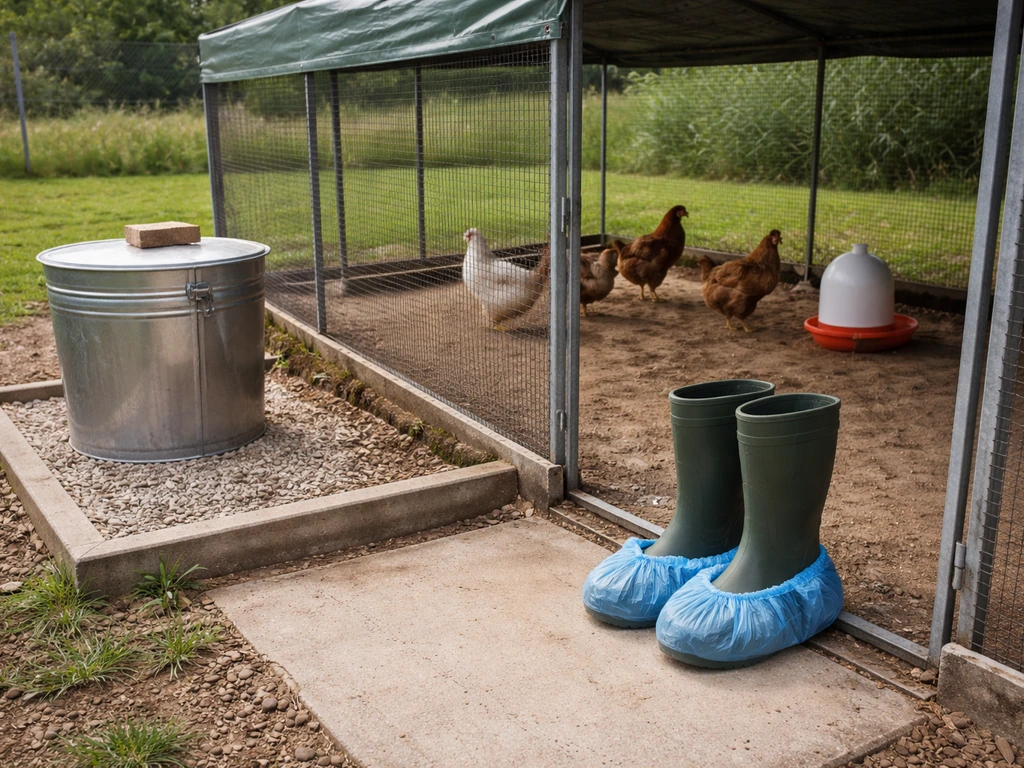
- Keep wild birds out: cover runs and feed areas so you do not attract wild waterfowl or shorebirds, which are the primary reservoir for avian influenza
- Use dedicated footwear and clothing for your coop area and change before going elsewhere
- Disinfect equipment and tools before they enter your property, especially if they have been at another farm
- Avoid contact with sick or dead wild birds, and report unusual wild bird mortality to your state wildlife agency
- Know your neighbors: if nearby flocks are affected, your risk is elevated even if your birds look healthy
- Consider whether housing your birds indoors temporarily is appropriate during active outbreak periods in your region
What the public needs to know
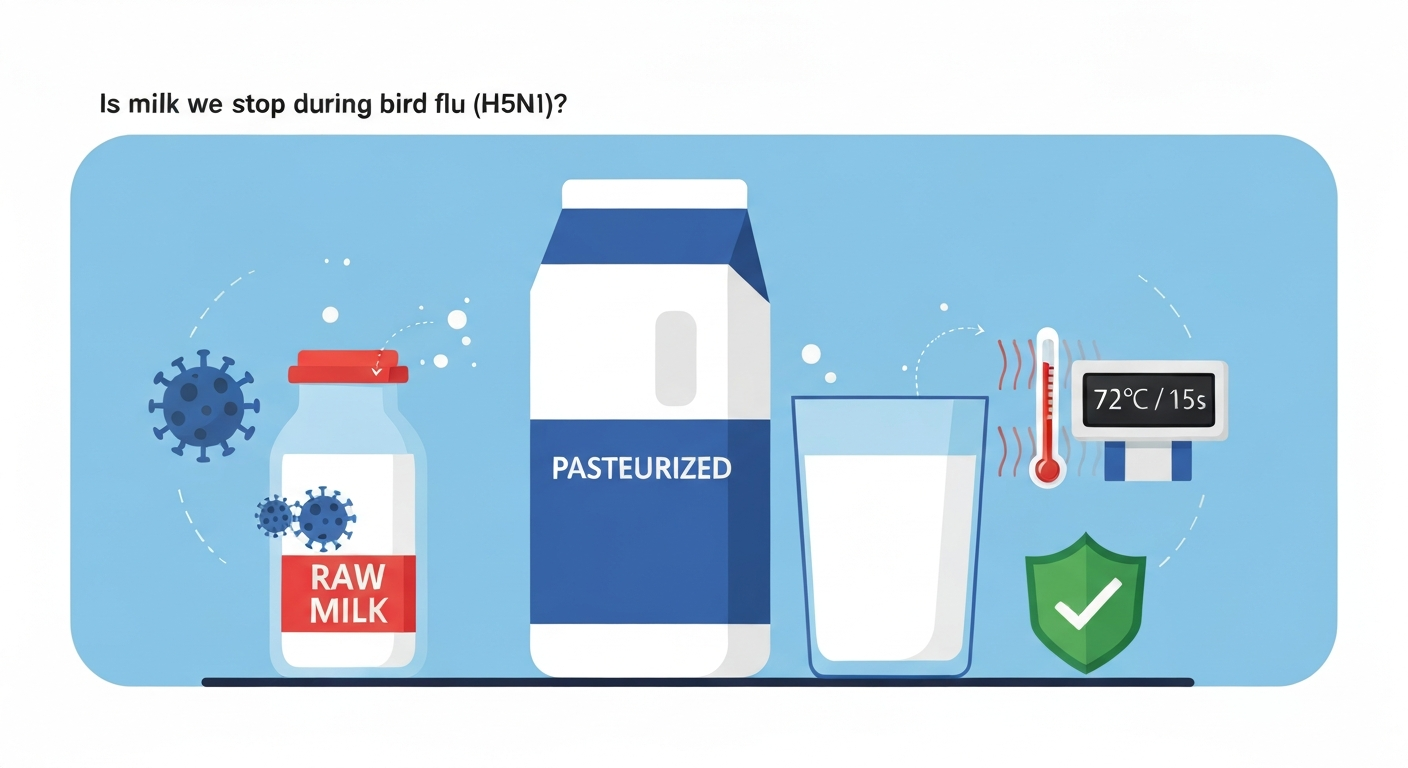
For people who do not keep poultry but are worried about food safety or their own health: properly cooked poultry and eggs are safe to eat. Cooking to an internal temperature of 165 degrees Fahrenheit (74 degrees Celsius) kills avian influenza viruses. Birds from HPAI-affected flocks do not enter the food supply. The culling process is specifically designed to keep infected birds out of commerce. Human infections with avian influenza are rare and almost always involve direct, close contact with infected live birds. Buying chicken at a grocery store or restaurant does not put you at risk.
The response to bird flu outbreaks, including the difficult decision to cull entire flocks, exists to protect both animal welfare and public health. It is one of the more sobering aspects of managing infectious disease in agricultural animals, but it is also one of the clearest examples of evidence-based outbreak control working as intended.
FAQ
Do they kill all chickens on a farm, or only the ones that are infected?
In many outbreaks, authorities cull not just confirmed infected birds, but also birds that were exposed through close contact, shared airspace, shared equipment, or contact with contaminated materials. The exact “in-contact” area depends on the investigation and risk assessment, so two farms with different setups can have different depopulation boundaries.
What if my birds seem healthy, will I still be required to cull?
It can happen if your flock is classified as exposed, for example because of nearby confirmed cases, contaminated movement (litter, vehicles, feed deliveries), or contact with people or equipment that also served infected premises. Even when birds look fine, early HPAI can be detected by testing or strong epidemiologic links, and waiting increases the chance of silent spread.
Can farmers ask for treatment instead of culling if tests come back positive?
Usually not for highly pathogenic avian influenza. Field treatment is not a practical substitute for outbreak control because there are no approved, effective poultry antiviral regimens for flock-wide use, and treating delays containment. Authorities can sometimes consider alternative approaches for certain low pathogenic cases, but only after lab typing and under strict regulatory direction.
How quickly do authorities move after detection, and does timing change the outcome?
Timing is critical. The response is designed to stop virus shedding before it spreads via barn-to-barn transmission, transport, and contamination. Delays can allow more birds to become infected, which then expands the number of birds and materials that must be handled during cleanup.
Is culling always humane, and how do they decide the method?
Methods are selected based on bird type and housing (cage versus floor-raised), flock size, facility design, and what trained responders can apply correctly and quickly at that scale. For small flocks, veterinarians may use different AVMA-aligned methods, but responders generally prioritize procedures that achieve rapid unconsciousness and minimize distress.
What happens to contaminated feed, bedding, manure, and equipment after culling?
The goal is to remove or inactivate everything that could carry virus, not just the birds. Carcass and waste disposal plans typically include prompt handling, secure storage or treatment, and protocols for cleaning and disinfection, because the virus can persist on porous materials and contaminated surfaces long enough to infect other poultry.
If I had a confirmed case near my farm, when can I restock or resume normal operations?
Restocking is usually delayed until authorities complete decontamination, confirm the premises is safe through clearance steps, and lift movement restrictions. “Clearance” can include inspections, cleaning verification, and waiting periods, so the timeline varies by jurisdiction and by what risk factors were found.
What should backyard flock owners do immediately if they suspect bird flu?
Treat it as an emergency: limit access to the flock, keep other animals and people away, isolate your birds from any contact with wild birds, and call your veterinarian or state/provincial animal health authority for guidance. Do not attempt home testing or move birds, eggs, litter, or manure, because those actions can spread virus to neighboring farms.
Can I still sell eggs or poultry if there is a suspicion case in my area?
During official investigation periods, movement and sales are often restricted for exposed premises. Even if you do not see illness, you may be required to stop distributing eggs and poultry until testing and regulatory clearance are complete, since egg and poultry movements can transmit contamination.
Is it safe to eat chicken and eggs during an outbreak?
Yes when products are properly cooked and handled. Cooking poultry and eggs to an internal temperature of 165°F (74°C) inactivates avian influenza viruses. The bigger risk is practical cross-contamination at home (handling raw products, not cooking thoroughly), not buying properly distributed food from commerce.
Do culling policies always target H5N1 and H5N2, or can other strains trigger it?
Outbreak response depends on the strain’s pathogenicity and the lab characterization, not only the headline subtype. Authorities may use depopulation for highly pathogenic avian influenza strains, while some low pathogenic situations can lead to different strategies like quarantine and enhanced monitoring.
Why does vaccination not “fix” an active outbreak in the same way it prevents future ones?
Vaccination is mainly designed to reduce new infections before exposure. In an active outbreak, vaccination can complicate surveillance because it may cause vaccinated birds to test positive depending on the testing strategy, which can hide the difference between infected and vaccinated animals. That DIVA challenge can slow down decisions about which flocks are truly infected.