
Common household disinfectants kill bird flu on surfaces reliably, as long as you use them correctly. Products containing bleach (sodium hypochlorite), quaternary ammonium compounds, accelerated hydrogen peroxide, or iodine-based disinfectants all inactivate avian influenza viruses. The catch is that none of them work well on dirty surfaces, so you always clean off organic matter first, then apply the disinfectant and let it sit for the full contact time (usually 5 to 10 minutes).
What Kills Bird Flu on Surfaces: Disinfection Steps

Maya Chen
4 May 2026
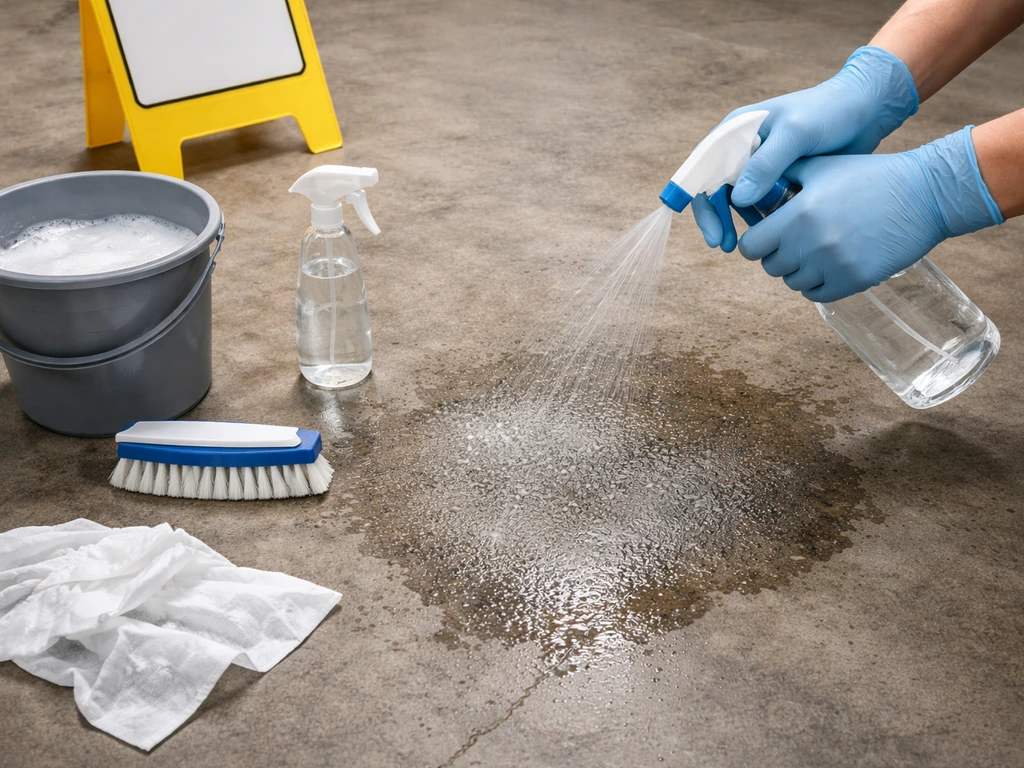
NDSU Extension’s disinfectant chart provides specific contact-time examples for “Avian/Swine Influenza Virus,” including 10% bleach with a 5-minute contact time and 6% hydrogen peroxide with a 1-minute contact time contact time (usually 5 to 10 minutes). That sequence is what makes the difference between decontaminating a surface and just making it look clean.
How long bird flu survives on surfaces
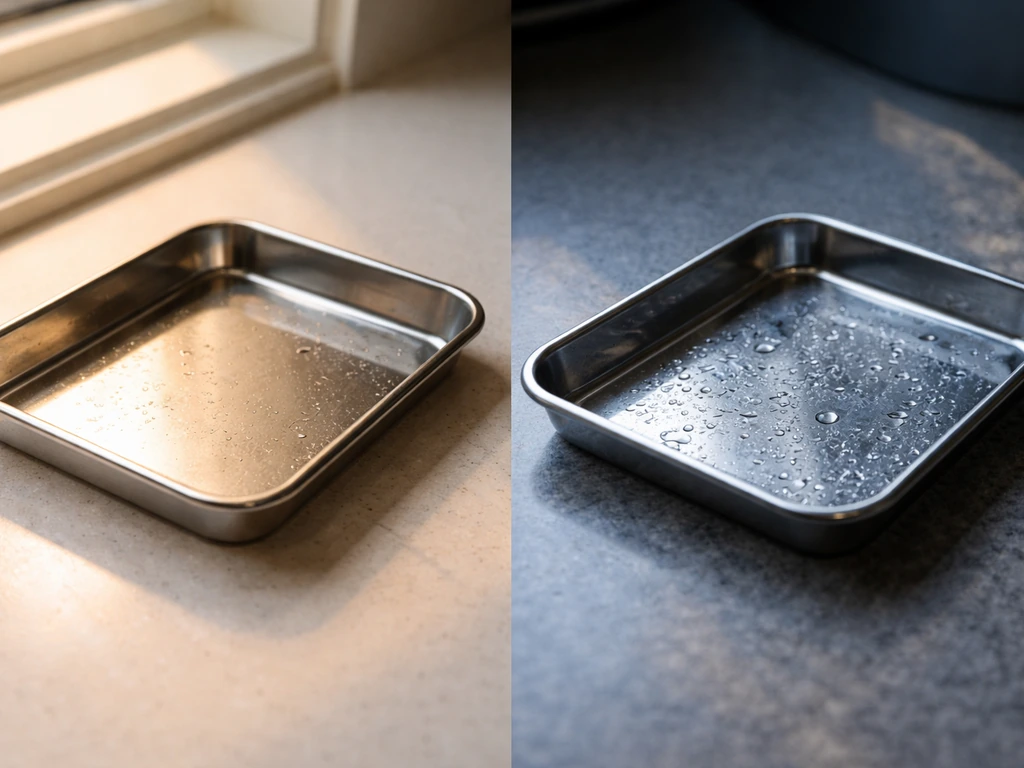
The survival time of avian influenza virus on surfaces is longer than most people expect, especially in cold, wet, or shaded conditions. Cold is the real problem: the Canada Food Inspection Agency (CFIA) reports that avian influenza virus can persist for roughly 72 days on glass and up to 120 days in soiled litter or soil at 4°C (just above refrigerator temperature). On metal surfaces in slurry or feces at the same temperature, survival can reach around 60 days. These numbers apply to cold barns, outdoor winter environments, and shaded areas where sun and heat are not working in your favor.
At warmer indoor temperatures, survival drops significantly. Research on H5N1 found persistence on plastic surfaces of roughly 26 hours at typical room conditions, and only about 4.5 hours on skin. Studies on H9N2 show that plastic (PET) tends to harbor the virus longer than glass or stainless steel, and that lower humidity (below 20%) extends survival compared to moderate humidity. The practical takeaway: a hard, cold, dirty plastic or metal surface in a barn or outdoor pen is where the virus survives longest. A warm, sunny, dry surface is where it degrades fastest. This is closely related to how heat and UV light affect the virus, which are worth understanding alongside chemical disinfection.
| Surface / Condition | Approximate Survival Time | Key Factor |
|---|---|---|
| Glass at 4°C | Up to ~72 days | Cold temperature |
| Soiled litter / soil at 4°C | Up to ~120 days | Cold + organic matter |
| Metal (slurry/feces) at 4°C | Up to ~60 days | Cold + organic contamination |
| Plastic (H5N1, room temp) | ~26 hours | Temperature, humidity |
| Skin surface (H5N1) | ~4.5 hours | Body warmth, drying |
| Warm, dry, sunny surface | Hours to 1–2 days | Heat and UV exposure |
Disinfectants that reliably inactivate avian influenza
Avian influenza viruses are enveloped viruses, which actually makes them easier to kill chemically than non-enveloped viruses like norovirus. UV light is often discussed as a germ-killer, but the safe approach for bird flu is still to clean and use proven disinfectants with the right contact time. A wide range of common disinfectants work, but the product has to be used at the right concentration and left on the surface long enough to actually do its job.
- Sodium hypochlorite (bleach): A 0.1% solution (roughly 1 part household bleach to 49 parts water) is effective. For heavily contaminated areas, 0.5% is often recommended. Contact time: at least 10 minutes.
- Quaternary ammonium compounds (quats): Found in many farm and household disinfectants. Effective at label-specified concentrations. Follow the product label for contact time, typically 5 to 10 minutes.
- Accelerated hydrogen peroxide (AHP): Products like Rescue (Accelerated Hydrogen Peroxide) are widely used in veterinary and poultry settings. AHP is effective, low in toxicity, and works faster than bleach. Contact time varies by concentration, but often as little as 1 to 5 minutes.
- Iodine-based disinfectants (iodophors): Commonly used on farms. Effective against influenza viruses at recommended dilutions. Can stain surfaces.
- Phenolic compounds: Effective and used in many agricultural disinfectants. Some are inactivated by hard water, so check product instructions.
- Citric acid-based products: Can be effective against enveloped viruses at appropriate concentrations.
- Ethanol and isopropanol (70%+): Good for small hard surfaces like tools and equipment handles. Less practical for large areas.
One thing worth noting on Rescue (accelerated hydrogen peroxide) specifically: it has solid evidence behind it for avian influenza, and it is widely used in poultry barn decontamination. Rescue is a disinfectant option people sometimes ask about for avian influenza, but it still has to be applied correctly. It is also less corrosive than bleach, which matters if you are treating metal equipment. Contact time and correct dilution are non-negotiable regardless of which product you choose. A disinfectant that has not sat on the surface long enough is basically just wet.
Clean first, disinfect second: the right order of operations
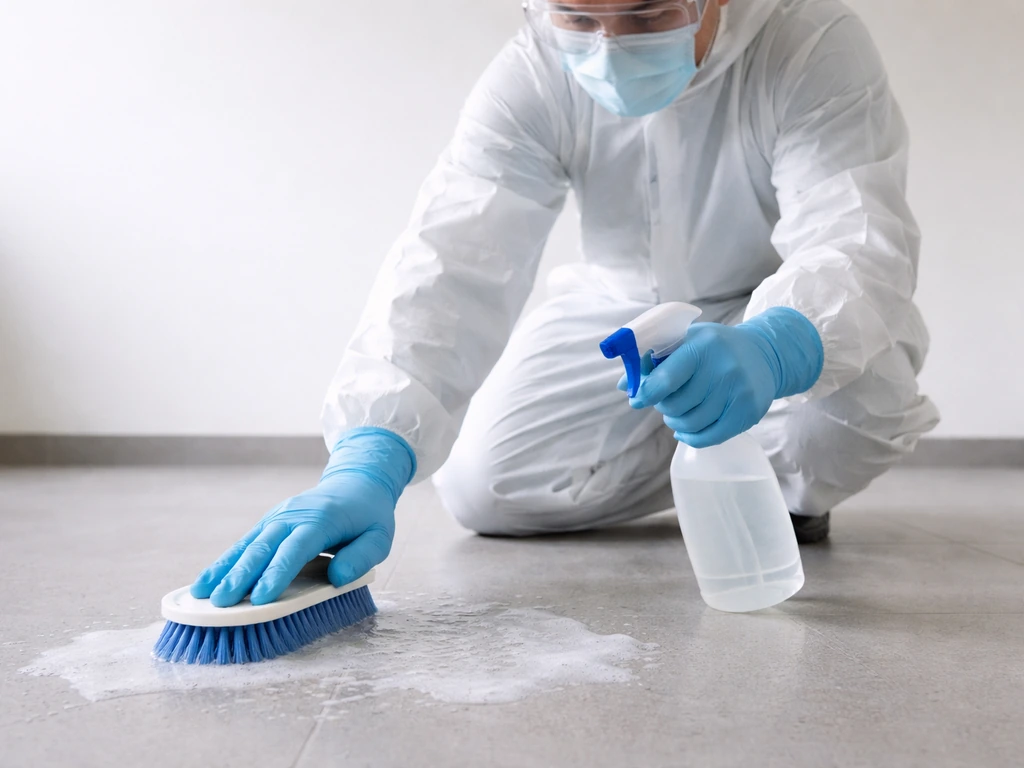
This step-by-step sequence applies whether you are cleaning a backyard chicken coop, a barn floor, outdoor footwear, or a bathroom where a contaminated bird was temporarily kept. Skipping or rushing any step reduces the effectiveness of the whole process.
- Put on your PPE before you start. Gloves (nitrile or rubber), eye protection, an N95 or P100 respirator, waterproof boots, and a disposable coverall or clothes you will immediately wash afterward.
- Remove loose material first. Scoop or sweep out droppings, feathers, litter, and debris. Place everything in sealed, heavy-duty plastic bags. Do not dry-sweep, which aerosolizes the virus. Wet the material lightly before removing it if possible.
- Pre-soak if needed. For dried, caked material, apply water or a low-level detergent solution and allow it to soften before scrubbing.
- Scrub surfaces thoroughly with detergent and water. Use a stiff brush. The goal is to remove all visible organic matter. This step physically reduces viral load and allows the disinfectant to reach the surface.
- Rinse off the detergent and allow surfaces to drain.
- Apply your chosen disinfectant at the correct dilution. Make sure the entire surface is visibly wet with the product, not just lightly misted.
- Maintain the full contact (dwell) time. Do not wipe, rinse, or let it dry before the time is up. For bleach, this is at least 10 minutes. Check your product label.
- Rinse (if required by the product label) and allow to dry with ventilation.
- Remove PPE carefully, rolling it away from your body. Wash your hands thoroughly with soap and water for at least 20 seconds.
- Bag and dispose of PPE, contaminated cleaning materials, and waste securely.
Specific scenarios: different surfaces and settings
Barn floors and concrete
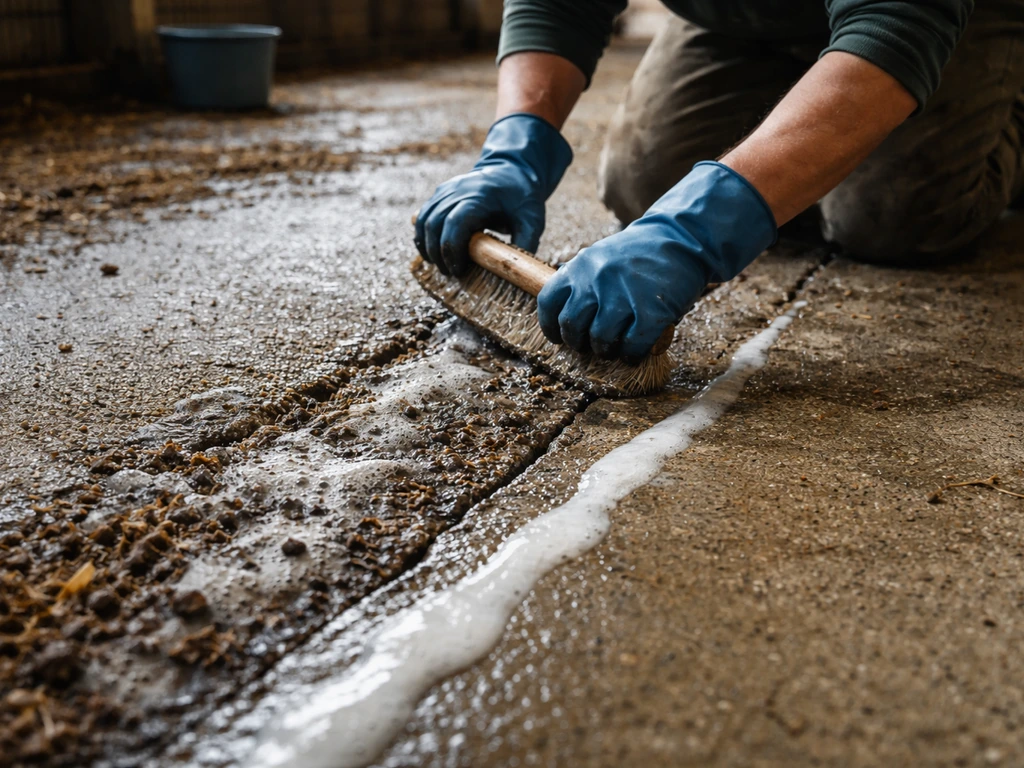
Concrete is porous and holds organic matter in cracks, which is why the cleaning step matters so much here. Remove all litter, scrub with detergent, rinse, then apply disinfectant with enough volume to penetrate surface irregularities. USDA APHIS cleaning and disinfection guidance also emphasizes that some surfaces and materials can be difficult to disinfect and that effective cleaning is essential before disinfection in animal health settings blank" rel="noopener noreferrer">apply disinfectant with enough volume to penetrate surface irregularities. Foam application helps on floors because it clings and maintains contact time better than a quick spray.
Cages, feeders, and waterers
Metal and plastic equipment should be removed from the contaminated space if possible, scrubbed thoroughly with detergent and a brush, rinsed, then submerged in or soaked with disinfectant solution. For items that cannot be soaked, apply disinfectant liberally and ensure the full dwell time before rinsing.
Footwear and tools
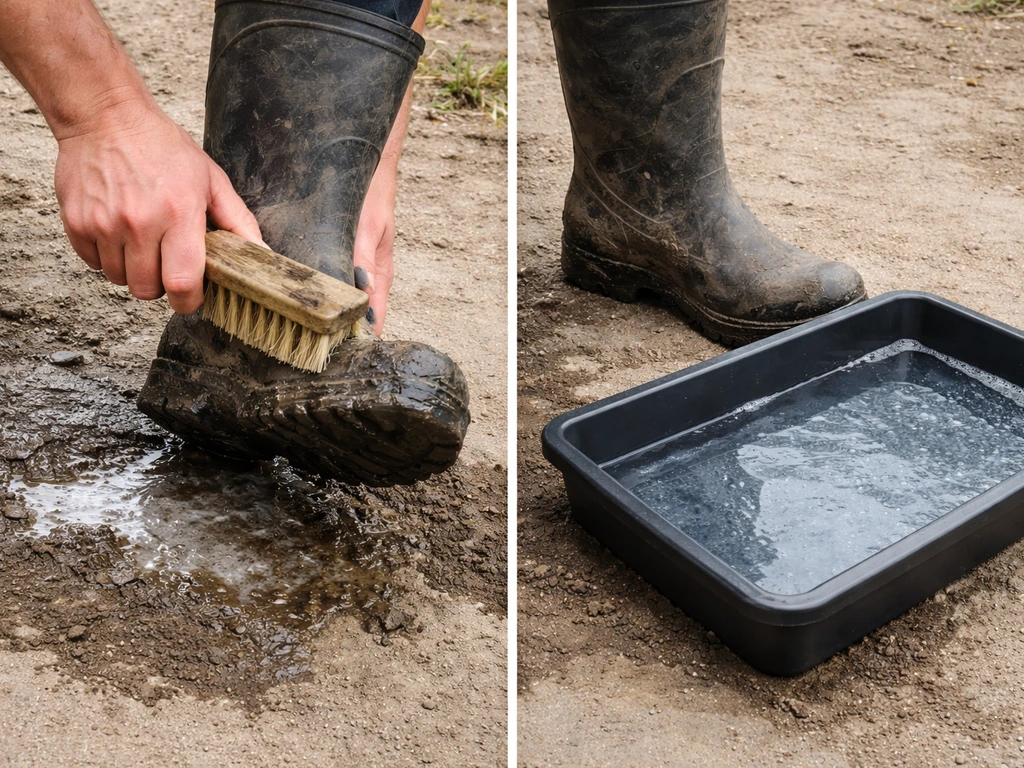
Boots are one of the most common ways bird flu moves between areas. Scrub the soles and sides to remove all caked material, then stand in a disinfectant footbath or apply disinfectant spray generously to the outer boot surface. Let it sit the full dwell time. For shovels, rakes, and other tools, the same clean-then-disinfect order applies. A bucket of disinfectant solution at the entrance to a contaminated area is a practical way to treat tools as you exit.
Outdoor ground-contact areas
This is the toughest scenario. You cannot fully disinfect soil, and the virus can persist in cold, wet soil for months. The best approach for outdoor areas is to remove as much contaminated material as possible (droppings, feathers, carcasses, wet soil), limit access to the area, and consider lime treatment (agricultural lime, calcium hydroxide) which raises pH and reduces viral survival. Sunlight and drying are natural allies here, so improving drainage and sunlight exposure to the area helps over time. Sunlight can help reduce virus survival on outdoor ground, but it is not a substitute for cleaning and removing contaminated material. Do not rely solely on spraying liquid disinfectant on open soil.
Laundry
Clothing potentially contaminated with bird flu should be washed at the hottest temperature the fabric allows, ideally 60°C (140°F) or higher. Wash separately from other laundry. Normal laundry detergent combined with high heat effectively inactivates influenza viruses. Do not shake or handle contaminated clothing more than necessary before washing.
Indoor areas and bathrooms
If a sick or dead bird was brought indoors, focus on hard nonporous surfaces first: floors, counters, sinks, and anything the bird or its droppings contacted. Clean with detergent, then apply a bleach solution (0.1% for general surfaces, 0.5% for heavily soiled areas) or another EPA-approved disinfectant. For carpet or fabric, remove what you can mechanically, then steam clean if available. Ventilate the room during and after disinfection to reduce chemical exposure.
What to wear while decontaminating
PPE is not optional when you are dealing with a confirmed or suspected bird flu contamination. The main exposure routes during cleaning are respiratory (inhaling aerosolized particles or dried droppings) and mucous membrane contact (touching your face with contaminated gloves). Here is what you need:
- Gloves: Nitrile for light contact, heavy-duty rubber for scrubbing. Double gloving is reasonable for high-contamination areas.
- Respiratory protection: An N95 respirator at minimum. A P100 half-face respirator is better for high-dust environments like litter removal in barns.
- Eye protection: Safety glasses with side shields or goggles. A face shield is ideal if splashing is likely.
- Body covering: A disposable Tyvek coverall or dedicated clothing you immediately bag and launder. Avoid clothing with fabric that traps particles.
- Waterproof boots: Rubber boots you can scrub and disinfect. Do not wear your everyday footwear into a contaminated area.
- After removing PPE: Wash hands with soap and water for at least 20 seconds, even if you wore gloves throughout.
Dispose of single-use PPE in sealed bags. If you have been working in a confirmed outbreak area, monitor yourself for symptoms (fever, cough, conjunctivitis) for 10 days and contact your local health department if any develop.
Surfaces vs. food: two different problems
Killing bird flu on surfaces and killing it in food are related concerns but require different approaches. What kills bird flu in food is different, because heat is what makes poultry and eggs safe when handled properly. On surfaces, your tools are disinfectants, contact time, and physical cleaning. In practice, that is why people on Reddit usually point to household disinfectants and proper contact time for killing bird flu on surfaces.
In food, your tool is heat. Poultry and eggs should be cooked to an internal temperature of 74°C (165°F), which reliably inactivates avian influenza viruses. There is no food safety concern from properly cooked poultry or eggs, even during an outbreak. The risk from food comes from cross-contamination: raw poultry juices on a cutting board, countertop, or utensil that then contacts something eaten uncooked.
That is a surface contamination problem, and it is handled the same way: clean off organic material (in this case, raw poultry residue) and then disinfect with a food-safe sanitizer or bleach solution, followed by rinsing. So if you are thinking about both environmental surfaces and kitchen surfaces around raw poultry, the same clean-first-then-disinfect principle applies in both contexts.
Common mistakes that leave the virus alive
- Skipping the cleaning step and going straight to disinfectant. Organic matter neutralizes many disinfectants and physically blocks them from reaching the virus. This is the single most common mistake.
- Not leaving the disinfectant on long enough. Spraying a surface and immediately wiping it off does almost nothing. The dwell time is where the killing happens.
- Using water alone. Water does not kill avian influenza. It can move contamination around, but it does not inactivate the virus.
- Diluting disinfectant too much or too little. Too little concentration and it does not work. Too much (especially with bleach) and you may deactivate it faster or create corrosion and health hazards without added benefit. Follow the label.
- Mixing chemicals. Never mix bleach with ammonia-based cleaners or other disinfectants. This creates toxic gases and does not improve disinfection.
- Dry sweeping litter or droppings. This launches dried material (and potentially virus) into the air. Always dampen before removing.
- Leaving contaminated waste in open bags or containers. Seal bags as you go and dispose of them promptly.
- Treating outdoor soil the same as a hard surface. You cannot fully disinfect soil with spray-on products. Focus on removal, drainage, and physical barriers instead.
- Forgetting footwear. Boots track contamination into clean areas. Treat them as part of the contaminated zone.
When to call in professionals or public health authorities
DIY decontamination is reasonable for limited exposure: a single dead bird found in a backyard, droppings on an outdoor surface, or a small enclosure with suspected exposure. Bird flu does not typically kill birds just from contact; it spreads through infected birds and can cause illness and death depending on the strain and the bird's condition does bird flu kill birds. But there are situations where you should stop, contain the area, and make some calls instead.
- Multiple dead birds found at once, especially wild waterfowl or poultry, suggest a potential outbreak. In the US, report to your state veterinarian or USDA APHIS Wildlife Services. In Canada, contact the CFIA. Your state or provincial agriculture department can direct you.
- You have a commercial or backyard flock with suspected avian influenza (birds showing neurological signs, sudden unexplained deaths, rapid spread through the flock). This is a reportable disease and authorities need to know immediately.
- You had direct, unprotected exposure to a sick or dead bird and are now experiencing symptoms. Contact your local health department and let them know about the exposure. Antiviral treatment (oseltamivir) works best when started early.
- The contaminated area is large or heavily soiled beyond what you can safely manage (a full barn floor covered in infected litter, for example). Professional agricultural or biosecurity cleanup services exist specifically for this.
- You are unsure whether the bird tested positive for avian influenza. Local wildlife authorities and veterinary labs can test carcasses. Do not assume all dead birds are bird flu, but do handle them as if they could be.
Public health and animal health agencies have moved quickly on avian influenza response in recent years, and they generally want to hear from you early rather than late. Reporting is not about blame. It is how outbreaks get contained before they spread further. If you are ever in doubt about what to do next, a quick call to your local agricultural extension office or state veterinarian will get you pointed in the right direction fast.
FAQ
Can I just spray disinfectant and not bother scrubbing if the surface looks clean?
No. You still need to remove organic matter first (detergent cleaning), then apply disinfectant at the stated dilution and leave it wet for the full contact or dwell time. A disinfectant that dries early is often just “wetting,” not inactivation.
How do I know which household disinfectant is strong enough, and can I substitute brands?
If the product is labeled for influenza or enveloped viruses and you maintain the correct dilution, it is generally acceptable. Avoid mixing chemicals (especially bleach with ammonia or acids), and use a test area if the surface is delicate or could be damaged.
What contact time should I actually aim for, and what if the surface dries quickly?
For bird flu situations, the practical target is “keep it wet for the label contact time.” Light re-wetting may be needed on porous surfaces or in airflow, but do not extend beyond label instructions without guidance.
Do disinfectants work on porous surfaces like concrete, grout, and wood?
Yes for many common household disinfectants. Make sure the material stays wet long enough and isn’t so porous that the liquid never reaches contaminated areas (concrete and grout can be especially tricky). If the label contact time cannot be achieved, mechanical cleaning should be increased or the approach changed.
Does cold weather change how I disinfect surfaces?
Higher temperatures can help chemical action, but don’t treat that as a substitute for correct dwell time. In cold conditions, you may need to clean more thoroughly and ensure the product stays wet longer, since virus persistence can be much higher in the cold.
Can bird flu spread from contaminated shoes or tools even if I disinfect the chicken coop floor?
Yes. Birds can contaminate areas indirectly through footwear and tools, and virus can persist on surfaces longer when it is trapped in dried residue or soil. Treat tools, boots, and the ground immediately around the work area as contaminated even if the rest of the yard “seems fine.”
Is it safe to use dish soap or “food sanitizer” the same way I would disinfect surfaces after birds?
Food-style sanitizers are not always equivalent to disinfectants, especially for dwell time or concentration. If you are cleaning after a bird, use the disinfectant approach described in the article (clean first, then apply a properly diluted disinfectant with sufficient contact time). For food utensils, follow food-safety guidance separately.
What should I do if there is heavy droppings or dried material on the surface?
For heavy soil, many household disinfectants perform poorly if the surface is still coated with droppings, feathers, or slime. Increase mechanical cleaning, remove debris, then apply disinfectant with enough volume to reach cracks and crevices.
Is it better to soak equipment or just wipe it down with disinfectant?
If you can remove the item, soaking or full submersion is often more reliable than a quick wipe, because it reduces missed areas and helps maintain even wet contact. If soaking is impossible, apply liberally and track dwell time, then consider repeating after re-cleaning.
Do I need special handling for contaminated clothing beyond washing at high heat?
Laundry is different from hard surfaces because the goal is to inactivate virus on fabric fibers while avoiding aerosol spread. Do not shake contaminated clothing, wash separately at the hottest allowed setting (ideally 60°C), and ensure the items stay in the wash through full cycles.
Why is PPE and ventilation emphasized during cleanup?
Ventilation matters because disinfectants can irritate eyes and lungs, and improper PPE use increases exposure risk during cleaning. Use gloves and eye protection when cleaning residue, work in a well-ventilated area, and avoid creating mist or aerosols when possible.
Can I fully disinfect outdoor ground with disinfectant spray?
It depends on the goal. You can reduce risk on hard surfaces with disinfection, but you cannot fully disinfect soil. For outdoor ground, the actionable steps are removal of contaminated material, restricting access, and considering pH-raising lime treatment, while using sunlight and drying as additional helpers.
What should I do if I had exposure during cleanup but I feel fine right now?
Yes. If someone in your household had close exposure to droppings or indoor contaminated cleanup, monitor for symptoms for 10 days and contact your local health department if symptoms develop. Early communication helps agencies guide next steps.