No currently approved human bird flu vaccine uses mRNA technology. The human H5N1 vaccines that exist today, including AUDENZ (the FDA-licensed product in the U.S.) and European stockpile vaccines like Adjupanrix, are inactivated and adjuvanted, meaning they use a killed form of the virus combined with an immune-boosting adjuvant, not an mRNA platform. That said, mRNA-based bird flu vaccines are actively being researched and developed, so this answer could change, and it's worth knowing how to verify the platform for any new product that gets announced.
Is the Bird Flu Vaccine mRNA? What to Know Now

Maya Chen
9 Jul 2026

What 'bird flu vaccine' actually means (it's not one single thing)
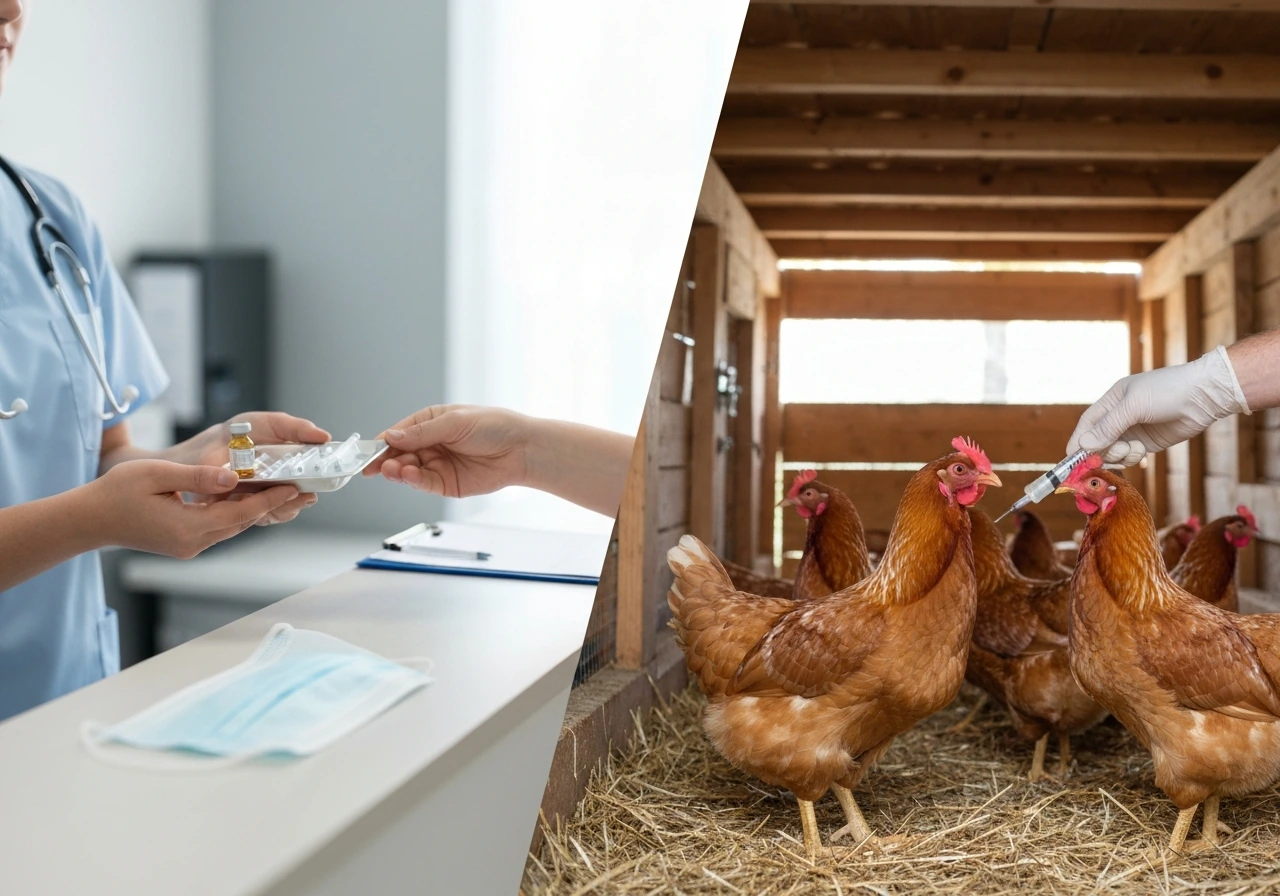
When people search for bird flu vaccines, they're often talking about completely different products depending on context. There are human vaccines designed to protect people from H5N1 infection, poultry vaccines used in agriculture to prevent spread among birds, and pandemic preparedness stockpiles held by governments for emergency deployment. These are separate products made by different manufacturers, regulated by different agencies, and based on different technologies.
On the human side, the conversation mostly centers on H5N1, the strain of avian influenza that has caused the most documented human infections. The FDA has licensed at least one human H5N1 vaccine for the U. The FDA’s list of vaccines licensed for use in the United States includes an H5N1 vaccine for the National Stockpile called “blank" rel="noopener noreferrer">Influenza Virus Vaccine, H5N1 (for National Stockpile)”. S. National Stockpile: AUDENZ, made by Seqirus. In the U.S., the main licensed human H5N1 vaccine is AUDENZ, made by Seqirus. There are also stockpiled products in Europe. Neither of these is an mRNA vaccine. On the poultry side, vaccines used in commercial flocks vary widely by country and are entirely separate from anything a person would receive.
Is the current bird flu vaccine mRNA? Here's the direct answer
No. As of July 2026, the licensed human H5N1 vaccines available in the U.S. and Europe use inactivated (killed virus) technology with an adjuvant, not mRNA. AUDENZ, the main FDA-licensed product, is officially described as an "Influenza A (H5N1) Monovalent Vaccine, Adjuvanted" and its package insert clearly identifies it as an inactivated vaccine. Europe's Adjupanrix is labeled as a "split virion, inactivated, adjuvanted" product by the EMA. Neither product involves mRNA.
That said, mRNA-based H5N1 candidates are in clinical development. The timeline for how long a bird flu vaccine took to develop depends on the platform and how quickly candidate vaccines moved through clinical trials and regulatory review clinical development. Moderna and other manufacturers have been working on mRNA flu vaccines, including H5 strains, as part of pandemic preparedness programs. If one of those gets authorized or approved, the platform language in the official FDA or EMA product label will say "mRNA" explicitly. Until then, the licensed products are inactivated.
How to verify the vaccine type yourself

The most reliable way to confirm any vaccine's technology platform is to look at the official prescribing information (package insert) for that product. In the U.S., every FDA-approved vaccine has a package insert posted on the FDA's website, and the "Description" section will tell you exactly what the product is: inactivated, live-attenuated, recombinant, or mRNA. For blank" rel="noopener noreferrer">AUDENZ, it says inactivated. If an mRNA bird flu vaccine ever gets authorized, that Description section will say so. The FDA's "Vaccines Licensed for Use in the United States" page is also a useful starting point to see what's currently approved.
What vaccine platforms are actually being used for bird flu
The dominant approach for human H5N1 vaccines right now is inactivated plus adjuvant. Here's a quick breakdown of the major platforms in use or development:
| Platform | How it works | Current status for H5N1 | Example product |
|---|---|---|---|
| Inactivated + adjuvant | Killed virus particles combined with an immune-boosting agent | FDA-licensed and stockpiled | AUDENZ (Seqirus) |
| Split virion + adjuvant | Fragmented virus particles with adjuvant | EMA-authorized, stockpiled in Europe | Adjupanrix (GSK) |
| Recombinant | Uses recombinant DNA technology to produce viral proteins | Used in some seasonal flu vaccines; being explored for H5 | Not yet licensed for H5N1 in U.S. |
| mRNA | Uses messenger RNA to instruct cells to make a viral protein | In clinical development; not yet licensed for H5N1 | Candidates in trials (Moderna and others) |
The reason inactivated vaccines have been the go-to for H5N1 preparedness stockpiles is partly historical: these vaccine technologies were well-established in influenza manufacturing before mRNA platforms matured. Adjuvants like AS03 (used in Adjupanrix) and MF59 (used in AUDENZ) help stretch limited vaccine supply and improve immune response, which matters a lot in a pandemic scenario where you need to vaccinate large populations quickly.
Who actually needs a bird flu vaccine right now
This is an important point that often gets lost in the conversation. The CDC has stated that there are currently no human H5N1 vaccines available for general public use in the United States. If you’re looking for who and bird flu vaccine availability, the CDC currently says there are no human H5N1 vaccines available for general public use in the United States. The stockpiled vaccines are held for potential pandemic response, not routine use. Surveillance as of now shows no unusual flu activity in people from H5N1, which means there's no broad public vaccination campaign underway.
WHO and European health authorities have identified specific occupational groups that could be considered for targeted vaccination during interpandemic or emergence periods. These are people with elevated exposure risk. If you're in one of these groups, checking with your employer or occupational health provider is the right move.
- Poultry farmers and workers with direct contact with infected or potentially infected flocks
- Veterinarians and animal health workers involved in outbreak response
- Scientists and laboratory workers who handle H5N1 virus material
- Fur farm workers in areas where H5N1 outbreaks have occurred among animals
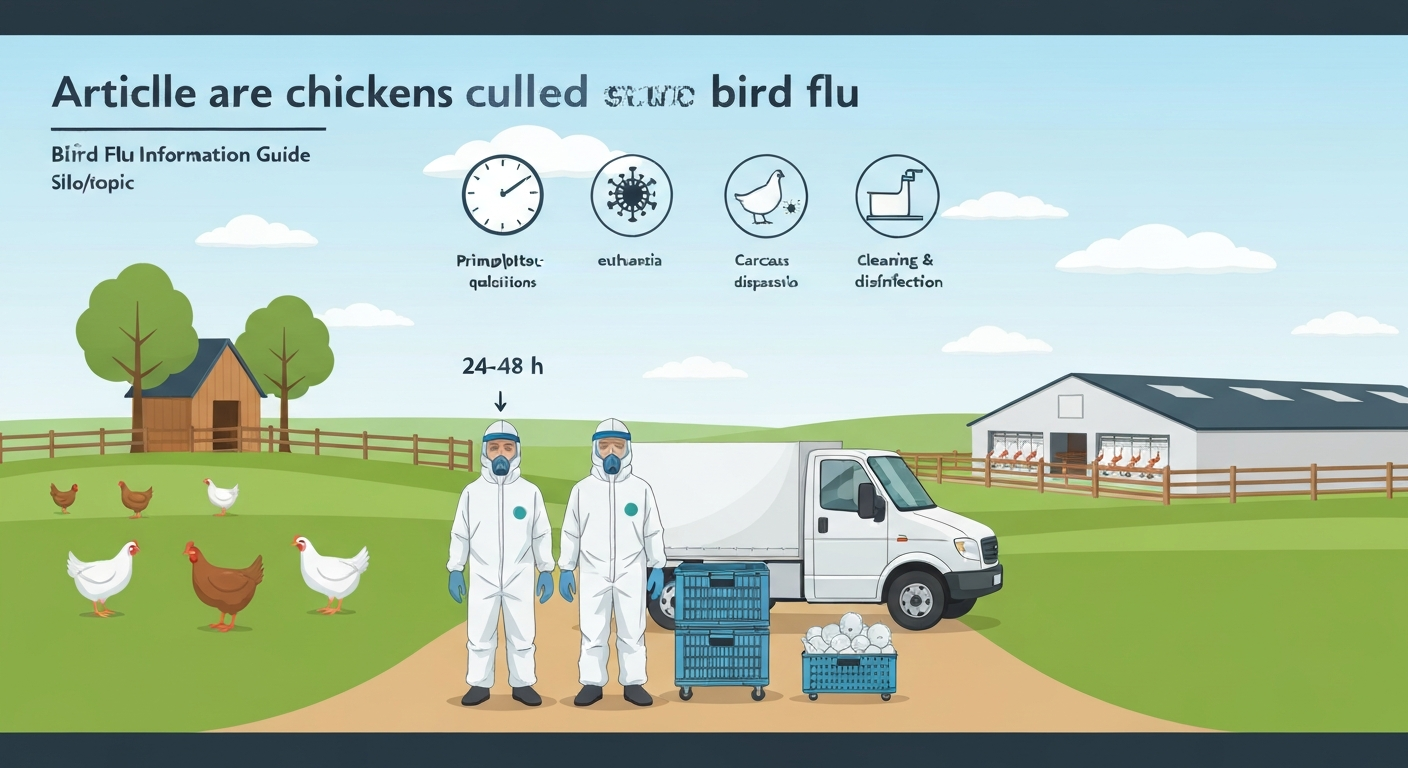
- Emergency responders involved in culling or decontamination operations during outbreaks
For the general public with no direct animal exposure, the current risk from H5N1 is considered low. Vaccination isn't recommended or available outside of specific high-risk occupational settings and government stockpile programs.
How vaccination fits into the bigger bird flu prevention picture
Vaccination is one layer of protection, but for most people, day-to-day prevention comes down to avoiding direct exposure to infected birds and practicing food safety. H5N1 doesn't spread easily from birds to humans, and the cases that do occur typically involve close, direct contact with infected poultry or their environments. Understanding the actual transmission routes makes the risk much easier to manage practically.
- Avoid direct contact with wild birds or sick poultry, especially in areas with active outbreaks
- Do not touch dead birds with bare hands; use gloves and wash hands afterward
- Cook poultry and eggs to safe internal temperatures (165°F / 74°C for poultry)
- Avoid consuming raw or undercooked poultry products, or unpasteurized dairy from affected farms
- Workers in poultry operations should use appropriate PPE including gloves, eye protection, and masks during potential exposure events
- Report unusual bird die-offs to local wildlife or agricultural authorities
The bird flu virus is RNA-based, which is part of why it can mutate and why pandemic preparedness planning takes it seriously. But that biological fact doesn't change the practical guidance for most people: the food safety and exposure-avoidance steps above cover the realistic risk for the vast majority of readers. Vaccination is a supplement to those measures for high-risk workers, not a replacement, and it's not currently an option for the general public.
What to do right now if you have questions about bird flu vaccination
If you're a member of the general public wondering whether you should get a bird flu vaccine, the honest answer today is that it's not available to you through normal channels, and current guidance doesn't call for it. But staying informed and knowing where to look is genuinely useful, especially if the situation changes. If you are trying to figure out how to get bird flu vaccine access in the real world, start by checking current public health guidance and eligibility for your situation.
- Check CDC's bird flu hub (cdc.gov) for the current human risk assessment and any updated vaccination guidance. The page is updated when the situation changes.
- If you work in poultry, veterinary, or wildlife settings, ask your occupational health provider or employer about whether any targeted vaccination program applies to your role.
- If a new vaccine gets announced, look up the product's FDA package insert on the FDA website and check the 'Description' section to confirm the platform (inactivated, recombinant, mRNA, etc.).
- Review WHO's guidance on H5 vaccines for the most current international recommendations, especially if you're outside the U.S.
- Follow food safety practices as outlined above regardless of vaccination status, since those reduce risk independently of any vaccine.
- If you've had direct exposure to sick or dead birds and develop flu-like symptoms, contact a healthcare provider promptly and mention the exposure.
The landscape of bird flu vaccines is genuinely evolving. Questions about who makes these vaccines, how long they took to develop, how effective they are, and how to access them are all worth tracking as the science and public health guidance continues to develop. If you want to gauge how effective is bird flu vaccine, focus on the reported immune response and real-world effectiveness data for the specific product and population studied how effective they are. For now, the bottom line is simple: no mRNA bird flu vaccine is licensed or available today, the existing stockpiled vaccines use inactivated technology, and general public vaccination isn't currently recommended or available.
FAQ
If bird flu is an RNA virus, why isn’t the bird flu vaccine mRNA?
No. Even though influenza viruses are RNA viruses, the vaccine technology matters. The currently licensed human H5N1 vaccines are made using killed (inactivated) virus plus an adjuvant, not nucleic-acid instructions that cells read (which is what mRNA products provide).
How can I quickly tell from a vaccine label whether it is actually mRNA?
Look for the word “mRNA” in the official Description section and the dosing information. If the label describes “inactivated,” “split virion,” or “live-attenuated,” that is a strong indicator it is not mRNA, even if a brand name looks unfamiliar or news coverage is confusing.
What should I verify before accepting a “bird flu vaccine” offer to make sure it is the right type for humans?
If you are offered something through a clinic, employer program, or travel context, you should confirm the exact product name and whether it is an FDA-approved or otherwise authorized product for the country you are in. Do not rely on social media claims, because poultry vaccines (used for birds) can be promoted online and are not the same as human vaccines.
I saw a headline saying “RNA” and “vaccine.” Does that mean it’s mRNA?
Do not assume that because a vaccine is “RNA-based” in news headlines it is mRNA. mRNA is a specific platform where the vaccine contains RNA encased for delivery to your cells, while inactivated vaccines contain no functional virus instructions, only viral material that has been killed.
Will side effects or dosing be different if an H5N1 mRNA vaccine is ever approved?
The inactivated plus adjuvant approach is different from mRNA, so the immune profile and expected reactogenicity can differ. If an mRNA H5 vaccine is authorized in the future, ask the clinician how side effects and dosing are expected to compare, since recommendations may depend on age and risk group.
Can I get a bird flu vaccine if I am not in a high-risk job?
Outside of specific high-risk occupational groups and government stockpile scenarios, there is generally no pathway for routine vaccination for the general public in the U.S. If someone offers a “routine bird flu shot,” confirm eligibility and the product’s authorization status with public health or the administering clinic.
Why do people get different answers online about bird flu vaccines being mRNA?
Yes, and the main practical point is to focus on the human H5N1 products versus poultry vaccines used in agriculture. Poultry vaccine programs can involve different manufacturers, different strains or formulations, and different technologies, so they should not be treated as if they are the same as a human mRNA vaccine.
What should I do if I hear about a new mRNA bird flu vaccine candidate but it hasn’t been clearly announced yet?
If you recently heard about an “mRNA bird flu vaccine,” treat it as unverified until you find an official product label, prescribing information, or an authorization notice from the relevant health regulator. In the meantime, prevention guidance for most people still centers on avoiding exposure and using food safety practices.