Quick answer: how many people have died from bird flu

As of the most recent data available in April 2026, the confirmed all-time global death toll from avian influenza A(H5N1) in humans stands at approximately blank" rel="noopener noreferrer">476 deaths out of 994 confirmed cases, according to the European Centre for Disease Prevention and Control's week-8 report covering data through February 20, 2026. That's a case-fatality rate hovering around 48%, meaning roughly half of all confirmed H5N1 infections in people have been fatal. For 2026 specifically, WHO's cumulative table published on January 22, 2026 showed zero confirmed human cases and zero deaths reported so far that year, though that snapshot is already a few months old and surveillance continues.
To put that in context: these are confirmed, laboratory-verified deaths reported to WHO since tracking began in 2003. The number you see depends entirely on which agency you check and on which date their data was cut off, which is why you'll find slightly different totals in different places. PAHO/WHO, for instance, published a figure of 991 cases with a 48% fatality rate as recently as November 2025. WHO's own Disease Outbreak News item from early 2024 cited 889 cases and 463 deaths as of April 1, 2024. The numbers are moving targets, and the differences are real, not errors.
All-time vs this year: why the count you see keeps changing
The all-time cumulative total is the number most sources quote, and it covers H5N1 human infections reported to WHO going back to 2003. That number has climbed steadily from 463 deaths (as of April 2024) to 476 deaths (as of February 2026). It moves slowly because confirmed human H5N1 infections are genuinely rare. Most years see fewer than ten confirmed human cases globally.
When people ask how many people died from bird flu "this year," they usually mean the current calendar year. WHO tracks this in its annual cumulative table, which is updated periodically with a specific cut-off date in the title. The January 22, 2026 version showed zero human H5N1 deaths for 2026 as of that date. That does not mean zero cases will occur all year. It just means none had been laboratory-confirmed and reported to WHO by that snapshot date. Current data on how many people have bird flu is updated more frequently by national agencies like the CDC than by WHO's global tables, so checking both gives you a fuller picture.
One important nuance: the WHO cumulative table covers H5N1 specifically. Other avian influenza strains, including H5N2, H7N9, and H10N3, have also caused human infections and deaths, but those are tracked separately. H7N9 alone caused hundreds of human deaths in China between 2013 and 2019 before declining sharply. If someone tells you "bird flu has killed over 600 people," they may be combining multiple strains. If they say "463 deaths," they're probably quoting an older H5N1-only figure.
Birds and wildlife: the death toll is in the billions, not hundreds
Human deaths are the smallest part of this story by sheer numbers. The bird death toll is staggering by comparison, and it splits into two very different categories: domesticated poultry culled to contain outbreaks, and wild birds that have died from infection.
Domesticated poultry
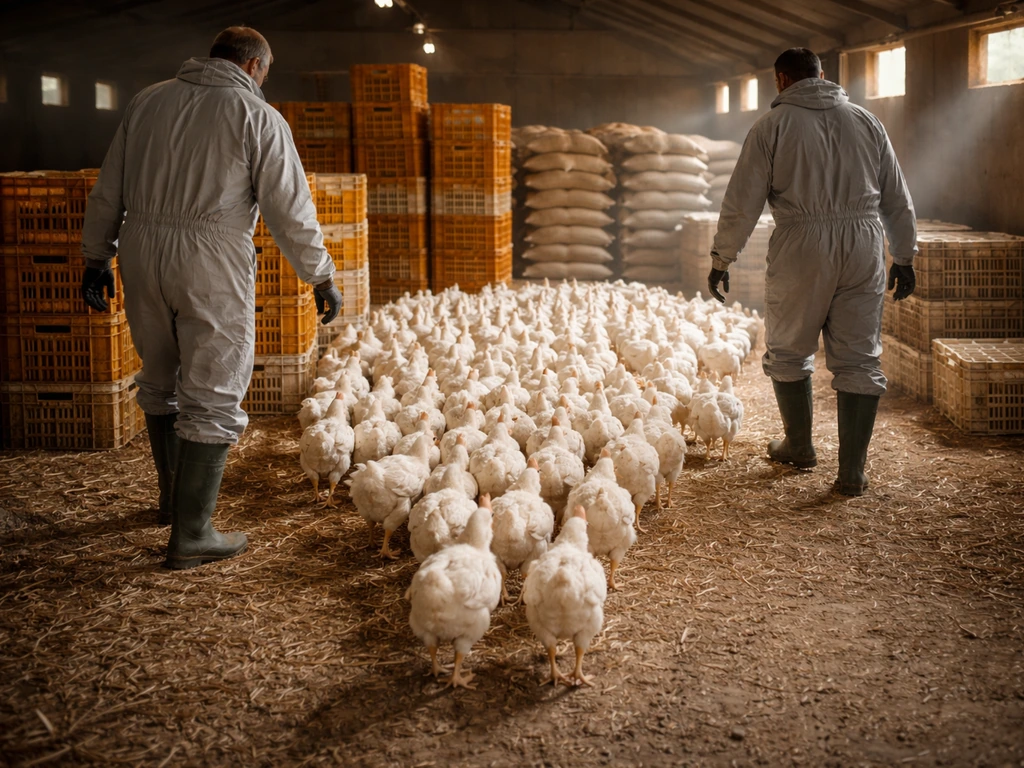
When H5N1 is detected on a commercial farm, the standard response is depopulation, meaning the entire flock is culled to prevent spread. This is where the numbers get enormous. To understand the scale of what that means for the industry, the data on how many chickens were killed due to bird flu makes the agricultural impact very concrete. We're talking about hundreds of millions of birds globally across recent outbreak cycles, with the United States alone losing tens of millions of birds in the 2022-2024 wave. These birds are not all "dying" from infection in the clinical sense. Most are killed as a precautionary control measure, but they're still counted in outbreak mortality statistics.
Farm-level reporting matters too. Knowing how many farms have bird flu helps you understand the geographic spread of active outbreaks, which in turn affects both poultry supply and the risk of human exposure through occupational contact.
Wild birds
Wild bird deaths are harder to count because no one is surveying every field and coastline. Reporting is passive: wildlife agencies and researchers log carcasses that are found and tested. The actual toll is certainly higher than what's officially recorded. What we do know is that migratory waterfowl, raptors, and seabirds have all been hit hard, with some colonies of seabirds experiencing mass mortality events. The situation with raptors is particularly striking. For example, dozens of bald eagles have died from bird flu in recent years, which would have been almost unimaginable given their protected status and recovery from near-extinction in the 20th century.
Other animals, including dogs and cattle: what we know and don't
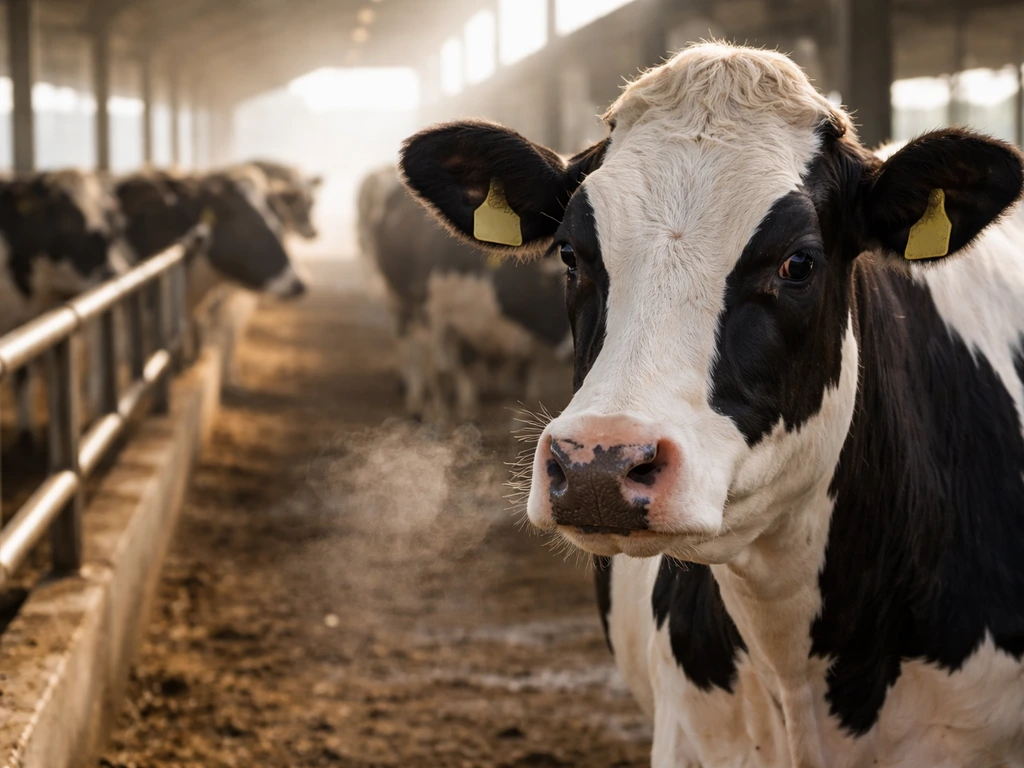
H5N1 has jumped into mammals far more frequently in the current outbreak cycle than in any previous wave, and that includes animals most people don't associate with bird flu. Dairy cattle in the United States became a major story in 2024, with herds across multiple states testing positive. The full scale of cattle infections has been tracked through milk testing and herd surveillance. If you want the current numbers, the latest count of how many cows have bird flu gives you a sense of how widely the virus has spread through the dairy industry specifically.
Dogs, cats, foxes, sea lions, and even bears have been documented with H5N1 infections in recent years. Deaths in cats and other carnivores have occurred, typically in animals that ate infected birds. Dogs are generally considered lower risk than cats because of differences in how they scavenge and eat prey, but confirmed infections in dogs have been reported. The challenge with mammal deaths is that surveillance is inconsistent. A dead fox in a field rarely gets tested. A dairy cow with production problems probably does. This means mammal death counts are almost certainly undercounts, and comparing them across species or countries is genuinely difficult.
Why the numbers differ depending on where you look
This is worth spending a moment on, because it confuses a lot of readers. There are at least four reasons why you'll find different bird flu death tolls on different websites on the same day.
- Data cut-off dates: Every official table has an "as of" date. WHO's cumulative H5N1 table was last updated January 22, 2026. ECDC's figure of 476 deaths reflects data through February 20, 2026. CDC's human monitoring page covers through February 28, 2026. These are not errors. They're just different snapshots.
- Strain definitions: H5N1 deaths and H7N9 deaths are tracked separately. Some sources quote H5N1 only. Others quote all avian influenza A strains combined. The totals are very different.
- Confirmed vs suspected: WHO counts only laboratory-confirmed cases reported through official channels. Suspected or probable cases in countries with limited lab capacity may never make it into the global total.
- Reporting lag and country capacity: Some countries have robust surveillance and report quickly. Others have limited lab infrastructure or political incentives to under-report. The WHO total is what got reported, not necessarily what occurred.
- Animal vs human counts: Searches for "bird flu deaths" often pull up poultry culling numbers, which are in the hundreds of millions, alongside human death figures, which are in the hundreds. These are not comparable numbers and should never be added together.
If you're trying to understand the specific individuals who have died, detailed information about who died from bird flu covers the case profiles and geographic distribution in more depth, which helps clarify why most confirmed human deaths have been concentrated in specific countries and exposure contexts.
A side-by-side look at the numbers

| Category | Approximate count | Source/notes |
|---|
| Human H5N1 deaths (all-time, 2003-2026) | 476 confirmed deaths | ECDC, data through Feb 20, 2026 |
| Human H5N1 cases (all-time, 2003-2026) | 994 confirmed cases | ECDC, data through Feb 20, 2026 |
| Human H5N1 deaths in 2026 (as of Jan 22) | 0 confirmed | WHO cumulative table, Jan 22, 2026 |
| Case-fatality rate (H5N1 in humans) | ~48% | PAHO/WHO, Nov 2025 |
| Domesticated poultry killed (US, recent outbreak cycles) | Tens of millions+ | USDA/APHIS; includes culled birds |
| Wild bird deaths | Undercounted; mass mortality events documented | Passive surveillance only |
| Dairy cattle infections (US) | Hundreds of herds confirmed | CDC/USDA ongoing tracking |
| Mammal species with confirmed H5N1 | 20+ species documented | USDA/academic surveillance |
Where to check reliable, live updates
For human cases and deaths, go directly to the primary sources rather than news aggregators. For the latest CDC updates on A(H5) bird flu, use blank" rel="noopener noreferrer">CDC’s “Current Situation” page and its linked human surveillance and monitoring system for ongoing changes. The numbers below come from agencies that publish original surveillance data, not summaries of summaries.
- WHO Disease Outbreak News (DON): Publishes situation reports for confirmed human cases, including H5N1. The cumulative H5N1 table (updated with an explicit "as of" date) is your best global reference for all-time human totals.
- CDC's A(H5) Bird Flu Surveillance and Human Monitoring page: Updated on a regular cadence (as of the most recent version, through February 28, 2026). Best for US-specific data on both human cases and animal detections.
- ECDC Communicable Disease Threats Report: Published weekly and includes a rolling update on global H5N1 human case totals. The week-8 2026 report is the most recent source cited here.
- PAHO/WHO for the Americas: Tracks H5N1 and other avian influenza strains specifically across North and South America, including the dairy cattle outbreak in the US.
- WOAH (World Organisation for Animal Health, formerly OIE): The authoritative source for animal outbreak data, including poultry culling figures by country. Their WAHIS (World Animal Health Information System) database is searchable by country and disease.
- National agriculture and wildlife agencies: In the US, USDA APHIS publishes farm-level bird flu detection data. In the UK, it's DEFRA. In the EU, EFSA publishes avian influenza surveillance reports.
One practical tip: bookmark the specific data pages, not the homepage. WHO's homepage won't tell you the current H5N1 count. You need to navigate to the Disease Outbreak News section or search for the cumulative H5N1 table directly.
What the death toll actually means for your personal risk
Nearly all of the 476 confirmed human H5N1 deaths since 2003 occurred in people who had direct, prolonged contact with infected poultry, usually in live bird markets or backyard flocks in countries like Egypt, Indonesia, Vietnam, and China. Casual exposure, like eating properly cooked poultry or being near someone who works on a farm, has not been a documented transmission route. The virus does not spread efficiently from person to person, which is why the global total has stayed in the hundreds over more than two decades despite infecting millions of birds.
The dairy cattle situation in the US introduced a new occupational exposure route for farm workers, and a small number of human infections linked to cattle contact were confirmed in 2024 and 2025. Those cases were generally mild, which differs from the historical H5N1 pattern of severe respiratory disease. This is partly because the clade circulating in US cattle may behave differently in humans than the Southeast Asian clades that drove the early mortality statistics. Understanding the potential scale of a worst-case scenario is also worth being informed about, and the estimates of how many people would die in a bird flu pandemic depend heavily on whether the virus gains efficient human-to-human transmission, which it has not done as of this writing.
Practical steps based on your situation
- General public with no farm exposure: Your risk is very low. Eat fully cooked poultry and eggs (internal temperature of 165°F/74°C kills the virus). Avoid touching dead wild birds with bare hands. Standard hand hygiene is sufficient.
- Poultry or dairy farm workers: This is where real vigilance matters. Use PPE (gloves, eye protection, N95 respirators) when working with sick animals or in confirmed outbreak areas. Report any flu-like symptoms to your doctor and mention your occupational exposure. Antiviral treatment with oseltamivir (Tamiflu) is most effective when started early.
- Backyard flock owners: Keep your flock separated from wild birds. Avoid introducing new birds from unknown sources during active outbreak periods. Know which farms in your region are affected. Checking which farms are affected by bird flu in your area is a practical starting point for understanding local risk.
- Travelers to high-risk regions: Avoid live bird markets and direct contact with poultry in countries with active H5N1 circulation. WHO and CDC both publish travel health notices when risk is elevated in specific locations.
- People with sick or dead wild birds nearby: Don't handle them with bare hands. Contact your local wildlife or agriculture agency. In the US, USDA APHIS has a reporting line for unusual wildlife deaths.
The bottom line is that 476 deaths over 23 years is a real public health concern, particularly because of that 48% case-fatality rate, but it also reflects a virus that has so far remained very difficult for humans to catch. The risk today is concentrated in specific occupational and geographic contexts. Stay informed through official sources, take sensible precautions if you work with animals or live in an active outbreak area, and recognize that the numbers you see in headlines will vary depending on which agency reported them and when their data was last updated.