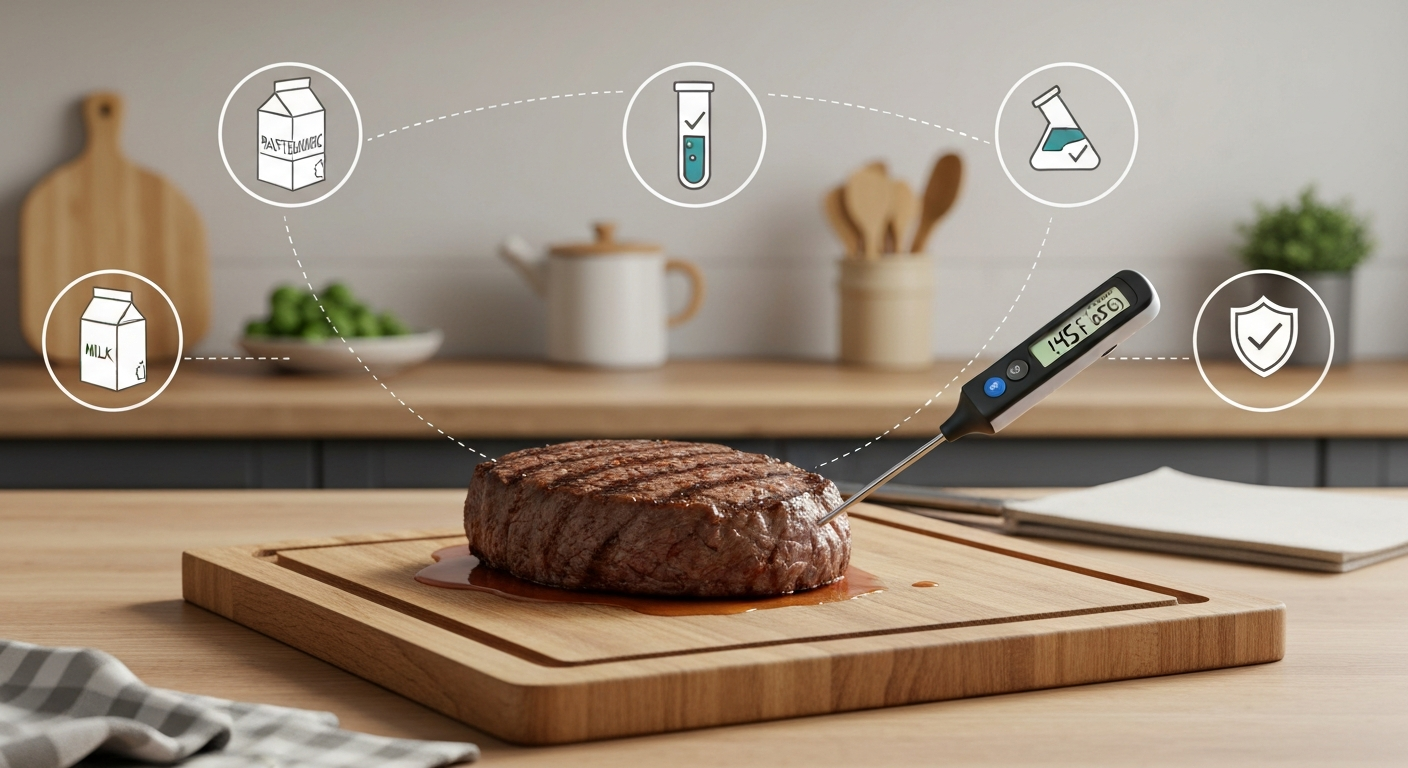
Yes, beef is safe to eat during the current bird flu situation, provided it is cooked to the USDA-recommended internal temperatures. Ground beef needs to reach 160°F (71°C) and whole cuts need to reach 145°F (63°C) with a 3-minute rest. At those temperatures, avian influenza A viruses, including H5N1, are inactivated. Thermal inactivation studies (Thermal inactivation of avian influenza and Newcastle disease viruses in chicken meat, PubMed / J Food Prot) show heat at these temperatures effectively inactivates H5N1 in meat Thermal inactivation of avian influenza and Newcastle disease viruses in chicken meat (PubMed / J Food Prot). No confirmed human infections have been traced to eating properly cooked beef, and every major public-health agency, including the CDC, WHO, FAO, and USDA, agrees on this point.
Is It Safe to Eat Beef During Bird Flu Concerns? Evidence & Advice

Bottom-line actions for consumers
- Cook ground beef to 160°F (71°C) and whole cuts to 145°F (63°C) with a 3-minute rest using a meat thermometer, not guesswork.
- Buy pasteurized milk and dairy products. Avoid raw milk, which has been identified as a high-concentration source of H5N1 in affected dairy herds.
- Follow standard raw-meat handling: wash hands, use separate cutting boards for raw and ready-to-eat foods, and refrigerate promptly.
- Check USDA FSIS and CDC websites for active recalls or outbreak advisories before purchasing meat during a declared outbreak.
- Do not eat raw or undercooked beef, poultry, or eggs, especially if the product comes from an area with confirmed herd infections.
- If you think you were exposed to infected animals or consumed potentially contaminated raw products and develop fever or respiratory symptoms within 10 days, contact your healthcare provider and mention the potential exposure.
Why are people Googling 'beef' and 'bird flu' together?
The phrase 'bird flu' naturally makes most people think of chickens, turkeys, and wild birds. So when someone searches 'is it safe to eat beef bird flu,' they usually fall into one of a few categories. Some have seen news headlines about H5N1 spreading in U.S. dairy cattle since early 2024 and are wondering whether that changes anything for beef. Others have a vague, understandable worry that a virus spreading among farm animals could somehow contaminate meat on store shelves. And some are simply unsure whether cattle are vulnerable to the same virus that affects birds.
The concern is reasonable. In March 2024, USDA APHIS confirmed the first detection of HPAI H5N1 in a Texas dairy cattle herd, which genuinely expanded what most people understood to be the scope of this outbreak. USDA APHIS confirmed the first detection of HPAI H5N1 in a Texas dairy herd on March 25, 2024, and issued a Federal Order on April 24, 2024 requiring premovement testing and mandatory reporting for lactating dairy cattle Status and Analyses of HPAI-affected Livestock Herds (USDA APHIS). The virus, previously associated almost exclusively with birds, was now circulating in a mammal that produces both milk and beef. That shift in the news cycle understandably raised questions about food safety that go beyond poultry.
How avian influenza actually spreads
Avian influenza A viruses circulate naturally in wild aquatic birds like ducks and geese, which typically carry the virus without getting sick. The problem arises when those viruses reach domestic poultry flocks. Highly pathogenic avian influenza (HPAI) H5N1 spreads between birds through direct contact with infected birds, their secretions, or contaminated environments. Fomites, shared water sources, and contaminated equipment are also documented transmission routes in agricultural settings.
Human infections have happened, but they are rare and almost always tied to close, direct contact with infected animals or heavily contaminated environments, not from eating cooked food. The CDC and WHO both note that no confirmed human cases have been linked to consuming properly cooked poultry, beef, or pasteurized dairy. In the 2024 U.S. dairy cattle outbreak, a small number of people tested positive for H5N1, with exposures linked to infected dairy cattle and raw milk, not retail meat or cooked products.
The spillover to cattle in 2024 was a notable development. H5N1 clade 2.3.4.4b was detected in dairy cow milk, serum, and tissues. The mammary gland showed very high viral loads, making raw milk the primary concern from a food-safety standpoint. Muscle tissue, which becomes the beef people eat, showed much lower and less consistent viral detection, an important distinction when assessing food safety risk.
What the science actually says about H5N1 in cattle and beef
USDA FSIS completed a notable round of surveillance testing in May 2024, analyzing 109 muscle-tissue samples collected from culled or condemned dairy cows. Of those 109 samples, 108 came back negative by PCR. One sample, from the diaphragm, showed viral RNA. Critically, that carcass was held and did not enter the food supply, and further testing did not identify infectious (live, replication-competent) virus in common retail muscle cuts from that animal. Viral RNA being present is not the same as infectious virus being present, and that distinction matters enormously.
Starting September 16, 2024, FSIS expanded its monitoring through the National Residue Program, holding sampled carcasses pending results so that any confirmed positive would be prevented from reaching consumers. European risk assessments looking at the same USDA data reached the same conclusion: detection in bovine muscle is rare, and standard slaughterhouse inspection combined with cooking makes foodborne risk to consumers very low. Those assessments do acknowledge uncertainty and call for continued surveillance, which is an honest and appropriate response to a still-evolving situation.
Peer-reviewed studies published in Emerging Infectious Diseases through 2024 and into early 2026 confirmed widespread H5N1 herd infections in U.S. dairy cattle, with milk being the most consistent high-titer matrix. Muscle tissue remained a low-risk compartment. The FAO's overall assessment is that the risk of acquiring H5N1 from food is negligible when standard food-safety practices are followed, and that documented human infections have been tied to animal contact, not food consumption.
Could beef carry HPAI? The pathways and how realistic they are
Let's think through the realistic contamination pathways. For H5N1 to end up in beef that poses a risk to a consumer, the following would need to happen: an infected animal would need to have detectable infectious virus in its muscle tissue (uncommon based on current data), that animal would need to pass through slaughter inspection undetected (addressed by FSIS's expanded monitoring and APHIS's Federal Order requiring pre-movement testing for lactating dairy cattle), the muscle tissue would need to enter the supply chain without being cooked, and the consumer would need to eat it raw or severely undercooked. Each step in that chain reduces the risk further, and cooking is the final, reliable backstop.
Cross-contamination during raw meat handling is a more plausible concern, and it is not specific to bird flu. Handling any raw meat and then touching your face, mouth, or ready-to-eat food without washing hands is a standard food-safety risk for multiple pathogens. The mitigation is the same regardless of bird flu: handle raw meat carefully, wash hands thoroughly, and keep raw and ready-to-eat foods separated.
Practical food-safety steps at home
Cooking temperatures are the most reliable protection you have, and a meat thermometer is the only way to verify them. Color and texture are not reliable indicators of doneness for beef. The USDA guidelines below apply regardless of any ongoing bird flu situation, but they provide a large margin of safety specifically against H5N1.
| Beef Type | Safe Internal Temperature | Rest Time |
|---|---|---|
| Ground beef (burgers, meatballs, meatloaf) | 160°F (71°C) | None required |
| Whole cuts (steaks, roasts, chops) | 145°F (63°C) | 3 minutes |
| Beef in mixed dishes (stews, casseroles) | 165°F (74°C) | None required |
Beyond cooking temperatures, standard food-safety practices cover the rest. Keep raw beef separated from produce and ready-to-eat foods in your shopping cart, bags, and refrigerator. Use a dedicated cutting board for raw meat and wash it with hot soapy water (or run it through the dishwasher) after each use. Refrigerate beef within two hours of purchase and within one hour if the ambient temperature is above 90°F. Thaw frozen beef in the refrigerator, in cold water (changed every 30 minutes), or in the microwave if you plan to cook it immediately. Never thaw meat on the countertop.
How the food-supply chain protects you before beef reaches your kitchen
Consumer-level cooking is actually the last line of defense in a multi-layered system. At the slaughter level, USDA FSIS inspectors examine animals ante-mortem (before slaughter) and post-mortem (after). Animals that are visibly ill are condemned and do not enter the food supply. The APHIS Federal Order issued April 24, 2024 added a specific requirement: lactating dairy cattle must be tested and reported before movement between states, which directly limits the movement of potentially infected animals into the processing stream.
FSIS's expanded H5N1 monitoring program, which began in September 2024, adds a targeted surveillance layer on top of standard inspection. Carcasses from sampled animals are held until results are available, and any positive result triggers removal from the food supply. This is the same framework used for other residue and pathogen monitoring, and it is specifically designed to catch what standard visual inspection might miss.
Recall mechanisms exist as an additional backstop. If a contamination issue is identified after product has entered commerce, FSIS can issue a public recall. Checking FSIS's recall database and signing up for email alerts is a practical step for any consumer who wants to stay current. During active outbreak periods, this is worth doing.
Related concerns: turkey, restaurant chicken, raw pet food, and raw milk
Beef is only one piece of a broader set of food-safety questions that come up during bird flu events. Turkey is another common concern, and the logic is essentially the same: properly cooked turkey (165°F / 74°C internal temperature throughout the thickest part of the bird, including the innermost part of the thigh and wing) is safe to eat. The HPAI outbreaks in turkey flocks are managed through flock depopulation, and infected birds do not legally enter the human food supply. For specific guidance on turkey safety during outbreaks, see the page titled "is it safe to eat turkey with bird flu.".
For restaurant chicken, including fast-food chicken from chains like KFC, the relevant question is whether commercial cooking processes reliably hit safe temperatures. They do. Commercial frying, roasting, and grilling are designed to exceed minimum safe internal temperatures, and this applies regardless of whether there is an active bird flu outbreak. The bird flu risk from eating commercially prepared, fully cooked poultry is not meaningfully elevated by current outbreak conditions.
Raw pet food is a genuinely separate and more serious concern. H5N1 has been detected in cats that consumed raw poultry-based pet food, and raw cat food products have been recalled over bird flu concerns. Unlike cooked meat, raw pet food does not go through a heat-inactivation step, which means any virus present in the source material survives. If you feed raw pet food to cats or dogs, this is worth monitoring closely through USDA and FDA recall databases. The risk from raw pet food is not the same as the risk from properly handled and cooked human food.
Raw milk deserves its own mention because it represents the clearest documented food-safety risk in the 2024 U.S. outbreak. H5N1 is shed in very high concentrations in the milk of infected dairy cows. Pasteurization, specifically HTST (72°C for 15 seconds) or LTLT (63°C for 30 minutes), inactivates the virus. A laboratory spiking study published in NEJM confirmed that at 72°C, infectious virus dropped approximately 10,000-fold within 5 seconds. Commercial milk is pasteurized, and the CDC advises strongly against consuming raw milk during this outbreak.
What to do if you think you were exposed
If you ate raw or undercooked beef from a potentially affected source, or had direct contact with sick animals and are now concerned about exposure, watch for symptoms over the next 10 days. H5N1 symptoms in humans can include fever (temperature at or above 100.4°F), cough, sore throat, runny or stuffy nose, muscle aches, headaches, fatigue, and in some cases eye redness (conjunctivitis) or difficulty breathing. Gastrointestinal symptoms have also been reported.
If you develop symptoms and have a specific reason to believe you were exposed, contact your healthcare provider and tell them about the potential exposure before you arrive. This matters because H5N1 testing is not routine, and your provider needs the exposure history to order the right tests and notify public health authorities. Your state or local health department is also a resource; they coordinate with the CDC on H5N1 case investigations and can guide you on next steps. Do not delay seeking care based on uncertainty about whether your exposure was 'significant enough.'
Current public-health context and where to get updates
As of mid-2026, the H5N1 situation in U.S. livestock remains an active public-health concern that is being actively monitored and managed. The virus continues to circulate in dairy cattle herds across multiple states, and surveillance programs are ongoing. At the same time, the food-safety infrastructure: inspection, pre-movement testing, retail monitoring, pasteurization, and cooking guidance, remains in place and has been specifically strengthened in response to the dairy cattle situation.
The most reliable sources for current outbreak status and any changes to food-safety guidance are the CDC bird flu hub (cdc.gov/flu/avianflu), the USDA APHIS livestock situation page, and the USDA FSIS news and recall database. WHO's Q&A on H5N1 is regularly updated and provides international context. These pages are the right place to check if you hear a breaking news story and want to understand what it actually means for food safety.
The core message from all of these agencies has remained consistent: the current H5N1 outbreak in cattle is a serious animal-health and public-health concern, but it does not make properly cooked beef, properly cooked poultry, or pasteurized dairy unsafe for consumers. That conclusion is based on multiple layers of evidence, including surveillance data, thermal-inactivation studies, epidemiological investigations, and international risk assessments. Cook your meat to the right temperature, avoid raw milk, and stay informed through official sources. For more detail on whether bird flu is in food, see our page titled "is bird flu in food.". That is genuinely enough.
FAQ
Short answer: Is it safe to eat beef with respect to bird flu (H5N1)?
Yes — based on current evidence and official guidance, properly cooked beef and pasteurized dairy are considered safe. Public‑health agencies (CDC, WHO, FAO, USDA/FSIS) state standard cooking and pasteurization inactivate avian influenza viruses and there are no confirmed human infections from eating properly cooked meat or pasteurized milk.
Why do people ask about "beef" and bird flu?
People ask because avian influenza ("bird flu") is known to infect birds and sometimes spill over to mammals. In 2024–2025 H5N1 was detected in U.S. dairy cattle (milk tests and a few herd infections), raising questions about whether cattle, beef, or milk could carry the virus into the food supply. Concern also comes from headlines about infected animals and uncertainty about transmission routes.
How does avian influenza normally spread to people?
Most human infections have resulted from close contact with infected birds or contaminated environments (respiratory secretions, feces, handling carcasses). Foodborne transmission has not been a documented driver of human cases when foods are properly cooked or pasteurized; instead, direct animal contact and contaminated surfaces are the main risks.
Can H5N1 infect cattle and be present in beef?
Yes, H5N1 has been detected in dairy cattle (notably in milk and sometimes serum/tissues) during recent events. Detection in muscle tissue (meat) has been rare: large screening efforts found essentially no positive retail muscle samples and only isolated detections in animals culled/condemned, with those carcasses prevented from entering the food supply. The evidence indicates milk and mammary tissue are more consistently affected than skeletal muscle.
Could infectious virus be in retail beef or ground beef?
Risk appears extremely low. U.S. monitoring and peer‑reviewed studies found viral RNA only rarely in muscle, and regulatory controls (testing, condemnation, holding sampled carcasses) are in place. Moreover, standard cooking temperatures recommended for beef and ground meat should inactivate influenza viruses if meat were contaminated.
What cooking temperatures and food‑safety steps protect against avian influenza in meat and milk?
Use a thermometer: cook ground beef to 160°F (71°C) and whole cuts to at least 145°F (63°C) with a 3‑minute rest. Avoid raw or undercooked meat. Drink only pasteurized milk and avoid raw milk products. Follow standard hygiene: wash hands, avoid cross‑contamination between raw and cooked foods, sanitize surfaces, and refrigerate/freeze promptly.
Raw Cat Food Recall Over Bird Flu Concerns: What to Do
Bird flu raw cat food recall checklist: identify affected lots, stop feeding, safe cleanup, and human health risk guidan