
Yes, KFC and other cooked fast-food chicken is safe to eat during bird flu outbreaks. Every credible public health authority, including the WHO, CDC, and USDA, agrees on this point: properly cooked poultry is not a transmission route for avian influenza. The virus is heat-sensitive and is destroyed at the internal temperatures that commercial kitchens are required to reach. There is no documented case of a person contracting bird flu from eating thoroughly cooked chicken or eggs.
Is KFC Chicken Safe During Bird Flu? Evidence-Based Guide

Maya Chen
26 Jul 2026
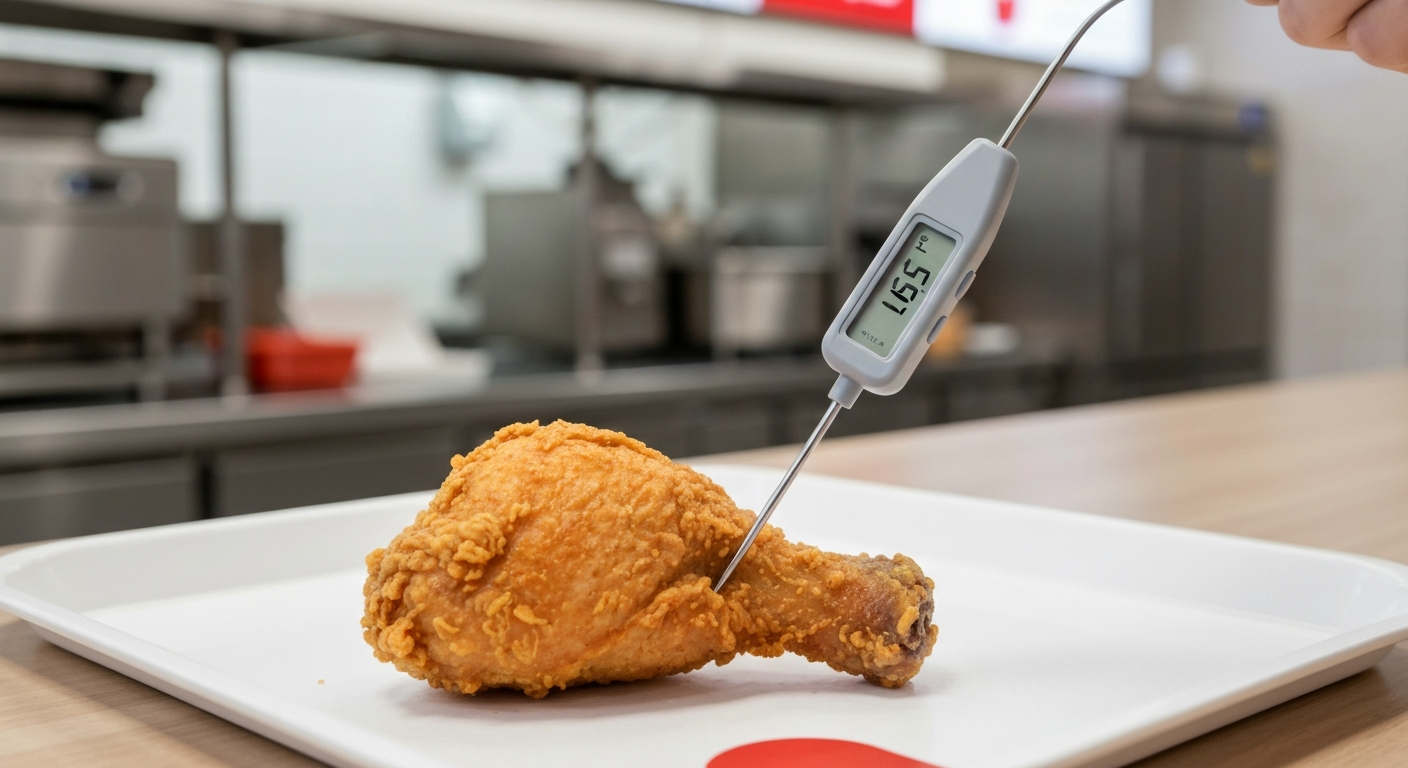
What the science actually says about cooking and bird flu
Avian influenza viruses, including the HPAI H5N1 strain that has been driving outbreaks in poultry flocks, are what scientists call heat-labile. That means heat kills them efficiently. USDA researchers (Thomas and Swayne) measured precisely how quickly HPAI H5 strains are inactivated in chicken meat at temperatures between 57 and 61 degrees Celsius, producing thermal inactivation curves that confirm conventional cooking creates large log reductions in viral infectivity. In plain terms: the higher and longer the heat, the faster the virus is eliminated, and cooking temperatures far exceed the threshold needed.
The USDA FSIS sets the safe minimum internal temperature for all poultry at 165°F (74°C). The FDA Food Code, which governs restaurant and retail food service, independently requires poultry to reach that same 74°C mark before it can be served. The FDA Food Code, U.S. FDA (temperature‑measuring device requirements) requires temperature‑measuring devices to meet specified accuracy (commonly ±2°F) and to be calibrated/verified with documented records Food Code — U.S. FDA (temperature‑measuring device requirements). KFC fries its chicken at oil temperatures well above that threshold. By the time a piece of fried chicken is finished cooking, every part of it has exceeded the temperature at which the virus can survive, multiple times over.
One thing worth knowing: the virus behaves almost the opposite way in cold conditions. Research summarized in the UK Food Standards Agency's technical risk assessment found that HPAI H5 strains can survive in chilled or frozen tissue for weeks to months, with some strains remaining infectious for up to roughly 160 days in muscle tissue under refrigeration conditions. Freezing does not inactivate the virus. That distinction matters a lot when comparing raw and cooked product risks, which I will get into below.
How restaurant practices keep cooked chicken safe
The safety of cooked fast-food chicken is not just a matter of physics. It is also a matter of documented, inspected operational controls. The FDA Food Code requires every retail food establishment, including fast-food chains, to use calibrated probe thermometers accurate to within 2°F, maintain temperature logs, and follow HACCP (Hazard Analysis and Critical Control Points) plans that include cooking temperature verification as a critical control point. Staff training programs like ServSafe, which is based directly on the FDA Food Code, teach food handlers exactly how and why these checks matter.
KFC's parent company, Yum! Brands, publicly reports supplier audit programs covering large numbers of supplier facilities with GFSI (Global Food Safety Initiative) certification targets for its supply chain. Yum! Brands details its supplier and restaurant food-safety programs, including extensive supplier audits and GFSI certification targets, in its Raised Responsibly, Yum! Brands (food-safety / supplier commitments) report Raised Responsibly — Yum! Brands (food-safety / supplier commitments). That does not mean every location is perfect every day, but it means there is a formal, audited system in place designed to catch failures before they reach customers. For bird flu specifically, the risk these systems address at the cooking stage is already extremely low, because heat is such an effective kill step.
Cross-contamination at restaurants is a more nuanced concern. The danger would not be from eating fully cooked chicken, but from a scenario where raw poultry contaminates a surface or food that is then consumed without further cooking. Proper kitchen practices (separate cutting boards, handwashing protocols, no raw poultry contact with ready-to-eat foods) are specifically designed to prevent this. HACCP plans in commercial kitchens treat cross-contamination as a recognized hazard with defined prevention steps.
From farm to restaurant: supply chain controls and inspections
The U.S. poultry supply chain has multiple layers of oversight before a bird reaches any kitchen. USDA APHIS (Animal and Plant Health Inspection Service) manages surveillance at the flock level, including enhanced pre-slaughter surveillance for turkey flocks in HPAI-affected states, which was updated in January 2025. The goal is to detect infected flocks before birds enter the food system. If a flock tests positive, it is depopulated and does not proceed to slaughter.
At the processing level, USDA FSIS inspectors are present in slaughter and processing plants, enforcing HACCP validation and running sampling programs for pathogens. FSIS and APHIS together have authority to remove product from commerce if a safety concern is identified. This is a genuine backstop: even if a bird somehow entered the system from a flock under investigation, processing controls and inspection create additional detection and removal opportunities.
APHIS has explicitly stated that properly cooked poultry and eggs remain safe to eat even when outbreaks are ongoing in the broader flock population. That reassurance is grounded in the multi-layer system described above, not just in the cooking kill step alone.
How recalls and outbreak responses work
When an HPAI detection occurs at a farm, the response is fast and aggressive. APHIS initiates a quarantine around the affected premises, the flock is depopulated (meaning the birds are culled, not harvested for food), and a controlled area is established around nearby farms. Product that has already entered commerce from an affected operation can be subject to recall. These recalls are coordinated between USDA FSIS, the farm, and the processor, and they are announced publicly through FSIS recall notices.
It is worth noting that recalls tied to HPAI are not the same as recalls of cooked product. The recalls you see in the news tend to involve raw poultry products, including raw pet food, not finished cooked items from restaurants. The heat treatment that cooked products have already received is exactly why they fall into a different risk category.
Raw poultry and cross-contamination: the real risk zone
If you handle raw chicken at home during an active bird flu outbreak, the risk calculus changes. As noted earlier, the virus can survive in chilled or frozen raw meat for extended periods. If an infected bird somehow moved through the supply chain, which the controls above are designed to prevent, raw meat handled at home could theoretically carry live virus before it is cooked. This is not a new concept for food safety. The same logic applies to Salmonella and Campylobacter in raw poultry, which is why safe handling of raw chicken has always been standard guidance.
Practical safe handling at home means treating raw poultry as a potential pathogen source regardless of bird flu. Keep raw chicken separate from other foods, wash your hands thoroughly after handling it, use a food thermometer to confirm the internal temperature hits 165°F, and sanitize surfaces and utensils that contacted raw meat before using them for anything else. These steps eliminate the risk from any heat-sensitive pathogen in raw poultry, including avian influenza.
Raw pet food and H5N1: a genuinely different situation
The area where bird flu and food safety intersect most concretely for consumers right now is raw pet food, not restaurant chicken. Multiple raw pet food products in the U.S. have been voluntarily recalled after testing positive for H5N1. These recalls are significant because raw cat and dog foods often contain uncooked poultry or poultry byproducts, and because infected companion animals (particularly cats) have shown serious illness after consuming contaminated raw food. Cats appear to be notably susceptible to H5N1.
The FDA has responded by requiring manufacturers of raw cat and dog food that use uncooked poultry or cattle materials to re-analyze their Preventive Controls for Animal Food (PCAF) plans to specifically include H5N1 as a reasonably foreseeable hazard. This is a regulatory acknowledgment that the raw pet food sector poses a real, not hypothetical, risk in the current outbreak environment. For pet owners, the actionable guidance is to check the FDA's recall database regularly, avoid raw poultry-based pet foods unless you have confirmed they are from a tested, certified supply, and wash hands after handling any raw pet food products. If you want more detail on this topic specifically, the raw cat food recall situation is covered in depth elsewhere on this site.
Comparing risk: chicken, turkey, and beef
Readers often ask whether beef is safer than chicken during bird flu outbreaks, or whether turkey carries higher risk than chicken. The honest answer is that the primary concern with bird flu is specific to avian species, but the comparison between different meats is worth laying out clearly.
| Meat type | Susceptible species? | H5N1 detected in animals? | Risk from cooked product | Key concern area |
|---|---|---|---|---|
| Chicken (cooked) | Yes (poultry) | Yes, in flocks | None (virus destroyed at 165°F) | Raw handling and cross-contamination |
| Turkey (cooked) | Yes (poultry) | Yes, in flocks | None (virus destroyed at 165°F) | Raw handling; flock surveillance ongoing |
| Beef (cooked) | Cattle are affected by H5N1 | Yes, in dairy herds | None from properly cooked beef | Raw milk is the documented risk, not cooked beef |
| Raw poultry (any) | Yes | Yes | Possible if virus present and meat not cooked | Home handling, cross-contamination |
| Raw pet food (poultry-based) | Yes | Confirmed in recalled products | High if product is H5N1-positive | Direct exposure for pets and handlers |
Turkey deserves specific mention because HPAI outbreaks have heavily affected U.S. turkey flocks, and enhanced surveillance for turkey has been a specific regulatory focus. The risk profile for cooked turkey is identical to cooked chicken: proper cooking to 165°F eliminates the virus. The concern for raw turkey at home mirrors the concern for raw chicken. For beef, the documented H5N1 risk is primarily associated with raw milk from infected dairy cattle, not with beef muscle meat. Properly cooked beef carries no identified H5N1 risk. For more on beef and H5N1 risks, see Is it safe to eat beef during bird flu outbreaks Is it safe to eat beef during bird flu outbreaks?. If you are comparing these categories more broadly, the food safety bird flu topic on this site covers the general landscape across food types in more detail.
Practical steps if you are concerned
Most people eating cooked fast-food chicken have nothing specific to do differently. But if you want a concrete checklist for confidence, here is what the evidence actually supports.
- Eat cooked chicken from reputable restaurants without concern: the cooking process reliably eliminates avian influenza virus.
- At home, use a food thermometer and confirm all chicken and turkey reaches an internal temperature of 165°F (74°C).
- Treat raw poultry as a pathogen risk during handling: separate from other foods, wash hands with soap after contact, sanitize cutting boards and surfaces.
- Check the USDA FSIS recall database (fsis.usda.gov) and FDA recall database (fda.gov) periodically, especially if you buy raw or minimally processed poultry products.
- If you feed pets raw poultry-based food, check the FDA's H5N1 recall notices specifically and consider switching to commercially heat-treated pet food until the outbreak environment stabilizes.
- Avoid raw or undercooked poultry products: raw or lightly cooked dishes, runny eggs from unknown sources, and raw duck blood products, which have historically been associated with anecdotal exposure reports.
- If you work directly with live poultry or wild birds and experience respiratory illness or conjunctivitis, contact your healthcare provider and mention the exposure. This is an occupational concern, not a food concern.
Where to check current outbreak status and recalls
Outbreak status in U.S. poultry flocks changes frequently. USDA APHIS publishes current confirmed HPAI detections by state and species at aphis.usda.gov. The CDC monitors any human cases of avian influenza exposure at cdc.gov/flu/avianflu. For food recalls specifically, USDA FSIS and FDA each maintain searchable recall databases updated in real time. The WHO tracks international H5N1 and other avian influenza developments through its Influenza fact sheet and situation reports. These four sources give you an accurate, current picture without needing to rely on news coverage, which sometimes frames outbreak data without useful consumer context.
The bottom line is straightforward: the risk from eating properly cooked chicken at KFC or any similar restaurant during a bird flu outbreak is not a meaningful risk. The science of thermal inactivation, the regulatory framework around poultry inspection, and the complete absence of documented human infections from cooked poultry all point in the same direction. See the short FAQ titled is bird flu in food for a concise consumer-focused answer. The areas where genuine caution is warranted are raw poultry handling at home and raw pet food products, both of which are specific, actionable concerns rather than reasons to avoid cooked chicken.
FAQ
Is KFC (and similar cooked fast-food chicken) safe to eat during avian influenza (bird flu) outbreaks?
Short answer: Yes — properly cooked and handled restaurant chicken (including KFC and major fast-food chains) is considered safe to eat during avian influenza outbreaks. Public‑health authorities (WHO, CDC, USDA/FSIS, FDA) say there is no evidence that people have been infected by eating properly cooked poultry or eggs. Cooking poultry to a safe internal temperature (165°F / 74°C) inactivates avian influenza viruses; restaurant food‑safety regulations and large chain supplier controls are designed to ensure those temperatures and sanitary practices are met (WHO: https://www.who.int/…, CDC: https://www.cdc.gov/…).
Why is cooked restaurant chicken safe from avian influenza? What is the science?
Cooking: Avian influenza viruses are heat‑labile and are reliably inactivated by normal cooking temperatures used for poultry. Authorities and thermal‑inactivation studies show conventional cooking (internal temperature 165°F/74°C) produces large reductions in infectivity. Processing and restaurant practice: slaughterhouse inspection, supplier HACCP and FSIS oversight, plus restaurant temperature checks and food‑safety training (FDA Food Code/ServSafe) further reduce risk. Cold survival caveat: the virus can persist for long periods in chilled or frozen raw tissues, so it is the combination of processing controls and cooking that makes ready‑to‑eat cooked chicken safe (see USDA study and FSA risk review for thermal and cold‑stability data).
Do fast‑food chains like KFC have extra safety steps that reduce risk?
Yes. Large chains typically require supplier certifications, routine supplier audits, traceability, and standardized cooking procedures (use of calibrated probe thermometers, time/temperature records, HACCP‑style controls). Corporate food‑safety programs (for example Yum! Brands/KFC) emphasize supplier verification and restaurant‑level controls. These measures aim to ensure raw product is safe at receipt and is cooked and held at safe temperatures before service.
Could infected raw chicken ever be served undercooked or contaminate other foods at a restaurant?
Undercooking or cross‑contamination are potential hazards in any food service setting, but they are controlled risks. The FDA Food Code and industry training require calibrated thermometers, cook‑temperature verification, separation of raw and ready‑to‑eat foods, and cleaning/sanitizing procedures. To reduce risk, most reputable restaurants follow those rules. The biggest risk from avian influenza is from raw or undercooked meat or poor cross‑contamination controls — not from properly cooked menu items.
What about raw pet foods, like raw cat food or raw dog food — are those safe during bird flu outbreaks?
Raw pet foods are different: because they are uncooked, they can retain infectious avian influenza virus if made from infected poultry. Regulatory agencies (FDA) have required manufacturers of raw pet foods to include H5N1 in their hazard analyses and some raw pet‑food lots have been recalled for H5N1. If you use raw pet food, be aware of recall notices, follow strict handling and hygiene, and consider switching to cooked or sanitized pet diets during outbreaks.
Is there any documented case of people getting bird flu from eating poultry in a restaurant?
No well‑documented, laboratory‑confirmed human infections have been attributed to eating properly cooked poultry. Historical incidents implicating ingestion involved raw or unusual uncooked products (for example raw blood dishes) rather than conventionally cooked meat. Public‑health guidance therefore focuses on avoiding raw/undercooked poultry and maintaining food‑safety practices.
Next Articles
Is It Safe to Eat Beef During Bird Flu Concerns? Evidence & Advice
Is it safe to eat beef amid bird flu concerns? Clear answer, evidence, cooking safety, and steps if exposed.
Raw Cat Food Recall Over Bird Flu Concerns: What to Do
Bird flu raw cat food recall checklist: identify affected lots, stop feeding, safe cleanup, and human health risk guidan
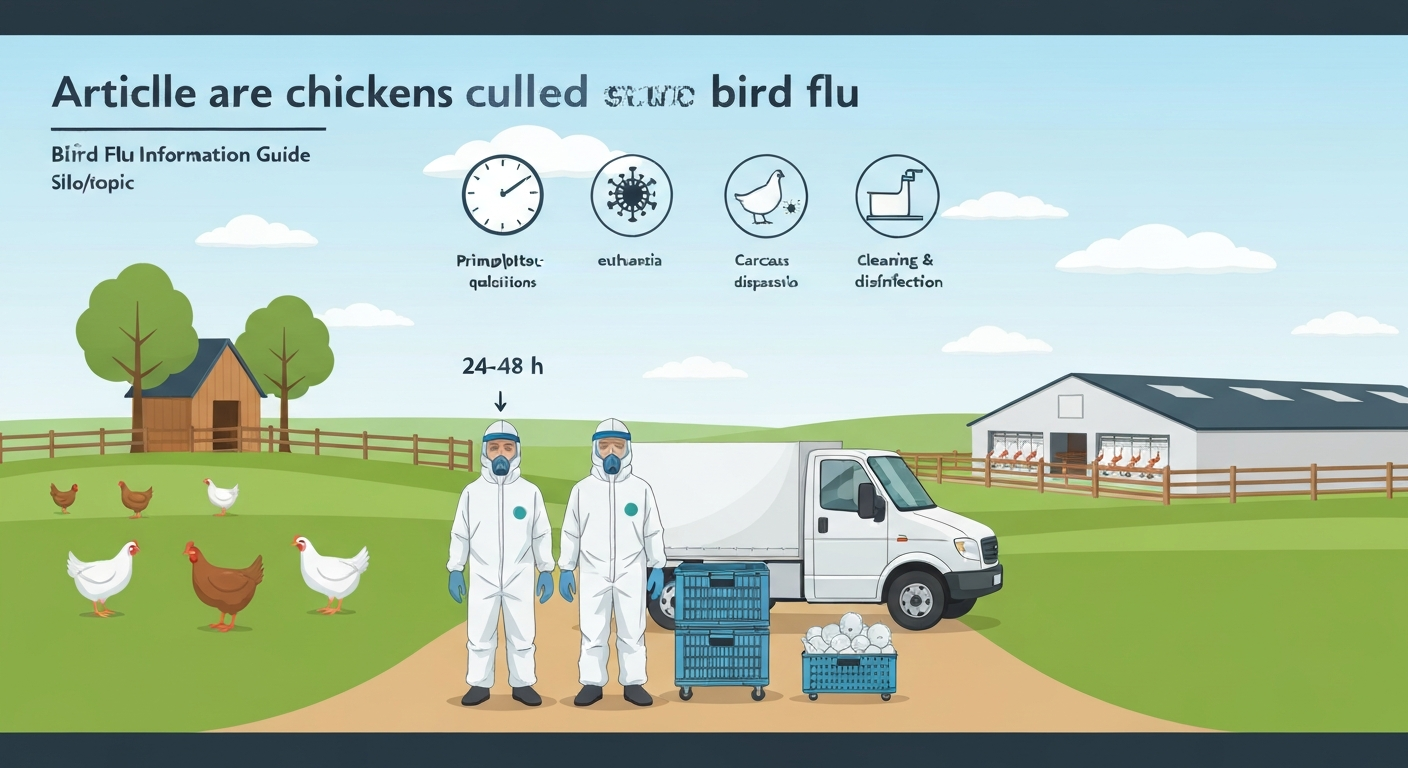
How Are Chickens Culled Bird Flu: Methods, Reasons & Steps
How are chickens culled during bird flu: why it’s done, humane methods, disposal, biosecurity, and next steps