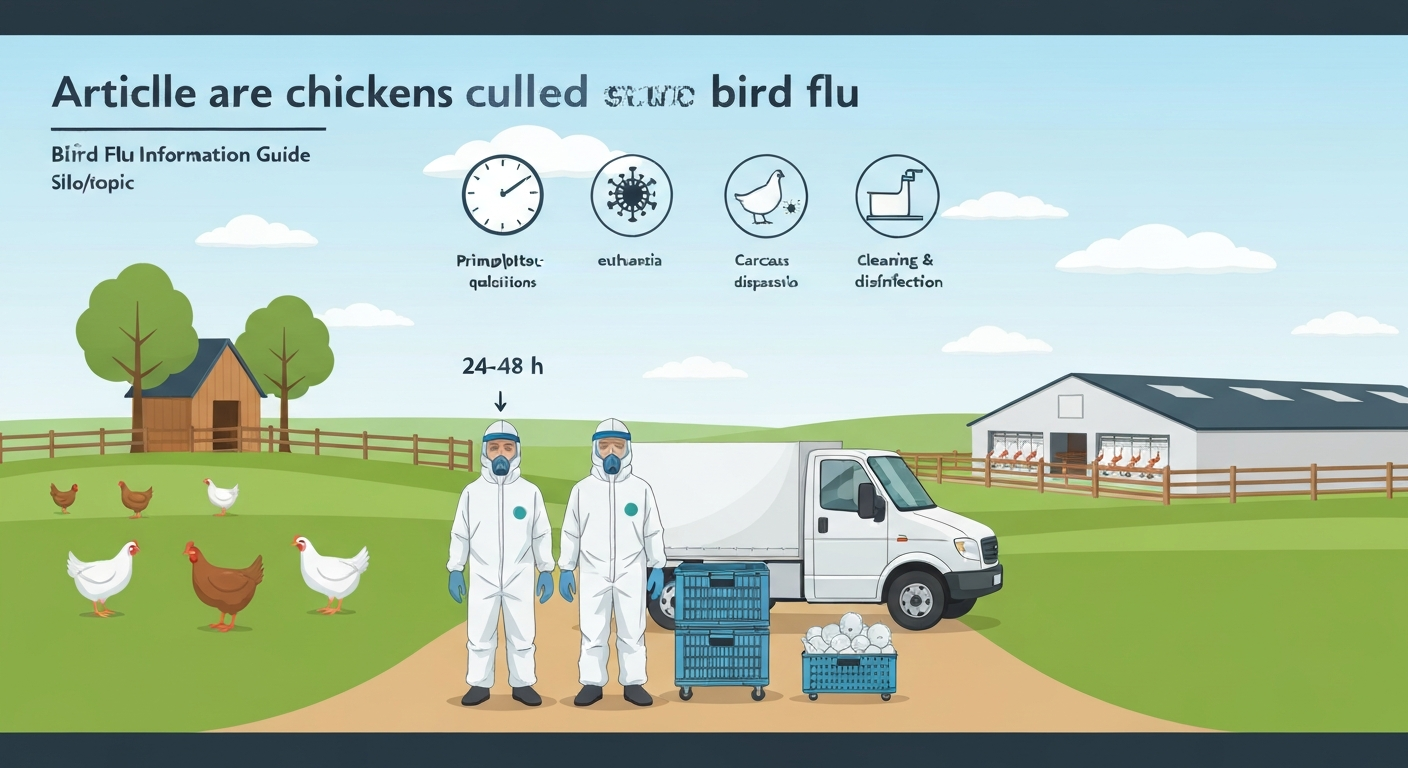
When bird flu is confirmed in a flock, authorities almost always respond by killing every bird on the affected premises, often within 24 to 48 hours of a positive test. For a concise explanation of the reasons behind these emergency killings, see why do they kill chickens with bird flu. The method depends on flock size: small backyard flocks are typically euthanized one bird at a time using cervical dislocation or CO2 gas, while commercial houses holding tens or hundreds of thousands of birds are depopulated using whole-house gas or foam systems. The goal is to stop the virus spreading, protect public health, and, where possible, minimize suffering. It is a difficult process, but the evidence consistently shows that speed matters enormously. Delays measurably increase outbreak size and the number of flocks ultimately lost.
How Are Chickens Culled Bird Flu: Methods, Reasons & Steps

Why this matters whether you have 5 chickens or 50,000
Bird flu culling is not just a commercial farming issue. Backyard keepers, smallholders, exhibition poultry owners, and anyone who lives near a poultry operation all have a stake in understanding how an outbreak unfolds. If your flock is within a control zone around an infected premises, you may face movement restrictions, mandatory housing orders, or even pre-emptive culling. Knowing what to expect, what your rights and obligations are, and what the authorities will actually do on the day can make an overwhelming situation a great deal more manageable.
There is also a public health dimension. Highly pathogenic avian influenza (HPAI) strains, particularly H5N1, can infect people who have close, unprotected contact with infected birds or contaminated environments. The culling process itself is one of the highest-risk moments for human exposure, which is why it is carried out under strict protocols. Understanding how those protocols work helps both keepers and members of the public in the surrounding area make sense of what they are seeing.
What "culling" actually means in a bird flu outbreak
The word "culling" gets used loosely, so it is worth being precise. In everyday farming language, culling means removing an animal from a flock for any reason, including routine flock management. In the context of an avian influenza outbreak, culling refers specifically to what the World Organisation for Animal Health (WOAH) calls "stamping-out": the killing of all birds in an infected flock, and often birds in flocks that have had contact with the infected one, in order to contain and eradicate the disease. The formal term used in official documents is "depopulation" for the large-scale killing of a group of animals, and "euthanasia" when the focus is on the welfare of the individual animal. Both apply during a bird flu response, though the scale and urgency of commercial depopulation sometimes create tension between those two objectives.
WOAH's Terrestrial Animal Health Code, which sets the international framework that countries including the US, UK, and EU member states follow, requires that infected animals and those in close contact with them be killed as part of stamping-out. WOAH’s Terrestrial Animal Health Code (index) provides the international standards and glossary defining terms such as “stamping‑out”, “depopulation” and “euthanasia” and guiding national control measures WOAH Terrestrial Animal Health Code (index). This is not a discretionary call by an individual vet. Once HPAI is officially confirmed, the stamping-out response is legally mandated in most jurisdictions.
The reasons birds are culled: public health, animal welfare, and economics
There are four distinct reasons culling is used, and they reinforce each other. Understanding all four helps explain why the response can feel so immediate and sweeping.
Stopping the virus from spreading
This is the primary driver. HPAI spreads rapidly through respiratory secretions and feces, can survive on equipment, footwear, and clothing, and can travel on the wind over short distances. Every day an infected flock remains alive, it sheds enormous quantities of virus. Modelling studies from France and Canada have shown that delays to depopulation markedly increase both epidemic size and variability, meaning the final outbreak is not just larger but less predictable. Removing the source of virus quickly is the single most effective intervention available.
Protecting public health
HPAI H5N1 can infect people, and those infections can be severe. The risk to any individual person outside a poultry work setting is very low, but it is not zero, and an infected flock that continues to shed virus for days or weeks creates an ongoing exposure hazard for anyone who comes close to it. Culling and rapid carcass disposal sharply reduce that risk. Infected birds are also removed from the food supply, which is a legal requirement in almost every jurisdiction.
Animal welfare
HPAI kills chickens quickly and extremely unpleasantly. Birds can show severe neurological signs, respiratory distress, and hemorrhage. Allowing the disease to run its course is not a welfare-neutral alternative to culling: it means a period of significant suffering followed by death for most of the flock anyway. There is a genuine welfare argument for prompt, humane killing over a slow, disease-driven death, and this is explicitly recognized in European legislation under Council Regulation (EC) No 1099/2009.
Economic and trade reasons
Countries that contain HPAI quickly retain access to export markets. A prolonged outbreak triggers trade bans from importing countries, which can cost an affected nation far more than the compensation paid to farmers. In the US, most countries, and across the EU, farmers whose flocks are compulsorily culled are entitled to compensation, which is structured partly to incentivize rapid reporting rather than concealment.
How bird flu affects chickens: HPAI vs LPAI
Not all avian influenza strains are equal, and the decision to cull partly depends on the strain involved. The two main categories are highly pathogenic avian influenza (HPAI) and low pathogenic avian influenza (LPAI), and they behave very differently in birds. See our guide on what does bird flu do to chickens for detailed information on symptoms, timelines, and visual signs to watch for.
| Feature | HPAI | LPAI (non-H5/H7) |
|---|---|---|
| Mortality in chickens | Up to 90–100% within days | Usually low, often minimal |
| Speed of clinical signs | Hours to 1–2 days after infection | Days to weeks, often subclinical |
| Typical signs | Sudden death, respiratory distress, neurological signs, severe drop in egg production, cyanosis, hemorrhages | Mild respiratory signs, reduced egg production, sometimes no visible signs |
| Zoonotic risk | Higher (especially H5N1, H5N8, H7N9) | Generally low, variable by subtype |
| Regulatory response | Mandatory stamping-out in almost all jurisdictions | Surveillance and movement controls; culling may or may not be required depending on subtype |
| Mutation risk | Already highly pathogenic | H5 and H7 LPAI subtypes can mutate to HPAI, triggering stricter controls |
HPAI moves through a flock with alarming speed. Keepers sometimes report finding dead birds with no prior warning signs, or seeing a flock go from apparently healthy to near-total collapse within 48 hours. That rapid timeline is one reason why the question of how fast bird flu kills chickens matters so much practically: by the time you notice something is wrong, significant virus shedding may already have occurred. For specific timelines and typical mortality rates, see how fast does bird flu kill chickens. LPAI is more insidious because affected flocks can look broadly normal, which is part of why surveillance and reporting systems exist.
For H5 and H7 LPAI subtypes specifically, most regulatory systems including the USDA and EU treat detection as a trigger for mandatory investigation and often depopulation, even if mortality is currently low. The reason is straightforward: these subtypes have a well-documented ability to mutate into HPAI in a poultry environment, and acting early is far less costly than waiting.
How and when authorities decide to cull
The decision to cull is not made by one person on a farm visit. It follows a defined sequence that begins with clinical suspicion and ends with a legally confirmed positive result that triggers a statutory response.
- A keeper or veterinarian suspects avian influenza based on clinical signs or unexplained mortality and reports it to the relevant authority (in the US, the state veterinarian and USDA APHIS; in the UK, the APHA; in EU member states, the national competent authority).
- Temporary movement restrictions are placed on the premises immediately, before any test results are back, as a precaution.
- Official vets visit and take samples for laboratory testing. In clear clinical presentations of HPAI, restrictions intensify even before the final confirmation.
- Laboratory confirmation of HPAI (or H5/H7 LPAI in many systems) triggers the official stamping-out order. In the US, this follows the USDA APHIS Foreign Animal Disease Preparedness and Response Plan, sometimes called the Red Book.
- A protection zone (typically 3 km radius) and a surveillance zone (typically 10 km) are established around the infected premises. All flocks within the protection zone face immediate restrictions; some may face pre-emptive culling depending on their contact history and proximity.
- The depopulation team is deployed to the infected premises, usually targeting completion within 24 hours of the stamping-out order.
The speed of this sequence is not bureaucratic overkill. Research consistently shows that every day of delay in depopulation increases the epidemic size. A 2019 modelling study published in PLOS ONE found that rapid detection and rapid culling capacity were the two variables that most strongly reduced outbreak size and costs. The protective and surveillance zone system creates a layered buffer that has been validated in real outbreaks, including the H5N8 outbreak in southwest France in 2016 to 2017.
Humane euthanasia methods for backyard and small flocks
For small flocks, typically backyard keepers or smallholders with a few dozen birds or fewer, the focus is on individual-bird methods that a trained person can apply quickly and that cause rapid unconsciousness and death. The American Veterinary Medical Association (AVMA) Guidelines for the Depopulation of Animals (2019 edition) and equivalent EU standards under Regulation 1099/2009 list the following approaches as preferred or acceptable for individual birds.
- Cervical dislocation: Manual separation of the vertebrae at the base of the skull from the neck, causing immediate loss of consciousness. The AVMA permits this for individual birds up to certain weight thresholds; EU regulation also permits it but places limits on numbers and requires oversight for official depopulation.
- Captive bolt: A penetrating captive bolt applied to the head causes immediate concussion and brain destruction. Used for larger individual birds where manual methods are not practical.
- CO2 gas chamber: Birds are placed in a sealed container filled with a high concentration of CO2, leading to rapid loss of consciousness. Considered a preferred method where equipment is available.
- Injectable barbiturate overdose: Administered by a veterinarian; reliably humane but resource-intensive and not practical at scale.
- Decapitation: Permitted as an emergency individual method in some jurisdictions, though it requires immediate verification of death.
A critical requirement in both AVMA and EU frameworks is verification of death for every bird. This sounds obvious but is easy to overlook under the stress of an outbreak. Official guidance from EFSA explicitly states that any depopulation method must include confirmation that death has occurred before carcasses are moved or disposed of. For backyard keepers, this is worth knowing because it defines your obligation if you are directed to carry out on-farm euthanasia under supervision.
If you keep backyard chickens, it is worth discussing emergency euthanasia methods with your vet before an outbreak ever reaches your area. Knowing the correct technique in advance, and having basic equipment available, makes a terrible situation far less chaotic.
Depopulation methods used in large commercial flocks
Depopulating a commercial poultry house containing 100,000 birds or more is a logistical challenge unlike anything in routine farming. Individual-bird methods are not feasible at that scale, so the industry and regulators use whole-house approaches designed to kill all birds in a house as quickly and humanely as possible.
Preferred and commonly used whole-house methods
- Containerized CO2 or inert gas: Birds are loaded into sealed containers and exposed to high-concentration CO2 or nitrogen/argon mixtures. Considered one of the most humane whole-house options when equipment and personnel are available.
- Firefighting foam (water-based): A high-expansion foam is pumped into the poultry house, filling the space rapidly and causing death by hypoxia. The AVMA lists this as an acceptable method for constrained-circumstance use; it is faster to deploy than gas systems in some configurations.
- Whole-house gassing with CO2: Gas is delivered directly into the house through hoses, raising CO2 concentrations to levels that cause rapid loss of consciousness followed by death.
The controversy around ventilation shutdown
Ventilation shutdown (VSD) and its enhanced variant VSD+ involve turning off ventilation systems and, in VSD+, adding heat or steam to accelerate death. The AVMA classifies this as "permitted in constrained circumstances," meaning it is only supposed to be used when no other method is logistically feasible, typically in the context of very large, fully stocked houses where entry is dangerous or impractical. VSD has attracted significant controversy from animal welfare organizations, veterinary researchers, and bodies including WOAH and EFSA, which do not recognize heat and oxygen deprivation as acceptable approaches. Published welfare research indicates that VSD causes prolonged distress and highly variable times to death. It is a method of last resort, not a standard tool, and its use in the US during recent HPAI outbreaks has renewed debate about whether depopulation infrastructure in the country is adequately resourced for more humane alternatives.
The broader point is that all depopulation methods used under official authority are supposed to follow national and international animal welfare guidelines, including WOAH's Terrestrial Animal Health Code and, in the EU, Regulation 1099/2009. Whether those guidelines are consistently met at the scale of a major outbreak is a legitimate question that regulators, welfare groups, and the veterinary profession continue to debate.
Carcass disposal: what happens to the birds after culling
Getting carcasses off the premises quickly and safely is almost as important as the culling itself. Dead birds that remain accessible continue to pose a contamination and wildlife attraction risk. USDA APHIS maintains a detailed carcass management resource and a multi-method blank" rel="noopener noreferrer">Emergency Carcass Management Desk Reference that gives operational teams a hierarchy of disposal options based on site conditions, local regulations, and scale.
| Method | How it works | Preferred for | Key limitations |
|---|---|---|---|
| On-site composting | Carcasses are layered with carbon materials (wood chips, straw) and allowed to decompose under monitored conditions following an HPAI Mortality Composting Protocol | Large commercial flocks; preferred when site space is available | Requires correct carbon ratios, moisture management, and temperature monitoring; takes weeks to complete |
| Rendering | Carcasses are transported to a processing facility and heat-treated to destroy pathogens | Where a licensed renderer can accept HPAI material; destroys virus effectively | Transport logistics and biosecurity requirements; not all renderers accept HPAI material |
| Incineration | Carcasses are burned in a fixed or mobile incinerator | Smaller volumes or where composting is impractical; provides rapid, complete pathogen destruction | Capacity limitations; mobile units needed for large remote operations |
| Burial | On-site or off-site burial in licensed sites | Emergency option when other methods unavailable | Groundwater risk; not preferred; regulatory restrictions vary |
| Landfill | Transport to a licensed landfill | Smaller flocks in some jurisdictions | Limited acceptance by landfill operators; transport biosecurity requirements |
| Mobile treatment technologies | Mobile high-heat systems that can process carcasses on-site | Remote locations or where fixed infrastructure is unavailable | Equipment availability; still relatively limited in deployment |
Composting and rendering are generally prioritized in the US system when feasible. Composting has the advantage of being fully on-site, avoiding the biosecurity risk of moving infected material off the farm. When done correctly, internal compost temperatures exceed 55°C, which is sufficient to inactivate HPAI virus. The USDA's HPAI Mortality Composting Protocol specifies the layering ratios, turning schedule, and temperature monitoring required to verify that inactivation has occurred.
Cleaning, disinfection, and what happens to your farm afterward
Culling and carcass disposal are only the beginning of on-farm decontamination. The virus can persist in the environment for days to weeks, particularly in cold, damp conditions, and on organic material such as litter, manure, and feathers. The USDA APHIS Red Book sets out a defined sequence for cleaning and disinfection that farms must complete before any restocking can be approved.
- Remove and dispose of all litter, manure, and organic material from the poultry house. This material is typically composted or treated on-site.
- Rough clean all surfaces, equipment, and ventilation systems with water and detergent to remove gross contamination, which significantly reduces virus load before disinfection.
- Apply an approved disinfectant at the correct concentration and contact time. The USDA maintains a list of approved disinfectants effective against HPAI.
- Allow a drying period, then a second disinfection round of the house and all farm vehicles, equipment, and high-traffic areas.
- Official inspection and environmental sampling to confirm the premises meet the standard required before any lifting of restrictions.
- A fallow period, typically 21 days or longer after the premises have passed inspection, before restocking is permitted. This allows time for any residual virus to degrade and for sentinel bird testing before full restocking.
Movement controls around the infected premises remain in place throughout this process. Vehicles, people, and materials entering or leaving the farm are subject to biosecurity protocols even after culling is complete. If you live or farm near an infected premises, you may be asked to apply enhanced biosecurity to your own flock, or to participate in surveillance testing, even if your birds have shown no signs of illness.
What to expect if a culling operation comes to your farm or neighborhood
If your flock is subject to a culling order, or a neighboring farm is being depopulated, here is a realistic picture of what the process looks like on the ground.
On your farm
- An official veterinarian or inspector will contact you, confirm the legal order, and explain the process. You should receive documentation.
- A team, typically comprising official vets, trained depopulation operatives, and biosecurity personnel, will arrive at an agreed time. Team size depends on flock size.
- All team members will be in full PPE: at minimum N95 respirators (or equivalent), eye protection, disposable gloves, and coveralls. The CDC recommends this level of protection for anyone with direct or close contact (within approximately 6 feet) with infected birds or contaminated environments.
- You will be asked to stay away from the working area during depopulation, partly for your own safety and partly to avoid compromising the PPE protocols the team is following.
- The operation is logged, with counts recorded, and official documentation is completed. This record is part of the compensation claim process.
- After the birds are dead and carcasses are secured, the team will begin the carcass management and initial cleaning steps. You will be given specific instructions about movement on and off the farm.
- You should not dispose of, move, or tamper with any dead birds or equipment before official instructions are given. Doing so can compromise biosecurity and, in most jurisdictions, is a legal offence.
If you live near an affected premises
If you keep backyard chickens and you are within a protection or surveillance zone, you may receive a letter or call from the animal health authority informing you of the restrictions. Typically this means a mandatory housing order (keeping birds indoors and netted, away from wild birds), enhanced biosecurity, and reporting of any deaths or illness. You may also be asked to register your flock if you have not already done so, which matters both for outbreak management and for compensation eligibility. The question of whether to keep your chickens housed during an active outbreak in your area is one worth taking seriously, as it directly affects your birds' exposure to potentially infected wild birds. If you’re asking “should I keep my chickens in because of bird flu?”, guidance on housing birds during outbreaks explains how staying indoors and strict biosecurity can reduce exposure risk.
Human health risks during and after culling: what the evidence actually says
Human infections with HPAI H5N1 are serious when they occur, but the risk to members of the public during a poultry culling operation is very low provided standard protocols are followed. The workers most at risk are those with direct, unprotected contact with infected birds or contaminated material, which is exactly why PPE requirements are strict. CDC guidance specifies that anyone with direct or close contact with infected birds, their environment, or materials should wear at minimum a properly fitted N95 respirator, eye protection, disposable gloves, and coveralls.
If you or anyone else has had unprotected exposure to infected birds or a contaminated environment, CDC recommends active symptom monitoring from the day of exposure through 10 days after the last exposure. Symptoms to watch for include fever, cough, sore throat, shortness of breath, and conjunctivitis. Anyone who develops symptoms during that monitoring window should seek medical attention promptly and inform the clinician of the bird exposure, since empiric antiviral treatment with oseltamivir (Tamiflu) can be started while testing is underway. For those assessed as higher risk, antiviral prophylaxis may be recommended even before symptoms appear.
For neighbors, bystanders, or members of the public who have not had close contact with infected birds, the risk is considered negligible. The culling operation itself reduces the environmental viral load rapidly, which is another reason prompt depopulation protects not just other flocks but the wider community.
Food safety: why culled birds never enter the food supply
Birds from an infected flock, or from a flock culled as part of a stamping-out operation, are not processed for human consumption. This is a legal requirement in virtually every jurisdiction and is part of the definition of the stamping-out response. Properly cooked poultry and eggs from unaffected, approved flocks remain safe to eat: cooking temperatures above 70°C inactivate avian influenza virus. The food safety concern from bird flu outbreaks is not about cooked poultry or eggs in the supply chain; it is about unprotected direct contact with sick or dead birds, which is a very different exposure route.
Other species: when does culling go beyond chickens?
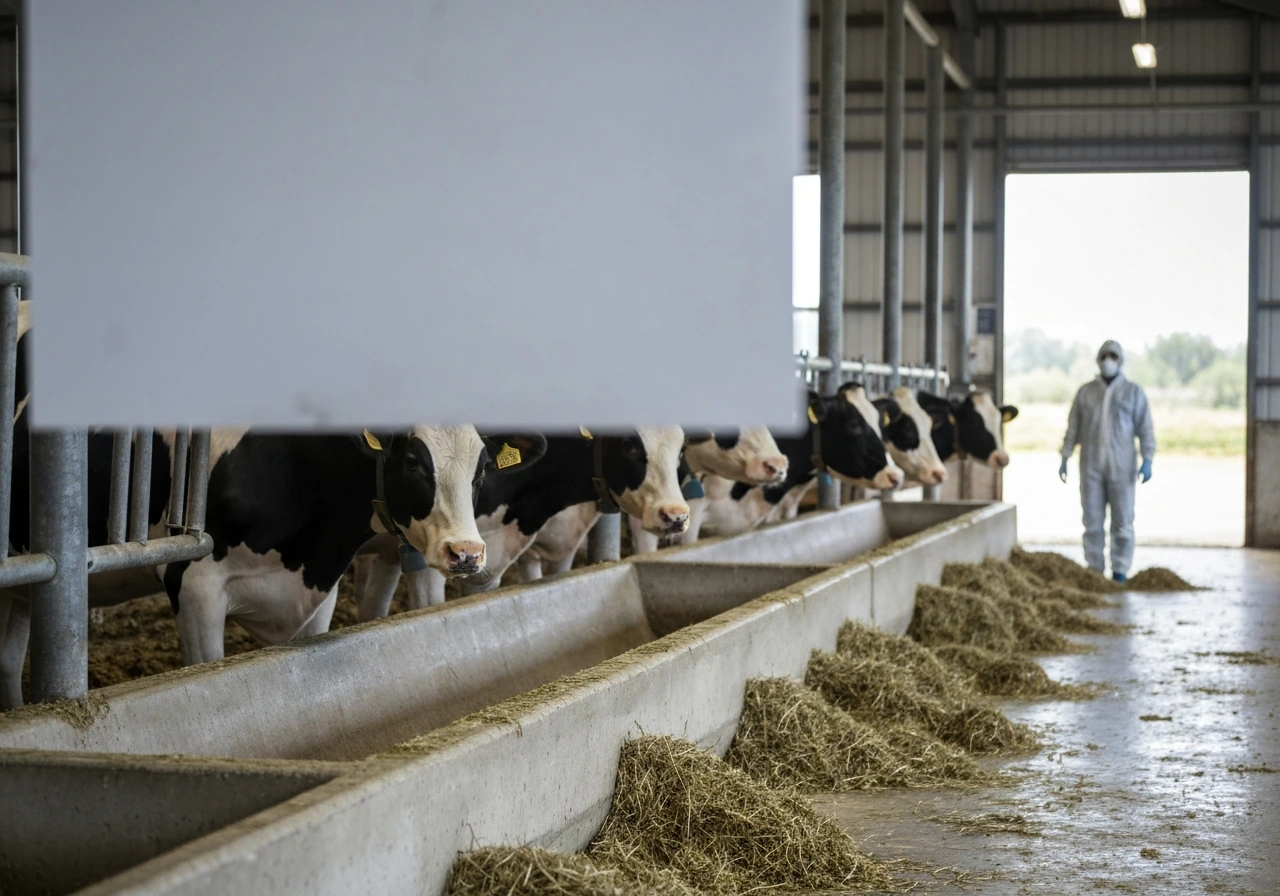
HPAI H5N1 in its current clade has shown an unprecedented ability to infect a wide range of non-poultry species, including wild birds, marine mammals, and, since 2024, dairy cattle in the US. The culling policy for mammals is different from that for poultry. For cattle, the current approach in the US has focused on movement controls, biosecurity, and monitoring rather than mass culling, partly because the scale of affected dairy herds makes stamping-out impractical and partly because the pattern of spread in cattle appears different from that in birds. For more detail on current practice and why authorities have generally avoided mass culling of cattle, see the section answering the question "do cows with bird flu have to be killed.". The question of whether infected cows must be killed is a live regulatory and epidemiological discussion, and the approach may evolve as more evidence accumulates.
For other poultry species, including turkeys, ducks, and geese, the same stamping-out principles apply as for chickens. Ducks in particular can carry and shed HPAI with fewer overt clinical signs than chickens, which makes them epidemiologically important and sometimes a source of undetected spread.
Compensation and legal framework for keepers
In most countries with established HPAI response systems, keepers whose flocks are compulsorily culled are entitled to compensation for the value of the birds and, often, for the costs of cleaning and disinfection. In the US, USDA APHIS operates an indemnity program under the Federal Agriculture Improvement and Reform Act. In the EU and UK, national schemes apply. The compensation is not automatic in every case: it typically requires that the keeper registered their flock appropriately, complied with movement controls and biosecurity requirements, and reported disease promptly. Delayed reporting or failure to comply with control measures can affect eligibility. This is one practical reason why registering your flock and reporting suspicions early is genuinely in your interest, not just a regulatory obligation.
Practical steps if you suspect bird flu in your flock
- Do not wait to see if things improve. Unexplained sudden death in multiple birds, severe respiratory signs, or a sharp drop in egg production in a short period are all reasons to call your vet or the relevant animal health authority immediately.
- Restrict access to your flock. Stop other people, vehicles, and animals from entering the area where your birds are kept. Avian influenza spreads on footwear, clothing, and equipment.
- Do not move birds, eggs, litter, or equipment off the premises until you have spoken to an official vet.
- Write down the number of birds showing signs and the number of deaths, with times. This information helps the investigating team assess the situation quickly.
- If you are in the US, contact your state veterinarian and USDA APHIS. In the UK, call the APHA. In the EU, contact your national competent authority. Most countries have a 24-hour emergency line for suspected notifiable disease.
- Follow the official guidance you receive. Do not attempt to euthanize birds yourself unless you are specifically directed to do so by an official vet, as this can complicate the investigation and carcass management process.
- Consider your own safety. Avoid handling sick or dead birds without gloves and a mask while waiting for official guidance.
Early reporting is genuinely the most important action you can take. It protects your neighbors, your community's poultry population, and, ultimately, your own position regarding compensation and future restocking. The system is designed to move quickly once a report is made, and the evidence shows that the quicker it moves, the better the outcome for everyone involved.
FAQ
What does “culling” mean in the context of bird flu (avian influenza)?
Culling (also called depopulation or stamping‑out) means intentionally killing infected birds and, in many cases, birds exposed to them to stop further transmission. International animal‑health bodies (WOAH/FAO) and national authorities use culling alongside movement controls, surveillance and cleaning to contain and eradicate outbreaks.
Why are chickens culled during avian influenza outbreaks?
Reasons for culling include: 1) stopping onward spread of the virus to other flocks and wild birds; 2) protecting animal and public health; 3) preventing larger economic losses by limiting outbreak size; and 4) reducing welfare harms from large, uncontrolled epidemics. For highly pathogenic avian influenza (HPAI) rapid culling is a core control tool in most national response plans.
When will authorities choose to cull and when might they use other measures?
Decisions depend on virus subtype, pathogenicity and local risk. HPAI strains (e.g., many H5 HPAI viruses) typically trigger mandatory stamping‑out. Some low‑pathogenic avian influenza (LPAI) subtypes may be managed with surveillance, movement restrictions, targeted culling, or vaccination depending on regulations and risk of mutation (H5/H7 subtypes often prompt stronger action because of mutation risk). National law and international standards guide the choice.
What humane methods are used to kill chickens during culling?
Approved methods follow international and national animal‑welfare rules and include: controlled gassing (containerized CO2 or approved gas mixtures) and whole‑house methods endorsed under specific protocols, and individual euthanasia techniques such as cervical dislocation (within legal/competency limits), captive‑bolt, or injectable methods where available. Authorities require that methods be humane, rapid where possible, applied by trained personnel, and that death be verified for every bird.
Are any depopulation methods controversial or restricted?
Yes. Some methods (for example ventilation‑shutdown/heat‑based approaches) are classified as permissible only in constrained circumstances by certain veterinary bodies and are controversial because of welfare concerns. EU and other regulations set limits on manual methods (weight/number limits for cervical dislocation) and require competent supervision. National guidelines specify allowed methods and oversight.
How are carcasses and contaminated materials disposed of after culling?
Disposal follows a prioritized hierarchy (varies by country) and may include on‑site composting (commonly used for poultry), rendering, incineration or approved landfill; burial and mobile thermal treatments are options where permitted and safe. Disposal methods are chosen to inactivate virus, prevent environmental contamination, and follow veterinary and environmental regulations. Authorities direct and approve the method used.
Do Cows With Bird Flu Have to Be Killed? What Happens
Explains whether cows with bird flu must be killed, and what happens for confirmed vs suspected cases, isolation and nex