
Budgies can catch avian influenza, including highly pathogenic H5N1 strains, and may shed virus even when they look healthy. The good news is that the risk to a well-managed indoor budgie is genuinely low, and a straightforward set of habits (strict sourcing, a 30-day quarantine for new birds, keeping wild birds away from feed and water, and consistent cage hygiene) covers the vast majority of your exposure risk. This article walks through each of those steps in practical detail, explains why they work, and tells you exactly what to do if something goes wrong.
How to Prevent Bird Flu in Budgies: Practical Owner Guide

Maya Chen
13 Jul 2026
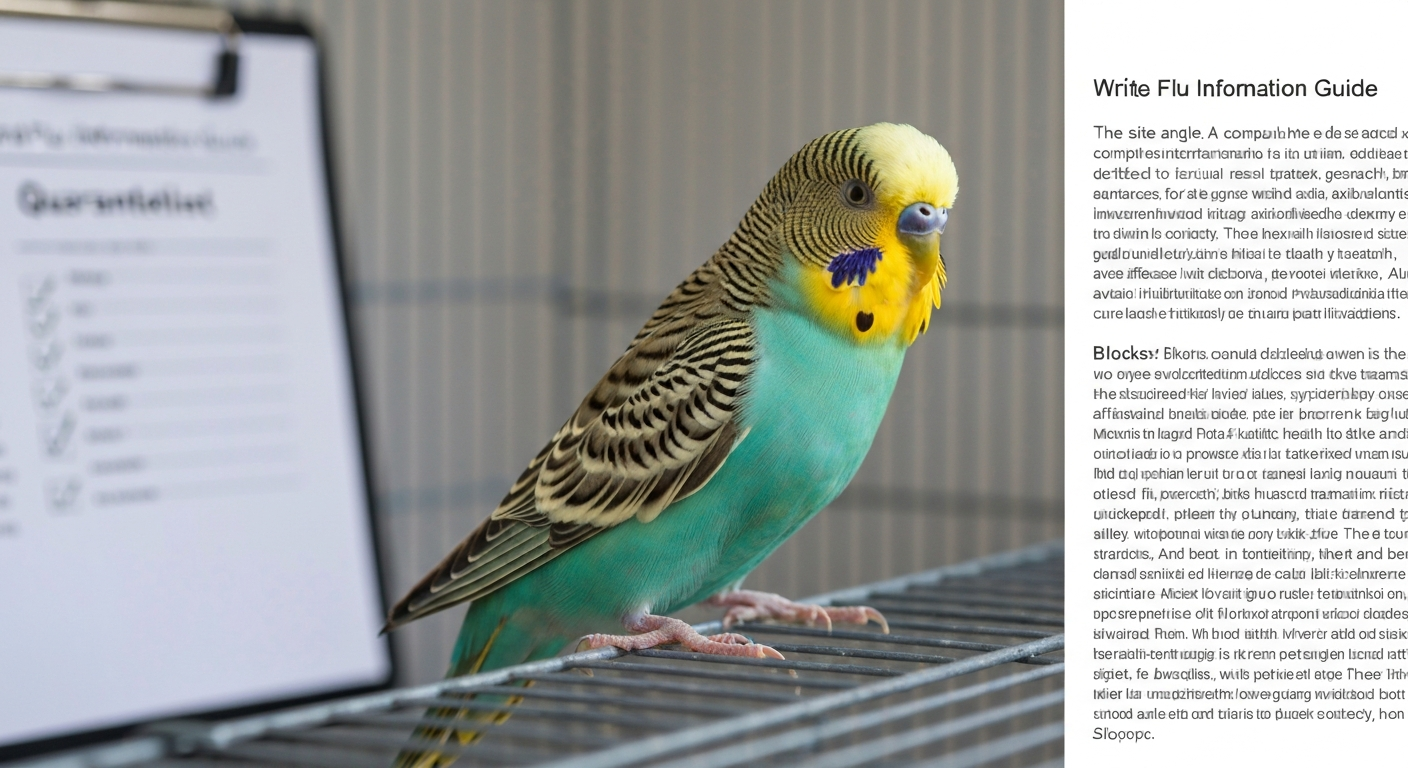
Prevention at a glance: your one-page reference
Before diving into the reasoning behind each step, here is a prioritized checklist you can print and keep on hand. The items are ordered by the size of risk they address, not alphabetically.
- Source birds only from reputable breeders or rescues with documented health histories, and request a veterinary health certificate for any bird that has been transported or imported.
- Quarantine every new or returning bird in a completely separate room (different airspace) for a minimum of 30 days before any contact with resident birds.
- Schedule a veterinary exam and, where indicated, avian influenza testing during or at the end of quarantine.
- Block wild bird access to your bird room, aviary, and all feed and water supplies at all times.
- Store pelleted or seed feed in sealed, rodent-proof containers away from outdoor air exposure.
- Provide only treated tap water or commercially bottled water in drinkers; never use outdoor collected rainwater or untreated pond water.
- Clean cages and equipment mechanically (remove droppings and organic debris) before applying any disinfectant. Use an EPA-registered product effective against avian influenza viruses.
- Change cage liners daily during quarantine and at least every two to three days for resident birds.
- Wash hands thoroughly with soap and water before and after handling birds, cages, or bird equipment.
- Change outer clothing and footwear before entering your bird room if you have been near poultry farms, live-bird markets, or wild waterfowl.
- Monitor every bird daily for early warning signs (changes in droppings, appetite, breathing, or behavior).
- If you suspect avian influenza, isolate the affected bird immediately, contact an avian vet the same day, and do not wait to see if the bird improves on its own.
- Check your state or national agriculture authority's current outbreak map regularly, especially before attending bird shows or making purchases.
Why this matters: bird flu risk for budgies and your household
Budgerigars are not chickens or waterfowl, and they are not the birds making headlines in most avian influenza outbreak reports. But laboratory and field research confirms they are genuinely susceptible. Experimental infections with H5N1 and other highly pathogenic strains have produced outcomes ranging from no visible illness with active viral shedding, all the way to severe respiratory and neurological disease and death. The range of outcomes depends on the specific strain and dose, but the take-home point is clear: budgies can get it, and they can pass it on before you know they are sick.
Studies also show that some budgies infected with zoonotic strains like H7N9 can replicate and shed virus, which means they represent at least a theoretical bridge between wild-bird populations and people in the household. That is not a reason to panic, and it does not mean your bird is a walking biohazard. It does mean that basic precautions have a real scientific rationale, not just a bureaucratic one.
On the human side of the equation, the risk from a single pet budgie in a well-managed home is very different from working on a poultry farm during an active outbreak. Avian influenza viruses do not spread easily between people, and most documented human infections have involved prolonged, close exposure to large numbers of infected poultry or their secretions. That context matters. The goal here is sensible risk reduction, not fear.
For households with dogs or cats, it is worth knowing that other companion animals can also be exposed to avian influenza in ways that create indirect household risk. Protecting your budgie is part of a broader household biosecurity picture.
How avian influenza gets to pet birds
Understanding the routes of transmission is genuinely useful because it tells you exactly where to intervene. There are five main pathways that matter for indoor pet budgies.
Direct contact with infected birds
This is the highest-risk route. Bird-to-bird transmission happens through respiratory secretions and feces. At bird shows, swap meets, pet shops, or rescue environments, an infected bird that looks healthy can shed virus directly onto your bird. This is why quarantine after any acquisition is non-negotiable, not just a precaution for birds that seem unwell.
Fomites: contaminated objects and surfaces
Avian influenza A viruses can remain infectious on stainless steel and hard plastic surfaces for hours to several days, and longer at cool temperatures. Shared cages, feed scoops, perches, and even pet carrier walls can all carry active virus. This is why 'clean first, disinfect second' is the standard veterinary protocol: organic debris like droppings or feathers physically protects the virus from disinfectants, so you have to remove it mechanically before the chemistry can work.
Contaminated feed and water
Avian influenza viruses can persist in surface water for weeks to months at low temperatures. Field‑based studies (Field‑based method for assessing duration of infectivity for influenza A viruses in the environment, USGS / Journal of Virological Methods (PMC)) show avian influenza A viruses can persist in surface water and wetlands for weeks to months at low temperatures, with persistence reduced by higher temperature, salinity, acidic pH, and microbial activity Field‑based method for assessing duration of infectivity for influenza A viruses in the environment — USGS / Journal of Virological Methods (PMC). If wild waterfowl have access to outdoor ponds, birdbaths, or any open water source near your home, and you use that water in your bird's drinker, you have created a direct exposure pathway. Similarly, feed stored in open containers outdoors or in areas accessible to wild birds can become contaminated through droppings.
Wild birds
Migratory waterfowl and shorebirds are the natural reservoir for most avian influenza strains, and they circulate virus without necessarily becoming sick themselves. Wild songbirds, sparrows, and pigeons can also become infected during active outbreak periods. Any wild bird that can land on or near your aviary, contaminate the airspace, or access feed and water is a potential source.
People as fomites
You can carry avian influenza into your bird room on your clothing, shoes, or hands without being infected yourself and without knowing you were exposed. Anyone who has recently visited a poultry farm, a live-animal market, a bird show, or an area with confirmed wild-bird die-offs is a potential mechanical carrier. Changing clothes and washing hands before entering your bird space is a low-effort step with meaningful protective value.
Recognizing bird flu in your budgie: what to watch for daily
One of the most useful things you can do is establish a clear baseline for each of your birds. When you know what your bird's normal droppings look like, how much it eats, how it moves and vocalizes, you will notice deviations early. Avian influenza does not produce a single signature clinical picture in budgies. Reported signs span a spectrum and often overlap with other illnesses, which is exactly why any significant change warrants a vet call.
Here are the clinical signs associated with avian influenza infection in psittacine birds, drawn from peer-reviewed case reviews and experimental infection studies:
- Sudden or rapid onset lethargy and marked depression (bird sitting fluffed at the bottom of the cage, not responding normally to interaction)
- Loss of appetite or complete refusal to eat
- Respiratory signs: labored or audible breathing, open-mouth breathing, tail bobbing, nasal discharge
- Neurological signs: tremors, loss of coordination, head tilting, circling, inability to perch
- Watery, discolored, or unusually voluminous droppings
- Sudden unexplained death, particularly in a bird that appeared well the day before
Build a daily check into your routine: look at each bird for 60 to 90 seconds before you clean or feed. Note posture, eye brightness, breathing rate, and droppings on the cage liner. This is also when you will spot the early signs of many other illnesses, making it worth doing regardless of any influenza risk.
If you see any combination of the above signs, especially in multiple birds at once, separate the affected bird immediately, minimize your own exposure (wear gloves and a face covering when handling it), and contact an avian veterinarian the same day. Do not wait. If the bird dies, do not dispose of the carcass in your regular household waste. Double-bag it in sealed plastic bags, refrigerate (do not freeze, as freezing can complicate testing), and follow your vet's or local agriculture authority's instructions for submission or disposal.
Getting birds right from the start: sourcing and pre-quarantine screening
The single most common way avian influenza enters a previously clean household flock is through a newly acquired bird. This does not mean you should stop bringing budgies into your home. It means the first layer of defense is choosing where you get them.
Reputable breeders who maintain closed flocks (limited contact with outside birds), have veterinary relationships, and can show you health records represent far lower risk than a bird purchased from an unscreened source at a swap meet. Rescue organizations with documented intake and quarantine protocols are also a reasonable source. Ask direct questions: Has this bird been in contact with recently imported or wild birds? Has it been quarantined, and for how long? Is there a health record or veterinary certificate available?
For any bird that has been transported across state lines, internationally imported, or sourced from an environment where multiple birds from different origins were housed together, a pre-purchase veterinary exam is worth arranging. Birds imported into the United States go through a mandatory minimum 30-day federal quarantine at USDA Animal Import Centers, with testing for HPAI and Newcastle disease. Even so, home quarantine on arrival is still warranted, because the 30 days of federal quarantine does not reset when the bird moves to a pet shop or breeder before reaching you.
If you are attending a bird show or sale, wash hands between handling different birds, avoid touching your face, and change clothes before returning home to your bird room. If you simply watched birds without handling them, changing your outer clothing and washing your hands is still worth doing as a habit.
Quarantine: duration, setup, and step-by-step protocol
Thirty days is the widely accepted minimum quarantine period for new or returning birds, based on federal import requirements and standard avian veterinary practice. Some avian vets and experienced breeders recommend extending monitoring to 60 to 90 days if you want broader screening coverage for diseases beyond avian influenza. For most household budgie owners, 30 days conducted correctly is the practical standard.
The quarantine only works if it is a true physical separation, not just a different cage in the same room. Follow this protocol step by step:
- Set up the quarantine space in a completely separate room with its own ventilation, ideally with the door kept closed. A separate bathroom or spare room works well. The goal is to prevent shared airspace with resident birds.
- Prepare a dedicated set of equipment (cage, food and water bowls, perches, cleaning tools, hand towels) that never crosses into the main bird area during the quarantine period.
- Before the new bird arrives, have the quarantine cage cleaned and disinfected with an EPA-registered product effective against avian influenza viruses.
- On arrival, place the new bird directly into the quarantine cage. Wash your hands and change clothes before entering your main bird space afterward.
- Visit the quarantine bird last in your daily routine, after caring for resident birds, to reduce the risk of carrying anything from the new bird to your established flock.
- Change cage liners daily throughout the quarantine period. Remove organic matter (droppings, feather debris, leftover food) before applying disinfectant to any surface.
- Observe the bird for 60 to 90 seconds each day: posture, breathing, appetite, droppings, activity level. Log any changes.
- Schedule a veterinary exam within the first week of quarantine if possible. Discuss with your vet whether testing for avian influenza or other pathogens is warranted given current outbreak status and the bird's origin.
- After the minimum 30-day period with no illness and with veterinary clearance, you can begin gradual introduction to resident birds. If the bird showed any illness during quarantine, extend the period and consult your vet before proceeding.
The same quarantine protocol applies to birds returning from shows, boarding, or veterinary visits where they were housed near unfamiliar birds. Even a bird that left your home healthy and returned apparently healthy should go through at minimum a 2-week re-quarantine after being in a mixed-bird environment.
Cage and aviary setup: building biosecurity into your space
How your cage or aviary is laid out and what it is made of directly affects how well you can prevent and control infection. These are not abstract recommendations.
For indoor cages, the priority is keeping wild birds physically separated from your birds and their food and water at all times. This means windows should be screened if opened for ventilation, and any outdoor aviary must be fully enclosed with mesh that prevents contact with wild birds (including small songbirds, not just larger species). During active HPAI outbreak periods in your region, moving outdoor birds inside entirely is the safest approach, and this is exactly the kind of precautionary housing order that agriculture authorities in several countries have mandated for commercial flocks.
When choosing materials for bowls, perches, and cage furniture, hard non-porous materials (stainless steel, hard plastic, sealed ceramic) are far easier to disinfect than wood, cloth, or rope. Viruses survive longer on porous materials in ways that are harder to fully eliminate. Wooden perches and natural branches are enriching for budgies, so if you use them, replace rather than attempt to disinfect them when a health concern arises.
If you keep multiple budgies in separate cages or groups, each group should have its own feeding and watering equipment that is never shared. Position cages so that droppings, feathers, or feed from one cage cannot fall into another bird's food or water. Shared feeders and waterers between cohorts are a straightforward fomite risk.
Ventilation matters more than most pet owners realize. Avian influenza is primarily transmitted via large respiratory droplets rather than true airborne aerosols, but in enclosed spaces with poor airflow the concentration of infectious particles can rise meaningfully. Design airflow so that air from the quarantine room does not recirculate directly into your main bird space. Simple things like keeping the quarantine room door closed and running a small air purifier with a HEPA filter in that room are practical additions.
Here is a summary comparison of cage and aviary features from a biosecurity standpoint:
| Feature | Lower biosecurity risk | Higher biosecurity risk |
|---|---|---|
| Feed/water bowls | Stainless steel or hard plastic, one set per bird group | Shared bowls between groups, porous ceramic, wooden |
| Perches | Replaceable wooden or hard plastic (replaced when contaminated) | Shared rope or fabric perches across bird groups |
| Cage material | Easy-to-clean powder-coated steel or stainless | Fabric-sided or wicker enclosures |
| Outdoor aviary | Fully enclosed mesh, no wild-bird contact possible | Open-top or partial cover allowing wild bird entry |
| Ventilation | Separate airspace from quarantine area, screened windows | Shared HVAC duct between bird room and quarantine space |
| Cage liner | Replaced daily or every 2-3 days | Changed weekly or less often |
| Bird group separation | Each cohort with dedicated tools and equipment | Shared tools moved between groups without disinfection |
Feed and water safety from purchase to bowl
Feed and water are underappreciated exposure routes for pet bird owners, but the science is straightforward. Avian influenza viruses can survive in surface water for weeks at low temperatures, and contaminated water from outdoor sources has been implicated in transmission events. This means the standard tap water or commercially bottled water you would use yourself is appropriate for your bird's drinker. Outdoor collected rainwater, pond water, or garden hose water that has sat in a warm container are all higher-risk choices.
For feed, the concern is less about what is in the bag at purchase and more about what can get into it afterward. Wild birds attracted to the smell of seed or pellets can contaminate open bags or outdoor storage bins with fecal material. Store all bird feed in sealed, hard-sided containers (metal or thick plastic) that rodents and wild birds cannot access. Keep storage locations indoors or in a locked shed. Do not leave feed bags open or partially sealed.
When filling feeders, use a dedicated scoop that stays in the feed container and is not used for anything else. Change water in drinkers at least once daily, and disinfect drinkers with an appropriate product every few days as part of your regular cage cleaning. Discard any seed or feed that has been visibly wet, has droppings in or near it, or has been potentially accessed by wild birds or rodents.
During active outbreaks in your area, consider feeding entirely indoors even if your bird normally spends time in an outdoor aviary. Removing access to outdoor foraging areas temporarily is a meaningful precaution when local wild-bird populations are known to be carrying active infection.
Cleaning, disinfection, and safe handling of sick or dead birds
Getting disinfection right is one of the areas where well-meaning bird owners most often fall short, usually because they skip the cleaning step and apply disinfectant over dirty surfaces. Organic matter (droppings, feather dust, leftover food) physically shields virus particles from chemical action. The protocol is always: remove all organic material mechanically first, rinse, then apply disinfectant at the correct dilution and wait for the full contact time before rinsing again.
For disinfectant selection, avian influenza viruses are enveloped viruses, which makes them relatively easy to kill with common products. Several classes of disinfectants are validated by WOAH, USDA APHIS, and independent laboratory studies as effective against avian influenza on hard non-porous surfaces:
- Sodium hypochlorite (bleach): approximately 0.1% (1,000 ppm) solution for general surfaces. Use 0.5% (5,000 ppm) for heavily contaminated areas. Allow at least 1 minute contact time, then rinse thoroughly. Do not use near birds as fumes are toxic to avian respiratory systems.
- Peroxygen compounds (potassium peroxymonosulfate, such as Virkon-S, or accelerated hydrogen peroxide products): well-validated in veterinary settings, generally lower fume concern than bleach, effective on cages and hard equipment. Follow label dilution and contact time exactly.
- Quaternary ammonium compounds (quats): effective against enveloped viruses including influenza A; ensure the product's EPA registration specifically includes avian influenza claims.
- Iodophors (iodine-based disinfectants): validated for HPAI in veterinary manuals, appropriate for hard surfaces when used at label-directed dilutions.
- Phenolic compounds: listed in WOAH guidance as effective against AIV, but can be toxic to birds at certain concentrations; ensure birds are removed and surfaces are fully rinsed and aired before reintroducing birds.
Always choose an EPA-registered product that specifically lists avian influenza on its label claims, and always follow the product label for dilution and contact time rather than a generic recommendation. Refer to EPA: Registered Antimicrobial Products Effective Against Avian Influenza for the official product list and for product‑specific use‑dilutions and contact times, and always follow the product label and manufacturer SDS rather than generic dilutions. The U.S. EPA maintains a searchable list of antimicrobial products registered for use against avian influenza, and USDA APHIS publishes updated disinfectant guidance for bird facilities. These are free to access and worth bookmarking.
When handling a sick bird that may have avian influenza, wear disposable gloves and a well-fitting face covering (at minimum an N95 respirator). Avoid touching your eyes, nose, or mouth. Wash hands with soap and water for at least 20 seconds after removing gloves. Change and launder clothing at 60°C or higher before wearing again in your bird space.
For a bird that has died with signs consistent with avian influenza, do not perform a home necropsy. Place the carcass in two sealed plastic bags, label it, refrigerate it (do not freeze), and contact your avian vet or state animal health laboratory for instructions on testing and disposal. In the United States, USDA APHIS and state departments of agriculture are the relevant authorities to notify. In the United Kingdom, reports go to the Animal and Plant Health Agency (APHA). In Australia, contact your state or territory department of agriculture. These agencies can arrange official testing and advise on any reporting obligations.
Protecting household members and other pets
The human risk from a single sick pet budgie is low but is not zero in theory, particularly for immunocompromised household members, elderly adults, young children, or pregnant people. The standard precautions that protect your bird also protect you: hand washing, avoiding face touching after handling birds or cleaning equipment, and wearing gloves when handling a sick bird.
If a budgie in your home has tested positive for avian influenza, or if you have had close unprotected contact with a bird strongly suspected of infection, contact your primary care physician or local public health department. In the U.S., the CDC and state health departments have clear protocols for evaluating potential human exposures to HPAI, and assessment does not necessarily mean treatment. Early reporting is encouraged and helps public health surveillance, not just the individual. For guidance on clinical management and treatment options for suspected human infection, see how to treat bird flu in humans.
Dogs and cats in the household represent an additional consideration. Cats in particular are susceptible to HPAI H5N1 and have been documented becoming seriously ill after consuming infected birds. Keeping dogs and cats away from your bird room and from any potentially infected carcasses is prudent. If a household dog has had direct contact with a confirmed HPAI-positive bird, that warrants a veterinary consultation. For detailed steps on how to protect dogs from bird flu, see our dedicated guidance on protecting household pets from avian influenza. For guidance on evaluating and managing potential infection in pets, see our page on how to treat bird flu in dogs (db054457-47be-4039-8135-c6caf38321b3).
Staying informed: monitoring outbreaks and legal obligations
Avian influenza is an actively evolving situation. Outbreak distribution and affected species change with migratory seasons and viral evolution, which means advice that was accurate six months ago may not fully reflect current risk. Make a habit of checking official sources at least monthly, and more frequently during peak migration seasons (autumn and spring in the Northern Hemisphere).
Key resources to monitor regularly:
- USDA APHIS Avian Influenza outbreak map (United States): updated regularly with current positive detections in commercial, backyard, and wild bird populations.
- CDC Avian Influenza (Bird Flu) section: human case tracking, risk assessments, and updated guidance for animal owners.
- WOAH (World Organisation for Animal Health) disease outbreak news: global tracking of HPAI detections across species.
- GOV.UK Animal Disease pages (APHA): UK-specific outbreak status and any current housing or movement orders for bird keepers.
- Your state or provincial department of agriculture: many jurisdictions have mandatory reporting requirements for suspected HPAI cases in any bird species, including pet birds. Knowing your local rules before an incident occurs saves critical time.
In most jurisdictions, a suspected or confirmed HPAI case in a pet bird is a reportable animal disease. That means you have a legal obligation to notify animal health authorities, in addition to the obvious practical benefit of getting official guidance and support. If you also keep livestock or work with farm animals, consult guidance on how to treat cows with bird flu for species-specific reporting and treatment steps. Reporting is not punitive for pet owners acting in good faith. It contributes to surveillance data that helps everyone, including other budgie owners in your area.
The steps in this article do not require expensive equipment or dramatic lifestyle changes. Consistent sourcing standards, genuine quarantine, keeping wild birds away from your bird's supplies, and a simple daily monitoring habit form the backbone of an effective prevention plan. When in doubt, an avian vet is always the right first call.
FAQ
What is the aim of an evidence‑based article on preventing bird flu in budgies?
To give budgie owners, hobbyists, shelter staff and the public clear, practical, vet‑recommended steps to reduce risk of avian influenza (AIV) infection in pet budgerigars (Melopsittacus undulatus). The article should explain the risk to budgies, primary transmission routes, common clinical signs, a prioritized prevention plan (sourcing/quarantine, cage/aviary setup, hygiene/disinfection, feed/water safety, limiting wild‑bird contact, transport/show precautions), an action checklist, exact steps to take if infection is suspected (isolation, veterinary testing, who to notify), safe cleaning/disposal and PPE guidance, advice to protect household members and other pets, and reliable resources for outbreak updates and legal reporting.
What authoritative evidence supports that budgies can be infected with avian influenza?
Peer‑reviewed experimental and field studies show budgerigars can become infected with several avian influenza A viruses (including some H5 and H7 strains) and may range from asymptomatic shedders to severely ill or dead birds. Laboratory work also shows budgies/parakeets can replicate and shed some zoonotic AIV subtypes, so infected pet birds could potentially transmit virus onward under some conditions. Cite sources such as Perkins & Swayne (Vet Pathol), the CDC Emerging Infectious Diseases parakeet study, and systematic reviews of psittacine infections (see CDC, PMC and journal references).
How does avian influenza spread to pet birds and budgies specifically?
Primary routes relevant to pet budgies: direct contact with infected birds or their respiratory secretions and feces; indirect exposure via contaminated fomites (feeders, cage surfaces, clothing, shoes), contaminated feed or water (including wild‑bird droppings in feeders/waterers), and contaminated environments (wetlands, standing water). Humans can act as mechanical carriers (fomites) on hands, clothes and equipment. Virus persistence on surfaces and in cool water can prolong risk, so blocking these routes is key. (Refer to CDC, WOAH/OIE, USGS persistence studies.)
What clinical signs in budgies should prompt concern for avian influenza?
Psittacines often show non‑specific signs. Watch for sudden lethargy, decreased appetite, weight loss, respiratory signs (sneezing, nasal discharge, labored breathing), neurologic signs (tremors, ataxia, head tilt), decreased vocalization/activity, sudden death, or changes in droppings. Because signs overlap with other diseases, any unexpected acute illness or multiple birds ill/dead warrants immediate veterinary attention and isolation. (See reviews of avian influenza in companion birds.)
What prioritized prevention measures should an article present?
Present a short, prioritized prevention checklist first, then expand each item: 1) Sourcing & quarantine: buy from reputable sources, require health records, isolate new/returning birds for ~30 days (some recommend up to 60–90 days for extra caution) with vet exam/testing as indicated. 2) Cage/aviary setup & biosecurity: separate cohorts, dedicated equipment, limit overcrowding, control airflow, use materials easy to clean. 3) Hygiene & disinfection: clean to remove organic debris then disinfect (use EPA/APHIS‑listed products or veterinary‑recommended peroxygen/iodophor/bleach products per label). 4) Feed/water safety: store feed sealed, prevent wild‑bird or rodent access, provide treated/mains water or covered water sources. 5) Limit wild‑bird contact: move outdoor aviaries/feeding sites away from wild‑bird perching, use netting or indoor housing during outbreaks. 6) Transport, shows & visitors: avoid shows during local outbreaks, use single‑use PPE or dedicated clothing, and disinfect transport cages. Prioritize measures depending on local outbreak risk and resources.
What concise prevention checklist should be included at the top of the article?
Prioritized short checklist for budgie owners: - Source birds from reputable breeders/rescues and request health/quarantine records. - Quarantine new/returning birds in a separate room for ~30 days with dedicated equipment and daily health checks; get a vet exam. - Keep birds away from wild birds and outdoor feeders/water during risk periods. - Clean cages daily, remove organic matter, then disinfect with an EPA/APHIS‑listed product per label. - Use dedicated shoes/clothing or PPE when caring for birds; wash hands between bird contact. - Avoid shows, sales or mixing birds during local outbreaks. - If birds become suddenly ill or multiple birds show signs, isolate affected birds and contact an avian vet immediately.