Yes, hypochlorous acid (HOCl) kills avian influenza viruses, including highly pathogenic strains like H5N1, when it's used correctly. A peer-reviewed study on PMC specifically evaluated chlorine-based inactivation using HOCl against highly pathogenic avian influenza virus (H5N1), supporting the relevance of chlorine and HOCl chemistry for AIV inactivation [HOCl kills avian influenza viruses](https://pmc. ncbi. nlm.
Does Hypochlorous Acid Kill Bird Flu on Surfaces? How to Disinfect Safely

Maya Chen
24 Jun 2026
nih. gov/articles/PMC2851495/). Research has specifically tested sprayed HOCl solutions and acidic electrolyzed water (which generates HOCl as the active ingredient) against avian influenza virus, and the results are positive. The catch, as with every disinfectant, is that correct use matters enormously.
Hydrogen peroxide is sometimes marketed for disinfection too, but it is not the same as hypochlorous acid or free chlorine. The wrong concentration, a dirty surface, or not enough contact time can mean the difference between inactivating the virus and just making the surface look clean.
What hypochlorous acid actually is and why it's used as a disinfectant
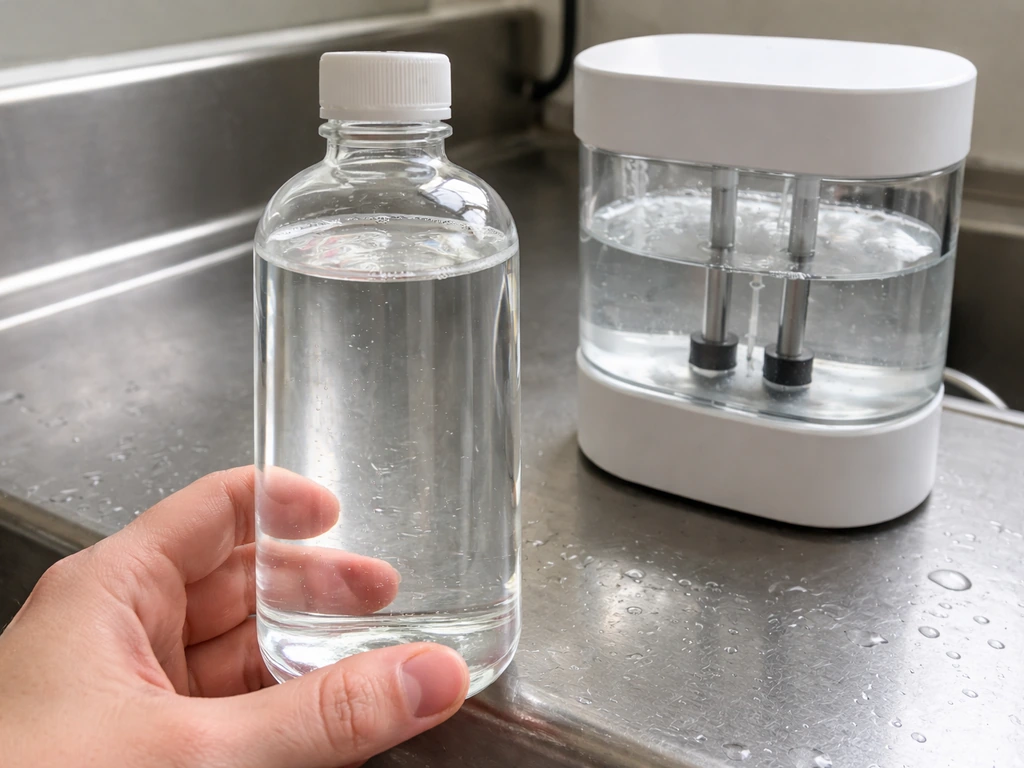
Hypochlorous acid is a naturally occurring molecule your own immune system produces to kill pathogens. As a disinfectant, it's made commercially through electrolysis, passing an electric current through a saltwater solution to generate HOCl at controlled concentrations. You'll sometimes see it marketed as electrolyzed water (EW), acidic electrolyzed water (AEW), or electrolyzed oxidizing water (EOW). These aren't different things, they're all referring to the same core active ingredient: HOCl.
The pH and concentration vary depending on how the product is formulated. Acidic electrolyzed water typically runs at pH 2 to 3 with around 10 to 90 ppm free available chlorine (FAC). Neutral-pH formulations, which are what most consumer and commercial HOCl sprays are today, sit closer to pH 6.5 to 7.5. Some commercial products are formulated at 170 to 200 ppm FAC. The neutral versions tend to be gentler on surfaces and safer to handle, while the acidic versions can be more aggressive but come with more handling considerations.
HOCl products come in trigger sprays, electrostatic sprayers, ready-to-use wipes, and bulk solutions for large-area application. The delivery method matters for poultry settings. A trigger spray works fine for a small coop or hard surfaces in a kitchen, but for larger farm operations you might use a backpack or electrostatic sprayer to ensure even coverage.
Does HOCl actually kill bird flu viruses?
The direct answer is yes, and there is specific experimental evidence to support it, not just general extrapolation. If you're trying to choose a product, look for HOCl-based disinfectants and confirm their label specifically claims effectiveness against avian influenza. A peer-reviewed study evaluated sprayed HOCl solutions specifically for virucidal activity against avian influenza virus in in vitro (lab-based) experiments, and the results supported inactivation. Separately, acidic electrolyzed water has been tested using veterinary disinfectant efficacy frameworks against both avian influenza virus and African swine fever virus with positive outcomes.
The broader chlorine chemistry picture also backs this up. A dedicated study on chlorine inactivation of highly pathogenic H5N1 avian influenza confirmed that free chlorine (the same chemistry HOCl delivers) is effective against this strain. The WHO has also noted that avian influenza virus is inactivated by sodium and calcium hypochlorite (bleach), which operates through the same HOCl mechanism.
One important distinction worth being clear about: most of the rigorous in vitro testing has used avian influenza virus broadly or H5N1 specifically. Direct studies on every current strain circulating in 2026 don't always exist in the published literature, and that's normal. What we do know is that influenza A viruses as a class are relatively susceptible to free chlorine chemistry, and HOCl is one of the more efficient forms of chlorine-based disinfection available.
The EPA maintains a List M of registered disinfectant products with label claims specifically against avian influenza A viruses on hard, non-porous surfaces, and HOCl-based products appear on that list. If you're buying a product today, check that it's on List M and that its label specifically mentions avian influenza.
What actually determines whether HOCl works
Three factors control whether your disinfection works or not, and skipping any one of them is where people go wrong.
Concentration
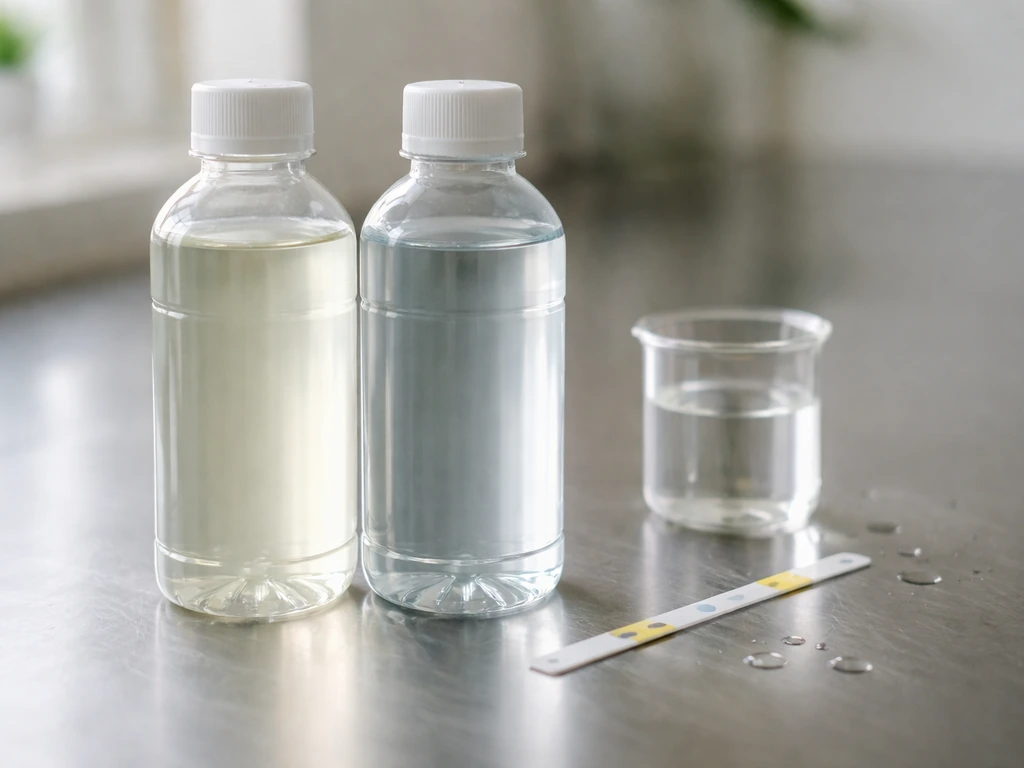
The free available chlorine (FAC) concentration needs to be sufficient to inactivate the virus within a reasonable contact time. Products formulated at 170 to 250 ppm FAC have shown strong performance in studies. If you're diluting a concentrate, follow the label exactly. Over-diluting a product to stretch it further is one of the most common ways disinfection fails.
Contact (dwell) time
The surface must remain visibly wet for the entire contact time specified on the label. The EPA is explicit about this: if the label says 10 minutes, the surface needs to stay wet for 10 minutes. HOCl evaporates faster than bleach solutions, especially in warm or windy conditions, so on porous or rough surfaces you may need to reapply to maintain the wet contact. If you're considering bleach, remember that it works through the same HOCl-style chlorine mechanism, but you still need correct concentration and contact time. For disinfectant foot dips (common on poultry farms), the UK government's guidance specifically flags that organic matter and UV exposure both degrade disinfectants in dips, so they need regular refreshing.
Organic matter (dirt, manure, blood, feathers)
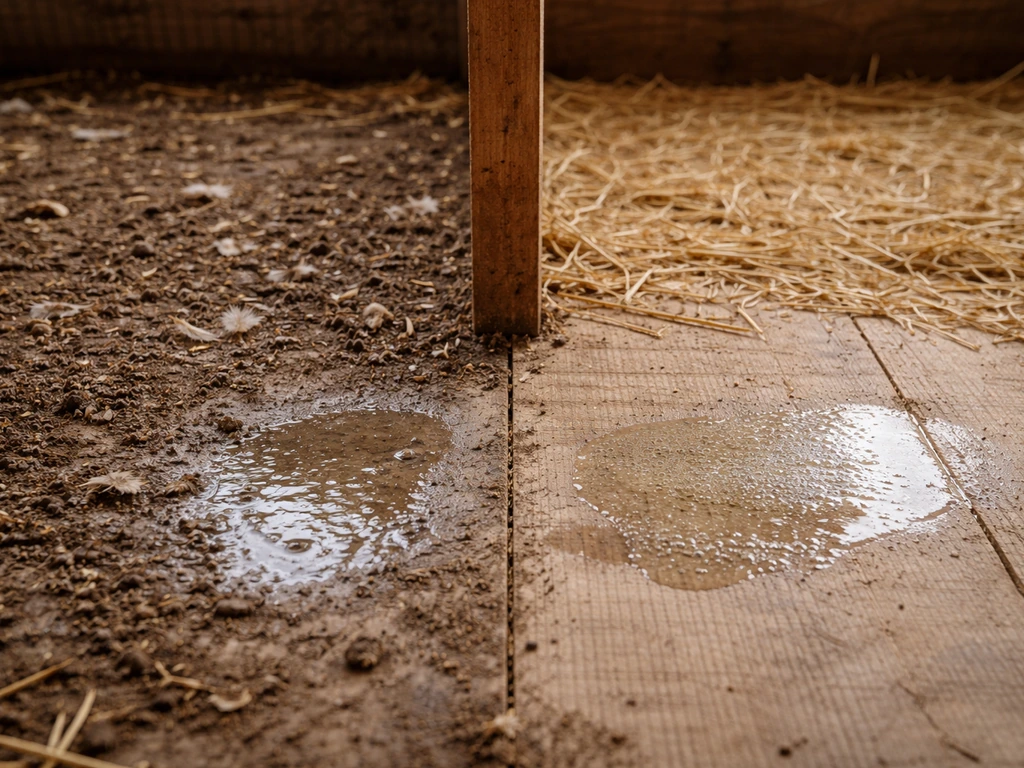
This is the biggest practical factor in poultry and farm settings. Organic matter neutralizes HOCl rapidly. Manure, feathers, blood, and bedding material will consume your disinfectant before it reaches the virus on the underlying surface. Studies on H5N1 survival show how quickly environmental factors shift the virus's vulnerability. A study testing physico-chemical factors affecting H5N1 survival found that highly acidic conditions were virucidal after long contact times, such as at pH 1 or pH 3 after 6 hours Studies on H5N1 survival. This is exactly why the CDC, USDA APHIS, and CFIA all require thorough physical cleaning before any disinfectant is applied. No disinfectant, including HOCl, bleach, or anything else on the market, can compensate for skipping the cleaning step.
Step-by-step: how to disinfect for bird flu risk
This process applies whether you're cleaning a backyard coop after a suspected infection, decontaminating equipment, or cleaning surfaces in a barn or processing area. The USDA APHIS, CDC, and CFIA all describe a similar two-stage process.
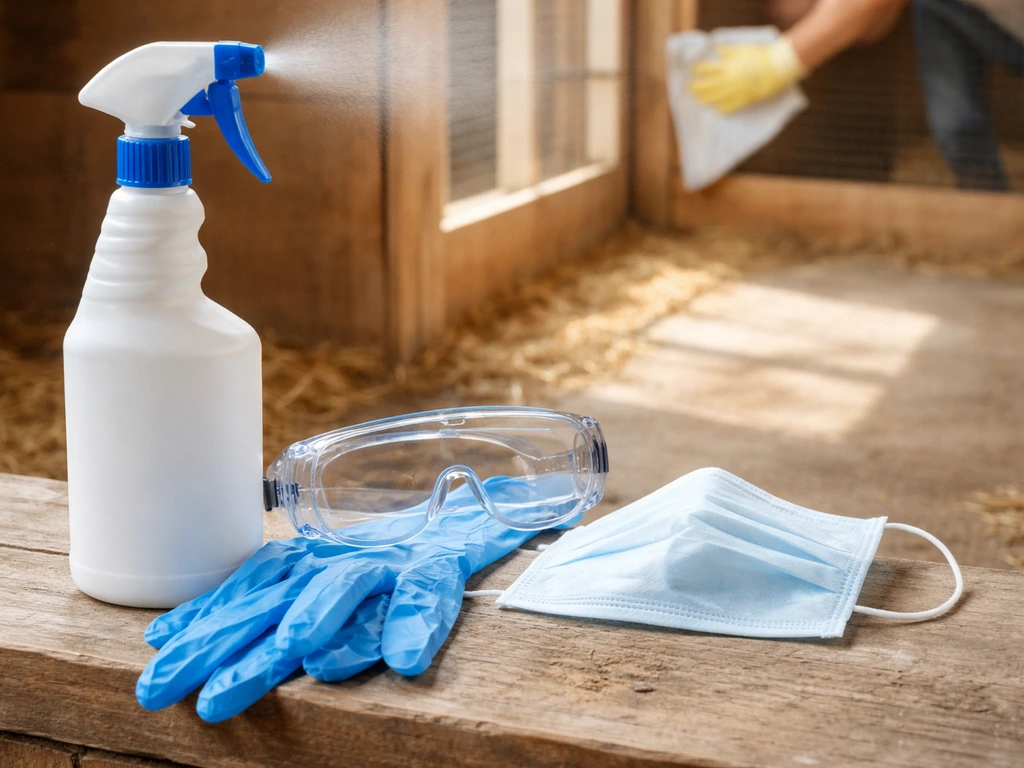
- Put on your PPE before you start: at minimum, waterproof gloves, an N95 respirator or better, eye protection, and a waterproof apron or coveralls. NIOSH and OSHA guidance for poultry workers specifically calls for respiratory protection when in contaminated environments.
- Remove all birds, eggs, feed, and loose equipment from the area you're cleaning.
- Dry-remove all loose organic material first. Scrape, sweep, or shovel out manure, bedding, feathers, and feed debris. Bag and seal waste properly. Do not let it spread.
- Pre-soak surfaces with low-pressure water to loosen caked-on material. Avoid high-pressure washing at this stage, it aerosolizes particles and increases your inhalation risk.
- Wash all surfaces thoroughly with soap or detergent and water until there is no visible dirt remaining. This is not optional. The CDC explicitly states this cleaning step must come before disinfection.
- Rinse off detergent residue. Some disinfectants are inactivated by soap, so check your HOCl product label.
- Apply the HOCl disinfectant at the labeled concentration to all surfaces, ensuring thorough coverage including corners, perches, waterers, feeders, and floor cracks.
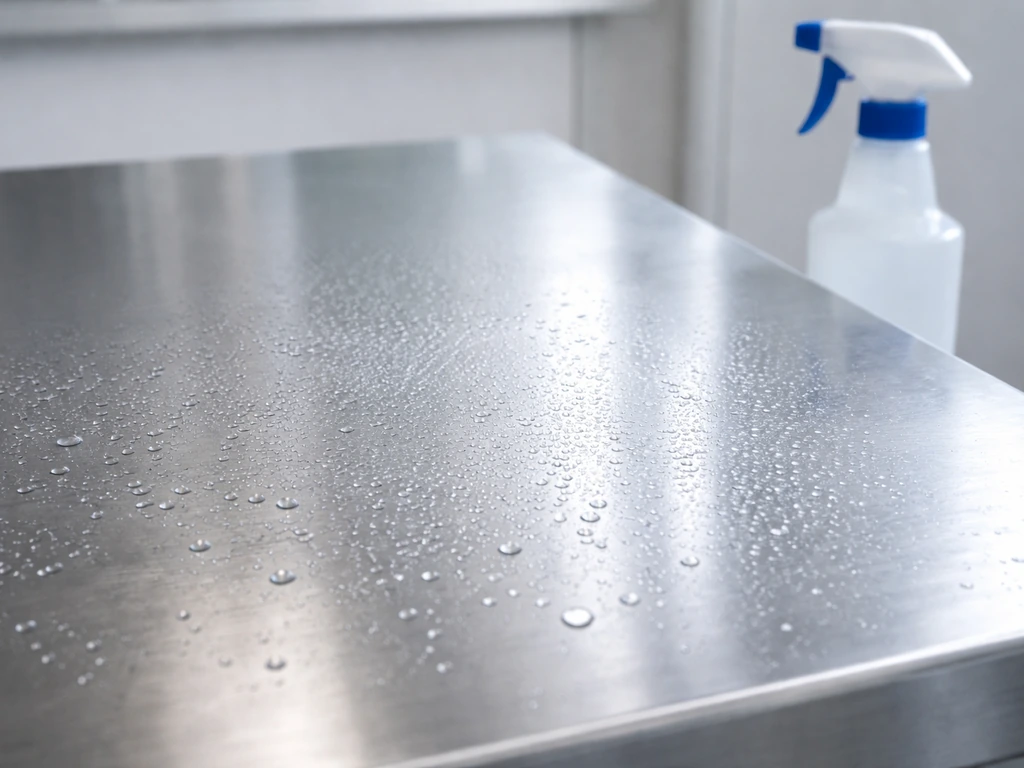
- Keep the surface visibly wet for the full contact time on the label (commonly 10 minutes for List M products). Reapply if surfaces start to dry before the time is up.
- After contact time, rinse if the label or food-contact requirements specify. Some HOCl products are approved as no-rinse for non-food-contact surfaces but require rinsing on food-contact surfaces.
- Allow to dry before restocking with birds. Discard your PPE or decontaminate reusable gear appropriately. Wash hands thoroughly with soap and water.
Limitations and common mistakes that make HOCl fail
HOCl is a capable disinfectant but it has real-world limits that are worth being direct about.
- HOCl does nothing to virus inside living birds. If your flock is infected, disinfecting the coop does not treat or cure the birds. Infected birds need to be reported and handled according to veterinary and regulatory guidance.
- Instant contact is not enough. A quick spritz and immediate wipe is not disinfection, it's cleaning at best. Dwell time is non-negotiable.
- Heavily soiled surfaces defeat the product. If there's visible manure, blood, or debris, the HOCl is being consumed by that organic load rather than reaching the virus. Clean first, always.
- HOCl degrades with UV light and in high-temperature environments. A product left in a sunny barn or a dip exposed to direct sunlight loses active chlorine rapidly. Store solutions away from light and heat, and use fresh solutions.
- Porous or rough surfaces are harder to disinfect. Wood, fabric, and rough concrete can harbor virus deeper than HOCl can penetrate with standard surface application. Replace heavily contaminated porous materials where possible.
- Product instability on the shelf. HOCl solutions have a shorter shelf life than bleach. Electrolyzed HOCl solutions can lose potency within days to weeks, depending on the formulation. Use fresh product and check expiration.
- Improper dilution. Both over-diluting (less effective) and under-diluting (potentially damaging surfaces and wasteful) are problems. Measure accurately.
Food safety and kitchen cleaning when bird flu is a concern
For the vast majority of people, the kitchen is where bird flu risk gets thought about in terms of raw poultry handling. The good news is that proper cooking thoroughly inactivates avian influenza virus. Cooking poultry and eggs to an internal temperature of 165°F (74°C) is the primary food safety step, not disinfecting your counters.
That said, surface disinfection in the kitchen after handling raw poultry is still good practice. If you're using an HOCl-based kitchen spray, check whether the product is labeled for food-contact surfaces and whether a post-rinse is required. Many HOCl products are approved for food-contact applications without rinsing, but the label is the definitive guide. After handling raw poultry, wash cutting boards, surfaces, and utensils with hot soapy water first, then apply the disinfectant spray and allow the labeled contact time before wiping or rinsing.
If you're in a region with active H5N1 outbreaks in dairy herds or wild birds and you're handling raw milk or backyard eggs, the same principle applies: thorough cooking or pasteurization is the definitive kill step. Surface disinfection is a sensible secondary measure, not the primary one.
Prevention beyond disinfecting: the bigger picture
Disinfection is one layer of protection, but it's not the highest-impact one for human health. Understanding how bird flu actually spreads to people helps you prioritize correctly.
Human infection with avian influenza almost always involves direct, close contact with infected birds or their secretions, manure, or contaminated environments. The biggest risk is during handling of sick or dead birds without proper protection, or working in heavily contaminated spaces without respiratory protection. Here's what actually matters most for exposure avoidance:
- Avoid handling sick or dead wild birds with bare hands. If you must handle them, use gloves and an N95 or better respirator.
- Keep backyard flocks away from wild waterfowl, which are a major reservoir for avian influenza viruses.
- Wear appropriate PPE whenever entering areas with confirmed or suspected infection: N95 respirator, goggles or face shield, gloves, coveralls or dedicated clothing, and boot covers.
- Ventilate enclosed spaces before entering. Don't stir up dried manure or feather dust in a closed barn without respiratory protection.
- Wash hands with soap and water after any contact with birds or their environments. Alcohol-based hand sanitizer is a secondary option, but soap and water is better here.
- Change and wash clothing that has been in a contaminated environment before entering your home.
- If you find dead wild birds in numbers, contact your state or local wildlife or agriculture agency rather than handling them yourself.
- Report sick or rapidly dying poultry to your state veterinarian or USDA APHIS immediately. Early reporting protects your flock, neighboring flocks, and public health.
Other disinfectants are worth knowing about in this context. Bleach, Lysol, hydrogen peroxide, and products like Microban are all in the same category of EPA-registered options, and comparing them comes down to surface compatibility, required PPE, and practical availability. HOCl has an advantage in lower irritation and broad food-contact approvals, but any EPA List M product used correctly will do the job.
When to seek help: symptoms, exposure, and next steps
If you've had direct contact with infected or suspected birds and develop flu-like symptoms within 10 days (fever, cough, sore throat, muscle aches, eye redness or discharge), contact your healthcare provider immediately and tell them about the exposure. Don't wait to see if it resolves on its own, and don't just walk into an emergency room without calling ahead, because clinics need to prepare to protect other patients.
If your flock shows signs of illness, including sudden death, dramatic drop in egg production, swollen heads or wattles, purple discoloration of combs, or respiratory distress, call your state veterinarian or your state's department of agriculture immediately. USDA APHIS has an emergency hotline at 1-866-536-7593 specifically for suspected highly pathogenic avian influenza in poultry. Time matters here: early detection and response are what limit outbreaks.
For confirmed outbreaks on premises, the USDA APHIS and state animal health officials will provide specific protocols for cleaning and disinfection that go beyond what a general HOCl label covers. Their guidance will specify approved disinfectants, concentrations, application methods, and the fallow period before restocking. The step-by-step process in this article gives you a solid, CDC-aligned foundation, but official response guidance takes precedence once an outbreak is confirmed.
Your practical checklist for today
Here's how to put all of this into action if you're dealing with a potential bird flu risk right now:
- Confirm your HOCl product appears on the EPA's List M and that the label specifically claims efficacy against avian influenza A viruses.
- Check product concentration (aim for 170 to 250 ppm FAC or follow label guidance) and verify the solution is fresh and not expired or UV-degraded.
- Gather your PPE before entering any potentially contaminated area: N95 respirator, eye protection, waterproof gloves, and coveralls or dedicated clothing.
- Clean all surfaces thoroughly with soap and water to remove visible organic material before applying any disinfectant.
- Apply HOCl at the labeled dilution and keep surfaces visibly wet for the full contact time (often 10 minutes).
- Rinse food-contact surfaces after the contact period if the label requires it.
- Dispose of waste and contaminated materials according to your state's guidance, or contact your state vet for direction.
- Report any sick or dying birds to your state veterinarian or USDA APHIS without delay.
- Monitor yourself for symptoms for 10 days after any significant exposure and contact a healthcare provider if symptoms develop, mentioning the bird exposure.
FAQ
If I spray HOCl and wipe right away, will it still kill bird flu on surfaces?
Not reliably. HOCl can only inactivate the virus when the surface stays wet for the full label contact time. If you spray and immediately wipe dry, the remaining film is often too thin or evaporates too fast, especially outdoors, on rough metal, or in warm, windy conditions.
Do I need to rinse HOCl after disinfecting a kitchen surface that touched raw poultry?
It depends on what the product is labeled for. Some HOCl sprays are approved for food-contact surfaces without rinsing, while others require a rinse after the contact time. Always follow the label instruction for your exact HOCl product, not a general rule about HOCl.
Can HOCl disinfect bird flu if the area is still dirty or has manure on it?
Yes, but only if you clean first. Organic material like manure, feathers, bedding, and dried blood rapidly consume chlorine chemistry, so disinfectant can fail when applied to dirty surfaces. Use a detergent wash or physical cleaning step to remove visible soil before applying HOCl.
What’s the most common way people dilute HOCl wrong for avian influenza disinfection?
Dilution mistakes matter. If you’re using a concentrate, over-diluting to stretch product is one of the most common reasons disinfection doesn’t work. Use measuring tools, not “eyeballing,” and match the labeled target free available chlorine or ppm guidance.
Will HOCl work the same on porous surfaces like wood, cardboard, or fabric?
For porous or highly textured materials, performance is less predictable because the disinfectant may dry or penetrate inconsistently. The wetness and contact time requirement is harder to meet, so you may need multiple applications or to choose a non-porous item that can be properly cleaned and disinfected.
Is it safe to skip PPE if I’m using HOCl to disinfect around birds?
Use the highest-risk handling steps even if the disinfectant is good. Wear appropriate gloves, consider eye protection, and follow label PPE guidance. Never rely on surface disinfecting to replace respiratory protection during cleanup of sick or dead birds or heavily contaminated barns.
How should I manage HOCl foot dips so they stay effective on poultry farms?
Yes, but not as a substitute for confirmed cleaning protocols. The correct concentration, wet contact time, and periodic refreshing still apply. Foot dips also lose effectiveness with organic load and UV exposure, so you need a schedule that matches the label and on-the-ground contamination level.
Can I mix HOCl with vinegar, bleach, or other cleaners to boost effectiveness?
Typically, you should not mix HOCl with other cleaners unless the label explicitly allows it. Combining chemicals can reduce disinfectant effectiveness or create irritating or hazardous byproducts. If you need a prior cleaner step, rinse with water as directed, then apply HOCl.
Does spraying HOCl into the air disinfect rooms for bird flu, or is it only for surfaces?
HOCl generally does not provide “instant sterilization” in the air. For aerosolized particles, airflow, droplet size, and settling matter, and labels are usually written for surfaces. If you’re dealing with an enclosed, heavily contaminated area, focus on proper cleaning and use the product as directed for the intended application type.
If I messed up the contact time or the surface dried early, should I reapply HOCl?
First, disinfectant cannot compensate for skipping physical cleaning, and second, labels specify the contact time under specific conditions. If you already applied HOCl once, and the surface dried early or you removed it before the full contact time, reapply to restore adequate wet exposure, following the label’s reapplication guidance.
How soon after possible bird flu exposure should I seek medical advice, even if I disinfected everything?
For people with suspected exposure, you should focus on medical evaluation, not waiting for disinfection results. Symptoms developing within about 10 days of exposure are a key trigger for contacting a healthcare provider and disclosing the exposure.
After using HOCl, what else should I do with contaminated bedding, laundry, or reusable equipment?
HOCl can reduce contamination on surfaces, but it does not eliminate the need for proper disposal and hygiene. Bag contaminated bedding and waste as directed by local guidance, wash hands thoroughly after cleanup, and treat laundry or reusable gear as potentially contaminated.
Next Article
What Disinfectant Kills Bird Flu and How to Use It
Learn what disinfectant kills bird flu and the exact steps, dilution, and contact time to disinfect safely.