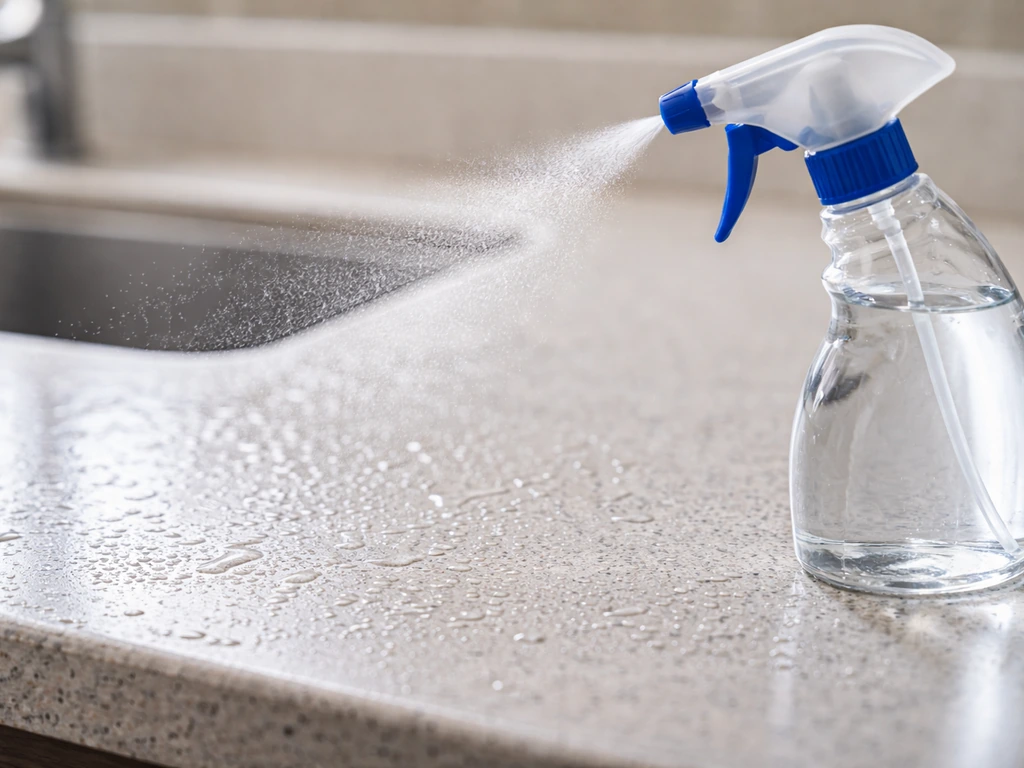
Yes, bleach kills bird flu. Household sodium hypochlorite (the active ingredient in standard bleach) is a well-established, CDC- and WHO-recognized disinfectant that inactivates avian influenza A viruses on hard, nonporous surfaces. The catch is that bleach only works when you use the right dilution, give it enough wet contact time, and clean the surface of organic material first. For high-level disinfection categories, CDC’s table specifies a household bleach dilution of 1:500 to achieve more than 100 ppm available chlorine (5.25% to 6.15% sodium hypochlorite) CDC’s table specifies a 1:500 bleach dilution for more than 100 ppm available chlorine. Skip any of those steps and you may be applying bleach to a surface that still carries live virus.
Does Bleach Kill Bird Flu? Safe Disinfection Steps

When bleach works: the conditions that actually matter
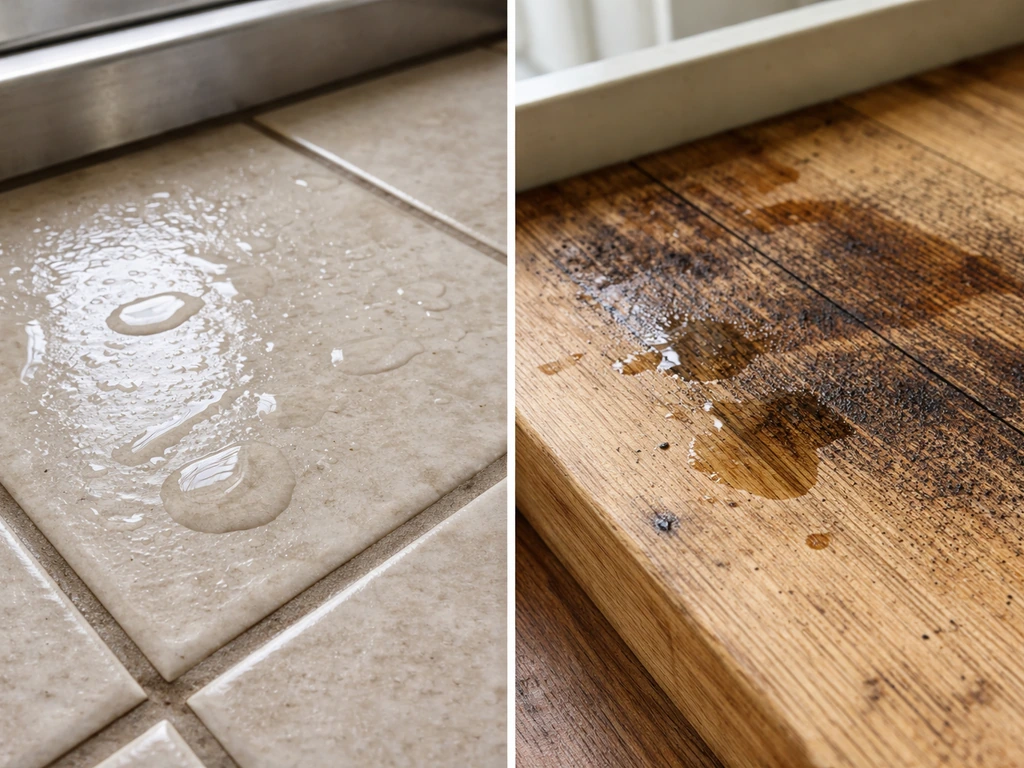
Bleach is not a magic spray-and-walk-away solution. Its active ingredient, sodium hypochlorite, is a powerful oxidizer that destroys viral proteins and genetic material, but organic material like droppings, feathers, mucus, blood, and dirt consumes the available chlorine before it can reach the virus. This is the single biggest reason bleach fails in real-world bird flu cleanup: people spray it on a visibly dirty surface and assume the job is done.
Surface type also matters. Bleach works well on hard, nonporous materials like concrete, metal, plastic, and sealed tile. On porous surfaces like untreated wood, fabric, or soil, organic matter can harbor the virus in crevices where bleach solution never reaches. The EPA's registered disinfectant list for avian influenza (List M) specifically distinguishes between hard nonporous and other surface types for exactly this reason. If you are working with a porous surface, bleach alone may not be sufficient, and you should contact your local agricultural or public health authority for guidance on those specific materials.
Finally, bleach solutions degrade over time, especially in sunlight and heat. Always make a fresh solution on the day you use it. A bottle of bleach that has been sitting open in a warm garage for months may have lost a significant portion of its active chlorine content.
How to disinfect safely: dilution, contact time, and cleaning first
Think of disinfection as a two-step job, not one. You clean first, then disinfect. Cleaning removes the organic material that would otherwise neutralize your bleach. Then the bleach can actually do its job on the virus itself.
Step-by-step process
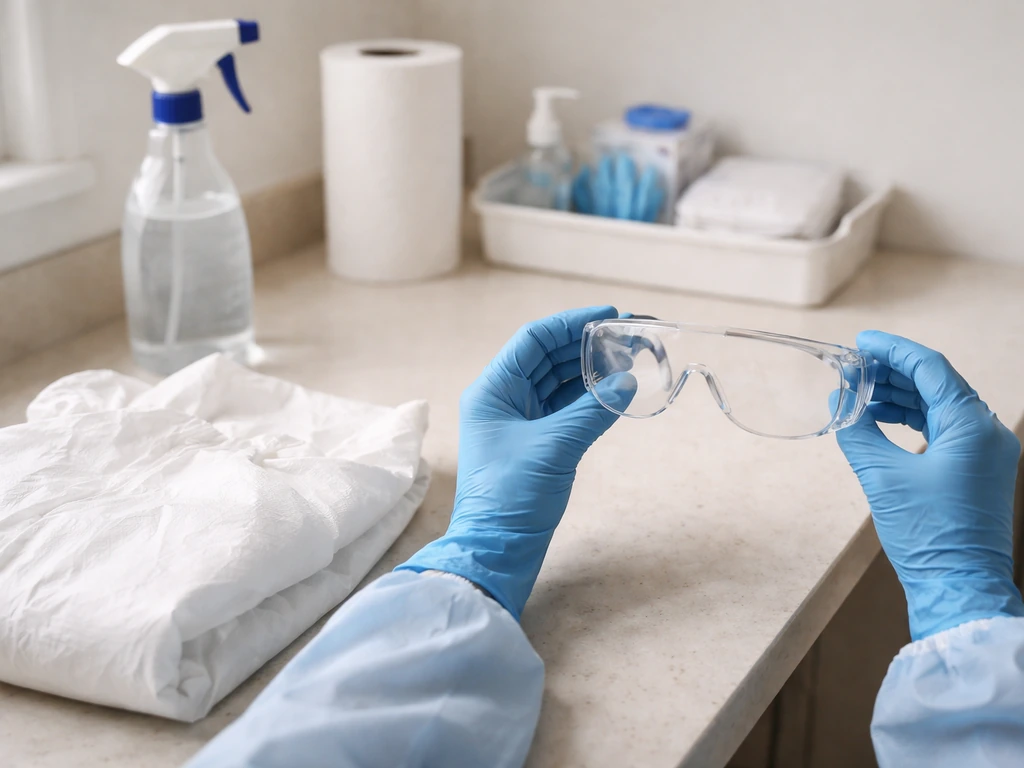
- Put on your PPE before you touch anything: disposable gloves, eye protection, and ideally a disposable gown or clothes you can wash immediately afterward. If you are in a heavily contaminated space (like a poultry barn or an area with a lot of dried droppings), add an N95 respirator.
- Remove gross contamination first. Use paper towels, a disposable scraper, or a shovel to pick up and bag solid material like droppings, feathers, litter, or carcasses. Seal the bags and dispose of them according to local guidelines.
- Clean the surface with soap and water. Scrub until you cannot see visible dirt or residue. This step is non-negotiable. The CDC and WHO both state that cleaning must precede disinfection for it to be effective.
- Rinse the surface and let it dry briefly if possible, or proceed to disinfection while it is still damp.
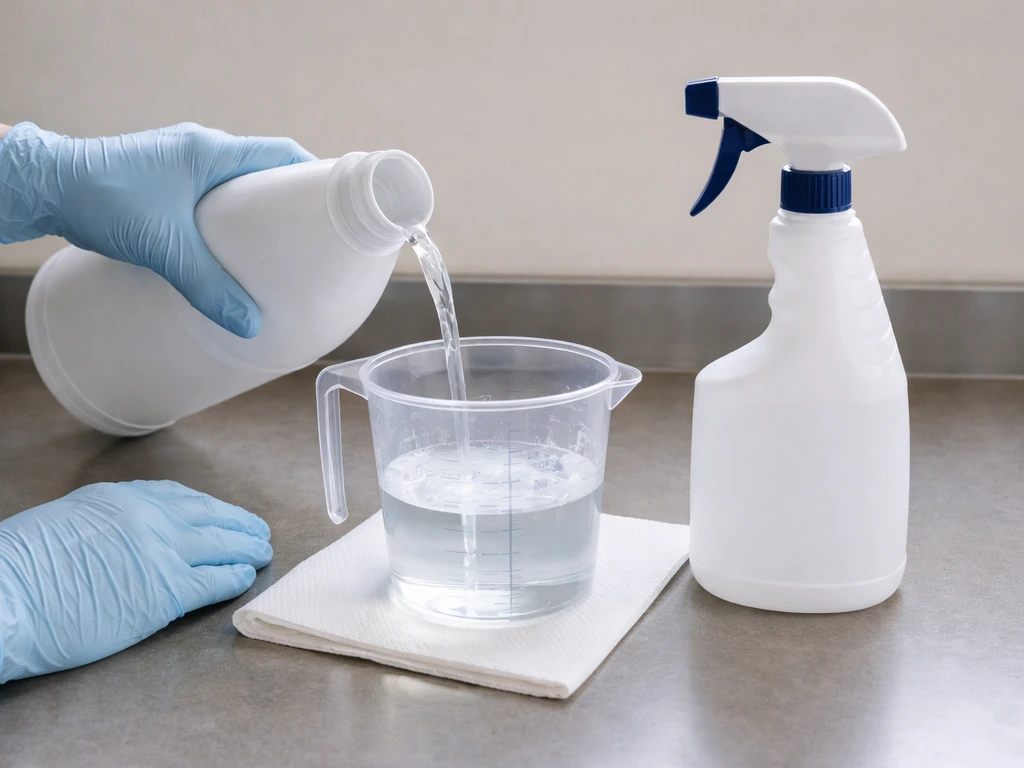
- Mix your bleach solution fresh. For a surface that has been cleaned of visible contamination, a 1:100 dilution of standard household bleach (about 5.25% to 6.15% sodium hypochlorite) is appropriate. That is roughly 1 tablespoon of bleach per quart of water, or about a quarter cup per gallon. If there is still significant organic load present that you cannot fully remove (like a heavily soiled porous surface), a stronger 1:10 dilution may be needed, but this is more corrosive and should be used carefully.
- Apply the bleach solution so the surface is visibly wet. Let it sit for at least 1 minute of wet contact time. The EPA's registered sodium hypochlorite products for avian influenza list a 1-minute contact time on hard nonporous surfaces. Do not let the surface dry before that time is up.
- Wipe or rinse as needed after the contact time is complete.
- Remove your PPE carefully, washing your hands thoroughly after disposal. Wash any clothing that may have been exposed.
If your bleach bottle has specific label instructions, follow those over any general guidance. The label is the law for registered disinfectants, and manufacturer instructions are formulated for how that specific product performs at its specific concentration.
Safety precautions and common mistakes
Bleach is effective, but it is also caustic and reactive. Here are the things that genuinely matter for your safety:
- Never mix bleach with ammonia-based cleaners, acidic cleaners (like vinegar), or any other cleaning product. Mixing bleach with ammonia produces toxic chloramine gas. Mixing it with acids releases chlorine gas. Both can cause serious respiratory harm and have sent people to the hospital.
- Ventilate the space. Open windows and doors before you start. Even properly diluted bleach in an enclosed room can irritate your airways, especially if you are working for more than a few minutes.
- Wear eye protection. Bleach solution splashing into eyes is a genuine risk during scrubbing or spraying.
- Do not spray or fog rooms with disinfectant. The WHO explicitly advises against this practice for avian influenza cleanup. It is less effective than surface-by-surface cleaning and disinfection, and it creates unnecessary inhalation exposure.
- Use gloves rated for chemical exposure, not just thin latex exam gloves if you are working with the stronger 1:10 dilution.
- Do not use bleach on metal surfaces for extended periods without rinsing, as it is corrosive.
- Make fresh solution each time. Diluted bleach loses potency within hours, especially in warm or sunny conditions.
Where to focus: high-risk areas and how bird flu actually spreads
Human infections with avian influenza most often happen after close, prolonged, and unprotected contact with infected birds or animals, or contaminated surfaces and materials. The practical implication is that random outdoor surfaces pose very little risk compared to direct contact with sick or dead birds, their droppings, litter, or feathers.
If you keep backyard poultry or have found a dead wild bird, here is where bleach-based disinfection is actually relevant:
- Coop floors, walls, feeders, and waterers that have been in contact with sick or dead birds
- Boots, tools, and equipment used around an infected or suspected flock
- Vehicles that have entered the property
- Any hard surfaces in areas where you handled dead birds or collected droppings
- Surfaces in your car or home that may have been touched with contaminated gloves or boots
Random surfaces in your yard or home that have not had direct contact with infected birds are much lower priority. Bird flu does not float through the air over long distances and land on your kitchen counter. The virus needs a direct route: infected bird material to surface to your eyes, nose, or mouth. That chain is what you are interrupting with PPE and targeted disinfection.
When bleach is not the right tool
There are real situations where bleach is not appropriate or not sufficient on its own. Knowing these limits matters as much as knowing how to use bleach correctly. If you are looking for alternatives, a commercial EPA List M disinfectant is often an adjacent option when bleach limits apply.
| Situation | Why bleach may not work | What to do instead |
|---|---|---|
| Porous surfaces (untreated wood, soil, fabric) | Virus can hide in material where bleach cannot penetrate; organic matter blocks contact | Consult USDA APHIS or local ag authority; consider removal/disposal of material |
| Heavy organic contamination that cannot be fully cleaned | Organic material consumes available chlorine before it reaches the virus | Remove as much material as possible first; use stronger dilution (1:10) as a last resort; consider professional decontamination |
| Bleach-sensitive equipment or materials | Bleach is corrosive to some metals and can damage certain coatings | Use an EPA List M product with a compatible active ingredient (quaternary ammonium, hydrogen peroxide, or peroxygen compound) |
| Large-scale poultry facility outbreak | Household bleach is not scaled or registered for commercial facility decontamination | Follow USDA APHIS guidance and work with state veterinary authorities |
| You are uncertain about what you are dealing with | Improvised protocols can miss areas or use wrong dilutions | Contact local public health or animal health authorities before proceeding |
If bleach is not appropriate for your situation, the WHO recognizes several other disinfectant classes that inactivate avian influenza viruses: quaternary ammonium compounds, phenolics, peroxygen compounds, and calcium hypochlorite. Clorox disinfecting wipes can be confusing because not all wipe ingredients and contact times are the same, so check whether the product is on EPA List M and whether the label specifically covers influenza A viruses do clorox wipes kill bird flu. WHO’s avian influenza Q&A provides general precautions around outbreaks in animals, rather than a specific bleach dilution and contact-time recipe WHO recognizes other disinfectant classes that inactivate avian influenza viruses.
Microban disinfectants are not the same as CDC- and WHO-recognized bleach-based approaches for inactivating bird flu, so you should not assume they work without checking an EPA List M product label inactivate avian influenza viruses. Hydrogen peroxide can be used as a disinfectant in some situations, but whether it kills bird flu depends on the product type and the contact time on the contaminated surface.
Depending on your surface and conditions, a different disinfectant class may be the one that kills bird flu instead of bleach disinfectant classes that inactivate avian influenza viruses. The EPA's List M provides a full roster of registered products with confirmed efficacy against avian influenza A viruses, including contact times and surface types. Products based on hydrogen peroxide or hypochlorous acid are among the alternatives worth looking into if bleach does not fit your situation. Hypochlorous acid is one of the disinfectant alternatives to consider when bleach is not a fit, and it is used for inactivating bird flu viruses on appropriate surfaces.
Other disinfectants like Lysol, Clorox wipes, and Microban products are also worth considering depending on the surface and scale of cleanup. If you are wondering does Lysol kill bird flu, check whether the product has confirmed efficacy against influenza A (avian) viruses on the specific surface you are disinfecting.
Next steps: when to call authorities and how to protect yourself going forward
If you have already done a cleanup before reading this and you are worried you did it wrong, here is the reassuring truth: the human risk from a single incomplete surface cleaning is low if you were not directly handling infected birds without protection. The primary exposure route is unprotected contact with infected birds and their materials, not a briefly touched surface. That said, it is worth going back and re-disinfecting properly if you skipped the cleaning step or did not wait for contact time.
If you do not have bleach, soap and water cleaning followed by a commercial EPA List M disinfectant is a fully acceptable approach. The CDC guidance for backyard flock owners specifically recommends cleaning with soap and water until visible dirt is gone, then applying an EPA-approved disinfectant per label instructions. You do not need bleach specifically; you need a product with demonstrated efficacy and a label that covers influenza A viruses.
When to contact authorities
- You find multiple dead wild birds in the same area, particularly waterfowl or poultry: report to your state or local wildlife/animal health agency or USDA APHIS.
- You have backyard poultry showing signs of illness (sudden death, respiratory distress, drop in egg production): contact your state veterinarian immediately.
- You had direct unprotected contact with sick or dead birds and develop flu-like symptoms (fever, cough, sore throat, muscle aches, conjunctivitis) within 10 days: contact your doctor and tell them about the exposure. The CDC recommends that people who become sick within 10 days of exposure isolate at home until avian influenza infection is ruled out.
- You are unsure whether a surface or area is safe to clean yourself: call your local public health department before proceeding.
Quick action checklist
- Put on PPE (gloves, eye protection, N95 if in a confined space with droppings or carcasses) before touching anything.
- Remove and bag solid contamination (droppings, feathers, dead birds) before applying any disinfectant.
- Clean all surfaces with soap and water until visibly clean.
- Mix a fresh 1: 100 bleach solution (1 tbsp bleach per quart of water) for cleaned nonporous surfaces.
- Apply solution and keep surfaces visibly wet for at least 1 minute before wiping.
- Ventilate the area throughout. Never mix bleach with other cleaners.
- Remove PPE carefully and wash hands thoroughly.
- Monitor your health for 10 days after significant exposure. See a doctor immediately if flu-like symptoms develop.
- Report sick or dead birds to your state animal health authority or USDA APHIS.
Bird flu outbreaks in animals are serious, but the human risk from properly managed cleanup is very manageable when you follow these steps. Bleach is a genuinely effective tool here, as long as you use it correctly. Pine-Sol (a pine-oil cleaner) is not a CDC-recommended disinfectant for bird flu, so it should not be relied on for inactivating avian influenza. The process is straightforward: protect yourself, clean first, disinfect second, and call the right people when the situation is beyond a basic household cleanup.
FAQ
What bleach dilution should I use to kill bird flu on surfaces?
Use the bleach label instructions, then verify the concentration and required “wet contact time” for avian influenza. A common mistake is making a weaker dilution than intended or wiping before the surface stays visibly wet for the full contact time, which reduces effectiveness.
Can I use bleach on any surface (wood, fabric, soil, or tile)?
Yes, but only if the surface can tolerate it and the product is designed for that material. Bleach can damage some metals, degrade some plastics, and discolor fabrics, and on porous materials it may not reach virus sheltered in pores and crevices.
If I made bleach solution earlier, is it still effective for bird flu cleanup?
Bleach can lose strength with improper storage or old solution, especially if exposed to heat and sunlight, and effectiveness also drops if the solution is contaminated with dirt. Mix a fresh batch on the day you disinfect and discard any unused solution afterward rather than reusing it days later.
Why does bleach sometimes seem to fail if I followed a dilution?
Do not rely on bleach to “react away” dirt. Start with cleaning using detergent and water (or a cleaner compatible with bleach), remove visible droppings or feathers, then disinfect, so the bleach is not consumed by organic material.
What PPE and ventilation should I use when disinfecting with bleach?
Bleach fumes and splashes increase risk, so ventilation and skin and eye protection matter. If you must disinfect, wear gloves, eye protection, and keep the area ventilated, and avoid spraying in a way that creates aerosols.
Can I mix bleach with vinegar, ammonia, or other cleaners to disinfect better?
Do not mix bleach with other household chemicals, especially ammonia or acids, because this can create toxic gases. Only use bleach with water (or follow the product’s label directions exactly) and never “boost” it with cleaners.
If I already wiped the area with soap, do I still need to disinfect?
“Cleaning” and “disinfecting” are different steps. Cleaning physically removes organic material, disinfecting inactivates viruses, if the surface stays wet for the required contact time. If you skip cleaning, you may leave virus protected by residue.
I used bleach but I think I wiped too soon, should I redo it?
Re-disinfect if you did not keep the surface wet for the full contact time or if you only spot-treated visible areas. When in doubt, clean again to remove any remaining residue, then disinfect properly from the cleaned surface outward.
If I do not have bleach, what’s an acceptable alternative for bird flu cleanup?
Soap and water cleaning plus an EPA-registered disinfectant that specifically lists efficacy against influenza A viruses (avian) on the relevant surface is acceptable. Bleach is not required if you use a product with demonstrated performance and follow its label contact time and dilution.
How do I choose between bleach and other disinfectants like hydrogen peroxide-based products?
The right choice depends on what you are disinfecting (hard nonporous vs porous) and the exact product formulation. Some alternatives work in certain cases, but you should confirm the product has influenza A (avian) claims for the surface type and that you can meet the required wet contact time.
Do I need to disinfect my whole yard or only specific areas after finding a dead bird?
If a dead wild bird or poultry came into direct contact with items, disinfect the contact surfaces, plus any areas likely contaminated by droppings, feathers, or nesting material. Routine disinfection of unrelated outdoor surfaces is usually unnecessary compared with targeted cleanup.
When is bleach-based household cleanup not enough, and I should call an authority?
If there is heavy contamination (large droppings, feathers, pooled body fluids, or extensive nesting material), household cleanup may be insufficient or too risky. In those cases, contact local agricultural or public health authorities for guidance, especially if large-scale premises or multiple birds are involved.
I already cleaned once, what if I still feel worried about exposure?
If exposure was brief and not tied to unprotected handling of infected birds or their materials, the overall human risk is generally low. If you had direct unprotected contact with sick or dead birds, contaminated materials, or splashes into eyes or mouth, seek medical advice and follow local public health guidance promptly.
Does Lysol Kill Bird Flu? Spray and Wipes Explained
Find out if Lysol spray or wipes kill avian influenza on surfaces, including contact time, surface prep, and safety limi