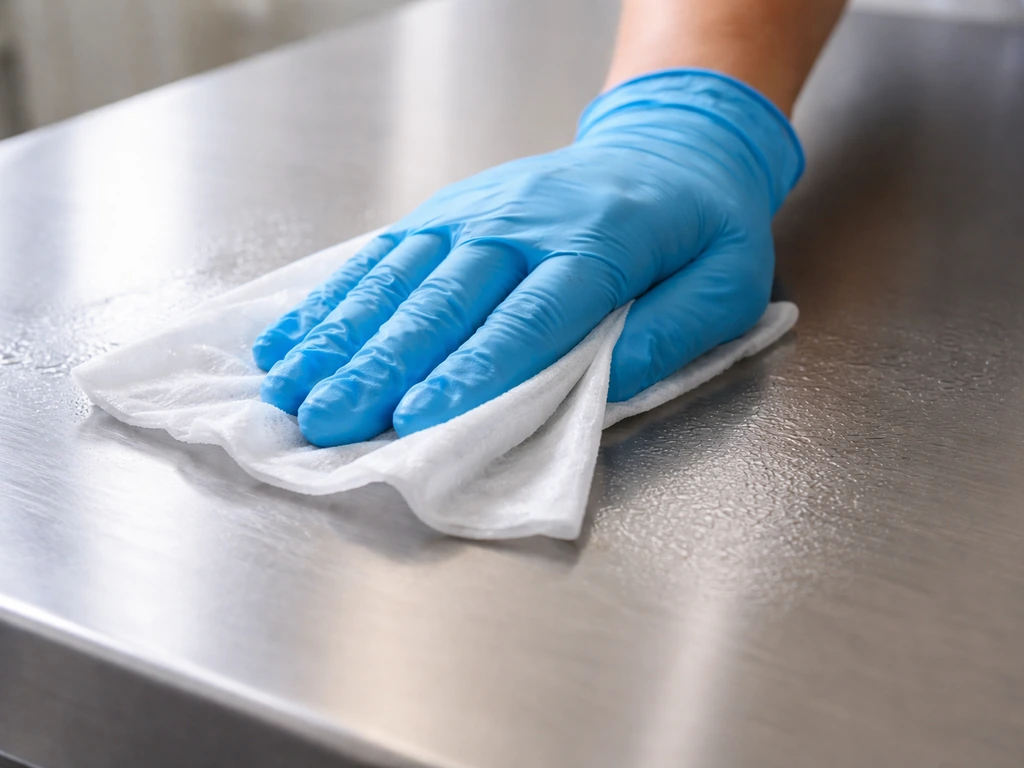
Yes, hydrogen peroxide can inactivate avian influenza (bird flu) virus on surfaces, but the details matter a lot. If you are looking at alternatives, the key question is whether hypochlorous acid can inactivate bird flu in real-world cleaning situations does hypochlorous acid kill bird flu. Standard 3% hydrogen peroxide from the drugstore has demonstrated virucidal activity against influenza viruses on hard, non-porous surfaces. More practically, accelerated hydrogen peroxide (AHP) products registered on the EPA's List M are specifically labeled for use against avian influenza A and are what poultry biosecurity programs actually recommend. blank" rel="noopener noreferrer">EPA’s “List M” provides product-by-product claims, including hydrogen peroxide contact times (the time the surface should remain wet) for avian influenza A disinfection on hard, nonporous surfaces. The catch is that surface cleanliness, concentration, temperature, and contact time all determine whether disinfection actually works. Spraying and immediately wiping dry does nothing. The surface needs to stay visibly wet for the full contact time listed on the product label.
Does Hydrogen Peroxide Kill Bird Flu? Safe Disinfection Guide

Does hydrogen peroxide inactivate avian influenza virus?
Research confirms that hydrogen peroxide in both liquid and vapor forms can inactivate influenza viruses. One study found that hydrogen peroxide vapor at roughly 1,200 ppm with about 30 minutes of exposure produced measurable inactivation of influenza virus on surfaces. Separate work with HP/TEG vapor at 25 to 29°C demonstrated approximately 1.3 log10 reductions per hour, meaning it was steadily knocking down viral load over time. Those are controlled lab conditions, but they confirm the basic mechanism: hydrogen peroxide's oxidizing action disrupts the virus's envelope and proteins.
On the practical side, the CDC acknowledges that commercially available 3% hydrogen peroxide is an effective disinfectant for inanimate surfaces. The EPA goes further with its List M, which registers specific hydrogen peroxide-based products with explicit claims against avian influenza A viruses on hard, non-porous surfaces. Products like Oxivir Three 64 and PREvail (an accelerated hydrogen peroxide formulation) appear on that list. AHP products in particular have become common in real-world poultry biosecurity programs in the U.S. and Canada precisely because they combine efficacy with a relatively favorable safety profile compared to some older disinfectants.
Concentration, contact time, and surface conditions
These three variables can make or break any disinfection attempt, and hydrogen peroxide is no different from any other disinfectant in this regard.
Concentration
For liquid disinfection, higher concentrations generally perform better, but the EPA-registered products already specify their working dilutions on the label. NDSU's animal disease disinfectant guidance lists a 6% hydrogen peroxide solution with a 5-minute contact time as effective against avian and swine influenza. AHP products like PREvail are typically used at a 1/16 dilution (roughly 1%) with a 5 to 10-minute contact time depending on conditions, and the manufacturer's technical bulletin specifically states a 5-minute claim for avian influenza. University extension biosecurity programs recommend AHP at 1% solution with a 10-minute contact time for housing, equipment, and footbaths. Don't dilute beyond label instructions expecting the same result.
Contact time
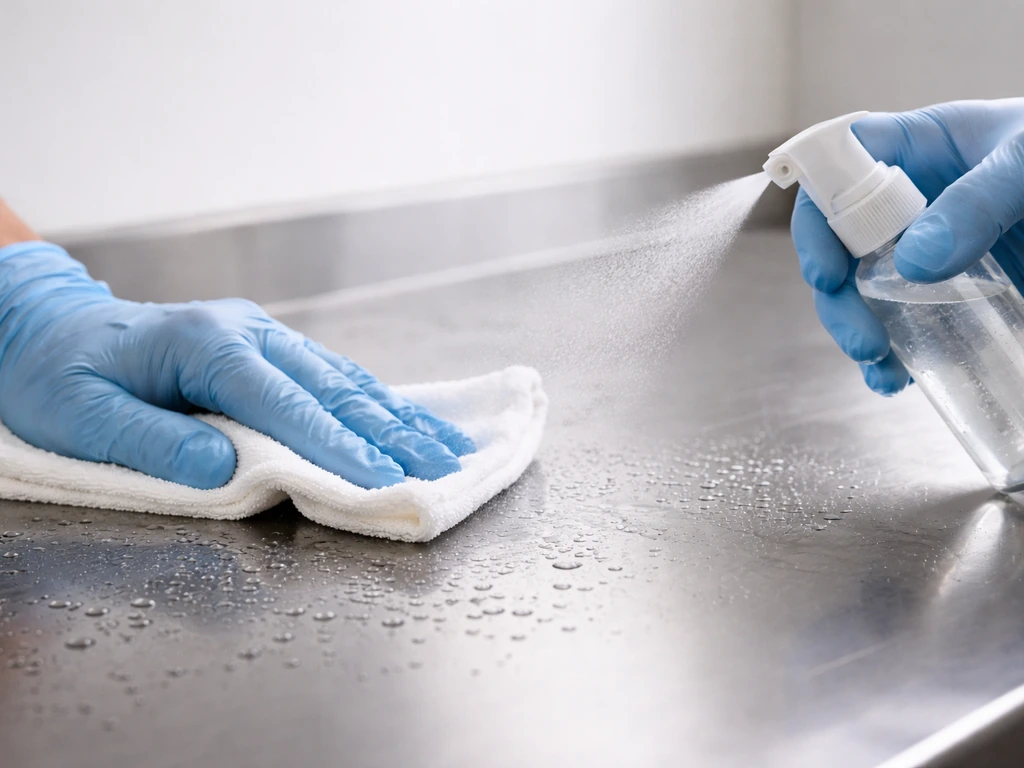
This is the piece most people get wrong. Contact time means the surface must stay visibly wet with the disinfectant for the entire required duration. If it dries in two minutes and the label says five, you haven't disinfected. NIOSH guidance is explicit on this point: follow the label's contact time, ensure the surface remains visibly wet, and never mix disinfectants with other chemicals, since mixing can change the product's properties and reduce effectiveness. blank" rel="noopener noreferrer">Some AHP wipe products claim a 1-minute contact time for hard surfaces under optimal conditions, while liquid applications typically require 5 to 10 minutes.
Temperature and surface cleanliness
Temperature matters more than most people realize. Research testing disinfectant efficacy against avian influenza at 25°C, 4°C, 0°C, and -10°C found that performance dropped significantly below 20°C. The Canadian Food Inspection Agency (CFIA) addressed this directly in its cold-weather protocols: PREvail (AHP) is recommended at a 1/16 dilution with a 10 to 20-minute contact time in cold weather conditions. If you're disinfecting in a cold barn or during winter, extend your contact time accordingly and check whether your product has cold-weather instructions.
Organic matter is the other major factor. Feces, feathers, bedding, mud, and blood all protect the virus and physically block the disinfectant from reaching surfaces. USDA APHIS is unambiguous: cleaning to remove all visible organic material must happen before disinfecting. Disinfecting without cleaning first is largely a wasted effort. Scrub or pressure-wash first, then apply disinfectant.
| Product / Form | Concentration | Contact Time | Notes |
|---|---|---|---|
| 3% H2O2 (standard) | 3% (undiluted) | Varies by label | CDC-acknowledged for inanimate surfaces; check EPA List M registration |
| AHP (e.g., PREvail) | 1/16 dilution (~1%) | 5 min (warm); 10–20 min (cold weather) | CFIA and USDA-referenced; on EPA List M for avian influenza A |
| AHP wipes (e.g., Oxivir Tb) | Ready to use | 1 min (hard non-porous surfaces) | Good for equipment; surface must stay wet |
| 6% H2O2 liquid | 6% | 5 min | Listed in NDSU animal disease disinfectant chart for avian influenza |
Where hydrogen peroxide makes sense: housing, equipment, and floors
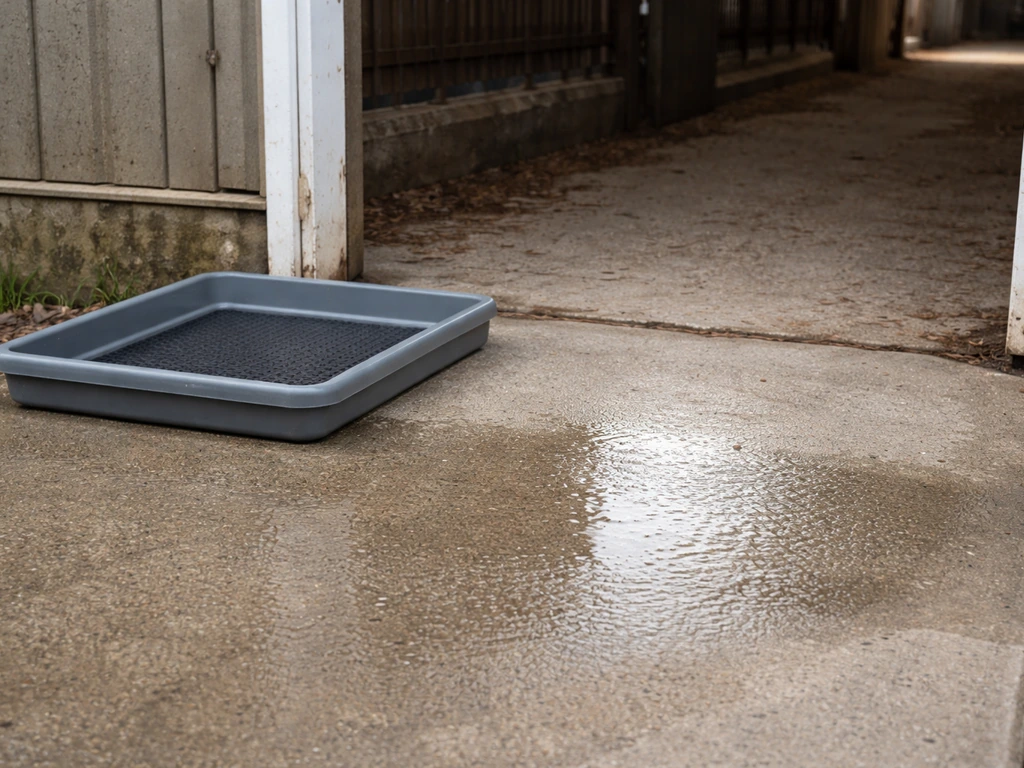
Hydrogen peroxide and AHP products are well-suited for hard, non-porous surfaces, which is exactly what shows up in most poultry operations and backyard setups: concrete floors, metal feeders and waterers, plastic cages, transport crates, metal tools, and equipment surfaces. Michigan MDARD HPAI cleaning guidance lists accelerated hydrogen peroxide as a recommended disinfectant for these areas, and USDA APHIS outbreak protocols cover disinfecting barns, pens, and all equipment following avian influenza events. Microban disinfectants are designed for general household sanitizing and are not a substitute for established HPAI or avian influenza control guidance does microban kill bird flu.
For footbaths at barn entrances, AHP solutions (1% concentration, refreshed regularly) work well. For large floor areas, a pump sprayer or backpack sprayer applied after thorough cleaning is practical. Vapor-phase hydrogen peroxide systems exist for whole-room decontamination of enclosed spaces, but these are specialized commercial setups, not something to attempt with household products. USDA APHIS guidance (VSG 13403.2) governs the full cleaning and disinfection process for quarantine facilities following outbreaks, which involves APHIS supervision and goes well beyond what an individual can do independently.
Porous surfaces like wood, soil, and fabric are harder to disinfect reliably with any product, including hydrogen peroxide. When in doubt, remove and bag contaminated porous materials rather than trying to disinfect them in place.
Safe disinfection practices and what to wear
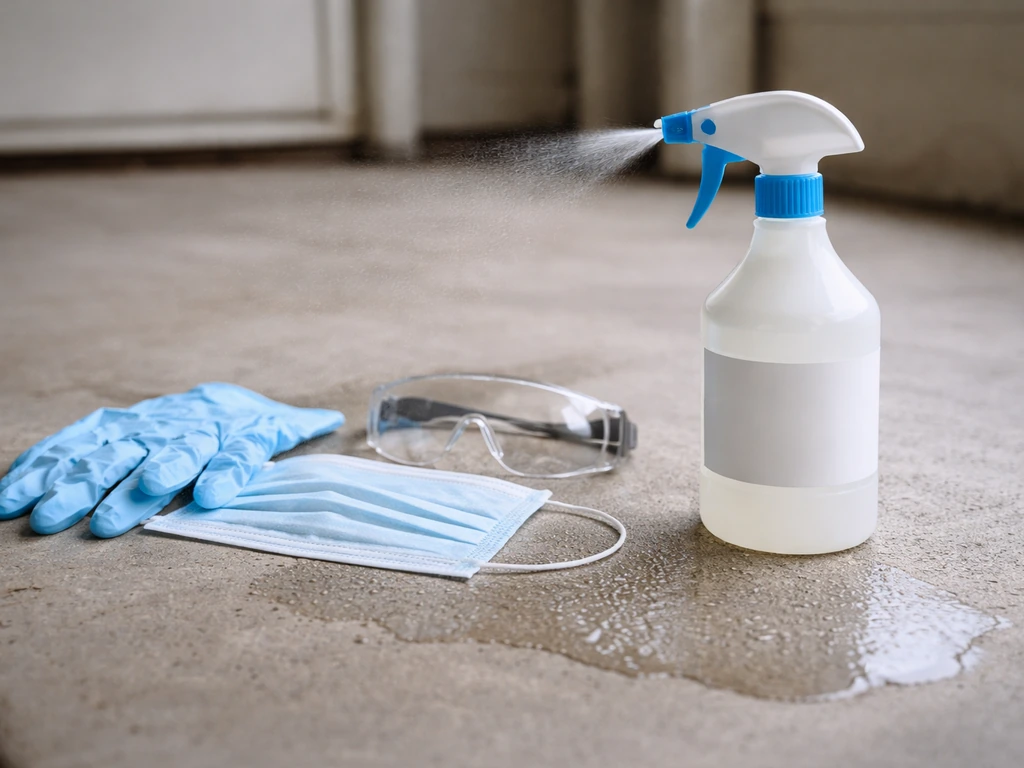
The CDC is direct about this: do not touch sick or dead birds or any contaminated surfaces without proper PPE. Before you even start cleaning, gear up. After cleaning and disinfecting, shower, remove and wash your clothing, and wash your hands thoroughly.
- Disposable gloves (nitrile or rubber, not thin latex): double-gloving is smart when handling heavily contaminated materials
- N95 respirator or better: bird flu spreads through respiratory droplets and contaminated dust; a cloth mask or surgical mask is not adequate protection when cleaning a contaminated area
- Eye protection: goggles or face shield, especially when using a sprayer that can create mist
- Waterproof coveralls or dedicated clothing you can bag and wash immediately
- Waterproof boot covers or dedicated footwear you disinfect before leaving the area
- Ventilate the space: open doors and windows when using any disinfectant, including hydrogen peroxide, which can irritate airways at working concentrations
The cleaning sequence matters too. Start by removing all birds, bedding, and obvious organic debris. Then wet-clean surfaces with detergent or soap and water, scrubbing to remove all visible contamination. Rinse, let drain, and only then apply your disinfectant. Allow full contact time. Rinse again if the label requires it or if food-contact surfaces are involved. Bag all contaminated waste in heavy-duty bags, seal them, and follow local guidance on disposal. Do not mix your disinfectant with anything else, including other cleaners or bleach. Stick to the label.
Food safety: don't use hydrogen peroxide on poultry or eggs
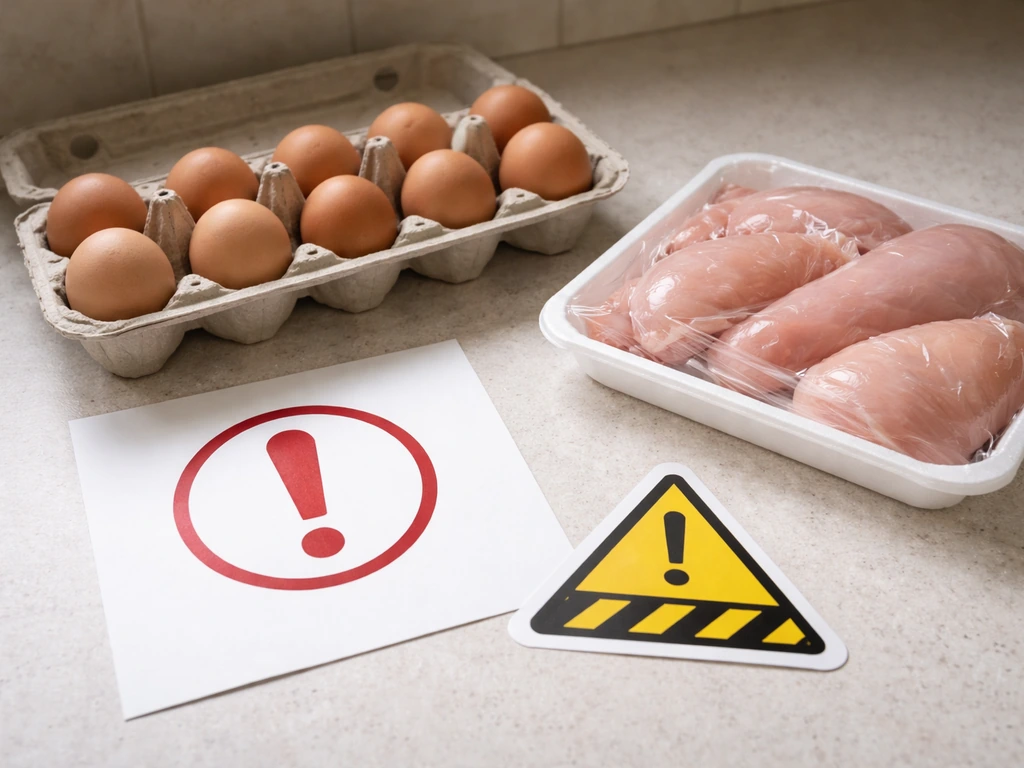
This is one of the most important things to clear up: using hydrogen peroxide to disinfect raw poultry or eggs at home is not an appropriate or effective food safety measure, and in some cases it can make things worse. USDA FSIS explicitly warns that washing or rinsing raw poultry increases the risk of cross-contamination by spreading potential pathogens to your sink, countertops, and surrounding surfaces. Spraying eggs or meat with hydrogen peroxide at home does not reliably penetrate the food to inactivate any virus inside, and it introduces a chemical residue you then consume.
Commercial egg processing is a different story. Licensed processors use regulated sanitizing compounds during washing at carefully controlled temperatures, and any hydrogen peroxide used in food processing must have residual amounts removed by approved chemical or physical means before the product reaches consumers. That's a regulated industrial process, not something to replicate in your kitchen.
The actual answer for food safety is heat. Cook poultry and egg dishes to an internal temperature of at least 165°F (74°C) throughout. At that temperature, avian influenza virus is inactivated. If you are asking specifically whether Pine-Sol kills bird flu, the safer answer is that you should not rely on household cleaners for avian influenza control and instead use EPA-registered disinfectants with listed claims and correct contact time. That's the standard recommended by FDA for eggs and egg dishes. If you're buying eggs from a commercial USDA-graded source, they've already been through regulated washing and processing. If you keep backyard hens and there's a confirmed or suspected HPAI case in your flock, don't eat eggs from those birds and contact your state veterinarian.
The limits of hydrogen peroxide and when to escalate
Hydrogen peroxide works well for what it's registered for: hard, non-porous surfaces that have been cleaned first, at the right concentration and contact time, in appropriate temperature conditions. It has real limits. It's less effective on porous materials, it degrades quickly when exposed to light and organic matter, and its performance drops substantially in cold temperatures without adjusted protocols. It's also not the only option, and in some situations, other disinfectants may be more practical or better suited. If you're asking what disinfectant kills bird flu, other disinfectants may be more practical depending on the surface and conditions.
Other disinfectants with demonstrated efficacy against avian influenza include bleach (sodium hypochlorite), Virkon-S, quaternary ammonium compounds, and certain phenolic products. The EPA's List M currently includes around 200 registered products for avian influenza disinfection on hard non-porous surfaces. Bleach is inexpensive and widely available but can be inactivated rapidly by organic matter and is corrosive to some surfaces and metals. Products like Lysol and Clorox wipes also appear in this space. Does lysol kill bird flu? Matching the disinfectant to the specific surface type and situation is worth doing rather than defaulting to a single product for everything.
Stop and call for help in these situations: you have multiple sick or dead birds in your flock and suspect HPAI; you've had confirmed or suspected direct contact with an infected bird without adequate PPE; you are part of a commercial poultry operation facing a suspected outbreak; or you're unsure whether your cleaning and disinfection was adequate before restocking. In the U.S., contact your state veterinarian or USDA APHIS directly for flock concerns. USDA APHIS has established outbreak response protocols, including supervised cleaning and disinfection procedures, and federal regulation (9 CFR § 53.7) requires that premises involved in disease control efforts be cleaned and disinfected under APHIS supervision. This isn't a situation to handle entirely on your own.
Human risk: symptoms to watch for and what to do next
Most people who take reasonable precautions when cleaning up after potentially infected birds will not get sick. Human infections with avian influenza are rare, and they almost always involve direct, close contact with infected birds or heavily contaminated environments without adequate protection. That said, if you've had a potential exposure, such as cleaning without PPE, handling sick or dead birds barehanded, or being in a confirmed HPAI zone without appropriate protection, you should monitor yourself closely for 10 days after the last exposure.
WHO guidance identifies the symptoms to watch for after potential avian influenza exposure: fever (often above 38°C / 100.4°F), cough, sore throat, shortness of breath, and eye irritation or conjunctivitis. Some cases have also presented with gastrointestinal symptoms including diarrhea and vomiting. The symptom profile can look a lot like ordinary flu, but the combination of respiratory illness and a known exposure to birds is what should raise your concern.
If you develop any of these symptoms within 10 days of a potential exposure, call your doctor or local health department before showing up in person. Tell them about your exposure to birds. This matters because treatment with antivirals like oseltamivir (Tamiflu) is most effective when started early, and public health authorities need to know about potential human cases for surveillance purposes. Don't wait to see if symptoms resolve on their own if you have a real exposure history. WHO emphasizes that people with potential exposure should seek medical evaluation promptly for relevant symptoms, not take a wait-and-see approach.
To reduce your ongoing risk: avoid contact with live or dead wild birds when possible, don't handle sick poultry without PPE, and follow WHO guidance to avoid touching surfaces contaminated with bird feces. If you manage a backyard flock, keep it biosecure by limiting visitor access, using dedicated footwear in bird areas, and sourcing birds from reputable suppliers. Disinfection with a properly applied, EPA-registered hydrogen peroxide product is one layer of that protection, but it works best as part of a complete biosecurity approach rather than as a standalone fix. Many people also ask whether bleach can kill bird flu, but the right choice depends on the virus and the product label requirements disinfection with a properly applied, EPA-registered hydrogen peroxide product.
FAQ
Does any hydrogen peroxide (including 3% drugstore) kill bird flu on surfaces?
Only use hydrogen peroxide products that have an explicit avian influenza (HPAI or avian influenza A) disinfection claim and follow the exact dilution and contact time on the label. Generic “kills germs” household bottles often have different strength and no virus claim for avian influenza, so you cannot assume effectiveness even if the liquid is 3%.
What’s the biggest reason hydrogen peroxide fails to disinfect for bird flu?
The surface must remain visibly wet for the full labeled contact time, so misting, quick wiping, or letting it air-dry usually fails. If you see the liquid drying early, reapply to keep the required wet time, and use enough product that it actually wets the entire surface.
Can I combine hydrogen peroxide with bleach or other cleaners to kill bird flu faster?
Do not mix hydrogen peroxide with bleach, acids, ammonia, or other cleaners. Mixing can reduce the disinfectant’s activity and can create irritating or harmful byproducts, especially if you’re using spray bottles.
Does hydrogen peroxide still work in winter or below 20°C (68°F)?
If you are disinfecting in cold conditions, you may need longer contact time than warm-weather labels imply. Check whether your specific hydrogen peroxide or AHP product has “cold weather” instructions, and if it does not, default to the longer exposure that other cold protocols use rather than cutting time.
Can hydrogen peroxide disinfect bird flu if there is still manure or dirt on the surface?
Yes, but only after thorough cleaning. Organic material like feces, bedding, mud, and blood blocks contact and reduces results, so the correct sequence is remove debris, wash with detergent or soap, rinse/drain, then disinfect.
Will hydrogen peroxide kill bird flu on wood, soil, bedding, or fabric?
Hydrogen peroxide generally works best on hard, non-porous surfaces. For porous items like wood, soil, or fabric, disinfection is unreliable, so it is usually better to remove and bag contaminated material (or replace it) rather than expecting full in-place decontamination.
How do I use hydrogen peroxide/AHP footbaths correctly for a flock area?
For footbaths, concentrate and refresh matters. Use an AHP solution at the labeled dilution, keep the solution from being overly contaminated (dirty solutions lose effectiveness), and ensure animals and people actually step through long enough to contact surfaces wetly before exiting.
Can I spray raw poultry or eggs with hydrogen peroxide at home to prevent bird flu?
Do not treat it as a food safety step. Washing raw poultry increases splatter and cross-contamination risk, and spraying eggs or meat at home does not reliably reach the interior of food to inactivate any virus; use cooking (internal temperature 165°F / 74°C) for risk reduction instead.
Do I need to rinse after using hydrogen peroxide to disinfect poultry equipment?
If your disinfectant label requires a rinse on certain surfaces (or if the surface is a food-contact area), rinse after the full contact time. For bird-handling equipment, follow the label’s instructions for rinse or wipe-down so residues do not build up on equipment animals touch.
Is hydrogen peroxide vapor or fogging safe and effective at home for bird flu?
Avoid vapor-phase “whole room” systems unless you have specialized equipment and training. Household hydrogen peroxide vaporization is not the same as controlled decontamination, and improper use increases exposure risk while not guaranteeing the required concentration and exposure time.
What should I do if I’m not sure my disinfection was adequate after a suspected outbreak?
If you suspect HPAI exposure and you did the cleaning without proper PPE or there were multiple sick or dead birds, stop and involve your state veterinarian or relevant authorities for a supervised plan. Federal outbreak response rules may require supervised cleaning and disinfection in premises involved in disease control efforts.
Do Clorox Wipes Kill Bird Flu? Evidence and How to Disinfect
Clorox bleach wipes can inactivate bird flu on surfaces when used correctly; follow contact time and safe cleaning steps