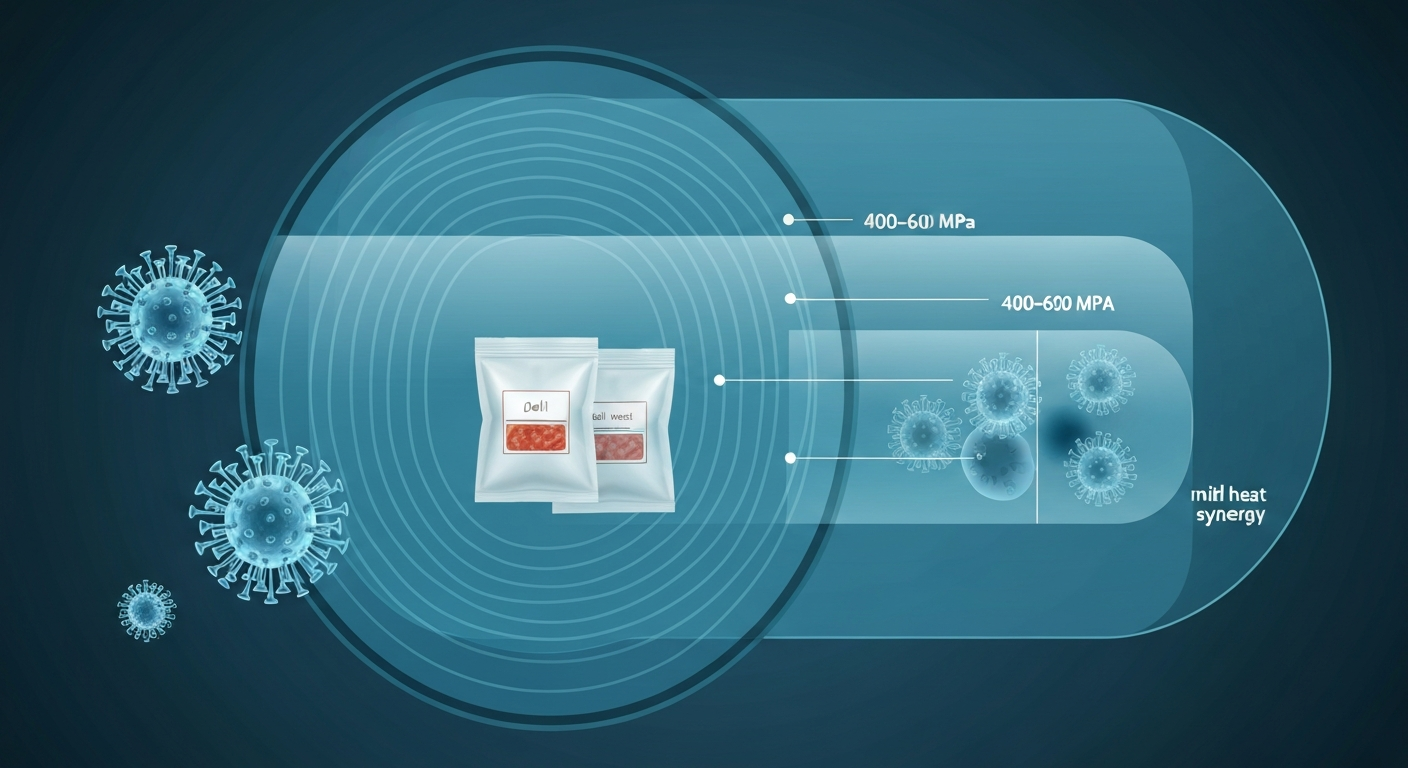
Yes, high pressure processing (HPP) can inactivate avian influenza viruses, including highly pathogenic strains like H5 and H7, when applied at sufficient pressure, temperature, and hold time. Research shows that pressures in the range of 400 to 600 MPa for several minutes can achieve reductions of 4 to 7 log10 in influenza virus infectivity. But 'can inactivate' is not the same as 'always does', effectiveness depends heavily on the specific virus strain, the food matrix, and whether the process parameters have been properly validated. For consumers, the more practical takeaway is that standard cooking to 74°C (165°F) remains the definitive control. HPP is primarily a food-industry technology, and it works best as part of a validated, product-specific process.
Does High Pressure Processing Kill Bird Flu? Evidence Guide

What is High Pressure Processing (HPP)?
High pressure processing is a non-thermal food preservation method where packaged food is placed inside a vessel and subjected to extremely high water pressure, typically between 100 and 600 megapascals (MPa). For reference, 600 MPa is roughly 6,000 times normal atmospheric pressure. The process takes minutes rather than hours, and because no sustained heat is involved, it preserves the taste, texture, and nutritional quality of food better than many conventional heat treatments.
You'll find HPP used commercially on products like deli meats, cold-pressed juices, guacamole, raw shellfish, and ready-to-eat (RTE) poultry. Regulators including USDA FSIS recognize it as a legitimate post-lethality process for controlling certain pathogens, provided the establishment validates and verifies their specific process parameters, covering pressure level, initial product temperature, and hold time.
How HPP inactivates viruses: roles of pressure, temperature, and time
Pressure doesn't rip viral particles apart the way heat does. Instead, it disrupts the non-covalent interactions that hold viral proteins together, things like hydrophobic bonds and hydrogen bonds. For influenza viruses specifically, this means the surface glycoproteins hemagglutinin (HA) and neuraminidase (NA) can be deformed or denatured, stripping the virus of its ability to enter and infect host cells. Interestingly, studies on human influenza A (H3N2) have shown that HPP-treated particles can look structurally intact under electron microscopy and still be completely non-infectious, which is actually useful for vaccine research but also confirms that particle structure alone isn't a reliable marker of safety.
Pressure, temperature, and time all interact. Higher pressure reduces the hold time needed to achieve a given log reduction. Mild heat (even just warming the product to 20 to 40°C rather than processing at refrigeration temperatures) works synergistically with pressure, meaning you can reach the same inactivation target at lower pressure when you add a modest temperature increase. This is the basis of what food scientists call 'hurdle technology,' where you combine two milder stresses to achieve what neither would accomplish as efficiently alone.
One important caveat on measurement: many HPP studies confirm inactivation using culture-based infectivity assays (TCID50 or plaque assays), sometimes with serial cell-culture passages to rule out residual live virus. RT-PCR tests, which detect viral RNA rather than infectious virus, can remain positive after successful HPP treatment. This means studies relying only on PCR may overstate residual risk. When reading HPP research, it's worth checking which assay was used.
What the research actually shows on HPP and influenza
The direct evidence on HPP and avian influenza viruses is limited but encouraging. The most cited study specific to avian influenza (Isbarn et al., Journal of Food Protection, 2007) tested highly pathogenic avian influenza A H7N7 in both cell suspension and chicken meat. The researchers reported greater than 5 log10 PFU/mL reductions at 500 MPa and 15°C within as little as 15 seconds in suspension, and a predictive model estimated a 7-log10 reduction after just 1 minute at 460 MPa and 15°C. They also noted that chicken meat as a matrix had only a minor effect on pressure stability, which is a relevant finding for real-world food processing applications. See our concise summary titled "does HPP kill bird flu" for a straightforward answer and practical takeaways.
A 2013 PLOS ONE study by Dumard and colleagues, working with human influenza A (X-31, H3N2), achieved complete loss of detectable infectivity at 289.6 MPa and 25°C after 3 hours, with no TCID50 detected and negative results across three serial cell-culture passages. The longer hold time here reflects the lower pressure used. A separate study published around 2021 on avian influenza H3N8 tested pressures up to approximately 290 MPa and documented pressure- and time-dependent loss of HA/NA activities and infectivity, further confirming that avian influenza viruses are sensitive to hydrostatic pressure, though the required parameters varied by strain.
Comprehensive reviews of HPP against foodborne viruses (including a 2021 PMC review) confirm that pressures around 400 MPa for 5 minutes at 4°C are frequently effective for achieving more than 4-log10 reductions for many enveloped and non-enveloped viruses, but stress that results are virus-specific and matrix-specific. The 2021 review Inactivation of Foodborne Viruses by High-Pressure Processing (review), PMC (2021) summarizes evidence on HPP efficacy against foodborne viruses and emphasizes that pressure, temperature, and time are critical variables Inactivation of Foodborne Viruses by High-Pressure Processing (review) — PMC (2021). Influenza viruses, being enveloped, are generally more susceptible to pressure than non-enveloped viruses like norovirus or hepatitis E, which is useful context for understanding where HPP sits in food safety.
Validated pressure ranges and where the evidence has gaps
Based on available research, the pressure ranges most associated with meaningful avian influenza inactivation fall between 400 and 600 MPa, with hold times of 1 to 5 minutes being commonly tested. Adding mild heat (roughly 20 to 40°C starting temperature) can improve efficiency. But it's critical to understand what 'validated' means here: these parameters have been tested in specific laboratory matrices, not necessarily in every food product where HPP might be applied commercially.
| Study / Source | Virus | Pressure | Temperature | Hold Time | Outcome |
|---|---|---|---|---|---|
| Isbarn et al. (2007) | HPAI H7N7 (suspension) | 500 MPa | 15°C | 15 sec | >5 log10 reduction (PFU/mL) |
| Isbarn et al. (2007) predictive model | HPAI H7N7 | 460 MPa | 15°C | 1 min | 7 log10 reduction (modelled) |
| Isbarn et al. (2007) | HPAI H7N7 (chicken meat) | 500 MPa | 15°C | Short | >5 log10 reduction, minor matrix effect |
| Dumard et al. (2013) | Influenza A H3N2 (human) | 289.6 MPa | 25°C | 3 hours | Full inactivation (no TCID50, neg. serial passages) |
| PMC study ~2021 | Avian influenza H3N8 | Up to ~290 MPa | Varied | Varied | Pressure/time-dependent HA/NA loss and infectivity reduction |
| Review consensus (2021) | Multiple viruses incl. influenza | 400–600 MPa | 4–25°C | 5 min | >4 log10 reduction (virus and matrix dependent) |
There are real gaps in the evidence worth acknowledging. Most studies use laboratory-prepared virus suspensions or simple meat matrices rather than complex commercial food products. There are no published, large-scale validation datasets for HPP against H5N1 or the currently circulating H5N1 clade 2.3.4.4b in commercial-product matrices like pasteurized-ready liquid egg or high-fat deli meats. The USDA FSIS requires establishments to validate and verify their own process parameters for their specific product, precisely because these gaps exist. Regulators don't accept extrapolation from one matrix or one viral strain to another without supporting data.
How HPP compares with other treatments
HPP sits in an interesting middle ground compared with the other food-safety treatments commonly discussed alongside bird flu. It's more gentle than cooking (no protein denaturation of the food itself), more targeted than standard pasteurization, and fundamentally different in mechanism from freeze-drying. Here's how they stack up for inactivating avian influenza viruses:
| Treatment | Mechanism | Avian Influenza Inactivation | Consumer Availability | Key Limitation for AIV |
|---|---|---|---|---|
| Conventional cooking (≥74°C / 165°F) | Thermal denaturation | Highly effective; CDC-recommended standard | Yes — home and food service | Requires internal temperature to reach target throughout product |
| Standard pasteurization (e.g., 63°C / 30 min or 72°C / 15 sec for milk) | Thermal denaturation | Effective for milk; validated by regulatory agencies | Consumer products | Not applicable to solid meats; not available for raw poultry |
| Ultra-pasteurization (UHT, ≥135°C / 2 sec) | Intense thermal denaturation | Highly effective; exceeds standard pasteurization | Consumer products (shelf-stable milk) | High heat may alter product quality; not used for raw poultry |
| High pressure processing (HPP) | Pressure-driven protein/capsid disruption | Effective at ≥400–500 MPa with validated parameters; no direct heat damage to food | Industry only; not a home method | Requires product-specific validation; limited published data on H5N1 in commercial matrices |
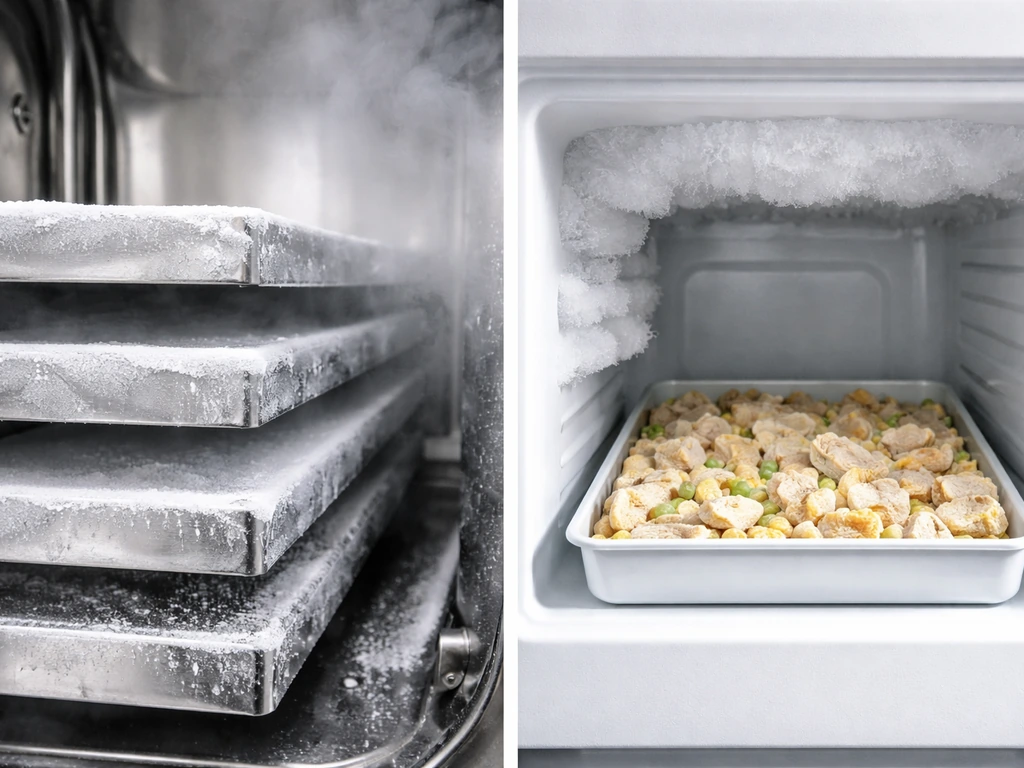
| Freeze-drying (lyophilization) | Desiccation, not inactivation | Does NOT reliably inactivate influenza; can preserve viral viability | Laboratory/industry; not a consumer safety method | Lyophilization with stabilizers actively preserves influenza virus for vaccine production |
The freeze-drying comparison deserves emphasis because it's counterintuitive. Lyophilization is actually used with excipients like trehalose to preserve influenza virus infectivity and immunogenicity for vaccine development and storage. If you wonder whether freeze-drying stops avian influenza, see does freeze-drying kill bird flu (resource 79f56c54-637d-41a3-9a43-06b2e809bb6c), which explains that lyophilization often preserves influenza infectivity. Desiccation alone is not an inactivation method, and anyone reasoning that 'dried' meat or egg products must be virus-free is making an unsafe assumption.
Thermal methods (cooking and pasteurization) have the advantage of decades of regulatory validation and well-established time-temperature tables for specific products. For more on thermal inactivation and whether pasteurization kills bird flu, see does pasteurization kill bird flu. Ultra-pasteurization exceeds standard pasteurization thresholds comfortably and is validated for liquid dairy. For specific comparisons of HPP versus high-temperature methods, see does ultra pasteurization kill bird flu for information on ultra-pasteurization's effectiveness against avian influenza. HPP's advantage over heat is product quality preservation, but its disadvantage for bird flu specifically is that the published validation evidence is thinner, particularly for H5N1 in commercial product matrices. That said, HPP's strong performance against a related HPAI strain (H7N7) at practical industrial pressures (460 to 500 MPa) is genuinely reassuring.
What this means for raw poultry and other meats
For raw poultry, cooking remains the gold standard. CDC guidance is clear: cooking poultry to an internal temperature of 165°F (74°C) kills avian influenza A viruses along with bacterial pathogens like Salmonella. WOAH (formerly OIE) guidance for international trade and safe consumption similarly relies on validated time-temperature combinations for inactivating HPAI in meat products. There is no regulatory shortcut here for consumers.
For the food industry, HPP is already used commercially on RTE poultry and deli meats as a post-lethality intervention for Listeria monocytogenes. The Isbarn et al. data showing that chicken meat as a matrix had only a minor effect on HPAI H7N7 pressure stability is useful, but it doesn't substitute for product-specific validation in a commercial manufacturing setting. Any establishment wanting to claim HPP as a viral control step for avian influenza in their specific product would need to conduct validation studies using their actual process parameters, product formulation, and packaging, consistent with USDA FSIS directive requirements.
Hurdle approaches combining HPP with mild heat are particularly worth exploring for high-value RTE poultry products where full cooking would compromise quality. The synergy between pressure and temperature documented by Isbarn and colleagues means that a relatively modest temperature increase (say, processing at 35 to 40°C rather than 4°C) can meaningfully reduce the pressure or hold time needed to achieve a given log reduction target.
HPP and eggs: liquid, powdered, and ready-to-use products
Eggs and egg products present a different set of considerations. Liquid whole eggs, liquid egg whites, and liquid egg yolks are typically pasteurized by heat before sale in the US, with USDA-mandated thermal treatments for each product type. HPP is technically applicable to liquid egg products, and some producers use it, but it needs to be validated specifically for the egg matrix. Egg composition (particularly the proteins in egg white and the high-fat content of yolk) can influence how pressure stress distributes through the product, and any viral control claim requires evidence generated in that specific matrix.
Powdered egg products are a more complicated case. USDA/ARS thermal inactivation data for H5N2 in dried egg white show that the low-moisture environment significantly extends D-values (the time needed for a 1-log reduction at a given temperature), meaning inactivation is harder in low-moisture egg products than in high-moisture ones. HPP inactivation in low-moisture powdered egg has not been as well characterized in the published literature, and the matrix effect of reduced water activity on pressure-mediated inactivation is not fully understood. Until validated data exist for dried egg products, thermal treatment remains the recommended control.
For consumers, the practical guidance is simple: use commercially pasteurized liquid egg products for recipes involving lightly cooked or raw eggs (like homemade mayonnaise or hollandaise), and cook whole eggs thoroughly. The shell egg sold at retail in the US is not HPP-treated or heat-pasteurized unless specifically labeled as pasteurized in the shell.
Regulatory guidance and what's still uncertain
From a regulatory standpoint, HPP is a recognized but conditionally accepted technology. USDA FSIS Directive 5000.15 covers verification activities for HPP, irradiation, and microwave tempering, and it requires that establishments validate their process against their target pathogen in their product. FDA technical reviews similarly require recording of pressure, temperature, hold time, and modeling or experimental validation before HPP can be credited as a control measure. Neither agency publishes a single universal HPP parameter for avian influenza, because none exists across all matrices.
The honest summary of what we know and don't know looks like this:
- HPP at 400 to 600 MPa for 1 to 5 minutes can achieve large (4 to 7 log10) reductions in influenza virus infectivity, including avian H7N7, in laboratory and simple meat matrices.
- Mild heat combined with pressure (hurdle approach) improves efficiency and can reduce the pressure or time required.
- Influenza viruses are enveloped and relatively pressure-sensitive compared with non-enveloped viruses, which is a favorable characteristic for HPP efficacy.
- Published validation data specific to H5N1 (including the current H5N1 clade) in commercial food product matrices are limited.
- Matrix effects (fat content, protein content, water activity, pH) can protect viruses and must be accounted for in product-specific validation.
- RT-PCR positivity after HPP does not indicate residual infectivity; culture-based assays are required to confirm inactivation.
- No regulatory body has issued a universal HPP parameter for avian influenza inactivation in food; product-specific validation is required.
- For consumers, cooking poultry to 74°C (165°F) and using pasteurized egg and milk products remain the evidence-based, regulatory-endorsed protective measures.
Research in this area is genuinely useful and moving in the right direction. The Isbarn et al. data on HPAI H7N7 in chicken meat, the Dumard et al. complete-inactivation findings for influenza A, and the growing body of HPP-virus reviews all support the conclusion that HPP is a credible tool for avian influenza control at industrial scale. But credible is not the same as fully characterized, and the food industry should treat HPP as a process requiring rigorous, product-specific validation rather than a generic viral kill step.
FAQ
What is high pressure processing (HPP) and how does it inactivate viruses like avian influenza?
HPP (also called high‑hydrostatic‑pressure processing) subjects sealed food products to very high hydrostatic pressures (commonly 200–600 MPa) for a controlled hold time while monitoring temperature. Mechanistically, HPP perturbs non‑covalent molecular forces (hydrophobic interactions, hydrogen bonds) and can alter viral surface proteins (for influenza, hemagglutinin HA and neuraminidase NA). Those conformational changes often abolish infectivity even if viral RNA remains detectable by PCR. Effectiveness depends on pressure magnitude, hold time, treatment temperature, the number of pulses, and the food matrix.
Does HPP reliably kill bird flu (avian influenza) in food?
Evidence indicates HPP can inactivate influenza A viruses, including some avian strains, under validated parameter sets. Published experimental results show substantial reductions (multiple log10) at pressures often in the 289–500 MPa range with appropriate hold times and temperatures. However, sensitivity varies by strain and by food matrix, so HPP can be effective but must be validated for the specific product and target virus — it is not an automatic guarantee across all foods and conditions.
What pressure/time/temperature ranges have been shown to inactivate avian influenza viruses?
Published studies report: - Strong inactivation for some influenza A strains at ~289–300 MPa for hours (e.g., full loss of infectivity after ~3 h at 289.6 MPa/25°C for a human H3N2 strain). - Rapid high reductions (several log10) modeled or observed at ~460–500 MPa with short hold times (seconds to minutes) at cool temperatures (≈15°C) for certain avian strains (H7 variants). - Reviews commonly test 300–600 MPa and note that ~400 MPa for several minutes at low temperature often produces >4‑log reductions for many viruses, but results are virus‑ and matrix‑specific. These ranges are examples: product‑specific validation is required to claim effectiveness for avian influenza.
How does temperature interact with pressure in HPP?
Temperature strongly modulates HPP efficacy. Mild heating during HPP (a pressure+temperature “hurdle”) often reduces the pressure and/or time needed to obtain the same inactivation. Conversely, treating at lower temperatures may require higher pressures or longer hold times. Many studies and predictive models show synergy: combining moderate heat with pressure increases inactivation compared with either alone.
Does the food type (matrix) affect HPP efficacy against bird flu?
Yes. Food matrices (e.g., raw poultry, egg products, milk, high‑fat or high‑protein RTE meats, shellfish) can protect viruses or alter the required parameter set. Water activity, pH, fat and protein content, and penetration of pressure into packaged products all influence outcomes. Therefore, validated HPP parameters must be determined in the actual product matrix rather than inferred from buffer or suspension experiments.
How does HPP compare to conventional cooking, pasteurization, ultra‑pasteurization, and freeze‑drying for inactivating avian influenza?
- Conventional cooking: Heating poultry/eggs to an internal temperature of 74°C (165°F) is a well‑validated consumer control that reliably inactivates avian influenza; cooking is the primary recommended consumer practice. - Standard pasteurization: Pasteurization conditions (e.g., 63°C/30 min or 72°C/15 s for milk processes) substantially reduce viral infectivity; validated thermal treatments are accepted controls for some products. - Ultra‑pasteurization: Higher time‑temperature combinations (e.g., 138°C for short times in UHT) give stronger inactivation than standard pasteurization. - HPP: Nonthermal; can inactivate influenza at validated pressure/temperature/time settings and is used commercially for some RTE foods and shellfish. HPP may preserve fresh sensory properties compared with heat but requires product‑specific validation. - Freeze‑drying (lyophilization): Does not reliably inactivate influenza; in fact lyophilization is often used to preserve virus viability in vaccines and labs. Overall: validated cooking/thermal processes are authoritative consumer protections; HPP can be effective in industry when validated; freeze‑drying is not an inactivation method.
Does Freeze-Drying Kill Bird Flu, and Does Freezing?
Explains if freeze-drying or freezing kills bird flu in chicken, whether it can survive, and why cooking is what matters