
As of today (July 6, 2026), the USDA APHIS dashboard is the best place to get the current number, since it updates every weekday. What we know with confidence from published data is that by September 30, 2024, H5N1 had been confirmed in at least 243 dairy cattle premises across 14 states since the first detections in Kansas and Texas in March 2024. The count has continued to grow since then.
How Many Cows Have Bird Flu Now? Live Counts and Context

Maya Chen
6 Jul 2026
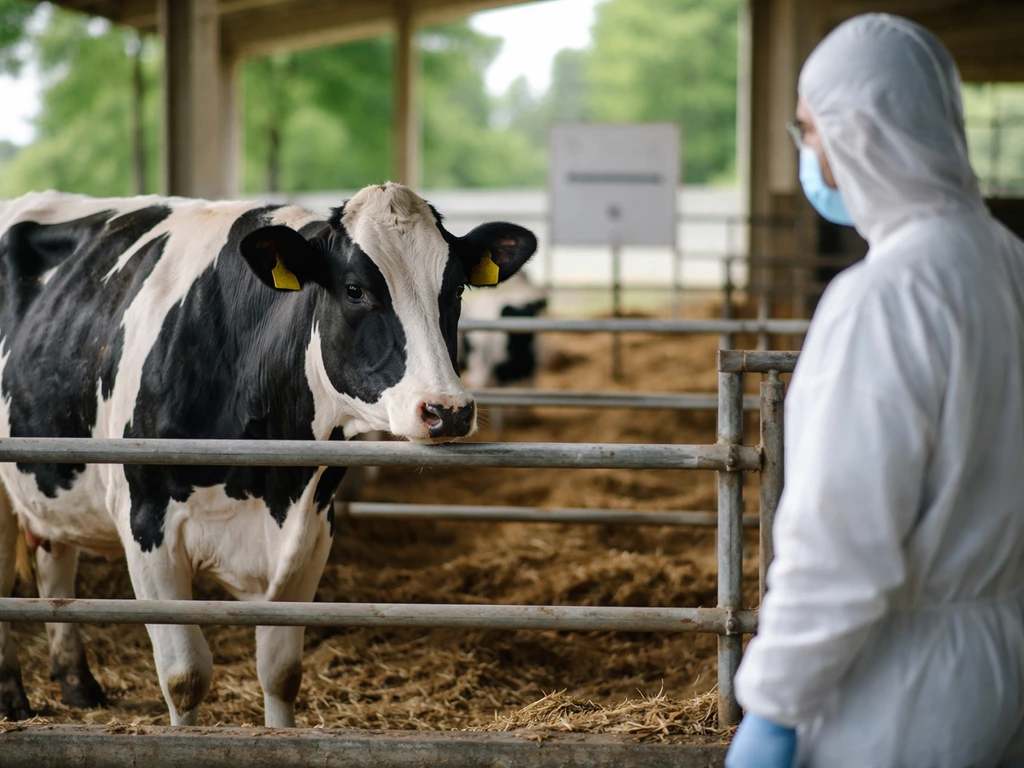
The same APHIS confirmed-premises dashboard can also tell you how many farms have bird flu overall, by looking at the total number of infected dairy premises. The key thing to understand upfront: these numbers refer to infected herds (premises), not individual cows. And when it comes to deaths, the picture looks very different from what you might expect with bird flu in poultry. Cattle generally get sick and recover.
Official reports consistently describe death rates under 2% and little to no associated mortality across affected herds.
The latest herd count and what it actually represents
USDA APHIS tracks confirmed H5N1 cases in livestock through an interactive dashboard titled "HPAI Confirmed Cases in Livestock." It shows both the cumulative number of confirmed cases by state and the number of new cases reported in the last 30 days. The dashboard refreshes each weekday, so the most current figure is always there rather than in any static article, including this one. USDA APHIS updates its “HPAI Confirmed Cases in Livestock” dashboard each weekday, including new confirmed livestock cases reported in the last 30 days and the cumulative confirmed cases by state.
The 243-premises figure from the September 2024 APHIS status report is a useful baseline. By that point, 14 states had confirmed affected dairy operations. The outbreak did not stop there, and subsequent months brought additional confirmations. If you need the number as it stands right now, go directly to the APHIS dashboard (covered in the section below on where to find live data). That said, the underlying pattern has remained consistent: dairy herds are being affected, most animals recover, and mortality in cattle is low compared to what H5N1 does in poultry.
How many cows have died from bird flu
There is no national running tally of individual cow deaths from H5N1, and that absence is itself informative. Unlike poultry, where H5N1 is devastating and mass culls drive enormous mortality numbers, infected dairy cattle mostly get sick with a temporary drop in milk production, reduced appetite, and mild respiratory signs, then recover.
USDA guidance consistently describes death rates under 2% in affected herds, and official joint communications from USDA, FDA, and CDC noted from the earliest stage of the outbreak that affected animals "have recovered after isolation with little to no associated mortality reported. Even though the guidance emphasizes low death rates in affected herds, you can also review who died from bird flu to understand how fatalities are handled in reporting. "
The Congressional Research Service also noted explicitly that cattle mortality from H5N1 is far lower than what is seen in poultry outbreaks. So while it is technically accurate that some cows have died, the number is small relative to the size of the outbreak, which is why you will not find a headline counter for it the way you might for poultry losses. If you are curious how the cattle picture compares to what has happened in chickens and other birds, the losses in those species have been dramatically higher. For chickens specifically, bird-flu outbreaks have also involved large numbers of deaths, and you may be looking for the latest reported total chickens and other birds.
Cases, detections, and deaths: what these words actually mean
The terminology used in official reporting can be genuinely confusing if you are not used to it, so it is worth unpacking. A "confirmed case" in USDA reporting means that a laboratory test, typically PCR or genetic sequencing, came back positive for H5 influenza in a cow or herd sample. Those samples can come from sick animals directly (nasal swabs, blood, tissue) or from bulk milk testing through the National Milk Testing Strategy (NMTS), which is designed to catch H5N1 circulating in dairy herds through routine milk surveillance.
That last point matters: a "confirmed case" does not always mean a cow was visibly ill. Milk testing can flag a herd before obvious symptoms appear, or it can catch low-level virus circulation in animals that seem mostly fine. So the confirmed-premises count includes both obviously sick herds and herds identified through surveillance testing. A "detection" is essentially a confirmed positive test result.
A "death" would require a cow to have died, which, as described above, happens in a small minority of infected animals. These distinctions explain why the herd-case count looks large while the death count is rarely reported as a standalone figure. A similar pattern has been seen in wildlife, where dozens of bald eagles have died from bird flu.
| Term | What it means in practice | Implies serious illness? |
|---|---|---|
| Confirmed case (premises) | At least one positive H5N1 test on the farm, via animal sample or milk testing | Not necessarily |
| Detection | A positive lab result (PCR or sequencing) from any submitted sample | Not necessarily |
| Affected herd | A farm with at least one confirmed positive animal or positive bulk milk test | Not necessarily |
| Death | An animal that died and was attributed to H5N1 infection | Yes, but rare in cattle |
Why the numbers keep changing and why different sources disagree

If you have looked at multiple sources and gotten different numbers, that is not a sign that anyone is hiding something. There are a few completely normal reasons for the variation.
- Reporting lag: Labs and state veterinarians must report positive influenza A nucleic-acid detection results to USDA APHIS, but the data pipeline from a positive test on a farm to the national dashboard takes time. A confirmation on Monday might not appear in the public count until later in the week.
- Premises vs. individual animals: The official count tracks affected premises (farms), not individual cows. A single dairy operation can have hundreds or thousands of animals, so the premises count underrepresents total animal exposure.
- Surveillance-driven vs. clinical-driven detections: Milk testing finds herds that might never have been reported otherwise. As the National Milk Testing Strategy expanded, the pace of detections picked up, which can look like a sudden spike when it is partly just better surveillance.
- State variation: Each state has its own agricultural reporting infrastructure. Testing volume, reporting speed, and case definitions can vary, which means some states have more complete data than others at any given moment.
- Snapshot timing: Any article, dashboard, or news story reflects the count at a specific point in time. By definition, a weekday APHIS update will be more current than a news article published two days ago.
Where to find the real-time numbers right now
For the most authoritative, up-to-date count, go to these sources directly rather than relying on any secondary summary (including this article).
- USDA APHIS "HPAI Confirmed Cases in Livestock" dashboard: This is the primary national tracker, updated each weekday. It shows cumulative confirmed cases by state and new cases in the last 30 days. Go to aphis.usda.gov and search for the HPAI livestock dashboard. Note that the page recommends refreshing your browser to ensure you are seeing the latest data.
- USDA APHIS "Bird Flu in Dairy Herds Information" page: Provides context alongside current numbers, including the interactive map and state-level breakdown. Updated on the same weekday schedule.
- CDC "A(H5) Bird Flu: Current Situation" page: Focuses on human cases and public health risk, but also tracks the animal outbreak context and is updated as new information becomes available. Useful for understanding where the human risk assessment stands alongside the cattle situation.
- State departments of agriculture: For farm-specific or county-level detail, your state's agricultural agency will have the most granular local reporting. Minnesota, for example, requires laboratories and state veterinarians to report all positive influenza A nucleic-acid results in livestock directly.
What these numbers mean for you and what to do next
If you work on or near a dairy farm
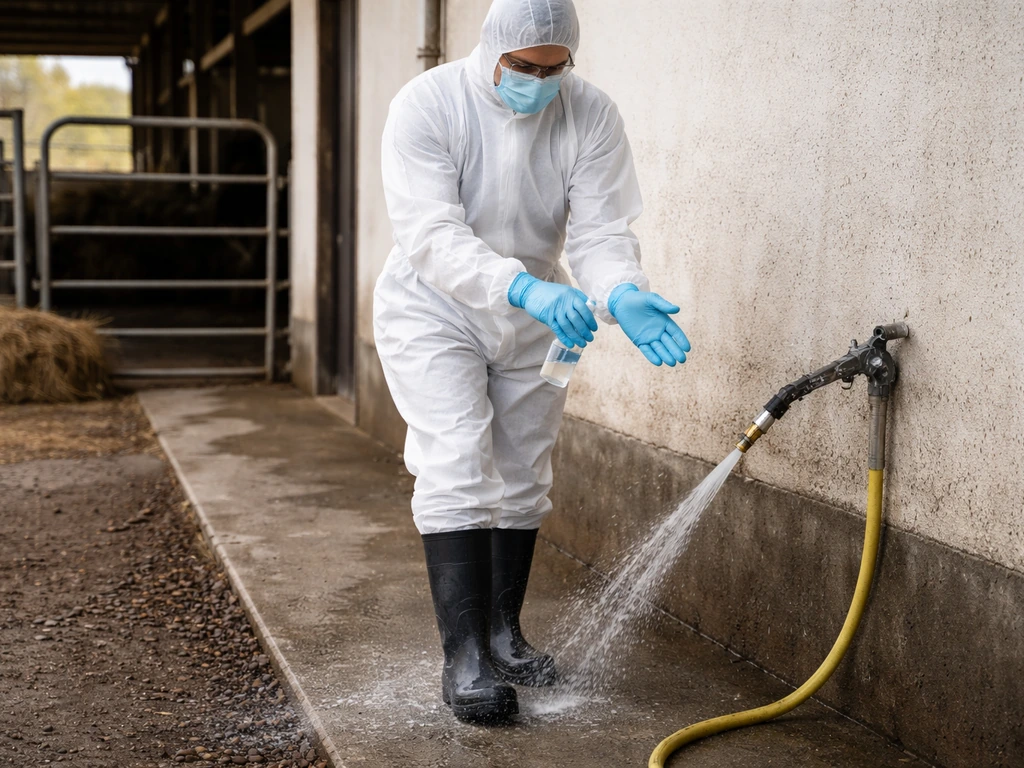
Your risk is higher than the general public's if you have direct contact with cattle or raw milk. CDC and USDA guidance is consistent on this: people exposed to infected animals or contaminated materials (including unpasteurized milk) should monitor themselves for flu-like symptoms and seek prompt medical attention if symptoms develop.
If you are wondering how many people died from bird flu, those human outcome counts are tracked in separate public-health reporting rather than through the dairy herd figures above. On the farm side, USDA's guidance is to isolate any animals showing signs of illness, and report suspected cases to your veterinarian and your blank" rel="noopener noreferrer">State Animal Health Official.
Federal testing through the National Animal Health Laboratory Network (NAHLN) and National Veterinary Services Laboratories (NVSL) is free of charge, so cost is not a reason to delay testing.
If you are a consumer concerned about dairy products
Pasteurization inactivates H5N1. FDA has been clear that commercially pasteurized milk and dairy products are safe. The risk pathway that authorities have flagged is raw (unpasteurized) milk, which can carry live virus from infected cows. If you are not consuming raw milk, your food-safety exposure from this outbreak is minimal. This is not reassuring spin: it reflects the consistent conclusion from FDA's investigation into H5N1 in dairy cattle.
For the general public
CDC's current assessment is that the public health risk from H5N1 in dairy cattle remains low for people without direct animal exposure. The outbreak has prompted careful monitoring of farm workers and people with animal contact, and that monitoring has informed the human case counts that are being tracked separately. CDC’s MMWR documents the 2024 multistate U. S.
dairy cattle outbreak context and describes how CDC’s investigation coordinated with USDA and others CDC’s MMWR documents the multistate 2024 dairy cattle outbreak context.
Human bird flu case counts are tracked separately from animal herd counts, so the total number of people affected comes from CDC reporting bird flu case counts for people. Staying informed through USDA and CDC dashboards, avoiding raw dairy products, and following standard hygiene around farm animals are the practical steps that apply to most people right now.
The big picture: the scale of this outbreak in cattle is genuinely significant from an agricultural and surveillance standpoint, but it does not look like the high-mortality, rapid-spread scenario seen in poultry flocks. Cows get sick, most recover, and the system for tracking and testing herds is active and improving. Keep an eye on the APHIS dashboard for current numbers and check CDC's situation page if your concern is specifically about human risk. If you are asking how many people would die in a bird flu pandemic, public-health risk estimates depend on how efficiently the virus spreads between people and how quickly outbreaks are detected and contained.
FAQ
Why can’t I find a live counter for the total number of individual cows with bird flu?
You cannot get a reliable “number of cows” from the USDA APHIS confirmed-dairy-premises dashboard, because it tracks confirmed premises (infected herds) and detections from surveillance, not individual animal rosters or individual cow outcomes. If you need an estimate of how many cows are in affected herds, you would have to combine herd size reporting from separate sources (often incomplete) with the premises count, so any “cow total” published online is usually an estimate rather than an official count.
Does “confirmed case” mean a cow looked sick, or can it come from surveillance testing?
A “confirmed case” in USDA reporting is a laboratory-positive test tied to a cow or a herd sample, but those samples can come from visibly sick animals or from routine bulk milk surveillance. That means the confirmed count can rise even if you do not see dramatic symptoms on farms, and it helps explain why herd-level counts grow faster than death totals.
Can a herd be counted even if only a few cows were actually infected?
If a farm is flagged through milk testing but the animals are not showing obvious illness, the herd can still be counted as confirmed. However, the dashboard does not translate that directly into how many individual animals were infected, because the underlying testing confirms virus presence at the herd level, not the exact number of infected cows.
If two websites show different numbers, what usually explains the mismatch?
Differences between two sources are most often due to different units (premises versus individuals), different time cutoffs (cumulative baseline as of a report date versus a continuously updating dashboard), and different case definitions (confirmed versus suspected, or detections versus deaths). Always align on the same metric, ideally using the same APHIS dashboard for animal status and separate CDC reporting for humans.
Why do the numbers I see today not match the numbers in the last update I read?
The APHIS livestock dashboard updates each weekday, so the most current figure is the dashboard itself, not a static article. If you are checking “today,” make sure you are reading the cumulative total and not the “new cases in the last 30 days” panel, since those will look different.
How are cow deaths tracked if there is no national cow-death counter?
There is typically no national running tally for individual cow deaths, because reporting is focused on confirmed premises and surveillance detections. For practical risk awareness, the more comparable metric is the reported low mortality percentage in affected herds, plus whether specific states or farms issue outcome updates as cases progress.
If the herd numbers are rising, does that mean my personal risk also rises automatically?
Yes, you can face higher exposure risk if you handle cattle, have close contact with farm environments, or are exposed to raw (unpasteurized) milk. If you are in that higher-contact group, follow CDC and USDA guidance on symptom monitoring and seeking care promptly if flu-like symptoms develop, rather than waiting to see “official counts” change.
Does the number of infected herds matter for consumers, or mainly for people handling raw milk?
Pasteurization inactivates H5N1, so risk from commercially pasteurized milk and dairy products is considered minimal. The main foodborne risk pathway that authorities have emphasized is raw/unpasteurized milk, so the number of infected herds matters less for people who do not consume raw dairy.
How do I get the “how many” answer for just my state?
If you are trying to interpret the outbreak for a specific state, use the APHIS state-by-state cumulative premises view, not a national headline. State totals may lag behind national changes depending on when each state first confirmed premises and when surveillance picked up detections.
If I suspect bird flu exposure on a farm, what should I do first?
If you want to know what to do on a farm or as a farm worker, the actionable step is to follow isolation and reporting guidance when animals show illness signs, and coordinate testing through your veterinarian and state animal health officials. The federal testing network is described as free, so cost should not be the reason to delay suspected-case reporting.
Next Article
Who Died From Bird Flu: Confirmed Human Cases and Ages
Find confirmed human bird flu deaths and ages using up-to-date, authoritative records, and verify rumor claims safely.