
As of June 12, 2026, confirmed human deaths from bird flu are real but remain relatively rare compared to seasonal flu. The vast majority have been tied to H5N1 and H7N9 outbreaks, mostly in Asia, the Middle East, and Africa, with a handful of cases now confirmed in the United States. The people who died were predominantly adults with direct, unprotected exposure to infected birds or contaminated environments, though deaths have occurred across a wide age range. Here is what the confirmed record actually shows, how to find it yourself, and what it means for your risk.
Who Died From Bird Flu: Confirmed Human Cases and Ages

Maya Chen
12 Jun 2026

What people mean when they say 'bird flu'
Bird flu is shorthand for avian influenza A viruses that have jumped from birds into people. Not every subtype behaves the same way. The CDC formally tracks human infections under two broad categories: low pathogenic avian influenza (LPAI) and highly pathogenic avian influenza (HPAI). The subtypes that have caused the most human deaths are H5N1 (HPAI, globally tracked since 2003) and H7N9 (a distinct lineage that caused large outbreaks in China between 2013 and 2019).
Other subtypes including H5N6, H5N5, H9N2, and H7N2 have also infected people, but most of those cases were milder and fewer ended in death. WHO Disease Outbreak News for H5N5 specifies laboratory confirmation and describes sequencing verification by CDC (CDC sequencing verified the virus as influenza A(H5N5)) laboratory confirmation and CDC sequencing verification as influenza A(H5N5).
When you see a headline about a bird flu death, the first thing to check is the subtype. H5N1 and H7N9 are the two with well-documented fatality histories. A confirmed H9N2 infection, by contrast, is almost never fatal. The subtype determines how worried you should be and which data table to look at.
Where to find confirmed human cases and deaths (reliable sources only)

News articles and social media posts about bird flu deaths are often incomplete, outdated, or missing the subtype entirely. The two most authoritative starting points are the WHO and the CDC, and each publishes structured, lab-confirmed data.
- WHO cumulative H5N1 tracker: WHO publishes a regularly updated PDF table titled 'Cumulative number of confirmed human cases for avian influenza A(H5N1) reported to WHO, 2003-2026.' The most recent version carries a data-as-of date (for example, 'HQ data as of 8 May 2026') so you know exactly how current it is. It breaks cases and deaths down by country and time period.
- WHO Disease Outbreak News (DON): For individual cases, WHO issues a DON report that explicitly states 'laboratory-confirmed case' and often describes the sequencing verification. If a DON does not say laboratory-confirmed, it is not a confirmed death for tracking purposes.
- WHO Avian Influenza Weekly Update: A numbered PDF series (reaching issue 1000 and beyond) with cumulative case and death tables for multiple subtypes in one place.
- CDC's 'Reported Human Infections with Avian Influenza A Viruses' page: This is the consolidated U.S. and global reference, with subtype-specific case counts and a link to total case counts reported since 1997.
- CDC MMWR reports: For outbreak summaries with age data, case-fatality proportions, and clinical severity breakdowns, the Morbidity and Mortality Weekly Report is the peer-reviewed record.
Avoid relying on aggregator sites, Wikipedia, or news summaries as primary sources. They pull from these official documents but often lag behind updates or omit the subtype. Go to the source directly.
Who died: confirmed human deaths by outbreak and region
Here is the clearest summary of what the confirmed record shows as of mid-2026. These figures come from WHO's cumulative H5N1 table, WHO DON reports, and CDC tracking. WHO’s Disease Outbreak News (DON512) for H5N1 notes that WHO was notified of a laboratory-confirmed case and later verified the report with national sequencing Avian Influenza A. The total numbers are real but still small relative to annual flu mortality.
| Subtype | Main Region(s) Affected | Outbreak Period | Approx. Confirmed Deaths (as of mid-2026) | Notes |
|---|---|---|---|---|
| H5N1 | Egypt, Indonesia, Vietnam, Cambodia, China, Bangladesh, and others; U.S. (recent) | 2003 to present | ~470+ globally (WHO cumulative) | Indonesia and Egypt account for the largest country-level death tolls; WHO table updated through May 2026 |
| H7N9 | China (mainland) | 2013 to 2019 | ~600 deaths across five epidemic waves | Fifth wave (2016-17) was largest; median age ~57 years |
| H5N6 | China, Laos, Vietnam | 2014 to present | Dozens confirmed | Most cases severe; case fatality proportion high but case counts lower than H5N1/H7N9 |
| H5N5 | United States | 2025 (first U.S. case) | One confirmed severe case (outcome notified to WHO via DON590) | Lab-confirmed by CDC sequencing; subtype verified as H5N5 |
| H9N2 | China, Egypt, India, others | Ongoing sporadic | Very few, mostly mild | Deaths are rare; most recoveries reported |
| H7N2, H7N4, H10N3, others | Sporadic, various | Various | Rare individual deaths | Most cases mild to moderate; deaths are case-by-case |
The U. S. picture has shifted in recent years. Through 2024 and into 2025-2026, the H5N1 strain linked to dairy cattle outbreaks produced a wave of human infections in farm workers, mostly mild.
However, WHO has also received notifications of more severe U. S. cases, including the H5N5 case noted above and earlier H5N1 severe cases. The cumulative U.
S. Public reporting also exists for livestock situations, including dairy cattle outbreaks linked to H5N1, which is why asking how many cows have bird flu depends on those official updates. death toll from bird flu remains in the single digits as of mid-2026, but the situation is actively monitored. If you want current U.
S. -specific numbers, the CDC bird flu tracking page is updated more frequently than any news outlet.
How old were the people who died from bird flu

Age patterns differ sharply by subtype, and this is one of the more interesting and practically useful things the epidemiological record shows.
For H5N1, deaths have skewed toward children and younger adults. A zoonotic influenza dataset analysis reported a median age of 18 years (interquartile range 5 to 31) for H5N1 cases, meaning half of all confirmed H5N1 cases globally occurred in people under 18. This is the opposite of what you see with regular seasonal flu, where the elderly are most at risk. Researchers have proposed that this pattern may relate to prior influenza immunity in older adults offering partial cross-protection.
For H7N9, the age pattern flips. The median age among H7N9 cases was approximately 57 years (range 4 to 93 years), based on CDC MMWR data from the fifth epidemic wave. A WHO DON example from the 2017 H7N9 wave reported a median age of 53.5 years (range 31 to 79) among notified cases at that reporting period. Older males with underlying health conditions were heavily overrepresented in H7N9 deaths.
For H5N6, the limited case series suggest adults in their 30s through 60s have been most affected, with most cases resulting in severe pneumonia. H9N2 deaths, where they have occurred, have largely involved young children.
The short version: if someone asks 'how old was the person who died from bird flu,' the honest answer is that it depends entirely on which subtype and which outbreak. H5N1 deaths have often been children or young adults; H7N9 deaths were typically middle-aged to older adults. There is no single answer that fits all bird flu deaths.
How to verify whether a specific 'bird flu death' claim is real
Online searches around bird flu deaths turn up a lot of noise: old stories recycled without dates, unconfirmed reports from countries with limited surveillance, and sometimes outright misinformation. Here is a practical checklist for deciding whether a specific death claim is credible. If you are trying to answer how many farms have bird flu, you should use the same kind of direct, subtype-aware official sources rather than secondhand summaries.
- Check for laboratory confirmation. A confirmed case requires virological proof, meaning the subtype was identified in a lab. WHO DONs and CDC reports will explicitly state 'laboratory-confirmed.' If the source just says 'suspected' or 'probable,' it is not a confirmed death for official tallying purposes.
- Check the subtype. A report that just says 'bird flu' without specifying H5N1, H7N9, or another subtype is incomplete. Subtype matters because case-fatality proportions vary dramatically between subtypes.
- Check the publication date and data-as-of date. WHO tables carry an explicit 'HQ data as of' date. News articles often resurface old outbreak statistics without flagging that the numbers are years old.
- Check the geography. Country matters because surveillance capacity and reporting standards vary. Some countries have historically under-reported; some have robust lab networks. WHO notes in its cumulative tables that case and death counts may reflect corrections over time.
- Check whether it is a human case. Bird flu outbreaks that kill thousands of poultry or dozens of wild birds are not human deaths, even if headlines treat them similarly. The relevant question for human risk is: was this a virologically confirmed human infection that resulted in death?
- Check the source tier. WHO Disease Outbreak News, CDC MMWR, and national public health agency bulletins (such as UKHSA in the UK) are tier-one sources. News articles, social posts, and aggregator sites are not.
Putting the deaths in context: what this means for your actual risk
Finding out who died from bird flu is important, but it is easy to come away with the wrong takeaway if the numbers are not put in context. In a future bird flu pandemic, estimates of how many people would die depend mainly on how easily the virus spreads between humans, how severe it is, and how quickly interventions like vaccines and antivirals are deployed bird flu deaths.
Roughly 470 or more H5N1 deaths have been confirmed globally over more than two decades of tracking. H7N9 has caused around 600 deaths, mostly concentrated in China between 2013 and 2019. These are serious numbers for those individuals and families, but they are a tiny fraction of global influenza mortality. Seasonal flu kills hundreds of thousands of people every year.
The reason bird flu deaths attract disproportionate attention is the high case-fatality proportion (roughly 50% for H5N1 in historical data), not the absolute numbers.
For the vast majority of people, the risk of dying from bird flu is extremely low. In the latest reports, dozens of bald eagles have died from bird flu, which shows how widely the virus can affect wildlife even when human risk remains low risk of dying from bird flu is extremely low. Human-to-human transmission remains rare, and the CDC confirms that only probable, limited, non-sustained human-to-human transmission has ever been documented. Nearly all confirmed infections have involved direct, unprotected contact with infected birds, their droppings, or heavily contaminated environments such as live poultry markets. Properly cooked poultry and eggs are safe to eat.
Who is actually at elevated risk
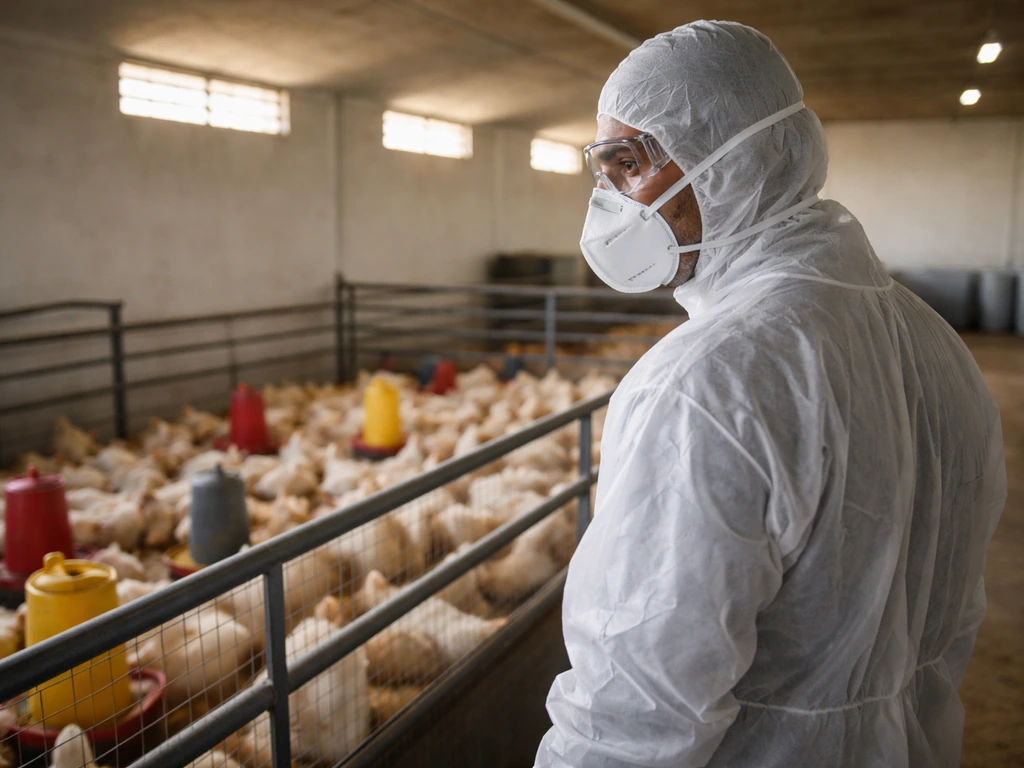
- Poultry farm workers and live bird market workers with unprotected exposure to infected flocks
- People who slaughter or handle sick or dead birds without respiratory and eye protection
- Individuals who visit live poultry markets in areas with active outbreaks
- In the current U.S. context, dairy farm workers in contact with H5N1-infected cattle
- People in countries with active H5N1 or H7N9 circulation who have direct bird contact
What to do if you have had a potential exposure
If you have had unprotected contact with sick or dead birds (or infected animals like dairy cattle) and develop symptoms within 10 days, including fever, cough, difficulty breathing, or eye redness, contact a doctor and specifically mention the exposure. Tell them you are concerned about avian influenza. This matters because antivirals like oseltamivir (Tamiflu) and zanamivir are most effective when started early, and WHO notes that neuraminidase inhibitors can shorten viral replication and improve outcomes. Waiting to see if symptoms resolve on their own is not the right move if you have a credible exposure history.
Public health agencies including the CDC and UKHSA have structured guidance for managing human exposures, and clinicians are instructed to distinguish between high-risk subtypes (like H5) and others when determining whether testing and treatment are warranted. If you report your exposure clearly, the clinical team can follow the right protocol.
Prevention in practical terms
- Avoid touching sick or dead birds with bare hands; use gloves and wash hands thoroughly afterward
- Wear a respirator and eye protection if working around infected or potentially infected flocks
- Do not visit live poultry markets in regions with active outbreaks unless necessary
- Cook poultry to an internal temperature of 165°F (74°C) and eggs until yolks are firm
- Follow any local public health guidance during active outbreaks in your area
The broader question of how many people have died from bird flu overall, and how those numbers might scale in a pandemic scenario, is worth understanding separately. If you want the most current count, use the WHO and CDC tracking tables rather than estimates or summaries how many people have died from bird flu overall.
The confirmed death toll to date reflects a virus that infects people relatively rarely but kills a high proportion of those it does infect. That combination is exactly why surveillance, early reporting, and transparent data from WHO and CDC are so critical. The numbers stay small as long as the virus does not gain efficient human-to-human transmission. That is what epidemiologists are watching for, and it is why these databases are updated continuously rather than just annually.
FAQ
Why do headlines about who died from bird flu sometimes give the wrong age or location?
There is no single age, country, or job category that covers all bird flu deaths. In the confirmed record, age and risk profile vary by subtype, for example H5N1 deaths have often involved children or younger adults, while H7N9 deaths have more often involved middle-aged to older adults. When you see a specific “who died” story, check whether the person’s case is tied to H5N1, H7N9, or another subtype, and then look up that subtype’s case age distribution in the WHO or CDC tables.
How can I tell if a specific person’s death was actually confirmed as bird flu?
Most “death” claims you see online are incomplete because they omit the subtype or the lab-confirmation status. A credible claim should be tied to a named outbreak notification (WHO DON or CDC tracking), include the virus subtype, and specify that the infection was confirmed by laboratory testing. If the post only says “bird flu” without the subtype (or without lab confirmation), assume it is not reliable until you can match it to official case entries.
What’s the biggest mistake people make when looking up who died from bird flu?
If you only search for “bird flu death” you can mix together different viruses, including mild avian influenza subtypes that rarely cause death. To avoid confusion, always filter by subtype (especially H5N1 vs H7N9) and by “confirmed human case” rather than “animal outbreak” or “suspected case.” The question “who died” is answered differently depending on whether the record is human confirmed deaths, probable cases, or animal-only events.
If someone near me died from bird flu, does that mean I was at risk too?
The article notes that human-to-human transmission has remained rare, and nearly all confirmed infections are linked to direct, unprotected exposure to infected birds, droppings, or heavily contaminated environments. So if you are assessing whether someone else might be “at risk because a family member got sick,” the key is whether there was documented, close, unprotected exposure, and whether the virus subtype is reported as confirmed. Without that, “contact risk” is usually far lower than exposure risk.
What should I do if I had unprotected contact with sick or dead birds or infected livestock and then got symptoms?
A common edge case is exposure to sick or dead animals, including infected dairy cattle, where the key detail is still timing. If symptoms begin within 10 days after unprotected contact, you should seek medical care and explicitly mention the avian influenza concern so clinicians can decide on testing and early antivirals when indicated. Waiting for symptoms to pass without telling the clinician your exposure history can delay the most time-sensitive part of treatment.
Will future bird flu deaths be similar to past H5N1 and H7N9 deaths?
Vaccines, antivirals, and public health actions are what change the “case fatality” outcome in a pandemic scenario, because they can reduce the number of severe infections and shorten viral replication. That means “how many people died” in the future depends on spread between humans, virus severity, and how quickly interventions reach people, not just the historical death rates. The confirmed past record may not translate directly if any of those factors change.
Does a bird flu death mean every bird flu subtype is highly fatal?
Not all bird flu infections become lethal, and some subtypes are much less likely to cause death. Even within H5N1, severity patterns are influenced by who gets infected and how they were exposed. For H9N2, deaths where they have occurred have largely involved young children, and the article emphasizes that many non-H5/H7 subtypes tend to be milder. So a single “death happened” headline does not mean all bird flu subtypes carry the same danger.
Where should I look for the most current and complete list of bird flu deaths?
If you want up-to-date answers to “who died from bird flu” in a specific country or year, rely on the WHO and CDC tracking tables rather than press reports, because the subtype and lab-confirmation status can change when new lab results are entered. Also note that databases are updated continuously, so the count and the age distribution can shift as additional notifications are published.
Next Article
How Many People Have Bird Flu? Latest Human Cases
Latest human bird flu case counts, meanings of cases, and how to verify current numbers and trends.