
Cooking eggs to an internal temperature of 165°F (74°C) kills avian influenza viruses, along with most other bacteria and pathogens you'd worry about. That means firm yolks, fully set whites, and no runny or soft-cooked eggs if you want to be thorough. For most people buying commercially produced eggs from a grocery store, the actual risk of getting bird flu from an egg is extremely low to begin with, but the food-safety habits that protect you from Salmonella also cover you for avian influenza. So: cook eggs all the way through, avoid cracked or dirty shells, wash your hands after handling raw eggs, and you're in good shape.
How to Cook Eggs to Avoid Bird Flu Risk Safely

Maya Chen
30 Jun 2026

What bird flu actually is and how it spreads to people
Avian influenza (bird flu) is a group of influenza A viruses that circulate primarily in birds. Some strains, particularly H5N1 and H5N2, can occasionally infect humans. When they do, it's almost always because of blank" rel="noopener noreferrer">close, direct contact with infected live or dead birds, their droppings, or heavily contaminated environments like live bird markets or poultry farms. The CDC and WHO are consistent on this: the main risk factor is prolonged exposure to infected animals or the environments they contaminate, not casual contact with commercially produced food. The CDC also notes that people are at greater risk of bird flu (avian influenza A) with close or prolonged contact with infected birds or other infected animals, or contaminated environments, including job- or recreation-related exposures blank" rel="noopener noreferrer">prolonged exposure to infected animals or the environments they contaminate.
Transmission to humans through eating properly cooked poultry or eggs has not been documented in the United States. There is limited evidence from Southeast Asia suggesting infections tied to consuming uncooked poultry blood or handling raw, infected birds in unsanitary conditions, but that's a very different scenario from cracking an egg into a pan in your kitchen. Understanding that distinction matters, because it helps you focus your caution where it actually makes a difference.
What's the real risk from eggs? Clearing up the confusion
The European Centre for Disease Prevention and Control (ECDC) states there is no evidence that people can become infected with avian influenza through consuming contaminated food. If you’re wondering whether eggs are affected by bird flu, the key point is that properly cooked, commercially produced eggs are not where infection risk is expected to come from. That's worth sitting with for a moment. Commercially produced eggs in the US go through supply chains with regulatory oversight, and birds that test positive for avian influenza are removed from the food supply. The eggs you're buying at a grocery store are not coming from infected flocks.
That said, raw eggs can carry Salmonella regardless of bird flu, and the same basic food-safety rules that protect against Salmonella also cover any theoretical avian influenza risk. So while the probability of encountering an egg contaminated with avian influenza A is extremely low in a commercial supply chain, the cooking precautions you'd take anyway are the same ones public health agencies recommend. The goal isn't to be fearful of eggs; it's to handle and cook them properly as a routine habit.
One common source of confusion is whether eggs can look different or abnormal if they're from an infected bird. In reality, you can't tell from visual inspection alone whether an egg poses any pathogen risk, which is exactly why cooking to temperature matters more than trying to spot a problem at the shell.
Handling eggs safely before they hit the pan
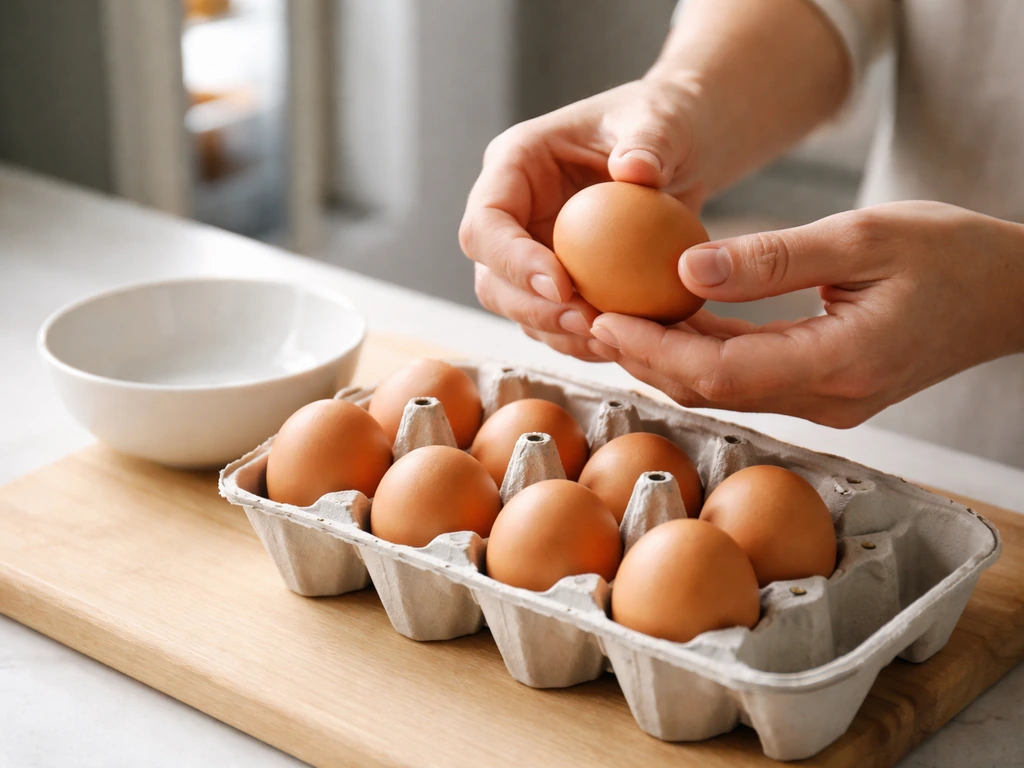
Safe egg cooking starts at the store, not just at the stove. In general, bird flu risk is addressed by cooking eggs thoroughly to a safe temperature. Here's how to set yourself up well from the moment you pick up a carton.
Shopping and storage
- Buy eggs from refrigerated displays, not room-temperature bins. In the US, commercially washed eggs must stay cold.
- Check the carton for cracked or broken eggs before you buy. A cracked shell is a direct entry point for bacteria and other pathogens.
- Refrigerate eggs at or below 40°F (4°C) as soon as you get home. Don't leave them in the door, which fluctuates in temperature; the main shelf is better.
- Use eggs by the expiration or best-by date on the carton. Freshness matters for both quality and safety.
- Don't wash eggs before storing them. In the US, commercial eggs are already washed and treated; washing them again at home strips the protective coating and can actually push contaminants through the porous shell.
Preventing cross-contamination in the kitchen

- Wash your hands with soap and water for at least 20 seconds before and after handling raw eggs.
- Don't let raw egg come into contact with ready-to-eat foods, countertops, or utensils that won't be washed before use.
- Use a dedicated cutting board for raw eggs and poultry if possible, or wash and sanitize boards thoroughly between uses.
- Wipe down any surface a raw egg touched, including the eggshell itself sitting on the counter, with a food-safe cleaner.
- If you crack an egg and get shell fragments or raw egg on your hands, wash immediately before touching anything else.
How to cook eggs to reduce any bird-flu risk
The CDC's guidance on food safety and bird flu is specific: cooking poultry and eggs to an internal temperature of 165°F (74°C) kills avian influenza A viruses. That's the number to know. At that temperature, the egg white is fully set and the yolk is firm, not runny. If you have a food thermometer, you can check the thickest part of the egg, but for most everyday cooking, visual doneness at that level is a reliable proxy.
Cooking methods and what doneness looks like
| Cooking method | Safe doneness level | Notes |
|---|---|---|
| Scrambled eggs | No liquid egg visible; fully set throughout | Cook over medium heat, stirring frequently. Remove from heat when just set. |
| Fried eggs (over easy/sunny side up) | Not considered fully safe; yolk is runny | For full safety, cook over-hard until yolk is firm. Flip and press gently. |
| Poached eggs | White fully set; yolk should be firm for full safety | Runny-yolk poached eggs fall in the same category as over-easy fried eggs. |
| Hard-boiled eggs | Fully safe; yolk and white are completely set | Boil for at least 10 minutes. Hard-boiled eggs reach well above 165°F. |
| Soft-boiled eggs | White set but yolk runny; not fully safe by strict guidelines | If you want full safety, cook until yolk is firm. |
| Omelettes | Fully safe if cooked until no liquid egg remains | Cook until the interior is set, not glossy or wet. |
| Baked egg dishes (quiches, frittatas) | Fully safe when center is set and reaches 165°F | Use a thermometer in the center; visual setting is a good guide too. |
The honest takeaway here is that fully cooked eggs (hard-boiled, scrambled until set, fried over-hard, fully set omelettes) are your safest choices. If you normally eat over-easy eggs or soft-boiled eggs and have never worried about it, the statistical risk is genuinely very low. But if you're specifically trying to minimize any possible bird-flu risk, cooking eggs to a firm, set yolk is the right call.
What to avoid when cooking eggs

Beyond just cooking to temperature, a few specific habits and preparations are worth avoiding if you're being careful about bird flu and general egg food safety.
- Runny or soft-cooked yolks: Over-easy fried eggs, soft-boiled eggs, poached eggs with liquid yolks, and eggs Benedict prepared conventionally all leave the yolk undercooked. The yolk may not reach 165°F in these preparations.
- Raw egg dishes: Caesar dressing made with raw egg, homemade mayonnaise, steak tartare with raw egg, raw cookie dough, eggnog made with unpasteurized eggs, and tiramisu with uncooked egg all carry the same concern. If you want to make these dishes, use pasteurized eggs.
- Cracked or dirty eggs: Don't use eggs with cracked shells or visible dirt or feces on the exterior. Contaminants on the outside of a shell can transfer to the interior when you crack it, and to your hands.
- Tasting raw batter or dough: If it contains raw egg, don't eat it. Even a small amount of raw egg carries risk.
- Reusing containers or utensils that touched raw egg without washing: This is the cross-contamination risk that catches people off guard. The bowl you cracked the egg in, the fork you beat it with, the counter it sat on, all need to be washed before they touch anything else.
- Unsafe cleanup shortcuts: Rinsing instead of washing with soap, skipping hand washing after handling shells, and wiping down surfaces with a dry cloth instead of a sanitizing cleaner are all common habits that undermine everything else you did right.
Symptoms to watch for and when to call a doctor
If you've handled raw eggs or poultry and are now worried because you're feeling sick, here's what to look for. Human bird flu infections, when they do occur, typically cause respiratory symptoms (fever, cough, shortness of breath, sore throat), and sometimes gastrointestinal symptoms like nausea, vomiting, and diarrhea. Symptoms usually appear within 2 to 5 days of exposure, though the incubation period can range from 1 to 10 days.
Most people who develop illness after eating undercooked eggs are dealing with Salmonella, not avian influenza. Salmonella symptoms typically start within 6 hours to 6 days after exposure and include diarrhea, fever, and stomach cramps. It's unpleasant but usually resolves on its own in 4 to 7 days.
Contact a healthcare provider or call your local health department if you develop fever with respiratory symptoms (particularly shortness of breath or difficulty breathing) and you've had recent contact with birds, visited a live bird market, or had significant exposure to raw poultry or eggs from an unknown or backyard source. Be specific with your doctor about what you were exposed to and when, because that context matters for how they approach testing and treatment. In the US, bird flu is a reportable condition and clinicians have guidance on testing. Don't wait on respiratory symptoms that are getting worse.
Prevention beyond cooking: sourcing, hygiene, and staying informed
Cooking eggs properly is the most direct control point you have, but a few broader habits round out your protection.
Source your eggs safely
Commercially produced eggs from major grocery chains in the US go through regulated supply chains where infected flocks are identified and removed. Backyard chickens, eggs from unlicensed sellers, and eggs sourced from live bird markets in other countries carry a higher theoretical risk because they don't go through the same oversight. If you keep backyard chickens, be aware of avian influenza outbreaks in your region and follow local agricultural guidance about flock health. Don't handle sick or dead birds without protective gear, and wash hands thoroughly after any contact with your birds before touching eggs.
General hygiene habits that matter
- Wash hands with soap and water before eating, after handling raw eggs or poultry, and after contact with birds.
- Keep your kitchen surfaces clean, especially areas where raw eggs or meat have been.
- Don't touch your face, mouth, or eyes while handling raw eggs or poultry.
- Use separate utensils and cutting boards for raw eggs and poultry versus ready-to-eat foods, and wash them in hot soapy water after use.
- Store raw eggs separately from other foods in the refrigerator, ideally in their original carton.
Stay aware of current outbreak status
Bird flu outbreaks in poultry are tracked by the USDA's Animal and Plant Health Inspection Service (APHIS) and summarized by the CDC. If there's an active, large-scale outbreak affecting commercial egg-laying flocks in your area, public health agencies will issue guidance. Checking the CDC's bird flu page periodically, or following your state health department, is a reasonable habit if you want to stay current. The guidance you're reading here is consistent with current public health recommendations as of mid-2026, but outbreak situations can shift recommendations, so staying plugged into official sources is worthwhile.
The bottom line is that properly handled and fully cooked eggs are safe. The same common-sense food safety practices that have always applied to eggs, buying fresh from reliable sources, refrigerating promptly, washing hands, cooking to a firm set, and cleaning up thoroughly, are exactly what you need. There's no reason to stop eating eggs. There are very good reasons to cook them all the way through.
FAQ
Do I really need to cook eggs to 165°F (74°C) if I buy eggs from a grocery store?
If you want maximum caution, yes, use 165°F (74°C) as the target. Practically, grocery-store eggs are already low-risk for bird flu, so the bigger win is cooking until whites are fully set and yolks are firm (no runny center), which provides the same practical protection people usually miss with soft or over-easy styles.
What’s the thickest spot to check with a thermometer for fried or over-easy eggs?
Check the thickest part of the yolk and adjacent white, because heat penetrates yolk slower than thin edges. If the center is still glossy or wobbly, cook longer rather than relying on browned edges.
How can I tell if my hard-boiled eggs are “fully cooked” without a thermometer?
Look for a yolk that is solid (not creamy or gelatinous) and a white that is fully set. If you cut one open and the yolk is runny, reduce the chance of undercooking next time by increasing time or lowering the cooling variables (for example, don’t pull them too early and then stop cooking abruptly).
Can I reduce bird flu risk by boiling eggs less, if the shell is intact?
No, the shell being intact doesn’t tell you whether the interior reached a lethal temperature. Bird flu concerns are addressed by internal doneness, so boil or cook long enough to fully set the yolk and whites.
Is it safe to eat runny yolk eggs if I’m avoiding bird flu specifically?
To be thorough, avoid runny or soft-cooked eggs. A runny yolk suggests the interior may not have reached the temperature associated with inactivation, so if your goal is minimizing any theoretical bird-flu risk, choose firm yolks.
Do microwave eggs count as “cooked all the way through”?
They can, but microwaves often heat unevenly. Stir during scrambling and, for fried-style reheats, rotate or check for hot spots. Use a thermometer when possible, because uneven heating can leave cooler pockets in the yolk or center.
Does washing eggs help reduce any bird flu risk?
Washing isn’t necessary for bird flu precautions and can increase contamination risk by spreading bacteria from the shell into cracks. Focus on buying from reliable sources, avoiding cracked or dirty shells, and cooking thoroughly, then wash hands after handling raw eggs.
How should I handle eggs if they’re labeled “pasture-raised” or from a local farm?
Cook them the same way, aiming for fully set eggs. The key difference is oversight and sourcing, so if eggs are from backyard chickens, unlicensed sellers, or markets without the same controls, be extra strict about avoiding cracked shells, refrigerating promptly, and cooking to firm doneness.
If a carton is “expired,” can I still eat the eggs if I cook them hard?
Expiration dates are about quality, not a guarantee of safety. You can still be at risk from bacteria if eggs are old or mishandled, so rely on storage and integrity (no cracks, proper refrigeration), and cook until fully set and firm.
What should I do if I cracked an egg and noticed an unusual smell or appearance?
Don’t taste it. Discard it, clean the area thoroughly, and wash hands. Cooking can’t reliably make spoiled eggs safe, and a bad smell or odd color can reflect spoilage or other contamination.
Can I catch bird flu from egg shells or from cleaning raw egg residue?
Bird flu risk is mainly about exposure to infected birds or contaminated environments, but raw egg handling can still spread other pathogens through shell residue. Use good kitchen hygiene: avoid splashing, clean counters and utensils after contact with raw eggs, and wash hands before touching ready-to-eat foods.
If I ate an undercooked egg and I feel sick, when should I worry about bird flu versus food poisoning?
Most illness after undercooked eggs is Salmonella, typically starting within about 6 hours to 6 days and causing diarrhea, fever, and stomach cramps. Bird-flu-like illness, when it occurs, tends to be respiratory (fever, cough, shortness of breath) and usually appears within 2 to 5 days after exposure, but ranges from 1 to 10 days. Seek medical guidance urgently if you have fever plus respiratory symptoms, especially with recent bird or live-market exposure.
Do I need to cook eggs differently for pregnant people, kids, or older adults?
For bird flu avoidance, the internal temperature and doneness target stays the same. However, for vulnerable groups the non-negotiables are tighter food safety practices overall, including strict refrigeration, avoiding cracked eggs, and thorough cooking, because Salmonella risk still matters.
Should I stop eating eggs during a bird flu outbreak in my area?
Typically, no. If you’re buying from regulated grocery sources, the main prevention step remains cooking eggs thoroughly and using normal food-safety habits. If public health guidance changes for commercial flocks or specific regions, follow those updates, but don’t assume all egg consumption becomes unsafe overnight.
Next Article
What Does Bird Flu Eggs Look Like and What to Do
Learn what bird flu eggs may look like, why you can’t diagnose by sight, and safe next steps and cooking guidance.