
You cannot reliably tell whether an egg is linked to bird flu by looking at it, smelling it, or cracking it open. Avian influenza does not leave a visible signature on eggs the way mold or a cracked shell does. That said, there are real visual clues that an egg is abnormal or potentially unsafe, and there are clear, practical steps you should take if you have genuine concerns about where your eggs came from. Here is what you can actually observe, what you cannot, and exactly what to do next.
What Does Bird Flu Eggs Look Like and What to Do

Maya Chen
22 Jun 2026

How to think about bird flu and eggs in the first place
Most people searching this question are not dealing with a farm outbreak. They have seen news about bird flu, noticed something odd about an egg, and want to know if there is a connection. So let's set the frame correctly. Highly pathogenic avian influenza (HPAI) devastates poultry flocks. Infected hens show clear illness, and one of the earliest flock-level signs is a sharp drop in egg production. By the time birds are sick enough to affect what ends up in an egg, those birds are usually dead or removed from commercial production under USDA APHIS response protocols. That's the first reassurance: the commercial egg supply in the U.S. is monitored specifically because of this.
The second thing to understand is how the virus would even get into or onto an egg. HPAI viruses are shed by infected birds through feces and respiratory secretions. As an egg exits a hen's body, it passes through the same canal where feces are excreted, which means the shell can theoretically be exposed to contaminated material. That is a shell-contamination route, not internal contamination. The egg white and yolk inside a clean, intact egg from a healthy bird are extremely unlikely to carry the virus. This distinction matters: the risk is mostly about shell surface handling and then cooking, not some invisible viral payload lurking inside a normal-looking egg.
What eggs from an HPAI-affected flock might actually look like
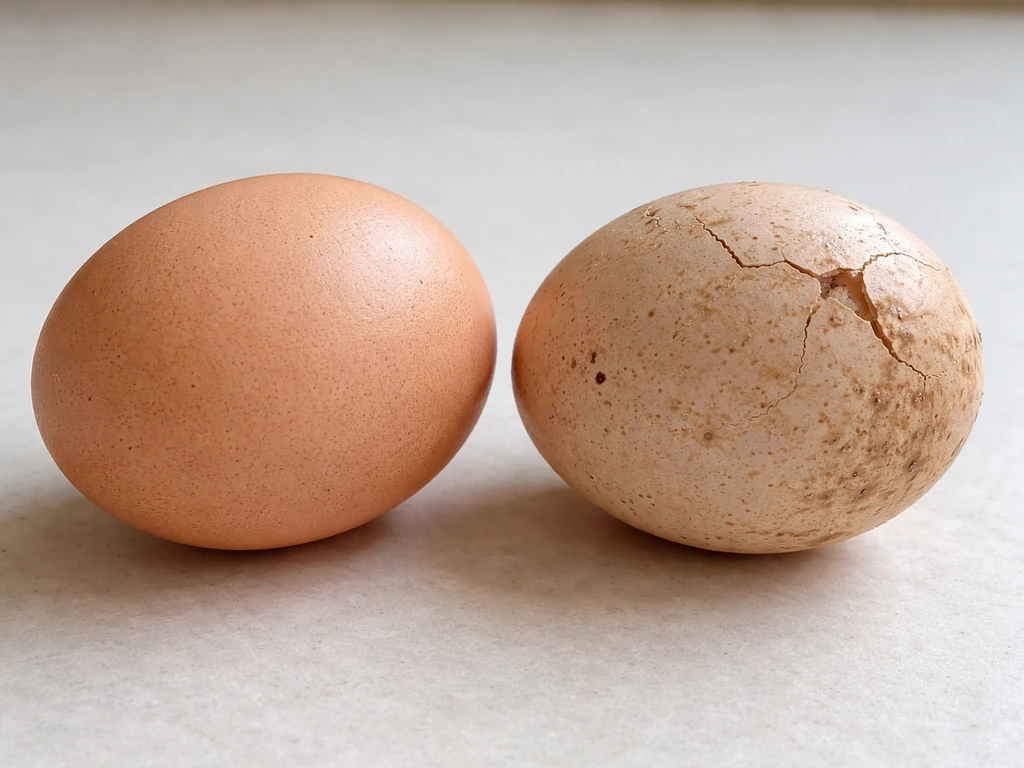
Here is the honest answer to the visual question: eggs from a flock affected by HPAI may not look different from any other egg. The virus does not cause a distinctive color, smell, or texture change that you can identify at home. What you might see are abnormalities driven by the hen's illness, not by the virus replicating inside the egg itself. Sick hens under significant physiological stress can produce eggs with:
- Thin, soft, or misshapen shells that feel fragile or look wrinkled
- Unusual shell discoloration, such as pale or mottled coloring compared with the normal shade for that breed
- Smaller-than-usual egg size for the breed
- Reduced or watery albumen (the egg white appears thinner than normal when cracked)
- Off odor on cracking (though this usually signals bacterial spoilage or a 'bad egg,' not a specific avian flu marker)
None of those signs are specific to bird flu. Stress from heat, poor nutrition, age of the hen, or other diseases can cause the same abnormalities. And critically, an egg from an infected flock could look and smell completely normal. Cooking eggs thoroughly is the main way to reduce the risk of avian influenza transmission what temperature kills bird flu in eggs. This is why food safety authorities focus entirely on handling and cooking rather than asking consumers to visually screen eggs.
What you can and cannot detect just by looking
Let's be blunt about the limits of your senses here. There is no visual, smell, or taste test that tells you an egg carries avian influenza virus. A laboratory test can detect it. Your eyes and nose cannot. What you can detect are general signs that an egg is abnormal or spoiled, which are reasons to discard an egg regardless of bird flu concerns.
| What you observe | What it likely means | What to do |
|---|---|---|
| Cracked or broken shell | Shell barrier compromised; bacteria can enter | Discard or cook immediately if just cracked |
| Thin, soft, or misshapen shell | Hen was stressed or ill; not specific to bird flu | Inspect source; discard if origin is unknown |
| Unusual shell color (pale, mottled) | Possible flock-level stress or illness | Note source; use standard safe handling |
| Pink, green, or iridescent egg white after cracking | Bacterial contamination (e.g., Pseudomonas) | Discard immediately |
| Dark or bloody spots inside egg | Blood or meat spots (common, not a disease sign) | Can discard or cook through; not a flu indicator |
| Strong sulfur or foul smell on cracking | Bacterial spoilage ('rotten egg') | Discard immediately |
| Normal appearance, no odor | Cannot rule in or out bird flu by this alone | Follow standard safe handling and cooking |
The bottom line from CDC and FDA is consistent: do not try to judge egg safety by sight. If you are wondering, “does bird flu affect eggs,” the practical answer is that the main concern is contamination on the shell surface, not an infected yolk or egg white in a normal-looking egg. Cooking and hygiene are the actual risk controls.
How to handle eggs safely (especially if you have concerns)
The USDA frames consumer egg safety around four words: Clean, Separate, Cook, and Chill. These four steps are not just general food safety advice. They are specifically cited by USDA and CDC as the consumer-level framework for reducing avian influenza food safety risk. Here is what each means in practice.
Clean
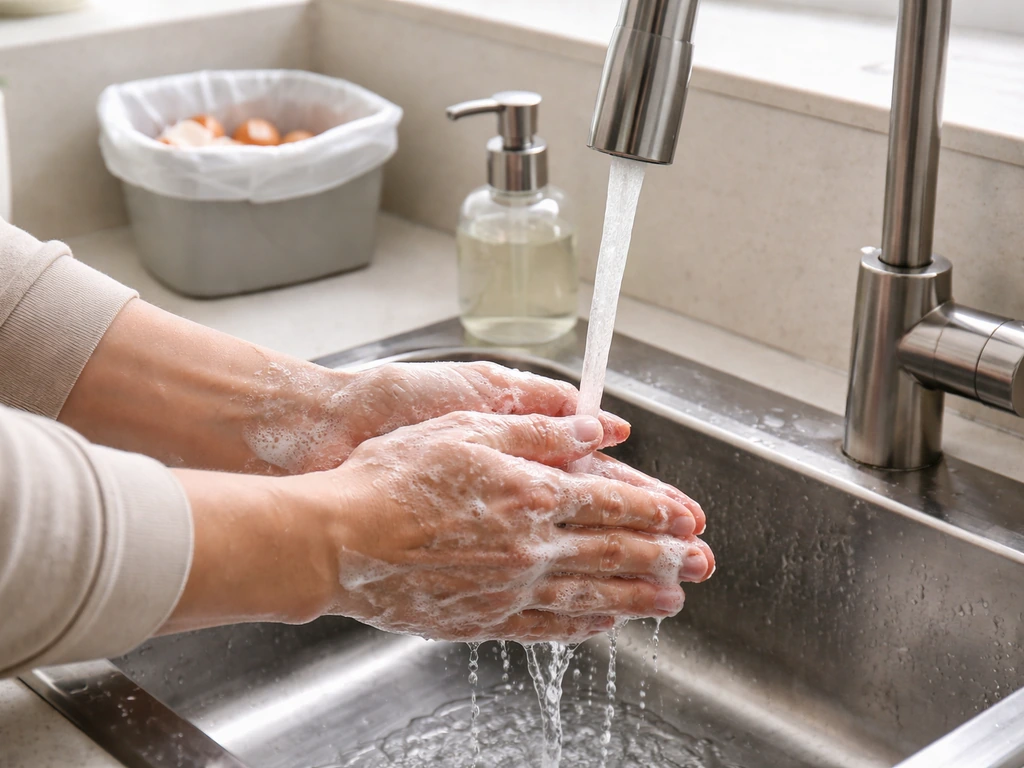
Wash your hands thoroughly with soap and water after handling raw eggs or their shells. Washing the shell itself can reduce surface contamination, but it does not eliminate it, and it can damage the protective coating on the shell (the cuticle) that helps keep bacteria out. For routine use, do not wash eggs before refrigerating them. Wash your hands, not the eggs.
Separate
Keep raw eggs and their shells away from foods that will be eaten without further cooking. If you crack an egg and then touch a salad bowl or a cutting board with the same hand, you have just created a cross-contamination pathway. CDC specifically calls out cross-contamination prevention as part of bird flu food safety guidance. Use separate utensils, wash surfaces, and do not reuse a bowl that held raw egg without washing it first.
Cook
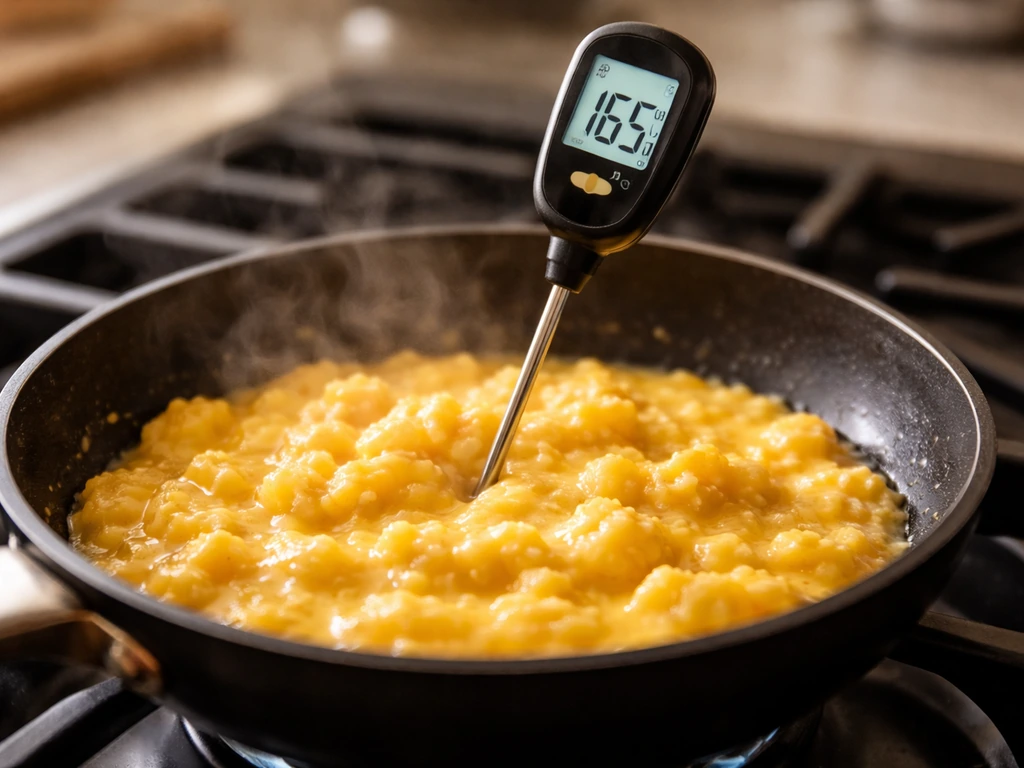
This is the single most important step. CDC recommends cooking eggs to an internal temperature of 165°F (74°C) to kill avian influenza A viruses, along with bacteria and other pathogens. FDA guidance for home consumers is to cook eggs until both the white and yolk are firm. If you are using a microwave, heat to at least 165°F in all parts and let the eggs stand covered for 2 minutes before eating.
WOAH's inactivation data confirms that time-temperature combinations that achieve a 7-log reduction in virus infectivity are achievable with standard cooking. For reference, APHIS protocols reference whole-egg inactivation at 60°C (140°F) held for 188 seconds, but for practical home cooking, cooking until yolks are firm well exceeds this threshold.
This is also why the question of whether eggs are safe to eat during bird flu outbreaks, or whether cooking kills the virus, comes down to the same answer: yes, thorough cooking eliminates the risk. FDA states clearly that there is no evidence HPAI virus can be transmitted to humans through properly prepared food.
Chill
Refrigerate eggs at or below 40°F (4°C) promptly. FDA guidance is explicit: keep eggs refrigerated and use them within a reasonable time. Cold storage does not kill viruses or bacteria, but it slows bacterial growth significantly and keeps eggs safe to cook later.
When to contact authorities or a doctor
Most people reading this article are not in a high-risk situation. But if you genuinely believe you may have handled eggs from a flock confirmed or suspected to have HPAI, or if you have had direct contact with sick or dead birds, here is when and how to escalate.
If you are concerned about the egg source
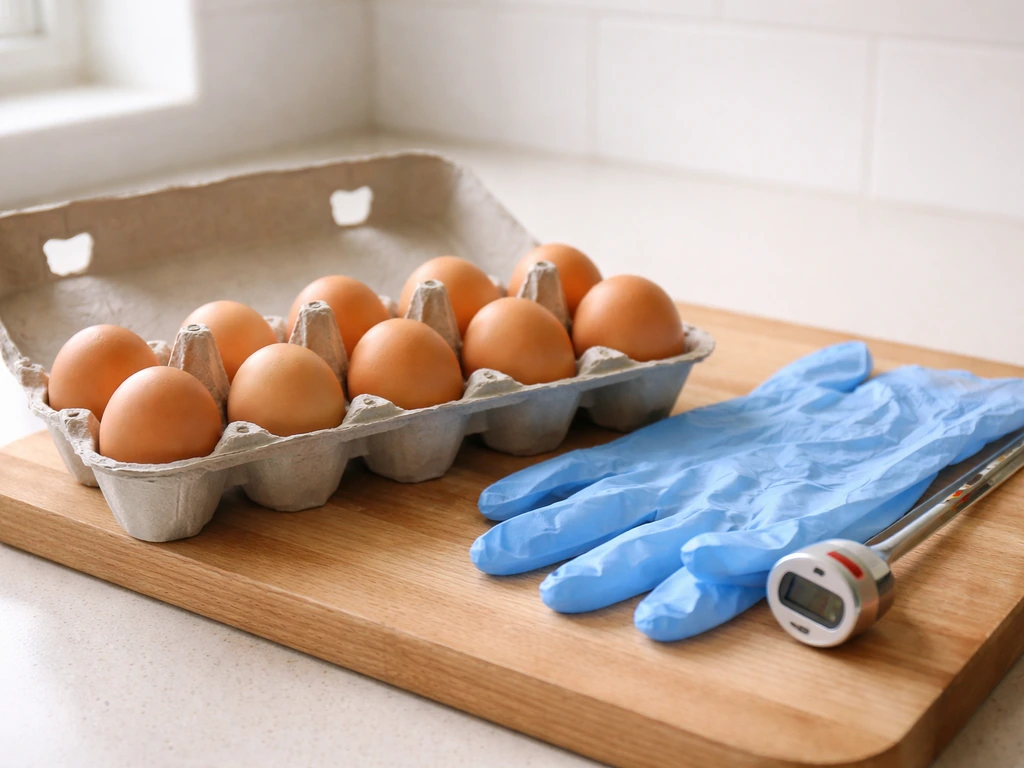
If you received eggs from a backyard flock, a small farm, or a local source and the birds have been behaving abnormally, dying unexpectedly, or showing signs of illness such as sudden drops in egg production, report it to your state veterinarian or USDA APHIS. Do not try to confirm bird flu yourself by examining eggs. Discard any eggs from the flock using gloves, wash your hands, and contact authorities. APHIS has a response plan and can arrange testing.
If you think you had a human exposure
Handling eggs from a confirmed HPAI-positive flock without appropriate protective equipment is a recognized exposure route. If that describes your situation, CDC advises monitoring yourself for new symptoms for 10 days after your last potential exposure. Avian influenza A(H5) virus has an incubation period of roughly 2 to 7 days, with respiratory symptoms appearing around day 3 on average. Eye redness or irritation can appear as early as 1 to 2 days after exposure. If you develop fever, respiratory symptoms, eye symptoms, or other signs of illness within that 10-day window, contact your local or state health department and a healthcare provider for evaluation and possible testing. Do not wait to see if symptoms improve on their own.
If you found commercially sold eggs that seem abnormal
If you bought eggs from a grocery store that look or smell abnormal, the most likely cause is normal spoilage or a shell defect, not avian influenza. Discard the egg. If you have a recurring issue with eggs from a specific brand or source, you can report it to FDA's MedWatch or your state agriculture department. Commercial eggs go through grading and inspection, so a flock-level HPAI outbreak would typically be caught well before eggs reach retail.
Common misconceptions worth clearing up
A few things keep coming up in public discussions about bird flu and eggs that are worth addressing directly.
- "I can tell if an egg has bird flu by the smell." You cannot. Odor indicates bacterial spoilage, not a viral pathogen. Bird flu has no detectable smell.
- "If the yolk looks weird, it might be bird flu." Yolk color and consistency vary with hen diet and age. A pale or dark yolk is not a bird flu indicator.
- "Washing the egg shell makes it safe." Washing reduces but does not eliminate surface contamination, and it can remove the protective cuticle. Proper cooking is the reliable safety step, not washing.
- "Bird flu can spread to me through a raw egg I touched but did not eat." Surface contact without mucous membrane exposure (eyes, mouth, nose) is a very low-risk scenario. Wash your hands thoroughly and you have addressed the practical risk.
- "Eating a partially cooked egg from a healthy commercial flock is a bird flu risk." There is no evidence supporting this. The commercial supply is monitored, and even eggs from affected flocks would have the virus inactivated by thorough cooking.
- "If eggs are sold at a store, they are guaranteed to be from a bird flu-free flock." The commercial system has strong safeguards, but the real protection is in proper cooking, not assuming upstream perfection.
The consistent message from CDC, FDA, USDA, and WHO comes back to the same place every time: you cannot visually diagnose bird flu in an egg, and you do not need to. Thorough cooking to 165°F eliminates the virus. If you are wondering how to cook eggs to avoid bird flu, focus on thorough cooking to 165°F and safe handling to prevent shell contamination.
If your concern is about a specific flock or a real exposure event, the right move is to contact the right authorities, monitor yourself for symptoms, and seek medical evaluation if symptoms appear within 10 days of exposure. The science on egg safety during bird flu outbreaks is clear and reassuring, as long as you actually apply the cooking and handling practices that make it true.
FAQ
If an egg looks normal, can it still be from a bird-flu affected flock?
Yes. Bird flu does not leave a reliable color, smell, or texture marker on eggs, so normal appearance is not proof of safety. The risk control is where contamination may land (mainly the shell surface) and whether you cook thoroughly.
What shell changes mean I should throw the egg out, even if I’m worried about bird flu?
Discard eggs with cracked shells, leaking contents, heavy egg “mold” or slime, and eggs that float after soaking in water. Those are general spoilage or damage signs, and they matter regardless of whether bird flu is circulating.
Should I avoid eating eggs that smell “off” but are still cooked well?
Yes. Cooking can reduce infectious risk, but it does not make spoiled eggs safe or pleasant to eat. If the odor is sour, rotten, or unusually strong, discard it rather than relying on temperature.
Does washing eggs before refrigerating increase risk?
Usually, yes. Washing eggs can damage the protective cuticle on the shell, which helps limit bacterial entry, and it can also spread contamination if water splashes. The safer approach is wash hands, and keep eggs refrigerated without washing the shells for routine use.
If I cracked an egg and my hand touched raw egg on the counter, what’s the right cleanup step?
Treat it like cross-contamination. Wash hands with soap and water, then sanitize the counter and any utensils that contacted raw egg using an appropriate cleaner. Reuse only after cleaning, and keep the shell waste contained and discarded.
Is the 165°F rule only for fully cooked “hard-boiled” eggs?
No. The same idea applies to any egg preparation where the temperature can be uneven. Make sure both yolk and white reach firm set, or if using a microwave, heat until all parts reach 165°F and let it stand covered so the heat evens out.
Can I tell bird flu apart from regular food poisoning by symptoms after eating eggs?
Not reliably. Avian influenza foodborne transmission through properly prepared food is not supported, and symptoms after eating eggs are more often linked to bacterial contamination or other illnesses. If someone becomes ill, focus on general foodborne illness guidance and seek medical care based on severity and risk factors.
What if I used a separate pan but didn’t wash a spatula after raw eggs?
That’s still a risk because utensils can transfer shell-surface contamination. Wash the spatula or use a dedicated tool for raw and cooked egg, then rinse and clean surfaces that were touched.
How long should I monitor myself if I handled eggs from a suspected HPAI situation?
Monitor for 10 days after your last potential exposure, especially if you had contact with sick or dead birds, or handled materials from an affected flock without protective equipment. If fever, respiratory symptoms, or eye irritation develop, contact a local or state health department and a healthcare provider promptly.
If eggs were left out at room temperature, does that change bird-flu risk?
Bird flu risk is addressed by cooking, but time out increases bacterial growth risk. Eggs should be refrigerated promptly (at or below 40°F / 4°C) and used within reasonable time windows to reduce bacterial hazards.
Next Articles

Are Eggs Affected by Bird Flu? Recalls, Safety, and How to Check
Learn if bird flu affects eggs, which types can be recalled, and how to check brands, farms, and safety steps.

Does Cooking Eggs Kill Bird Flu? Boiling Temps Explained
Explains whether cooking eggs prevents bird flu, with safe boil times, temperatures, and handling to reduce egg contamin
Are Eggs Safe to Eat With Bird Flu? Practical Guidance
Practical guidance on whether eggs are safe with bird flu, which eggs to avoid, and safe cooking and hygiene steps.