
KN95 masks do offer meaningful filtration against the particle sizes associated with bird flu transmission, but how well they protect you in practice depends heavily on fit, mask quality, and the specific situation you are in. For a concise, practical overview of mask effectiveness and recommendations, see do masks protect against bird flu. A well-fitting, legitimate KN95 from a reputable manufacturer can filter at least 95% of airborne particles in lab tests, making it a reasonable choice for the general public in low-to-moderate risk settings. However, for anyone with direct, sustained exposure to infected birds or contaminated environments, a NIOSH-certified N95 with proper fit testing is the stronger, more reliable option recommended by CDC and occupational health agencies.
Do KN95 Masks Protect Against Bird Flu? N95, Surgical Compared

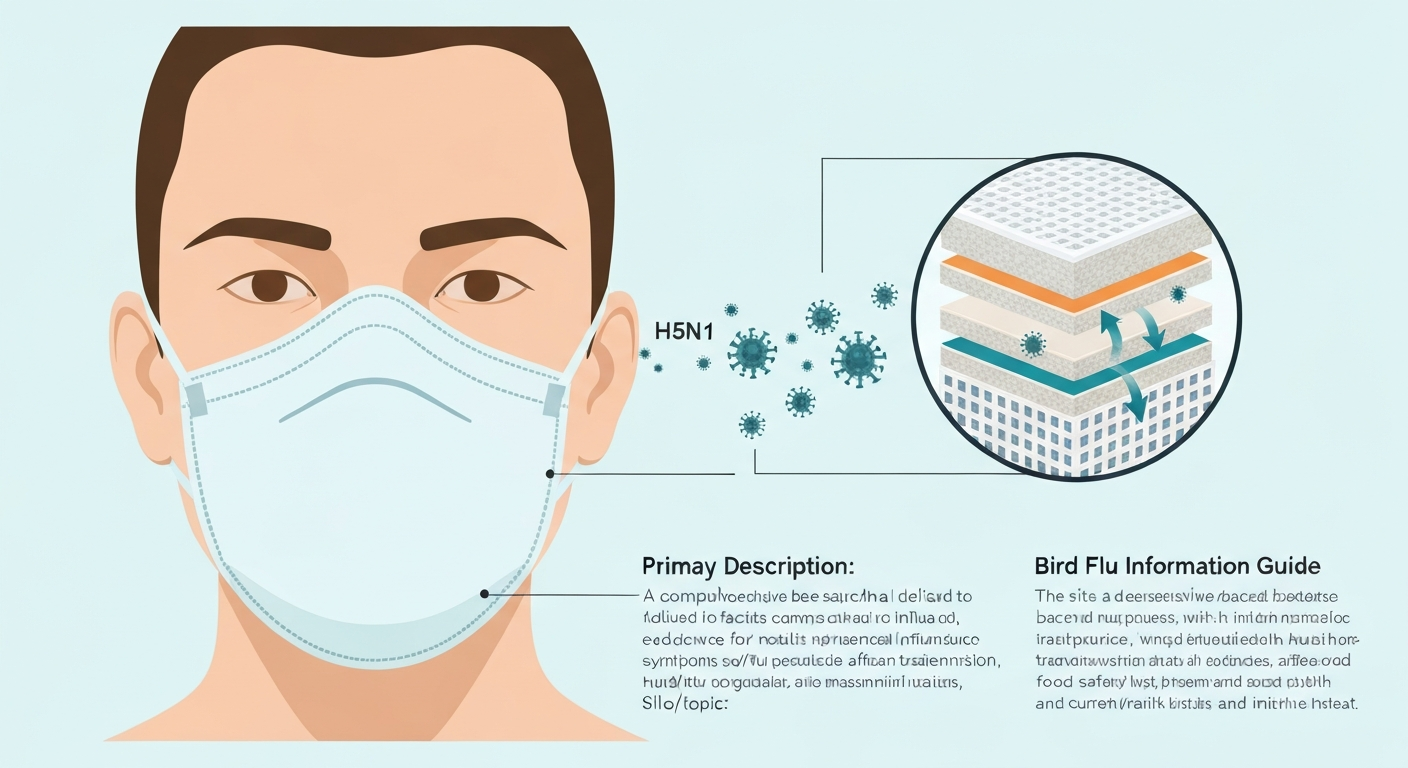
How bird flu actually spreads to people
Understanding how avian influenza (bird flu) moves from animals to humans helps clarify what a mask can and cannot do. The H5N1 virus does not spread easily from person to person. As of the most recent joint FAO/WHO/WOAH public health assessment (updated May 2026), there is no evidence of sustained community transmission among humans. The cases that do occur are almost always linked to direct contact at the human-animal interface, meaning people who work with or are close to infected birds or animals.
The virus reaches humans through three main routes. First, aerosols: infected birds shed the virus in respiratory secretions and feces, and activities like moving, handling, or culling birds can stir up fine airborne particles smaller than 1 micrometer. Research confirms influenza A viruses can travel in these fine aerosols, and animal studies suggest aerosol exposure may require a lower infectious dose than direct droplet contact. Second, large respiratory droplets: closer-range droplets from sneezing, coughing, or handling birds can deposit on the eyes, nose, and mouth. Third, fomites: virus-contaminated surfaces, equipment, clothing, and hands can transfer the virus to mucous membranes when you touch your face. This last route is one reason hand hygiene matters just as much as mask use.
How masks protect: filtration, fit, and what certification actually means
A mask's job is to intercept particles before they reach your airways. How well it does that depends on two separate things: how efficiently the filter material captures particles, and how well the mask seals to your face. Both have to work together. A mask with excellent filter media but poor face-seal is like a high-quality air purifier with a gap under the door.
Filtration efficiency is measured by challenging the mask material with a standardized aerosol (usually sodium chloride particles at a specific size and flow rate) and recording what percentage the material stops. A '95' rating means at least 95% of those test particles are captured. But no filter is perfectly sealed to every face, so regulators also measure total inward leakage, which combines filter penetration with any leakage around the edges. Certifications differ in how they test this. NIOSH N95 certification (U.S.) uses a NaCl aerosol at about 0.075 micrometers count-median diameter at 85 L/min flow. China's GB2626-2019 standard for KN95 uses a similar NaCl particulate test but with different procedural details. Europe's EN149 for FFP2/FFP3 uses 95 L/min and has its own penetration and breathing resistance limits. The nominal '95%' figure looks the same across standards, but the test conditions are not identical, which matters when you are comparing products.
Fit testing formalizes the seal question. Quantitative fit testing with equipment like a PortaCount measures the actual ratio of particles inside versus outside the mask on a real human face. Studies consistently show that common N95 models (with head straps and a structured cup or foldable shape designed to stand off the face) achieve passing fit factors more reliably than many KN95 designs, especially flat-fold ear-loop styles. Quantitative fit‑testing using PortaCount has shown many KN95 models, particularly ear‑loop and unbranded products, often fail to meet the OSHA/NIOSH pass criterion (fit factor ≥100) while common N95 models achieve passing fit factors more consistently (see Comparing the fit of N95, KN95, surgical, and cloth face masks and assessing the accuracy of fit checking (PLOS ONE)). Ear loops simply do not pull the mask tightly against the face the way adjustable head straps do, which is why ear-loop KN95s tend to show higher inward leakage in testing.
Mask types compared: N95, KN95, FFP2/FFP3, surgical, and cloth
Not all masks are built the same, and the differences matter in a bird flu context. Here is a straightforward comparison of the main types you will encounter.
| Mask Type | Standard / Certification | Minimum Filtration | Fit Mechanism | Practical Limitation for Bird Flu |
|---|---|---|---|---|
| N95 respirator | NIOSH (42 CFR Part 84, USA) | ≥95% (NaCl aerosol) | Head straps, structured seal | Requires fit testing for occupational use; must be NIOSH-certified |
| KN95 respirator | GB2626-2019 (China) | ≥95% (NaCl aerosol) | Ear loops or head straps (varies by model) | Variable quality; ear-loop models often have higher inward leakage; counterfeits common |
| FFP2 respirator | EN149 (European Union) | ≥94% (test aerosol) | Head straps, structured design | Slightly lower minimum threshold than N95; generally reliable from reputable EU manufacturers |
| FFP3 respirator | EN149 (European Union) | ≥99% (test aerosol) | Head straps, structured design | Highest filtration among standard respirators; used in high-risk healthcare settings |
| Surgical / medical mask | ASTM F2100 or EN14683 | Variable (often 60–95% for fluid resistance) | Loose-fitting, no seal | Does not form a tight face seal; does not reliably filter fine aerosols |
| Cloth mask | No regulated standard | Highly variable (often 10–50%) | Loose-fitting, no seal | Insufficient filtration and fit for influenza aerosol protection; not recommended for bird flu risk |
The important takeaway from this comparison is that the gap between an N95 and a KN95 is not mainly about the filter material on paper. It is about quality control, certification rigor, and fit consistency. During the COVID-19 pandemic, independent laboratory assessments found substantial variability in KN95 quality on the market, with some samples showing very low measured filtration and others meeting or approaching N95 standards. Laboratory and manikin studies show KN95 filter media can reach ≥95% particle filtration under NaCl testing in some samples, but measured protection in humans depends heavily on fit, and many KN95 designs (especially ear‑loop flat‑fold styles) exhibit higher total inward leakage than head‑strap N95s (see The protective performance of reusable cloth face masks, disposable procedure masks, KN95 masks and N95 respirators: Filtration and total inward leakage (PLOS ONE)). CDC and NIOSH have issued warnings about misrepresented and counterfeit products sold under the KN95 label, and they recommend checking the NIOSH Certified Equipment List and NPPTL assessment pages rather than relying on packaging claims alone.
Which masks hold up best against bird flu
For occupational settings with confirmed or suspected bird flu exposure, NIOSH-certified N95 respirators are the recommended standard according to CDC and OSHA guidance. For a concise FAQ on how well N95 respirators protect against avian influenza, see do N95 masks protect against bird flu. They have a defined certification process, consistent quality oversight, and a track record of fit-test performance. FFP2 and FFP3 masks from established European manufacturers are comparable options for people outside the U.S. An FFP3 is appropriate for very high-exposure scenarios like culling operations.
For the general public with no direct animal contact, a quality KN95 from a verified manufacturer is a practical and accessible option. The key is sourcing. Look for models with head straps rather than ear loops, check whether the manufacturer is on any independently verified list, and avoid suspiciously cheap, unbranded products. A KN95 purchased from a reputable supplier and worn correctly provides substantially more protection than a surgical mask or cloth face covering. That said, if your situation involves actual contact with potentially infected birds or animals, step up to an N95.
Surgical masks and cloth masks sit at the bottom of the protection hierarchy for bird flu. They reduce large-droplet exposure and may have some benefit, but they do not form an effective seal and do not reliably filter fine aerosol particles. They are not adequate for anyone with occupational exposure risk.
When masks actually help and where they fall short
Masks are most useful when the transmission route is airborne or droplet-based and when there is a realistic source of exposure nearby. For bird flu, the scenarios where a well-fitted respirator adds meaningful protection include visiting live bird markets or poultry farms during an active outbreak, working with sick or dead birds, handling poultry in areas with known HPAI detections, and attending to animals in enclosed or poorly ventilated spaces where aerosol concentration can build up.
There are real limits to what masks can do, and it is worth being honest about them. Masks do not protect the eyes, and conjunctival exposure is a recognized route for influenza A viruses, which is why eye protection matters alongside masks in occupational settings. Masks also do not address fomite transmission, so touching your face with contaminated gloves or hands bypasses the mask entirely. And the benefit of masks is blunted if they are worn incorrectly: touching the outside of the mask, wearing it under the nose, or reusing a heavily soiled respirator all reduce effectiveness.
It is also worth acknowledging what the clinical trial evidence says. Systematic reviews and meta-analyses of randomized trials in healthcare settings, including large cluster-RCTs and Cochrane reviews, have found no consistent, statistically significant advantage for N95 respirators over surgical masks in preventing laboratory-confirmed influenza in routine healthcare work. However, context matters enormously here: fit testing, exposure intensity, adherence, and whether aerosol-generating procedures are involved all influence outcomes. For high-intensity agricultural exposures like culling infected flocks in a confined barn, the aerosol burden is far higher than a typical hospital ward, which is exactly the scenario where a properly fitted N95 is most justified.
What the general public should actually do
For most people, the current risk from bird flu is low. The CDC assessment as of 2026 describes the overall risk to the general U.S. public from HPAI H5N1 as low. You do not need to wear a respirator at the grocery store or in general public settings unless there is a specific, declared public health emergency with community transmission, which has not occurred.
Where practical precautions do make sense for the general public:
- Avoid handling wild birds, sick birds, or dead birds with bare hands. Use gloves and wash your hands thoroughly afterward.
- If you visit a live poultry market or a farm with active bird flu in the area, a quality KN95 or N95 mask plus eye protection (goggles or safety glasses) is a sensible precaution.
- Do not eat raw or undercooked poultry or eggs. Properly cooked poultry is safe.
- If you feel unwell after exposure to birds or poultry, report it to a healthcare provider and mention the exposure. Early antiviral treatment can matter.
- Stay updated through CDC and WHO situation reports, which are published regularly and reflect the current outbreak status.
If you are considering mask options for preparedness, a NIOSH-certified N95 or a verified KN95 with head straps is a reasonable thing to have on hand. Store them in a clean, dry place away from direct sunlight. Masks degrade over time, especially the elastic components, so check manufacturer guidance on shelf life. For detailed recommendations and comparisons, see our guide to the best masks for bird flu.
Guidance for poultry workers and farm staff
If you work directly with poultry or in a dairy or livestock operation where H5N1 has been detected, you are in a higher-risk category and the precautions are correspondingly stronger. CDC and OSHA occupational guidance is explicit: workers in direct contact with infected or suspect birds and animals should use fit-tested N95 respirators as a minimum, along with eye protection, gloves, and protective clothing. The MMWR report on Colorado dairy farmworkers exposed to H5N1-infected cows in 2024 documented cases in workers who lacked adequate PPE, reinforcing why these protections matter in practice, not just in policy documents.
Respirator and PPE recommendations for farm settings
- Use a NIOSH-certified N95 respirator (or higher, such as a P100 half-face respirator, for culling or high-aerosol tasks) that has been individually fit-tested. A mask that fits your colleague may not fit you.
- Add eye protection: safety goggles or a full face shield, not just glasses. Influenza viruses can enter through the conjunctiva.
- Wear waterproof or fluid-resistant gloves. Double-glove for high-contact tasks like necropsies or handling heavily infected carcasses.
- Use protective coveralls or a dedicated work apron and footwear that stays on-site. Remove and bag contaminated clothing before leaving the work area.
- Follow a formal donning and doffing protocol to avoid self-contamination when removing PPE.
Engineering controls and workplace protocols
PPE is the last line of defense, not the first. Occupational health best practice puts engineering controls higher in the hierarchy. In poultry and livestock settings, this means improving ventilation in enclosed barns and handling areas to reduce airborne virus concentration, using water misting or wet methods to reduce dust and aerosol generation during handling and litter removal, creating physical separation between clean and contaminated zones, and limiting the number of workers in high-exposure areas during culling or outbreak response operations. These measures reduce the overall particle burden that workers are exposed to, which makes whatever PPE they are wearing more effective.
Employers covered by OSHA regulations have a legal obligation to implement a respiratory protection program that includes hazard assessment, selection of appropriate respirators, medical evaluation of workers, fit testing, and training. This is not just best practice during a declared outbreak. Sporadic H5N1 infections in agricultural workers have occurred without a formal outbreak declaration on a specific premises, so baseline protections should be in place at farms in regions with active animal-level detections.
Animal care protocols that reduce exposure risk
- Report sick or dead birds to your state veterinarian or state animal health official promptly. Early detection limits the scale of exposure for workers and the spread of the virus.
- Isolate suspect animals from healthy flocks immediately, using designated workers with full PPE for contact.
- Clean and disinfect equipment, vehicles, and footwear between poultry houses and before leaving the farm. The virus is readily inactivated by common disinfectants at approved concentrations.
- Shower and change clothes before leaving the farm during an active outbreak period.
- Participate in active health monitoring: any worker who develops fever, respiratory symptoms, or eye irritation within 10 days of exposure to suspect birds should seek medical evaluation and inform occupational health, mentioning the potential bird flu exposure explicitly.
It is also worth knowing that questions about other protective measures are common in this space. Whether the seasonal flu shot offers any cross-protection against avian influenza H5N1, and whether antivirals like Tamiflu are effective if exposure does occur, are separate but related questions that often come up alongside mask guidance. For a brief, focused answer on whether the seasonal flu shot offers cross-protection against avian influenza, see does the flu shot protect against bird flu. These are worth exploring if you are assessing your overall preparedness, particularly in an occupational context where layered protection matters most.
FAQ
Do KN95 masks protect against bird flu (avian influenza)?
KN95 masks can provide substantial filtration of airborne particles, including particles small enough to carry influenza viruses, but real-world protection against avian influenza depends heavily on mask fit, quality, and use. Properly made and well‑fitting KN95s can reduce inhalation exposure, but many KN95 models (especially ear‑loop or unbranded products) have shown inconsistent filtration or poor face seal in studies. For the highest and most reliable protection in high‑risk settings, fit‑tested NIOSH‑approved N95 respirators or equivalent (FFP2/FFP3 certified and fit‑tested) are preferred.
How does avian influenza (bird flu) spread between birds and people?
Avian influenza primarily circulates in birds. Human infections usually occur after close, prolonged, and unprotected contact with infected birds, contaminated surfaces, or contaminated environments (fomites). Influenza viruses can be present in droplets and fine aerosols produced by coughing, sneezing, or breathing, so transmission can occur via larger droplets and via smaller airborne particles. Rare limited human‑to‑human spread has been reported historically, but sustained community transmission has not been the norm in recent assessments.
What’s the difference between KN95, N95, surgical, and cloth masks for bird flu protection?
- N95 (NIOSH certified): Designed and tested to filter ≥95% of NaCl aerosol under NIOSH protocols; when fit‑tested and worn correctly, they give the most reliable respiratory protection. - KN95 (GB standard): Intended to filter ≥95% under Chinese standards; filtration media can be similar, but many KN95 models vary in manufacturing quality and fit; ear‑loop designs often leak more. - Surgical/medical masks: Designed primarily to protect others from wearer droplets and to protect wearers from large droplets; they provide much less consistent protection against small aerosols. - Cloth masks: Highly variable; typically offer the least protection unless multiple layers and high‑quality filter materials are used. Overall, filtration capacity, certification, and especially fit determine real protection.
Are KN95s equivalent to N95s?
Not always. Some KN95s have filtration material similar to N95s, but differences in standards, test conditions, and manufacturing mean KN95s are not automatically equivalent. Independent testing has shown many KN95s (particularly ear‑loop and unbranded models) have higher inward leakage or failed filtration. Authentic, high‑quality KN95s can perform well, but NIOSH‑approved N95s with head straps and documented certification are more consistently reliable in practice.
When should I wear a respirator (N95/KN95) for bird flu?
Wear a respirator if you have close, prolonged, or unprotected contact with sick or dead birds, work with poultry or infected animals, are in environments known to be contaminated, or are a healthcare worker performing aerosol‑generating procedures on a person suspected of avian influenza. For routine public activities where there is no known exposure, the general public risk is low in current assessments; masks can reduce risk in crowded indoor settings or if a person is particularly vulnerable.
Do seasonal flu shots protect against bird flu?
Seasonal influenza vaccines protect against circulating human influenza strains, not directly against avian influenza subtypes (e.g., H5 or H7). They are still recommended because reducing background seasonal influenza lowers burden on health systems and reduces the chance of co‑infection, which can complicate outcomes. Specific vaccines for an avian influenza strain would be developed if necessary and recommended by public‑health authorities.
Does Tamiflu Work for Bird Flu in Humans? What to Do
Find out if Tamiflu oseltamivir can treat bird flu in humans, when it helps, timing, and what to do next.