
You can dramatically reduce your flock's risk of bird flu by cutting off the main transmission routes: direct contact with wild birds, contaminated water and feed, and infected material tracked in on boots, hands, and equipment. None of that requires expensive infrastructure. What it does require is consistency, because biosecurity only works when it becomes routine rather than a reaction to headlines.
How to Prevent Bird Flu in Chickens: Biosecurity Guide

Maya Chen
12 Apr 2026
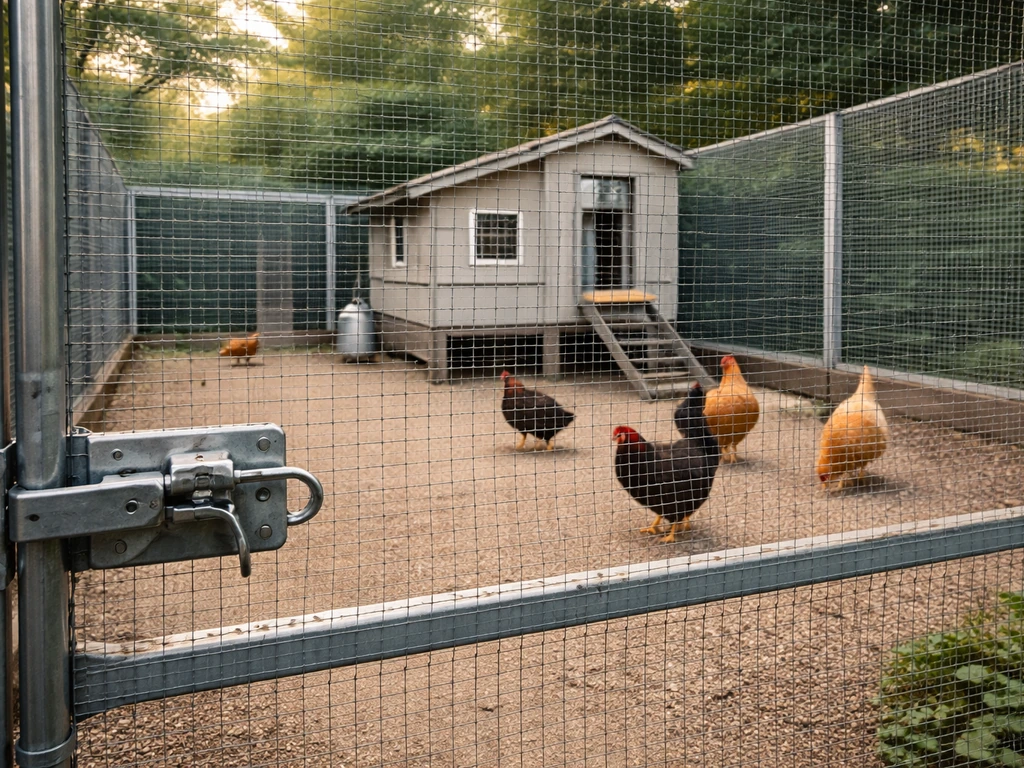
Understanding how bird flu spreads to chickens
Bird flu (avian influenza A viruses) spreads between birds primarily through direct contact with infected individuals and through exposure to contaminated environments and materials. The CDC confirms that the virus moves bird-to-bird, not easily to people, which is reassuring context for owners who are also worried about their own health. For your chickens, though, the risk is real and worth understanding mechanically.
The most common transmission pathway is contact with infected fecal material. Wild waterfowl, especially ducks and geese, can carry highly pathogenic avian influenza (HPAI) strains without showing obvious illness, then shed the virus in their droppings near ponds, puddles, and feeding areas. According to USDA APHIS, the virus also spreads through contaminated surfaces and materials, including manure, egg flats, crates, and other equipment, as well as on people's clothing, shoes, and hands. That last point is critical: you can carry the virus into your coop without knowing it, even if no wild bird has ever physically entered the space.
Airborne transmission over short distances is also possible, particularly when birds are in close proximity. Wind can carry respiratory droplets or dried fecal dust. This is why shared airspace with wild birds roosting directly overhead is a genuine concern, not just theoretical.
High-risk scenarios and where backyard flocks get exposed
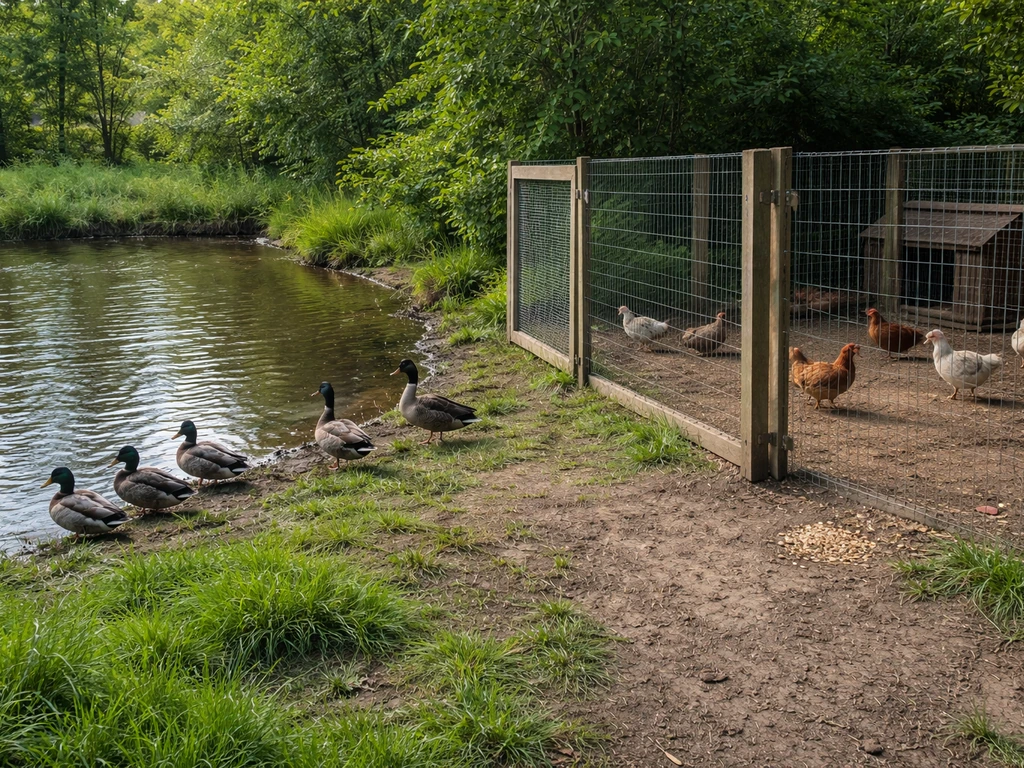
Most backyard flock infections trace back to a handful of predictable situations. Knowing which ones apply to your setup tells you exactly where to focus your energy.
- Ponds, lakes, or standing water near the run: Wild waterfowl congregate near water and leave contaminated droppings. If your chickens have access to the same water source, or if runoff from that area reaches their space, exposure risk is high.
- Open compost piles: Compost is attractive to wild birds, especially corvids and starlings. If your chickens free-range near an open pile or wild birds visit it and then move through your run, contaminated material gets tracked everywhere.
- Shared fields with other poultry or waterfowl: Mixed-species situations where chickens share space with ducks or geese, or where equipment moves between flocks without disinfection, are a classic amplification scenario.
- Wild bird roosting directly above coops or runs: Droppings fall straight into the chickens' environment. Covered runs are not just convenience; they are a direct barrier against this.
- Shared or borrowed equipment: Feeders, waterers, crates, and tools borrowed from neighbors or used at poultry swaps can carry the virus if they were not properly cleaned and disinfected between uses.
- Visitors and new birds without quarantine: People who have been around other poultry, and new birds added to your flock without a quarantine period, are two of the most underestimated exposure routes.
Biosecurity basics for prevention: housing, hygiene, and visitors
Good biosecurity is not complicated, but it has to be consistent. Think of it as a layered system: each layer stops some of the virus, and together they stop most of it. USDA APHIS frames biosecurity risk assessment as an ongoing program, not a one-time action, and that mindset shift matters. You are not building a perfect barrier once; you are maintaining habits that reduce risk continuously.
Housing and fencing
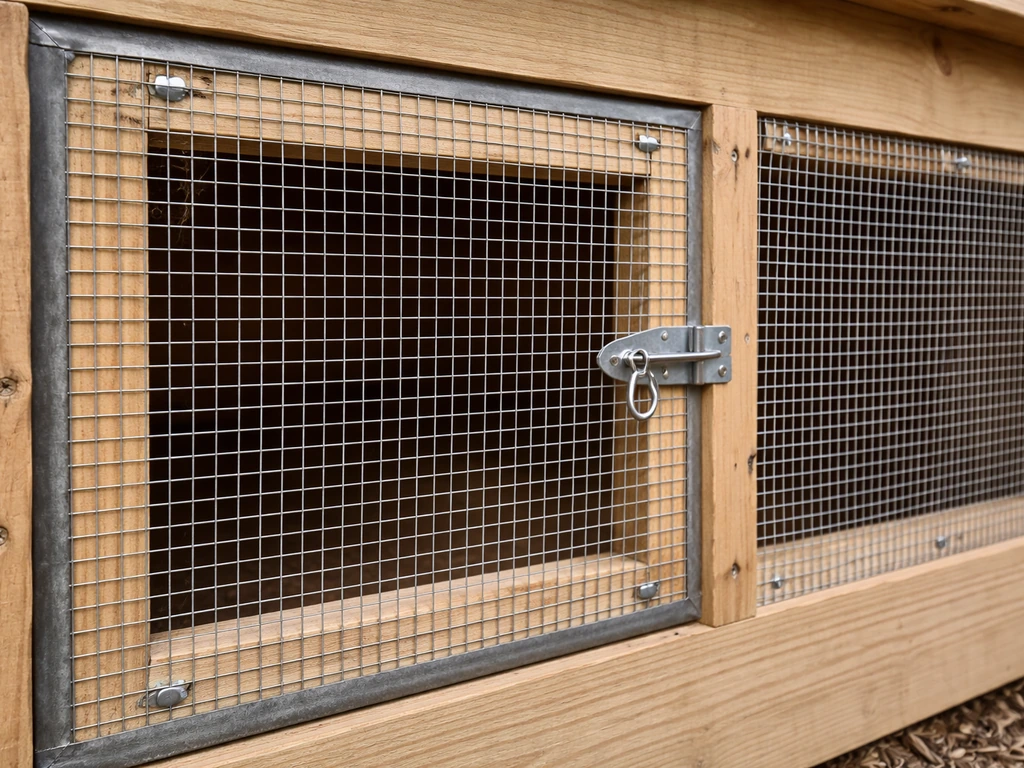
Your coop and run should be physically secure against wild bird entry. Hardware cloth (not standard chicken wire, which has gaps large enough for wild bird entry) on all openings is the baseline. The goal is to prevent wild birds from landing inside the run, roosting in the coop rafters, or accessing feeders and waterers. If you are not sure your current setup qualifies, walk through it as if you were a starling looking for an opening.
Hygiene routines
Change or disinfect footwear before entering the coop area. A simple dedicated pair of boots that never leaves the coop zone, or a boot dip station with an approved disinfectant, handles this practically. Wash hands before and after handling birds or their equipment. CDC also advises that people should not touch surfaces or materials contaminated with saliva, mucus, or feces from birds or animals with confirmed or suspected avian influenza A infection. Clean and disinfect feeders and waterers regularly, at least weekly during higher-risk periods. Remove and compost or dispose of manure consistently rather than letting it accumulate, since the fecal-oral route is the primary transmission path.
Controlling visitors
Anyone who has been around other poultry recently (at a farm, a swap meet, or even a neighbor's backyard flock) should change clothes and footwear before entering your coop area, or not enter at all. This is not about being antisocial; it is about the fact that contaminated clothing and shoes are a documented transmission route. Pets, especially dogs that roam freely and may have contact with wild bird droppings, should be kept out of the coop and run as well.
Isolating new and sick birds
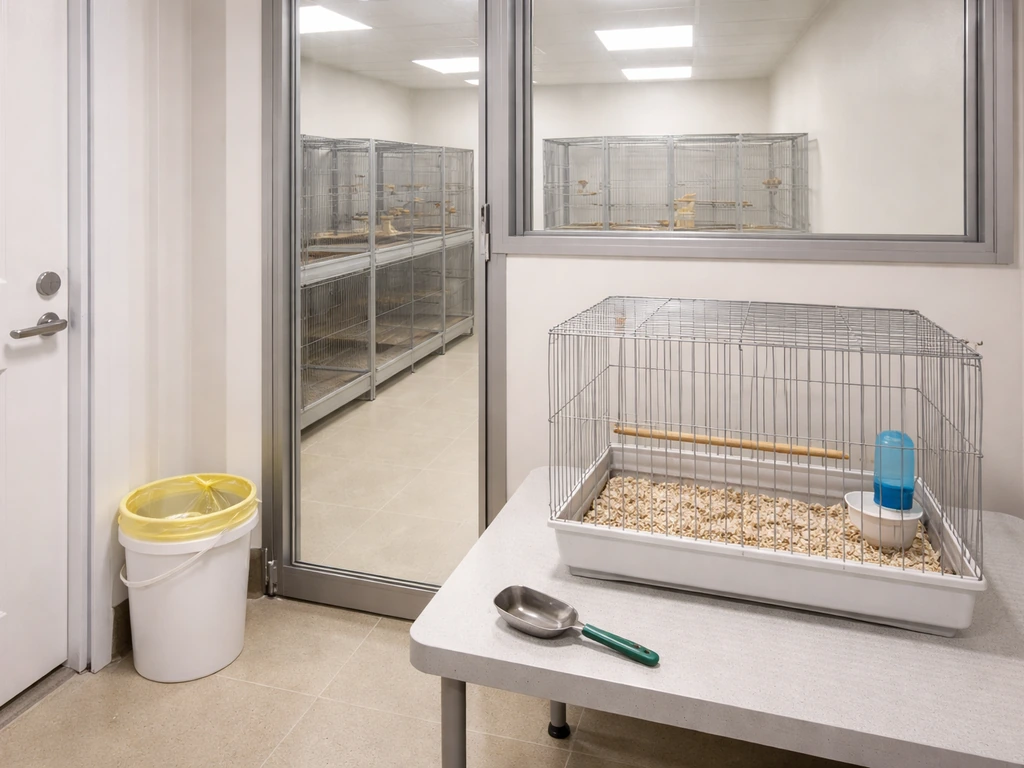
Any new bird should be quarantined in a completely separate space for at least 30 days before joining the main flock. During that time, watch for symptoms and care for them last, after your main flock. If you suspect a bird in your existing flock is sick, isolate it immediately using the same logic: separate housing, separate tools, and handling it last to avoid spreading anything on your hands or clothes.
Feeding and water safety: keeping wild birds out of the food supply
Feed and water are the two biggest attractants for wild birds, and contaminated feed or water is a direct route for virus introduction. The fixes here are straightforward.
Store all feed in sealed, rodent-proof and wild-bird-proof containers. Never leave feed out overnight or in open areas where wild birds can access it during the day. Move feeders inside the coop or into a fully covered section of the run so that wild birds cannot perch on or near them. If you use hanging feeders, choose styles that are harder for wild birds to land on. The goal is to make your feeding station unattractive and inaccessible to anything with wings that you did not put there yourself.
Water is equally important. Waterers should be inside the coop or under cover, not in open areas where wild birds can splash in them or defecate nearby. Change water daily and scrub waterers with a brush and disinfectant at least weekly. If you have a natural water source like a pond on your property, keep your chickens away from it with fencing. The UK government specifically advises fencing off open water and covering it with netting where possible to discourage wild birds from accessing the same water sources as domestic poultry, and the same principle applies here.
Managing contact with wild birds and shared airspace: run protection
If your chickens free-range, you are accepting a higher exposure risk in exchange for the benefits of ranging. During active HPAI outbreaks in your region (check USDA APHIS outbreak maps regularly), the responsible call is usually to confine your flock temporarily. That is not a permanent lifestyle change; it is a practical risk management decision, the same way you would not let a dog roam freely during a coyote spike.
For runs that are used year-round, a solid or mesh roof covering is one of the most effective single upgrades you can make. Canvas tarps cover the overhead exposure from wild bird droppings. Wire or netting covers prevent wild birds from landing inside entirely. If you have a partial cover, extend it so that there is no open section directly over roosting or feeding areas. During migration seasons (spring and fall), wild waterfowl movement increases dramatically, so this is when a covered run pays off the most.
Also consider the landscape around your run. Trim back trees that overhang the coop, remove feeders for wild birds in the immediate vicinity (relocate them well away from the chicken area if you want to keep them), and fill in low spots that collect rainwater and attract waterfowl. These small environmental changes reduce how attractive your property is to wild birds in general.
Surveillance, symptoms watch, and when to contact authorities
Preventing bird flu includes catching it early if prevention fails. Catching it early is the difference between containing it to one bird and losing a flock. Know what you are looking for, and make a habit of observing your birds every single day.
Early warning signs of HPAI in chickens include sudden death (often without prior symptoms in highly pathogenic strains), severe and rapid drops in egg production, respiratory distress such as coughing, sneezing, or nasal discharge, neurological signs like loss of coordination or tremors, purple or blue discoloration of the comb and wattles (from circulatory failure), and swollen head or eyes. The key word with HPAI is "sudden": birds that seemed fine yesterday becoming critically ill or dead today is a major red flag.
If you observe these signs, especially in multiple birds at once, do not wait. Contact your state veterinarian's office or USDA APHIS immediately. In the U.S., you can reach the USDA APHIS reporting line at 1-866-536-7593. Do not move birds off your property, do not allow visitors, and do not attempt to treat the birds yourself before getting official guidance. Early reporting protects other flocks in your area, and in most states it is legally required. Understanding how to cure bird flu in chickens is a separate question from prevention, and it is worth reading through in case you ever face a suspected outbreak, but the most important first step is always official notification.
Keep a simple flock log: daily headcount, egg production numbers, and any behavioral changes. This does not need to be elaborate. Even a notebook hanging in the coop works. When something looks off, you will have a baseline to compare against, which makes it much easier to identify whether a change is significant.
Vaccines and other prevention options: what is actually available
Vaccination against avian influenza exists and has been used in commercial poultry in several countries, but the situation for backyard flock owners is more complicated and varies significantly by location.
In the United States, HPAI vaccines for poultry are not currently available for routine use in backyard flocks. The USDA has been evaluating and conditionally approving vaccines for commercial use in specific contexts, particularly for table-egg layers, but widespread backyard flock vaccination is not yet an established option as of 2026. The barriers include concerns about masking infections in vaccinated birds (which complicates surveillance), trade implications, and the logistical challenge of vaccinating small flocks effectively.
In some other countries, vaccination programs exist for commercial operations and in some cases for backyard flocks, particularly in regions where AI is endemic. If you are outside the U.S., check with your national agriculture authority for what is approved and available in your area.
For most backyard owners right now, biosecurity is the primary and most effective prevention tool available. USDA APHIS provides an Avian Influenza overview that includes surveillance and risk context, including backyard flocks as part of priority areas. That is not a consolation prize; rigorous biosecurity genuinely works and is responsible for preventing far more infections than it gets credit for. Some owners also explore whether regional flock registration programs exist in their area, since registered flocks may receive earlier outbreak alerts and access to testing resources. This is worth looking into with your state agriculture department.
It is also worth being clear-eyed about treatment versus prevention. Whether bird flu is treatable in chickens is a question with a complicated answer, but the short version for HPAI is that treatment is generally not an option once birds are infected, which makes prevention not just preferable but essentially the only viable strategy.
Prevention vs. response: a practical comparison
It helps to see the full prevention toolkit laid out clearly, especially when you are deciding where to invest time and money first.
| Prevention measure | Difficulty | Cost | Effectiveness | Priority |
|---|---|---|---|---|
| Covered run (roof/netting) | Moderate | Low to medium | High: blocks droppings from above | High |
| Dedicated coop footwear / boot dip | Low | Very low | High: stops fecal tracking | High |
| Enclosed, covered feeders and waterers | Low | Low | High: removes wild bird attractants | High |
| Fence off natural water sources | Moderate | Low to medium | High: cuts off a primary exposure site | High |
| 30-day quarantine for new birds | Low | Minimal | High: stops introduction from new stock | High |
| Daily health observation and flock log | Low | None | High: enables early detection | High |
| Visitor biosecurity protocol | Low | Minimal | Medium-high: reduces human-carried transmission | Medium-high |
| Vaccination (where available) | Moderate | Variable | High where applicable, not widely available for backyard flocks | Situation-dependent |
A word on your own safety and food safety
If you have been reading about HPAI in the news, you may be wondering about your own risk. Human infections with avian influenza do occur but remain rare and are generally linked to prolonged, close, unprotected contact with heavily infected birds. The CDC and WHO both track human cases closely. Taking basic precautions (washing hands thoroughly after handling birds, avoiding touching your face during coop chores, wearing gloves and eye protection if handling sick birds) addresses the human health angle without requiring dramatic measures. Eggs and poultry meat from birds not showing signs of illness and handled with normal food safety practices remain safe to eat.
If you are ever uncertain about how to treat the bird flu in the context of human exposure, your local or state health department is the right contact, and they can give you guidance specific to your situation. For most backyard chicken owners, the risk to personal health from normal flock-keeping activities is low, especially with the hygiene practices you are already putting in place for your birds' protection.
Where to start if you are doing this for the first time
If all of this feels like a lot, start with the three highest-impact changes and build from there. First, cover your run to block overhead exposure from wild bird droppings. Second, move feeders and waterers under cover or inside the coop. Third, get a dedicated pair of boots for coop use only and commit to using them every single time. Those three steps alone close off the most common transmission routes for most backyard setups.
Once those are in place, add a daily observation habit, set up a quarantine protocol for new birds, and look into your state's flock registration program. Biosecurity is cumulative: each measure you add reduces the overall risk, and the hardest part is just building the habits. After a few weeks, they become automatic.
If you ever find yourself in the difficult position of dealing with a sick flock, understanding how to approach curing bird flu in the broader sense, including when to call for help and what official channels exist, will save you a lot of confusion in a stressful moment. But the goal of everything in this guide is to make sure you never need that information for your own birds.
FAQ
How can I tell if wild birds have contaminated my coop or run recently?
Look for fresh droppings on roosting beams, feeder rims, waterer lids, and the ground near entrances. If you find new droppings, treat nearby surfaces as contaminated until cleaned and disinfected, and delay entry until you have changed into dedicated coop clothing or fresh PPE.
Is chicken wire enough to keep wild birds out, or should I replace it?
Chicken wire often has gaps wide enough for small birds to enter and larger birds to land and access feeders or roost in the run. For openings, use hardware cloth or similarly secure mesh, and pay special attention to roof edges, door gaps, and any vents.
What should I do if my neighbors have poultry or visitors bring their own birds to the area?
Ask visitors to keep to a “no-contact” policy, meaning no entry into your coop zone and no handling of your birds, feeders, or equipment. If you must share airspace or tools, require them to avoid walking through your chicken area until after you clean and disinfect high-touch items and you provide your own protective cover (boot covers, gloves).
Can I transport feed or equipment in from other farms or stores without increasing risk?
Yes, but only if you prevent contamination of your storage and handling areas. Store purchased feed in sealed containers immediately, keep crates and egg flats off the ground, and avoid bringing in used equipment unless it can be thoroughly cleaned and disinfected on arrival.
Should I disinfect everything in my coop after a suspected exposure, even if my flock looks healthy?
Do a targeted “hotspot” clean first, high-touch areas like waterers, feeder contact points, door handles, egg collection surfaces, and floor areas where birds roost. Full, blanket disinfection is often unnecessary and can be harder to do safely, but you should disinfect any surface that has visible droppings or has been walked on with contaminated footwear.
What disinfectant works for bird flu prevention, and how should I use it?
Use an animal-safe disinfectant labeled for avian influenza, follow the required contact time on the label, and clean off organic matter first (droppings reduce disinfectant effectiveness). A common mistake is spraying without removing grime or not keeping the surface wet long enough for the product to work.
If a single chicken gets sick, do I isolate it or quarantine the whole flock?
Isolate immediately, separate it into a different pen with separate tools, and handle it last. However, if you see rapid deterioration, sudden death, or multiple birds showing signs at once, treat it as an outbreak scenario and contact your state veterinarian or USDA APHIS rather than moving birds around yourself.
How long should I quarantine new birds, and what “separate” really means?
The article recommends at least 30 days, separate housing plus separate tools. Practically, “separate” means different footwear and gloves for each area, no shared buckets, and no using the same feed scoop or bedding transfer between zones.
Can my pets bring bird flu into the coop?
Yes. Dogs and cats that roam can carry contaminated droppings on paws or fur. Keep pets out of the run, and if your dog enters nearby areas with wild bird droppings, wipe or wash paws and change before you go into the coop.
Is it safe to give chickens leftover food from a human kitchen or from outdoor gatherings?
Be cautious with anything that could have been exposed to wild birds. If you feed kitchen scraps, ensure they are kept indoors, covered, and handled with clean utensils, and avoid feeding from open containers that wild birds could reach.
Should I stop collecting eggs if I suspect contamination in the area?
Keep egg handling inside your biosecurity routine, but avoid transporting eggs off-property until you have guidance if disease is suspected. For daily operations, collect eggs frequently, keep them out of areas where wild birds can reach, and sanitize or wash only according to safe food-handling practices you follow locally.
Do I need to adjust biosecurity during spring and fall even if my birds seem healthy?
Yes. During migration seasons, increase focus on overhead protection and water safety, because wild waterfowl activity increases. A practical step is to inspect the roof cover, netting gaps, and feeder placement at least weekly during those months, not just at install time.
What are the biggest mistakes backyard owners make that defeat prevention?
Common errors include leaving feed or water accessible to wild birds, not changing footwear consistently, using insufficient mesh that allows landing inside, and delaying cleanup after any new droppings are found. Another frequent mistake is moving birds, tools, or people between areas without changing gloves or boots first.
How should I observe my flock to detect problems early without causing undue stress?
Use a consistent schedule (for example, morning and late afternoon) and track changes in appetite, breathing effort, and mobility in addition to egg counts. Compare today’s behavior to your baseline notes, and if you see sudden illness across multiple birds, prioritize contacting officials over trying home remedies.