
Yes, heat reliably kills bird flu virus. Cooking poultry or eggs to an internal temperature of 165°F (73.9°C) inactivates avian influenza A viruses, including highly pathogenic strains like H5N1. That one number is the core of the answer: 165°F all the way through the food, confirmed with a thermometer. If you hit that internal temperature, the food is safe.
Does Heat Kill Bird Flu? Food Safety Cook Targets

Maya Chen
31 May 2026
How heat actually affects the bird flu virus
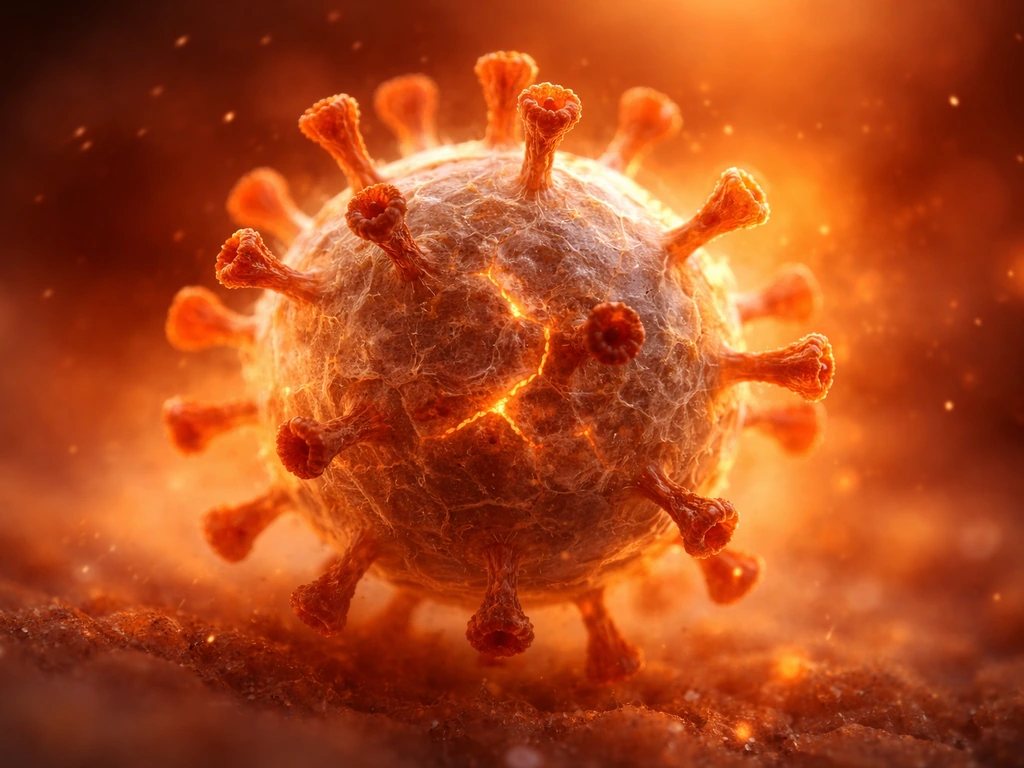
Influenza viruses, including avian influenza A, are fragile when exposed to heat. Heat disrupts the proteins and lipid envelope the virus depends on to infect cells, a process researchers call thermal inactivation. Once those structures are denatured, the virus can no longer replicate and is considered inactivated.
Lab studies back this up clearly: H5N1 virus in raw milk, for example, shows rapid, dramatic decreases in infectious titer when heated to 63°C or 72°C, with some experiments showing a 10-billion-fold drop within about 2. 5 minutes at 63°C. At 60°C, low pathogenic avian influenza strains are completely inactivated after about 10 minutes, and at 56°C the process takes around 60 minutes.
The practical takeaway from all of this is straightforward: higher temperatures work faster, and the cooking temperatures recommended by the CDC and USDA are well above the threshold where the virus survives.
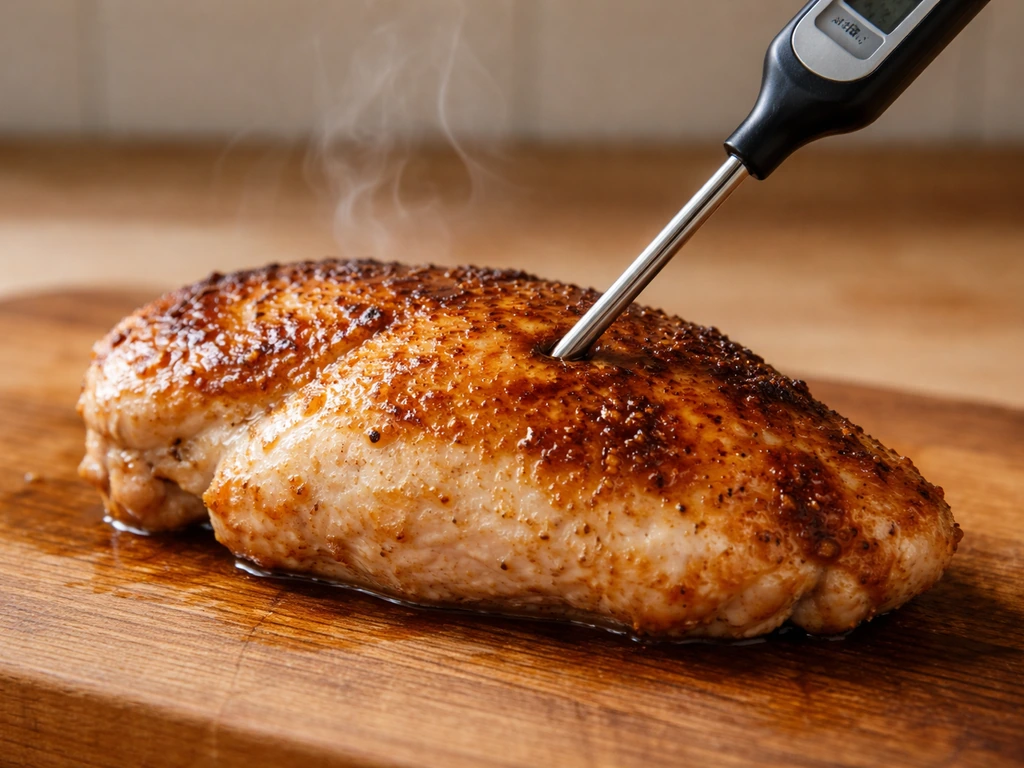
What matters for food safety specifically is internal temperature, not surface temperature. You can have a beautifully browned chicken breast that's still dangerously undercooked in the center. The CDC's food safety guidance focuses on that internal temperature target for exactly this reason.
The exact temperatures and times that make food safe
The CDC and USDA are consistent on this: all poultry products should reach an internal temperature of 165°F (73.9°C). That covers whole birds, parts, ground poultry, giblets, stuffing cooked inside the bird, and egg-based dishes like quiche, casseroles, and frittatas. The USDA's safe minimum internal temperature chart lists 165°F for all poultry categories without exception.
| Food | Safe Internal Temperature |
|---|---|
| Whole poultry (chicken, turkey, duck) | 165°F (73.9°C) |
| Poultry parts (breasts, thighs, wings) | 165°F (73.9°C) |
| Ground poultry | 165°F (73.9°C) |
| Giblets | 165°F (73.9°C) |
| Stuffing (cooked inside poultry) | 165°F (73.9°C) |
| Egg dishes and casseroles with meat/poultry | 165°F (73.9°C) |
| Reheated poultry or egg dishes | 165°F (73.9°C) |
The most reliable way to verify this is a food thermometer inserted into the thickest part of the meat, away from bone. Don't guess by color alone. Pink juices don't always mean undercooked, and clear juices don't always mean safe. The thermometer is the only way to know.
Why heat doesn't work the same in every situation
Here's where things get more nuanced. Heat is effective, but context changes how effective it is. Three situations in particular can undercut what looks like adequate cooking.
Organic matter protects the virus
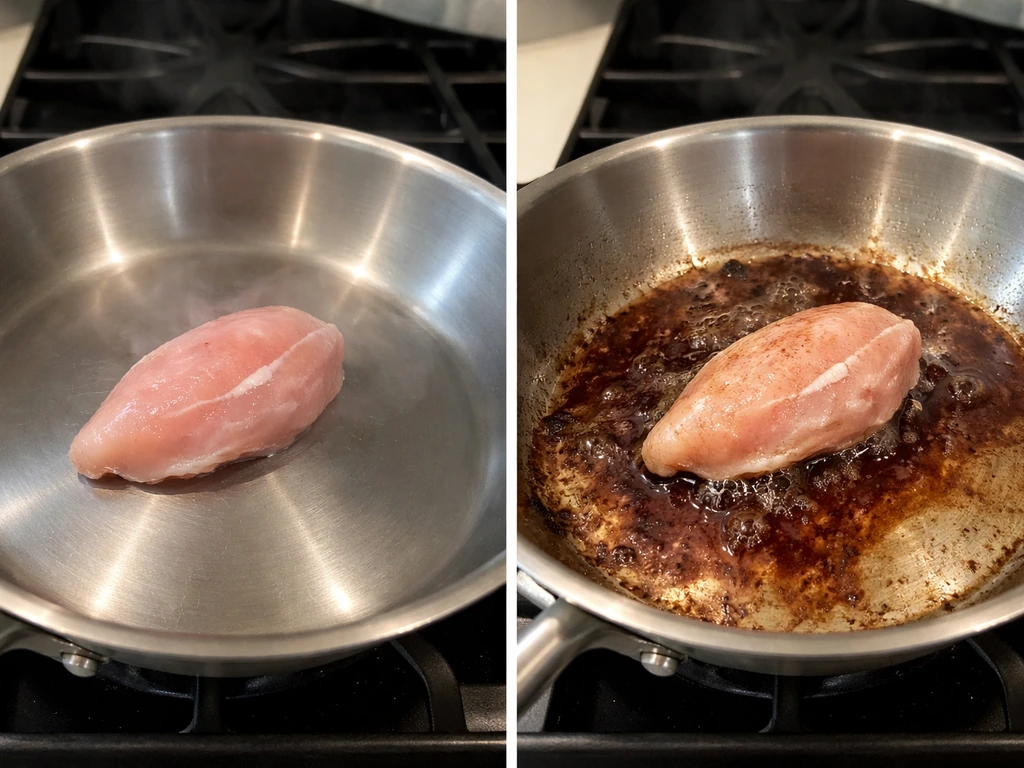
Proteins, fats, and fluids like blood can act as a physical shield around viral particles, slowing heat penetration and inactivation. This is why internal temperature of the whole product matters so much, not just whether the outside looks cooked. Blood and other biological fluids from infected poultry are considered a potential source of infection, particularly in contexts like Southeast Asia where people handle raw poultry closely. The protective effect of organic matter is also why surface disinfection (covered separately in guidance on what kills bird flu on surfaces) requires different considerations than cooking.
Uneven cooking creates cold spots
Ovens, microwaves, and stovetops don't always heat food uniformly. Thick sections, bone-in pieces, and dense casseroles can have significantly cooler centers than the surrounding food. The USDA specifically flags this as the reason food thermometers matter: hot spots and cold spots are real, and the cold spot is what determines whether the food is actually safe. Never assume the thinnest part of the meat represents the whole piece.
Low temperatures and partial cooking don't get the job done
Some people rely on color, texture, or touch to judge doneness. The problem is that at temperatures well below 165°F, the virus may still be viable. Lab studies show that at 56°C (about 133°F), inactivation of low pathogenic avian influenza takes up to 60 minutes. That's not a temperature range associated with properly cooked poultry, but it illustrates why partial cooking or warming food to a lukewarm temperature doesn't provide the same protection as fully reaching the target. Rare or medium-rare poultry isn't a safe option from a bird flu standpoint.
Safe cooking and handling steps for poultry and eggs
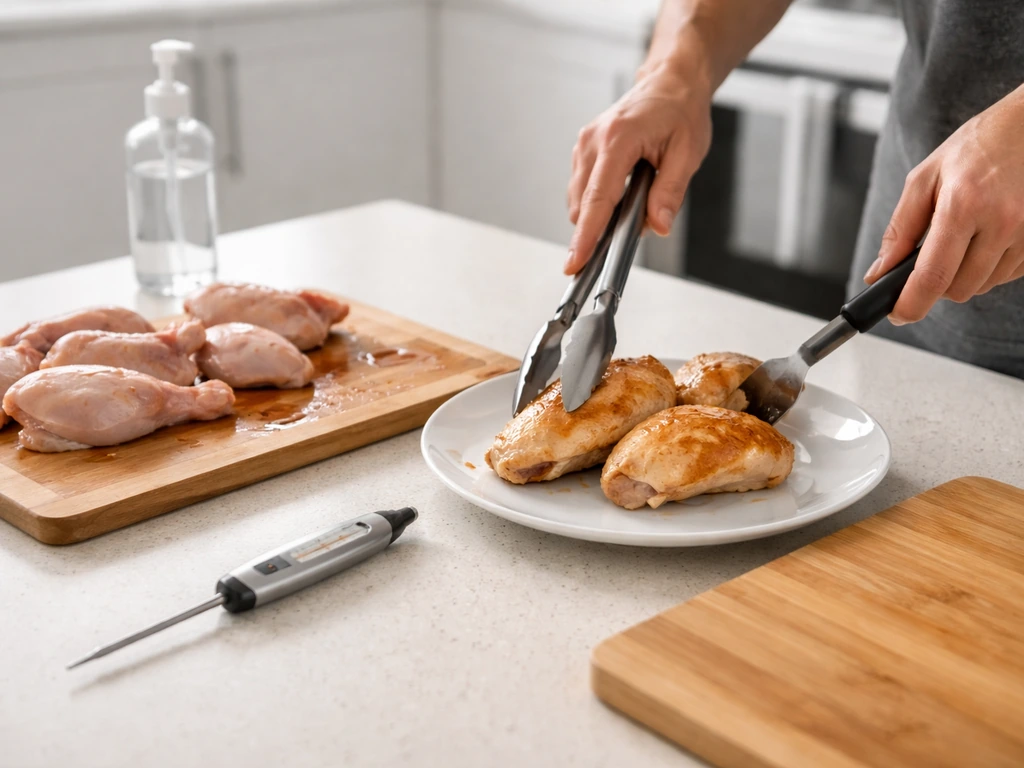
Getting to 165°F is the goal, but everything before and after cooking also matters because cross-contamination can spread virus from raw poultry to surfaces, utensils, and other foods that won't be cooked again. Here's how to handle the whole process safely: FSIS, USDA notes that washing or rinsing raw meat or poultry is not recommended because it can increase cross-contamination risk in the kitchen.
- Use a food thermometer every time. Insert it into the thickest part of the meat, avoiding bone. Wait for the reading to stabilize before pulling the food off heat.
- Don't rinse raw poultry. The USDA advises against washing raw meat or poultry because it spreads contaminated droplets around the sink and nearby surfaces, increasing cross-contamination risk rather than reducing it.
- Keep raw poultry separate from everything else during prep. Use a dedicated cutting board for raw poultry and wash it thoroughly with hot soapy water afterward.
- Wash hands thoroughly with soap and water for at least 20 seconds before and after handling raw poultry or eggs.
- Cook eggs until both the yolk and white are firm, or ensure egg dishes reach 165°F internally. Runny or soft-cooked eggs from potentially exposed birds carry more risk.
- Refrigerate or freeze raw poultry promptly and don't leave it at room temperature for extended periods.
- Reheat leftover poultry and egg dishes to 165°F before serving, not just until they feel warm.
Protection measures beyond heat
Cooking takes care of food safety, but for people who work with live birds, keep backyard flocks, or encounter wild or sick birds, heat in the kitchen isn't enough protection on its own. Ultraviolet (UV) light may be used for disinfection in some settings, but it is not a reliable method to kill bird flu risks on food compared with safe cooking temperatures heat in the kitchen isn't enough protection on its own.
Those same limits also apply to rescue situations, where handling live or contaminated birds can raise risk even if you try to use heat or cooking heat in the kitchen isn't enough protection. If you are wondering whether sunlight can help, the safest assumption is still to rely on proper cooking and hygiene rather than sunlight alone does sunlight kill bird flu.
Bird flu can kill birds, especially in outbreaks involving highly pathogenic strains like H5N1 does bird flu kill birds. The virus can be transmitted through contact with infected birds, their droppings, feathers, or contaminated environments, not just through eating undercooked food.
- Avoid direct contact with sick, dead, or wild birds where possible. WHO advises the public to strictly avoid touching sick or dead animals and to report them to local wildlife or veterinary authorities rather than handling them.
- If you must handle potentially exposed birds or clean contaminated environments, use appropriate personal protective equipment: gloves, eye protection, and a properly fitted respirator. CDC guidance for backyard flock owners during outbreaks emphasizes PPE during cleaning and depopulation activities.
- Avoid dispersing dust, feathers, or waste from contaminated areas, as these can carry viral particles.
- Disinfect contaminated surfaces and equipment using an EPA-approved disinfectant with influenza A label claims. Heat alone on non-food surfaces isn't always practical or sufficient, especially when organic matter is present.
- Use safe water and raw materials when preparing food, as outlined in WHO's Five Keys to Safer Food.
- Keep clean, separate raw from cooked, cook thoroughly, and keep food at safe temperatures. These WHO principles apply broadly to reducing all foodborne pathogen risk, including avian influenza.
There is no evidence of bird flu infection from properly handled and cooked poultry products in the United States. The risk through food is genuinely low when standard food safety practices are followed. The higher-risk scenarios involve people who have direct exposure to infected live birds or contaminated environments.
When to actually worry: symptoms, risk factors, and next steps after exposure
Most people cooking chicken at home face minimal personal health risk from bird flu. The concern is highest for people with direct, close contact with infected or potentially infected birds, including farmworkers, backyard flock owners, and people who handle wild birds. If you've had that kind of exposure, here's what to watch for.
Symptoms to watch for
Human avian influenza A infections can look like other respiratory illnesses early on. The CDC lists the following reported symptoms:
- Eye redness or irritation (conjunctivitis), sometimes the only symptom
- Mild fever of 100°F (37.8°C) or higher, or feeling feverish
- Cough
- Difficulty breathing or shortness of breath
- Fatigue, muscle aches, or headache
- Runny or stuffy nose
- Sore throat
- Diarrhea or vomiting in some cases
Who's most at risk and what to do
If you've had direct or close contact with sick, dead, or potentially infected birds or poultry, or been in a contaminated environment within the past 10 days, the CDC recommends monitoring yourself for illness for 10 days after your last exposure. If you develop any of the symptoms above during that window, contact your local or state health department before going to a clinic or emergency room so they can advise on testing and proper precautions to avoid spreading illness. Don't wait it out if you're having trouble breathing or symptoms are rapidly worsening.
If you're concerned about an animal situation, such as a sick or dead bird on your property or a flock showing signs of illness, contact your local veterinary or wildlife authority rather than handling the animal yourself. Reporting matters: early detection of outbreaks is how public health officials contain spread and reduce risk to both animals and people.
The quick checklist: what to do right now
- Cook all poultry and poultry-based dishes to an internal temperature of 165°F (73.9°C), verified with a food thermometer.
- Cook eggs until the yolk and white are fully set, or cook egg dishes to 165°F.
- Do not rinse raw poultry. Separate raw poultry from other foods during prep.
- Wash hands with soap and water before and after handling raw poultry or eggs.
- Sanitize cutting boards, countertops, and utensils that touched raw poultry using hot soapy water and a food-safe disinfectant.
- Avoid contact with sick or dead wild birds. Report them to local wildlife authorities.
- If you work with live poultry or have had close contact with potentially infected birds, wear PPE and monitor yourself for symptoms for 10 days.
- If symptoms develop after exposure, call your local health department before seeking in-person care.
FAQ
If my chicken looks cooked and juices run clear, can I still be unsure about bird flu safety?
If you only heat the outside, the virus could survive in the cooler center. Always take the temperature in the thickest part, away from bone, because poultry can have hot spots even when it looks “done.”
How do I check temperature correctly for a whole chicken or stuffed bird?
For whole birds, cook until the thickest part of the breast and the innermost part of the thigh both reach 165°F (73.9°C), then let it rest briefly. If you rely on time estimates, you can miss a cold center, especially with large or stuffed birds.
Does microwave cooking reliably kill bird flu the same way as an oven or grill?
Microwaves often create uneven heating, with cold spots that can stay below 165°F. Use a thermometer in the thickest area, rotate or stir as directed, and do not assume the “standing time” will fix an undercooked center.
Can re-heated leftovers be safe for bird flu, or does reheating change the risk?
Yes, but only if the food itself reaches 165°F internally. Reheating leftovers can cool quickly in the middle, so check temperature after reheating, not just when it was originally cooked.
Does disinfecting surfaces or washing poultry replace cooking to 165°F?
No. You need to use heat on the food to reach the internal temperature target. For personal protection, hygiene matters too, wash hands and sanitize surfaces after handling raw poultry, because virus can spread before or after cooking.
Is it safe to rinse raw chicken to reduce bird flu risk?
Do not wash raw poultry, because splashing spreads contamination to the sink, counters, and hands. Instead, cook thoroughly, and clean and sanitize surrounding areas and utensils after handling raw meat.
Does the 165°F rule apply to all poultry, not just chicken?
Turkey, duck, goose, and other poultry follow the same internal temperature standard for safety. The practical difference is that larger or denser pieces need more time to ensure the coldest spot reaches 165°F.
What if I’m doing meal prep, par-cooking, or finishing poultry later?
If you partially cook poultry and plan to finish later, food safety depends on whether the next heating step gets the internal temperature to 165°F again. Don’t “warm it up” to a lukewarm temperature, because viability can persist at lower temperatures.
Do ground poultry and egg dishes need the same 165°F internal temperature?
Yes. Ground poultry, organ meats, giblets, and egg-based casseroles also require the same internal target because the virus protection depends on the coldest point reaching 165°F, not on appearance.
Once poultry reaches 165°F, what are the most common mistakes that still make meals unsafe?
Even if cooked to 165°F, cross-contamination can reintroduce virus onto ready-to-eat foods. Keep cooked foods separate, use clean utensils, and refrigerate promptly, because the main “after cooking” risk is contamination rather than survival in the cooked food.
If I didn’t measure internal temperature, how should I decide whether the meal was risky?
If you used a thermometer and can confirm the internal temperature reached 165°F, the risk from that meal is very low. If you did not check and the food might have been undercooked, your best next step is to avoid eating it and follow up if you had high-risk exposure to live sick birds.
Does cooking from frozen affect whether heat kills bird flu?
If you cook with frozen poultry, the center can be cooler than expected, and the recommended approach is to cook until the internal temperature reaches 165°F. Avoid partially cooking then letting it sit at room temperature, because time in the danger zone increases the chance of unsafe handling.