
Title: How to Disinfect Shoes from Bird Flu: A Step-by-Step Guide
How to Disinfect Shoes from Bird Flu: Practical Steps

Maya Chen
13 Aug 2026
Meta description: Learn how to disinfect shoes after bird flu exposure with step-by-step protocols for all shoe types, recommended disinfectants, and biosecurity tips.
If your shoes may have picked up avian influenza virus, the protocol is straightforward: physically scrub off all visible dirt or fecal matter first, then apply an EPA-registered disinfectant effective against influenza A viruses, allow the full contact time on the label, rinse if required, and let the footwear dry completely before reuse. Skipping the physical cleaning step undermines the disinfectant almost entirely, so sequence matters as much as product choice.
Who this guide is for and why it matters
This article is written for anyone who has walked through a poultry area, backyard flock, farm, or wild-bird habitat during or near an active H5N1 or other highly pathogenic avian influenza (HPAI) outbreak. That includes backyard flock owners, poultry farm workers, veterinarians, wildlife responders, and general readers who want to understand the risk clearly and act on it without panic. The goal is evidence-based, practical guidance, not alarmism. Human infection from shoe-borne exposure remains a low-probability event, but for anyone working around infected birds regularly, good footwear hygiene is a sensible and achievable layer of protection.
Why shoes can carry avian influenza
Shoes are one of the most underappreciated fomite risks in avian influenza biosecurity. When you walk through poultry housing, outdoor runs, or areas where wild waterfowl congregate, your soles pick up feces, soil, feathers, and organic debris. HPAI viruses shed from infected birds at extremely high concentrations in feces, and those droppings can contaminate soil, litter, water, and any surface at ground level. Experimental studies show H5N1 can remain viable in poultry faeces for several days at lower temperatures, making fecal contamination on shoes a plausible environmental source (Survivability of Highly Pathogenic Avian Influenza H5N1 Virus in Poultry Faeces at Different Temperatures (PMC)). Once contaminated material sticks to the treads and fabric of your footwear, it travels wherever you walk next, including into your home, car, or the next flock you visit.
The deeper grooves in boot soles are particularly problematic because organic material packs in tightly, shielding any virus from disinfectants applied afterward. That is why USDA APHIS biosecurity guidelines require physical scrubbing with a long-handled brush before any boot-dip or spray disinfection. Footwear is explicitly listed alongside gloves, gowns, and eye protection in CDC PPE guidance for avian influenza response, which tells you exactly how seriously the public health community takes shoe contamination as a transmission pathway.
How long avian influenza survives on shoes, surfaces, droppings, and soil
Knowing how long the virus can persist helps you judge the urgency of cleaning. For more detail on environmental persistence, see our guide on how long does bird flu live on surfaces. The short version: survival is driven by temperature, moisture, UV light exposure, and whether the virus is sitting in organic material (which protects it). For more on environmental spread and distances over which avian influenza can move, see how far can bird flu travel. Cooler, darker, and wetter conditions consistently extend survival, so the risk from contaminated footwear is meaningfully higher in winter or in climate-controlled poultry barns than in hot summer sun. For specific data on virus persistence in droppings, see information on how long does bird flu live in bird poop. For more detail on persistence in soil, see our guide on how long does bird flu stay in soil. For more detail on persistence by material and conditions, see how long does bird flu live on shoes.
| Surface or material | Typical survival range | Key conditions |
|---|---|---|
| Hard, non-porous surfaces (rubber boot soles, plastic) | 24 to 48+ hours; up to 28 days in controlled cool/low-humidity studies | Prolonged at low temperature and low absolute humidity; shortened by UV and heat |
| Porous surfaces (fabric shoe uppers, canvas) | A few hours to roughly 8 to 12 hours under typical indoor conditions; up to 14 days in extreme cool/low-AH lab conditions | Porous materials generally reduce survival compared with non-porous; fabric composition matters |
| Poultry feces (wet or dry) | Multiple days at lower temperatures; shorter at warm temperatures | Fecal matrix protects the virus; wet feces at cool temps extends viability |
| Contaminated soil | Days to weeks depending on temperature and moisture | Cool, moist, shaded soil retains virus longer than warm, dry, sun-exposed ground |
These ranges come from experimental studies under controlled conditions and represent potential worst-case persistence. Real-world survival outdoors, especially in direct sunlight, is typically shorter. Even so, the practical takeaway is that contaminated footwear left in a cool mudroom or car trunk could carry live virus for a meaningful window of time, which is exactly why prompt cleaning matters rather than simply waiting for the virus to die off on its own.
When you actually need to clean or disinfect your shoes
Not every outdoor walk requires a full decontamination protocol. The decision should be based on realistic exposure, not anxiety. Ask yourself three questions: Were you in a location with confirmed or suspected HPAI in poultry or wild birds? Is there visible fecal matter, mud, or organic material on your footwear? Did this happen recently, within the survival window discussed above?
- You visited a poultry farm, backyard flock, live-bird market, or wild-bird habitat during an active HPAI outbreak in your region
- Your shoes have visible feces, mud, or litter from any poultry area regardless of outbreak status (good general biosecurity practice)
- You are a poultry worker, veterinarian, or responder moving between properties, where cross-contamination between flocks is a genuine risk
- You walked near dead or visibly sick wild birds, especially waterfowl
- Your shoes were worn in a confirmed HPAI-positive premises response
If none of those apply, a normal wash with soap and water before bringing shoes inside is still a sensible habit, but you do not need to treat your footwear like hazmat gear after a routine park walk. The goal here is proportional, not excessive.
General workflow: the sequence every protocol follows
Whatever shoe type you are dealing with, the process follows the same logical order. Deviating from this sequence, particularly by applying disinfectant before removing organic material, dramatically reduces effectiveness.
- Put on gloves (nitrile or similar) before handling contaminated footwear. Avoid touching your face throughout.
- Remove and contain loose debris outdoors or in a dedicated area, not in your kitchen or living space.
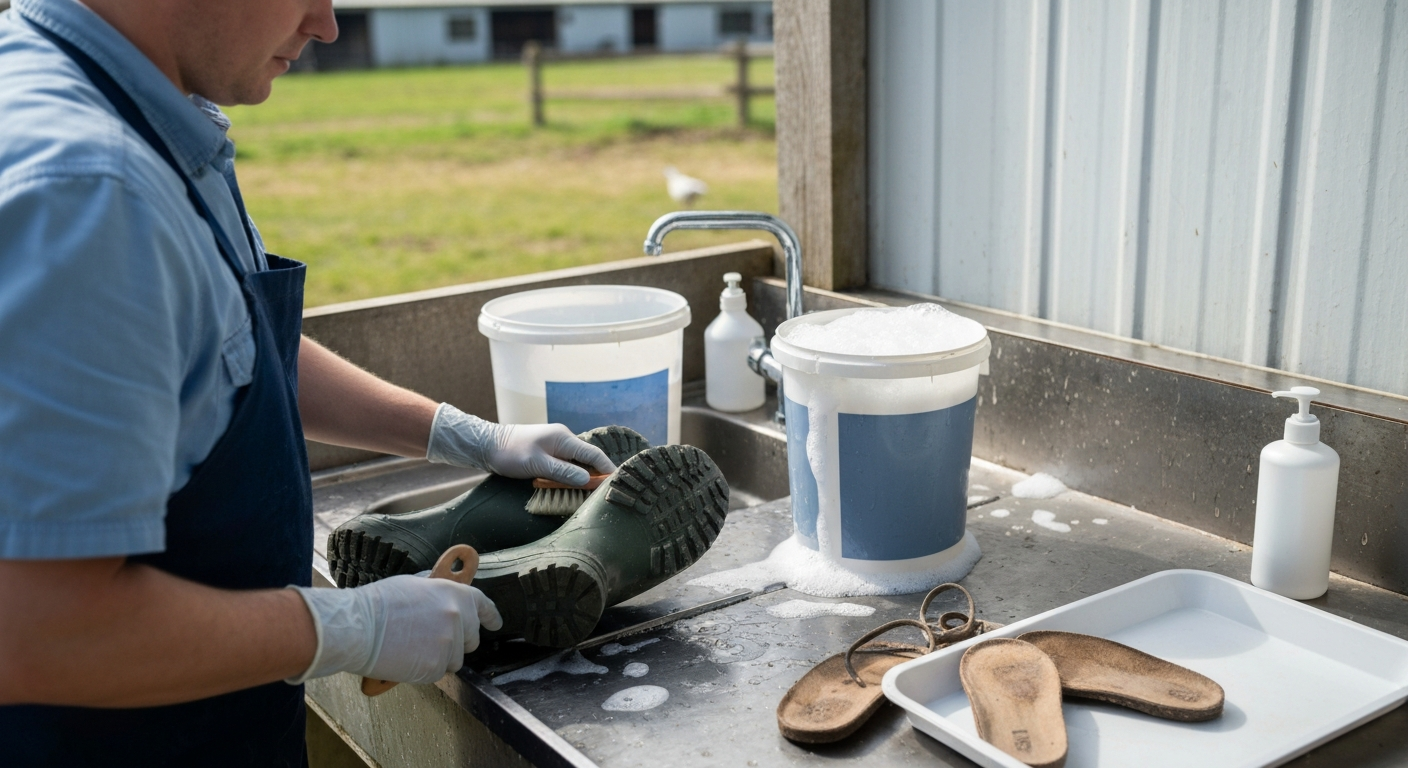
- Physically scrub all surfaces of the shoe, especially sole treads, with a stiff brush, soap, and water to remove all visible dirt, feces, and organic material.
- Rinse thoroughly with clean water.
- Apply your chosen EPA-registered disinfectant at the correct concentration, covering all surfaces.
- Allow the full contact time specified on the product label. Do not wipe off early.
- Rinse if the label requires it, or allow to air-dry completely if rinsing is not specified.
- Remove and dispose of gloves carefully, then wash hands thoroughly with soap and water for at least 20 seconds.
- Launder any clothing worn during the process.
Choosing your disinfectant
The EPA maintains a registered list of antimicrobial products effective against avian influenza A (commonly called EPA List M). Products on this list have been tested and labeled for use against influenza A viruses and are your most defensible choice. For farm and professional settings, Virkon-S (a peroxygen/potassium peroxymonosulfate formulation) is widely used in biosecurity because laboratory studies show it inactivates avian influenza viruses at validated concentrations and it retains some activity even with organic load present, though pre-cleaning is still required. Peer‑reviewed laboratory studies on H7N9 report that sodium hypochlorite, Virkon‑S, and ethanol achieved complete inactivation under test conditions with roughly a 5‑minute contact time at room temperature Peer‑reviewed laboratory studies on H7N9 report that sodium hypochlorite, Virkon‑S, and ethanol achieved complete inactivation under test conditions with roughly a 5‑minute contact time at room temperature.. For household situations, a freshly prepared diluted sodium hypochlorite (bleach) solution is a practical and effective option, but bleach is substantially inactivated by organic material, making the scrub-first step non-negotiable.
| Disinfectant | Common dilution for footwear | Approximate contact time | Notes |
|---|---|---|---|
| Sodium hypochlorite (household bleach ~5 to 6%) | 1 part bleach to 9 parts water (roughly 0.5% solution) | 10 to 30 minutes depending on concentration and guidance source | Inactivated by organic matter; always pre-clean; corrosive to some metals; do not mix with ammonia |
| Virkon-S (PPMS peroxygen formulation) | 1% solution (10g per liter) for general disinfection; 0.25% in some validated protocols | 10 minutes at room temperature; follow current label | Good broad-spectrum activity; perform pre-cleaning; follow label for farm/professional use |
| Quaternary ammonium compounds (EPA List M products) | Per product label | Per product label, typically 5 to 10 minutes | Check label specifically states efficacy against influenza A; some QACs have reduced activity in hard water |
| 70% ethanol or isopropanol | Ready to use (70%) | Approximately 30 seconds to 1 minute surface contact | Practical for spot disinfection of smooth surfaces; not ideal for porous shoe fabrics; flammable |
| Accelerated hydrogen peroxide (AHP) products (EPA List M) | Per product label | Per product label | Generally low toxicity; good for footwear; confirm label claim against avian influenza A |
Whatever product you choose, read the label. Contact time is not optional. Wiping a disinfectant off after 30 seconds when the label says 10 minutes means you have cleaned the surface but not necessarily disinfected it. Temperature also matters: most disinfectants work more slowly in cold conditions, and some have minimum temperature requirements listed on their labels.
Washable shoes and sneakers: step-by-step protocol
Fabric sneakers, canvas shoes, and most athletic footwear can tolerate more aggressive cleaning approaches, which works in your favor. Here is the protocol I follow and recommend for this category.
- Wear gloves before touching the shoes. If you have an N95 or surgical mask available and the contamination was heavy, wear it during the scrubbing step to avoid inhaling aerosolized droplets.
- Take the shoes outside or to a utility sink away from food preparation areas.
- Knock off loose clumps of mud or debris into a bag for disposal. Seal the bag.
- Using a stiff-bristled brush, scrub the entire shoe, including soles, sides, tongue, and lace eyelets, with soap and water. Work the brush into tread grooves firmly. This step is more important than any disinfectant you apply next.
- Rinse the shoes thoroughly with running water.
- Remove the laces and insoles if possible and wash them separately.
- Prepare your disinfectant solution at the correct dilution in a bucket or basin. Submerge or thoroughly saturate the shoes.
- Allow the full contact time per label directions. For a bleach solution at approximately 0.5%, that is typically 10 to 30 minutes.
- Rinse the shoes again with clean water to remove disinfectant residue.
- Machine wash if the shoe material allows it. Use a hot-water cycle (60 to 70 degrees C where the machine allows) with detergent. For heavily contaminated shoes, wash them separately from regular laundry in a dedicated load.
- Air dry completely or use a dryer on a high-heat setting if the shoe material permits. Full drying is important because residual moisture can support microbial regrowth.
- Remove and dispose of gloves, then wash hands thoroughly.
A note on hot-water laundry: infection-control guidelines for healthcare settings cite 70 degrees C (160 degrees F) held for at least 25 minutes as a thermal disinfection benchmark for textiles. Most household hot cycles reach lower temperatures, which is why combining detergent with whatever heat your machine offers is important. The chemical action of detergent plus heat together provides significantly better reduction than either alone.
Non-washable shoes and leather: what you can and cannot do
Leather dress shoes, leather work boots, and other non-machine-washable footwear require a different approach because you cannot submerge them in hot water or run them through a washing machine without damaging them. The good news is that the most contamination-prone parts of any shoe, the soles and lower sides, are usually the most durable and easiest to treat. The tradeoff is that if the leather upper is heavily contaminated or the shoe has absorbed fecal material into cracks or unfinished surfaces, complete decontamination is genuinely difficult.
- Wear gloves throughout. Consider an N95 mask if contamination is heavy.
- Remove loose debris outdoors. Use a stiff brush on the soles and lower boot areas first, scrubbing away all organic material with soap and water.
- For the leather upper, use a damp cloth with a mild soap or leather-safe cleaner to wipe down surfaces. Scrub any visibly contaminated areas.
- Rinse the sole and lower areas with clean water. Wipe the leather upper with a clean, damp cloth. Avoid soaking leather.
- Apply an EPA-registered disinfectant spray or solution to all surfaces, including the leather. Some disinfectants can dry out or discolor leather, so check product compatibility or test on a small hidden area first. For the sole, a disinfectant soak or generous spray is fine.
- Allow the full contact time. For non-porous rubber or synthetic soles, this is straightforward. For leather uppers, let the disinfectant sit without wiping for the contact time, then blot and allow to dry.
- Condition the leather after cleaning to restore moisture if you used a harsh disinfectant.
- Dry completely in a well-ventilated area before reuse. Avoid sealing damp leather footwear in bags or boxes.
When repair or replacement is the right call
If leather shoes were worn in a confirmed HPAI-positive premises response (say, on a depopulation team or during an official outbreak response), CDC and USDA guidance leans toward disposable footwear precisely to avoid this problem. Shoes with deep sole cracks, deteriorated materials, or those that have absorbed large amounts of fecal matter into the upper material may not be reliably decontaminated. In those cases, retiring the shoes is a reasonable decision. For professional responders, USDA APHIS incident waste procedures apply: disposable PPE and boot covers from confirmed HPAI response sites are not ordinary trash and should follow the incident waste plan for that response.
Rubber boots and farm footwear: boot dips and dedicated biosecurity steps
Rubber Wellington boots or dedicated farm boots are the gold standard for poultry biosecurity because they can be fully scrubbed and submerged without damage. If you have a backyard flock or work on a poultry farm, these are worth the investment specifically because they make this whole process easier and more reliable.
- Keep farm boots dedicated to the flock area. Do not wear them in the house, car, or to other properties.
- Before entering a boot dip, scrub all visible organic material off the boot with a stiff long-handled brush and soapy water. A dirty boot dip is not just ineffective, DEFRA guidance warns it may actually spread contamination by depositing organic material from one boot onto others.
- Step into the boot dip with both feet and rotate the boot so all surfaces, including heel and toe, contact the solution. Maintain contact for the time specified for that disinfectant product.
- Boot dip solutions must be prepared at the correct concentration, kept at ankle depth, changed regularly (at minimum daily in heavy-use settings, or immediately when visibly contaminated), and sheltered from rain dilution and UV degradation.
- After leaving a poultry area, scrub boots again, rinse, and store in a designated area away from the house interior.
- Periodically do a deep clean: fully scrub with soap and brush, rinse, then apply disinfectant solution at full concentration and allow extended contact time (15 to 30 minutes), then rinse and air dry.
Disposable boot covers: using and disposing of them correctly
Disposable boot covers are the simplest solution for one-time or emergency situations, such as if you unexpectedly encounter a dead bird in an outbreak zone or need to enter a premises with a suspected case. Both OSHA and CDC endorse disposable shoe covers as part of recommended PPE for avian influenza response.
- Put boot covers on before entering the potentially contaminated area, not after.
- Remove them by peeling from the outside in (turning them inside out) to contain contamination on the inner surface.
- Do not touch the outside of the boot cover with bare hands during removal.
- For routine situations (backyard flock, brief site visit), seal used boot covers in a zip-lock or tied plastic bag and dispose of in regular household trash.
- For confirmed HPAI response sites, follow the incident waste disposal plan: USDA APHIS SOPs specify that highly contaminated disposable items may require incineration, authorized on-site burial, or handling through the state/local incident waste framework, not ordinary trash.
Protecting your home from cross-contamination
One of the simplest and most effective biosecurity measures is also one of the oldest: take your shoes off at the door. If you work with poultry or have been in a potentially contaminated area, treat footwear as an outdoor item until it has been cleaned. Leaving shoes in a garage, mudroom, or on an outside step prevents anything on the soles from being tracked through the house. This principle applies whether you are worried about HPAI or simply about general fecal-oral transmission.
- Designate a specific area outside the main living space for removing and storing farm or outdoor footwear.
- Use a doormat with a coarse texture at entry points to catch loose debris before shoes are removed. Clean doormats regularly with soap and water, and periodically treat them with a diluted disinfectant solution.
- If someone in the household has worn potentially contaminated shoes indoors before cleaning them, mop hard floors with a disinfectant solution (following label directions) and avoid letting children or pets contact those floor areas until cleaned.
- Wash hands after handling any footwear that was worn in poultry areas, even if you wore gloves during cleaning.
- Wash any clothing worn during outdoor poultry contact separately and promptly. Do not leave it sitting in a pile in the bedroom or shared laundry area before washing.
Comparing shoe materials: disinfection ease and practical decisions
| Shoe type | Machine washable? | Disinfectant tolerance | Ease of decontamination | Recommendation |
|---|---|---|---|---|
| Rubber boots (Wellies) | No, but fully scrubable and dippable | Excellent; tolerates bleach, Virkon-S, QACs | High; easiest to fully decontaminate | Best choice for poultry work; dedicate to farm use only |
| Synthetic sneakers / athletic shoes | Usually yes | Good on soles; fabric uppers tolerate most solutions | High with machine wash + disinfectant pre-soak | Good for general outdoor use; machine wash after exposure |
| Canvas shoes | Usually yes | Moderate; bleach may discolor | Moderate; fabric absorbs organic matter | Acceptable; consider replacing if heavily contaminated |
| Leather boots or shoes | No | Limited; harsh disinfectants can damage leather | Moderate to low; deep cracks and porous leather are difficult | Use only if necessary; consider disposable covers over leather for farm visits; replace if heavily soiled |
| Disposable boot covers over any footwear | N/A (single use) | N/A | Highest; discard after use | Best for one-off visits to high-risk sites |
PPE reminders for the cleaning process itself
Cleaning contaminated shoes is itself a potential exposure event. You are handling material that may contain live virus, scrubbing it with a brush that can create aerosols, and working with chemical disinfectants that require their own precautions. OSHA mandates that employers provide appropriate PPE and hand-washing facilities for workers handling HPAI-related materials. Even at home, take these steps seriously.
- Wear disposable nitrile gloves (or reusable rubber gloves that can themselves be disinfected afterward).
- Consider an N95 respirator or at minimum a surgical mask if scrubbing heavily contaminated footwear, to reduce inhalation of aerosolized particles.
- Eye protection (safety glasses or goggles) is warranted if you are scrubbing vigorously or using spray disinfectants at close range.
- Work in a well-ventilated area, particularly if using bleach solutions, which produce irritating fumes.
- Wash hands thoroughly after the process even if gloves were worn throughout, because glove removal itself carries contamination risk if not done correctly.
When to contact public health or veterinary authorities
Disinfecting your shoes is a personal biosecurity measure, not a substitute for reporting. If you believe your flock has been exposed to HPAI, if you have found multiple dead wild birds in a concentrated area, or if you have had direct, unprotected contact with confirmed infected birds and subsequently develop flu-like symptoms (fever, cough, sore throat, eye redness, or difficulty breathing), contact the appropriate authorities promptly.
- Backyard flock owners: contact your state veterinarian or USDA APHIS at their emergency line (1-866-536-7593 in the US) if you suspect HPAI in your birds.
- Poultry producers: follow your state's mandatory reporting requirements for HPAI, which is a notifiable disease.
- Anyone with potential human exposure and symptoms: contact your local or state health department and inform them of the potential bird flu exposure. Do not just show up at an emergency room without calling ahead.
- Wildlife concerns: report unusual die-offs of wild birds (especially waterfowl, shorebirds, and raptors) to your state wildlife agency or the USDA Wildlife Services.
- If you are outside the US, contact your national agricultural authority and follow WHO guidance on human exposure reporting.
Quick-reference disinfection checklist
- Gloves on before touching contaminated footwear
- Mask and eye protection if scrubbing heavily contaminated shoes
- Remove loose debris outdoors; seal in a bag
- Scrub all surfaces (especially sole treads) with stiff brush, soap, and water until visually clean
- Rinse thoroughly
- Apply EPA-registered disinfectant (bleach solution, Virkon-S, or EPA List M product) at correct dilution to all surfaces
- Hold for full label contact time (do not wipe off early)
- Rinse if label requires; air dry or machine dry completely
- For washable shoes: machine wash on hottest safe cycle with detergent as an additional step
- Remove and dispose of gloves carefully; wash hands for 20+ seconds
- Launder clothes worn during cleaning
- Clean and disinfect the area where cleaning was performed
FAQ
Search-optimized title and meta description
Title: How to Disinfect Shoes After Possible Exposure to Avian Influenza (Bird Flu) Meta description (≤160 chars): Practical, evidence-based steps to clean and disinfect shoes after bird-flu exposure, plus PPE, disinfectants, boot-dips, and biosecurity tips.
Why can shoes carry avian influenza (bird flu)?
Shoes contact contaminated birds, droppings, soil and indoor surfaces. Avian influenza viruses can be deposited in feces and mucus and transferred on shoe soles and treads, making footwear a potential fomite for onward spread (CDC; USDA/APHIS; peer-reviewed studies).
How long can avian influenza survive on shoes, surfaces, bird droppings, and soil?
Summary (typical ranges; affected by temperature, humidity, UV and organic material): - Hard, non-porous surfaces (rubber, plastic, metal): often detectable for 24–48+ hours under cool/dry conditions; in lab extremes persistence can be several days to weeks at low temp. - Porous materials (fabric, some leathers): infectivity usually falls faster—hours to a day or two, but longer in cool/moist conditions. - Poultry feces/droppings: viable virus can persist for days at lower temperatures, especially when moist. - Soil/mud: persistence varies widely; wet, cool soil may preserve virus longer than dry, warm soil. Caveat: organic material (feces, mud) preserves virus and reduces disinfectant effectiveness; authoritative sources note large variability and dependence on environment (NCBI/WHO reviews; PMC studies; USDA/APHIS).
When should I clean and disinfect shoes—how to assess exposure risk?
Clean/disinfect if you: worked with or near sick/dead birds, entered poultry housing or live-bird markets, stepped in bird droppings/mud on farms, or visited premises under investigation. If shoes are visibly soiled with feces, mucus or wet soil, treat as potentially contaminated (CDC; USDA/APHIS). Low-risk casual public exposure (no bird contact, only passing a yard) generally needs only routine cleaning or removal at home entry.
Immediate safety precautions and PPE before cleaning shoes
Wear disposable gloves and eye protection if shoes are heavily soiled. Use a mask if splashing is possible. Work outdoors or in a well-ventilated area. Avoid touching face during cleaning and wash hands immediately after glove removal (OSHA; CDC). For occupational responses, follow employer PPE and training requirements for donning/doffing (OSHA; CDC).
Step-by-step protocol — washable shoes (canvas, fabric)
1) Remove laces and insoles if possible. 2) Brush off loose dirt outdoors with a stiff brush. 3) Machine wash on warm/hot with detergent if fabric allows; use hot-water/high-heat dryer when material tolerates (CDC laundry guidance). 4) After pre-cleaning, disinfect by laundering or by soaking in an approved disinfectant solution per label instructions (see disinfectant table). 5) Air- or machine-dry completely before reuse. Handle soiled items separately and avoid cross-contamination.
Next Articles
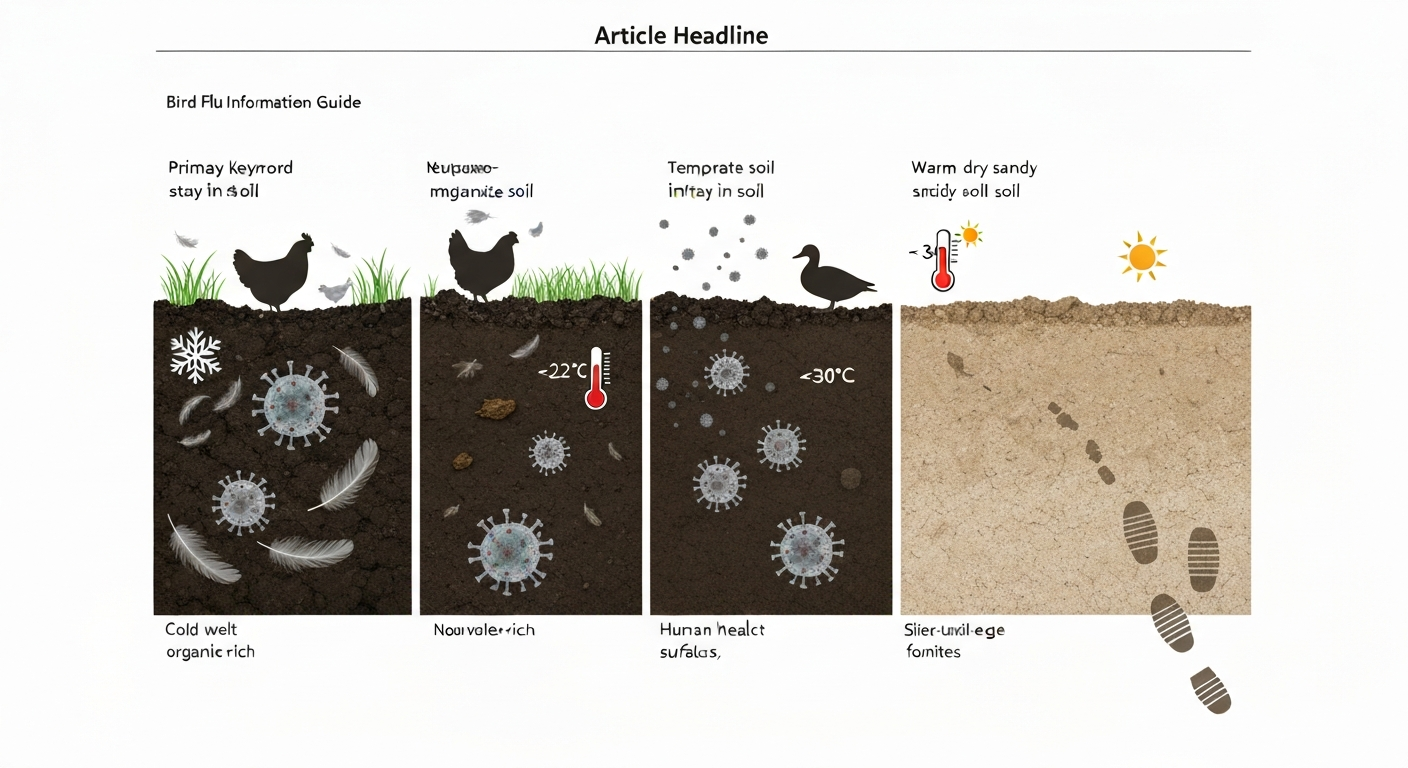
How Long Does Bird Flu Stay in Soil: Survival, Risks & Cleanup
How long does bird flu stay in soil, survival ranges, infection risk, and practical biosecurity for poultry owners.
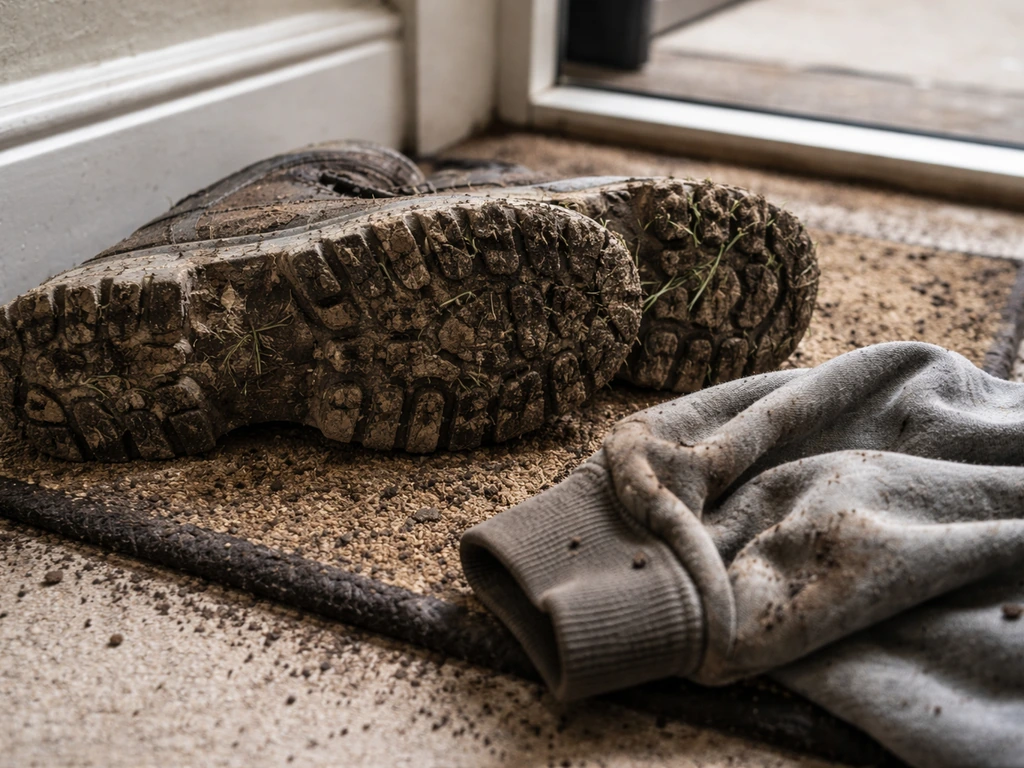
How Long Does Bird Flu Live on Shoes and Clothes?
Estimate how long bird flu can stay infectious on shoes and fabric, and practical cleaning steps to reduce risk.
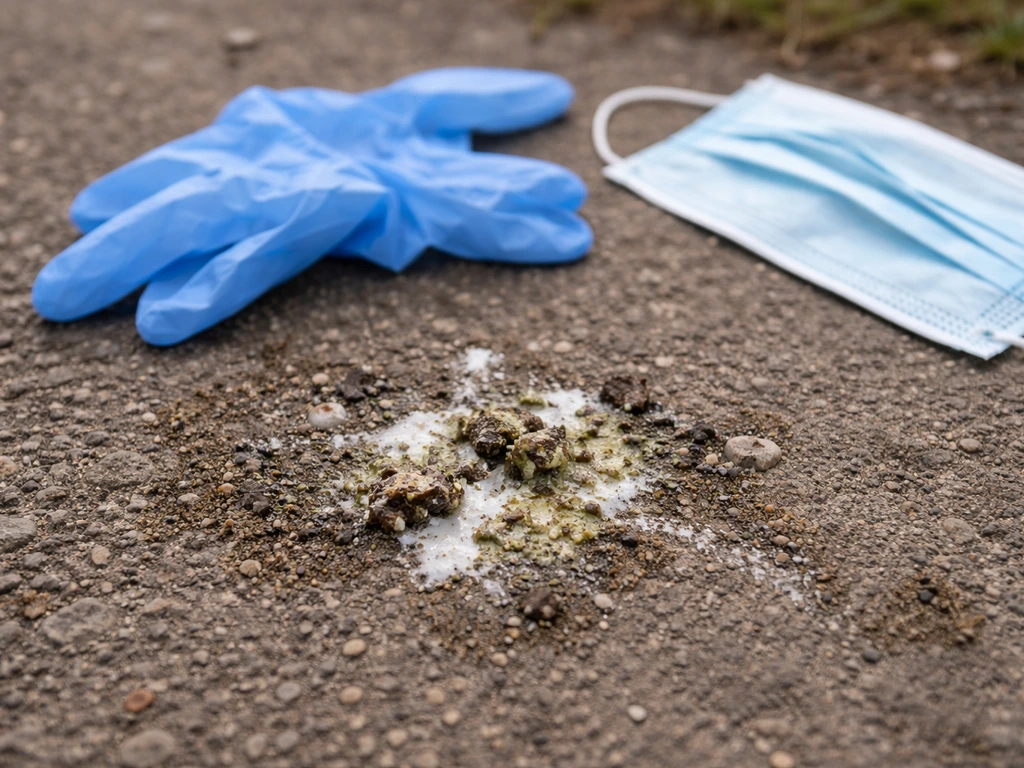
How Long Does Bird Flu Live in Bird Poop?
How long bird flu can remain infectious in bird poop, what affects survival, and safe cleanup and exposure steps.