
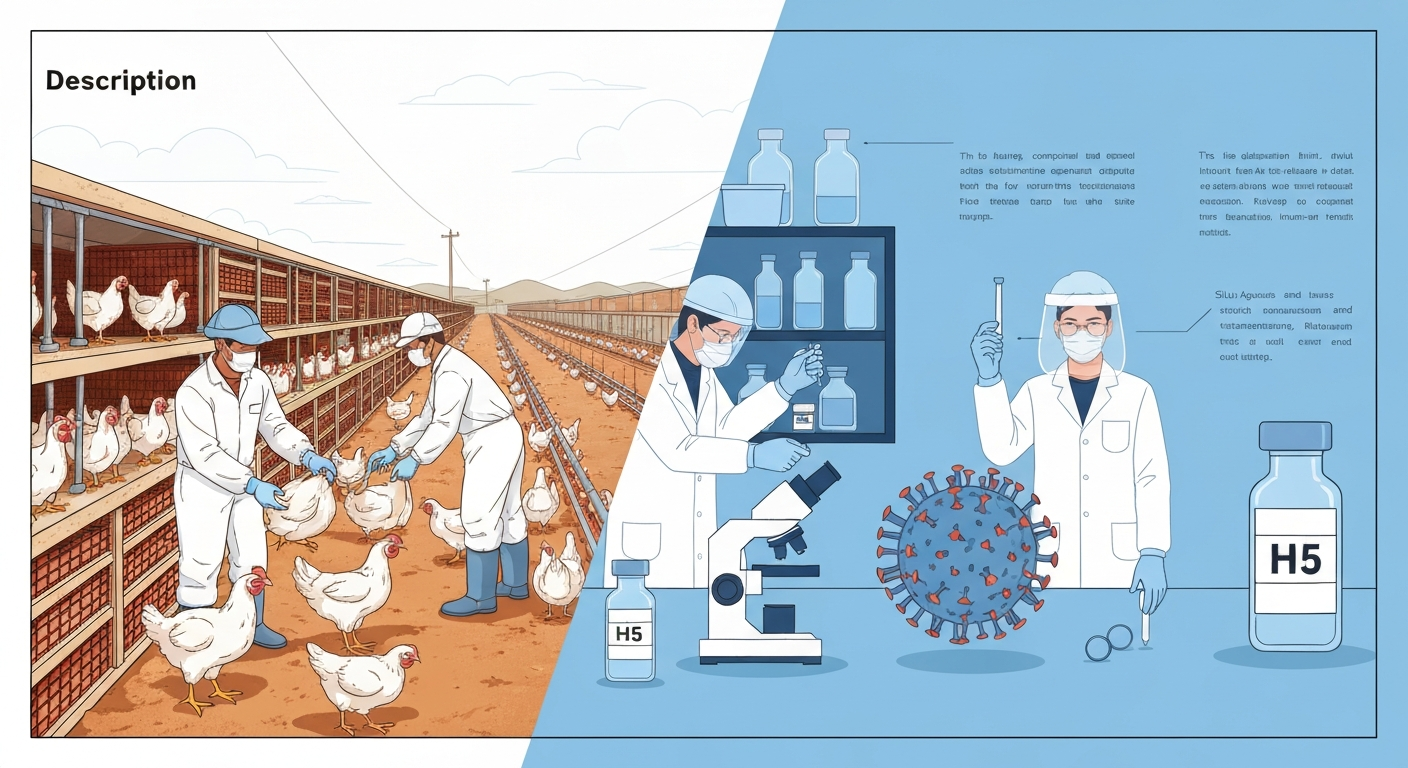
The first bird flu vaccine used at scale was an inactivated H5N2 vaccine deployed in Mexican poultry in 1995. For humans, the story starts later: the first H5N1 human infections appeared in Hong Kong in 1997, and by the mid-2000s, candidate human H5N1 vaccines were in clinical trials. As of 2026, no bird flu vaccine is routinely recommended for the general public, but stockpiled and trial-stage vaccines exist, mRNA candidates have completed Phase 1/2 human trials, and poultry vaccination programs run in multiple countries.
When Was the Bird Flu Vaccine Made? Timeline & Facts for Birds and People

Maya Chen
29 Jul 2026
The quick story: birds first, humans later
Bird flu vaccines for poultry came first because the disease is an agricultural emergency, not just a public health one. Mexico faced a devastating H5N2 outbreak in commercial poultry in 1994 to 1995, and authorities responded with an inactivated oil-emulsion H5N2 vaccine (seed strain A/chicken/Mexico/CPA-232/94). That campaign, combined with culling, helped eradicate the highly pathogenic strain by 1995 to 1996. It remains one of the earliest documented large-scale uses of an avian influenza vaccine in commercial birds.
Human-focused development accelerated after 1997, when H5N1 killed 6 of 18 infected people in Hong Kong. That event proved avian influenza could cross directly into humans and kill at an alarming rate. WHO and national labs immediately began producing candidate vaccine viruses (CVVs) for H5 strains. By the mid-2000s, whole-virus and adjuvanted split-virion H5N1 vaccines derived from the A/Vietnam/1194/2004 lineage were entering human clinical trials. The blank" rel="noopener noreferrer">A/Vietnam/1194/2004‑derived reassortant NIBRG‑14 CVV (a reverse‑genetics seed on a PR8 backbone) was prepared as the antigen for the earliest clinical trials of H5N1 whole‑virus and split/subunit human vaccines. Those trials, published from 2006 onward, laid the groundwork for the stockpiled and platform vaccines in existence today.
Key milestones at a glance
| Year | Milestone | Strain / Platform |
|---|---|---|
| 1994–1995 | H5N2 HPAI outbreak in Mexican poultry; inactivated H5N2 vaccine deployed at scale | H5N2 (A/chicken/Mexico/CPA-232/94) |
| 1995–1996 | HPAI H5N2 eradicated in Mexico; recombinant vectored vaccines later added to program (from 1998) | Inactivated + recombinant vector |
| 1997 | First human H5N1 deaths in Hong Kong; WHO begins CVV production for H5 | H5N1 (A/Goose/Guangdong/1/1996 lineage) |
| 2000 | Targeted poultry H7N1 vaccination in Italy following HPAI outbreak | H7N1 |
| 2003–2006 | H5N1 epizootics spread across Asia; routine poultry vaccination expands in Vietnam, China, and Indonesia | H5N1 (Clade 2.3 and others) |
| 2005–2006 | First human clinical trials of H5N1 candidate vaccines using NIBRG-14 (A/Vietnam/1194/2004) reverse-genetics seed | H5N1 inactivated (whole-virus / split) |
| 2006–2008 | NIH VRC DNA-H5 human trials (VRC-304/305); alternative platforms explored | H5 DNA vaccine |
| 2008 | Sinovac's inactivated H5N1 vaccine licensed in China — one of the first approved human avian flu vaccines | H5N1 inactivated |
| 2013 | Novel H7N9 emerges in China (March); CVVs and candidate vaccines enter trials by 2013–2014 | H7N9 (A/Anhui/1/2013) |
| 2014–2016 | H7N9 Phase 1/2 trials reported; live-attenuated, recombinant HA, VLP platforms tested | H7N9 multiple platforms |
| 2023–2024 | mRNA-1018 Phase 1/2 trial (H5N8, H5N1-sequence, H7N9 candidates) completes enrollment; dose-response immunogenicity confirmed | H5/H7 mRNA (Moderna platform) |
Why the virus being RNA matters so much for vaccine design
Avian influenza viruses are RNA viruses, specifically enveloped, negative-sense, single-stranded RNA viruses in the family Orthomyxoviridae, with a genome split across 8 separate segments. If you are curious whether bird flu is RNA or DNA, the answer is definitively RNA. That distinction is not just academic: RNA viruses lack the proofreading enzymes that DNA replication has, so mutations accumulate faster. More importantly, those 8 segments can be swapped between two different influenza viruses infecting the same cell, a process called reassortment. This is how pandemic strains emerge, and it is why a vaccine made against one H5N1 clade may offer partial or no protection against a newly reassorted one.
For vaccine developers, this RNA instability creates a moving target. The hemagglutinin (HA) protein on the virus surface is the main vaccine antigen, but HA mutates constantly under immune pressure. That is why WHO's Global Influenza Surveillance and Response System (GISRS) monitors circulating strains year-round and updates candidate vaccine viruses when significant genetic drift is detected. It is the same challenge, just higher stakes, as the annual reformulation problem faced with seasonal flu vaccines.
The four main types of bird flu vaccines
Whether you are talking about poultry vaccines or candidate human vaccines, the technologies fall into four broad categories. Each has trade-offs in terms of speed of production, cross-protection, and regulatory history.
Inactivated (killed-virus) vaccines
These are the oldest and most widely used type. The virus is grown in eggs or cell culture, chemically killed, and formulated in an oil emulsion (for poultry) or as a split/subunit preparation (for humans). Mexico's 1995 H5N2 poultry vaccine was inactivated, as were the first H5N1 human candidate vaccines tested in 2006. Inactivated vaccines are well understood regulatorily, but they require large volumes of eggs or bioreactors to manufacture, take months to scale up, and often need an immune-boosting adjuvant (like AS03 or MF59) to generate strong responses against avian strains, which are antigenically distant from human-adapted influenza.
Recombinant vectored vaccines
These insert the gene for avian influenza's HA protein into a harmless carrier virus, such as fowlpox virus or herpesvirus of turkeys (HVT). When birds are vaccinated, their immune systems respond to the HA antigen delivered by the vector. Mexico began using recombinant vectored vaccines alongside inactivated ones from 1998 onward. They offer a practical advantage in poultry: some HVT-vectored products can be given in the hatchery and provide long-lasting immunity with a single dose.
Subunit and virus-like particle (VLP) vaccines
Subunit vaccines use only the purified HA protein, with no live or killed virus at all. VLPs are hollow shells that mimic the influenza virus structure but contain no genetic material. Novavax has developed VLP candidates for H5 and H7 strains. Both approaches can be produced without handling live dangerous virus, which is a biosafety advantage, but they typically still need adjuvants to be sufficiently immunogenic, especially against antigenically unfamiliar avian strains.
mRNA vaccines: are bird flu vaccines mRNA?
Some are, at least in clinical trials. Is the bird flu vaccine mRNA? Short answer: some candidate bird flu vaccines tested in humans are mRNA-based, but no mRNA bird flu vaccine is yet licensed for routine use as of mid-2026. mRNA influenza vaccine research started in earnest in the early 2010s, and a large Phase 1/2 trial of Moderna's mRNA-1018 platform tested H5N8, H5N1-sequence (H5-only-CG), H7N9, and H7-only candidates in participants enrolled between July 2023 and July 2024. The trial confirmed dose-dependent immunogenicity and acceptable safety. No mRNA bird flu vaccine is yet broadly licensed for routine use as of mid-2026, but these candidates have now cleared a major human-trial hurdle. The appeal of mRNA is speed: once the HA sequence is known, a new mRNA construct can be designed and manufactured in weeks rather than months.
Who makes these vaccines and what role does WHO play
The manufacturers and developers active in this space span the full range from legacy egg-based producers to biotechnology firms. Key players include GSK (adjuvanted H5N1 candidates using AS03), Sanofi Pasteur, Seqirus (formerly Novartis Vaccines), Sinovac (whose inactivated H5N1 vaccine was licensed in China in 2008, making it one of the first approved human avian influenza vaccines anywhere), Novavax (VLP platforms for H5 and H7), and Moderna and Pfizer/BioNTech advancing mRNA influenza candidates through trials.
WHO's role is central but often invisible to the public. For more on WHO's coordination of candidate vaccine viruses and guidance, see WHO materials on who and bird flu vaccine. Through the GISRS network, WHO coordinates the selection and production of candidate vaccine viruses, which are the standardized seed strains that manufacturers actually use to make vaccines. For dangerous avian strains, CVVs are typically made using reverse genetics on a safe backbone (the classic PR8 backbone), so that labs and factories can work with them without needing high-biosafety-level containment. WHO also commissions potency reagents so that different manufacturers can measure their vaccine doses on a consistent scale. Biannual zoonotic influenza consultations review circulating strains and update the CVV list when genetic drift warrants a change. This coordination infrastructure is what allows multiple manufacturers worldwide to work in parallel during a potential pandemic.
Several governments, including the United States and EU member states, also maintain strategic stockpiles of pre-pandemic H5N1 vaccines (primarily GSK's and Sanofi's adjuvanted inactivated candidates). These stockpiles would not be a perfect match for every emerging strain, but they are intended to provide partial protection while strain-matched vaccines are produced.
How effective are bird flu vaccines, and what limits them
Poultry vaccines, when matched to the circulating strain, are effective at reducing disease and death in flocks, and can reduce viral shedding enough to slow spread. However, they do not always prevent infection entirely, which matters for surveillance because vaccinated birds can still carry and transmit virus without appearing sick, a situation sometimes called the DIVA problem (Differentiating Infected from Vaccinated Animals).
For candidate human vaccines, the picture is more complicated. H5N1 is antigenically distant from the seasonal flu strains humans have been exposed to throughout their lives, meaning people essentially have no pre-existing immunity to it. Two doses of an adjuvanted, inactivated H5N1 vaccine typically generate neutralizing antibody responses in the majority of recipients, but the titers achieved are lower than those seen with seasonal flu vaccines, and adjuvants like AS03 and MF59 are needed to close that gap. The main factors limiting effectiveness are:
- Strain match: H5 and H7 viruses drift and reassort constantly. A CVV prepared for one clade may cross-protect against related clades but fail against antigenically distinct ones.
- Adjuvant use: Without adjuvants, two full doses of inactivated H5N1 vaccine generate weak immune responses in most people. Adjuvanted formulations allow dose-sparing (more doses from the same antigen supply) and improve seroconversion rates.
- Dosing schedule: Most human H5 candidate vaccines require a prime-boost schedule (two doses several weeks apart), unlike seasonal flu which is typically one dose in adults. This doubles the production and logistics burden.
- Host factors: Age, prior influenza exposure, and immunocompromising conditions all influence response magnitude, as they do with seasonal vaccines.
- Manufacturing lead time: Even an effective vaccine does not help if it cannot be produced in sufficient quantities before a pandemic wave peaks.
Who can get a bird flu vaccine today, and how
For poultry owners and the agriculture sector
Commercial and backyard poultry vaccination against avian influenza is regulated at the national and regional level, and rules vary significantly by country. In the United States, for example, poultry vaccination for H5 avian influenza is not currently a standard routine practice for commercial flocks (control relies primarily on biosecurity and stamping-out), though USDA has licensed and stockpiled poultry vaccines and their use is evaluated during outbreaks. In contrast, countries like China, Vietnam, Egypt, and Indonesia have run sustained routine vaccination programs for years. Poultry owners should contact their national or state/provincial veterinary authority or agricultural extension service for current approved vaccines and protocols, as using the wrong vaccine or incorrect strain can create problems for trade and surveillance.
For people: who has access right now
There is no bird flu vaccine recommended or available for the general public as of mid-2026. Access to candidate human vaccines falls into a few categories. First, government stockpiles exist in the US, UK, and several EU countries, but these are held for emergency deployment and are not available through pharmacies or routine healthcare. Second, healthcare workers or laboratory personnel with occupational exposure to H5N1 or H7N9 may be eligible for vaccination under specific national occupational health programs, particularly during active outbreaks. Third, clinical trial participants have received mRNA and other novel candidates through research programs. If you are a poultry worker, veterinarian, or public health responder concerned about your risk, the most useful step is to contact your occupational health provider or your national public health authority (CDC in the US, UKHSA in the UK, ECDC in Europe) for current guidance, since recommendations can change quickly during active outbreaks. For step-by-step guidance on how to get bird flu vaccine, consult the resource titled "how to get bird flu vaccine" (071842a1-eed6-4f87-b5f4-c770bed076d2).
How long vaccine development takes, and why modern platforms change the math
Traditional influenza vaccine development using egg-based manufacturing follows a well-worn but slow path. Here is roughly how it unfolds with a new avian strain.
- Virus identification and characterization: Days to weeks. Scientists confirm the strain, subtype, and key genetic features.
- Candidate vaccine virus (CVV) generation: Weeks to a few months. WHO and partner labs use reverse genetics to create a safe seed strain on the PR8 backbone, then distribute it to manufacturers.
- Antigen production and scale-up: Months. Manufacturers grow virus in eggs or cell bioreactors, purify the HA antigen, and formulate the vaccine. Egg-based production alone typically requires 6 months or more for pandemic-scale volumes.
- Preclinical safety testing: Runs in parallel with production where possible, but still adds time.
- Phase 1 and 2 clinical trials: Months to a year or more for the first human safety and immunogenicity data.
- Regulatory review and authorization: Weeks to months, depending on whether emergency use pathways are triggered.
- Manufacturing at scale and distribution: Months more. Global vaccine supply chains have finite capacity.
In total, a conventional pandemic vaccine cycle from first human case to doses in arms has historically taken 6 to 12 months at best, and that is with full emergency prioritization. For a concise timeline on how long bird flu vaccine development took, see how long did bird flu vaccine take to develop. The COVID-19 pandemic demonstrated that mRNA vaccines can compress early development dramatically. Because mRNA constructs only require the published genetic sequence of the target antigen, manufacturers can design and produce clinical-grade material in weeks. The mRNA-1018 H5/H7 candidates moving through Phase 1/2 trials in 2023 to 2024 illustrate this: within months of genetic sequences being confirmed, trial material was ready. The bottlenecks that remain for mRNA are regulatory validation at scale, fill-finish manufacturing capacity, and the cold-chain logistics required for mRNA stability, though newer formulations are improving stability at higher temperatures.
Regulatory frameworks have also evolved. The US FDA's accelerated approval pathways and WHO's Emergency Use Listing process can reduce the time between trial completion and authorization when public health need is urgent. Importantly, pre-pandemic CVV stockpiling and potency reagent preparation by WHO and national institutes means that when a new strain emerges, manufacturers are not starting from zero: they have infrastructure, protocols, and sometimes partially matched antigens already in hand.
Where things are headed
The field is moving in several directions at once. mRNA H5 and H7 candidates have now demonstrated human immunogenicity, and development is continuing. Universal influenza vaccine research, targeting conserved regions of the HA stalk or the M2 ion channel protein, aims to produce a vaccine that would not require constant reformulation as strains drift. Recombinant and VLP platforms are maturing, offering manufacturing advantages over egg-based systems. And international coordination through WHO and agreements like the Pandemic Influenza Preparedness Framework are attempting to ensure that when the next pandemic-capable avian strain emerges, low- and middle-income countries are not left behind in vaccine access.
For practical, up-to-date information, WHO's GISRS pages on candidate vaccine viruses and zoonotic influenza, CDC's avian influenza resources, ECDC's risk assessments, and FAO's animal health guidance are the most reliable sources. These are updated as outbreaks evolve, and they are where any genuine change in vaccination recommendations will first appear.
Vaccine types compared: poultry vs. human candidates
| Vaccine type | Used in poultry? | Used in human candidates? | Key advantage | Key limitation |
|---|---|---|---|---|
| Inactivated (whole-virus or split) | Yes (oil-emulsion in poultry) | Yes (main platform in human trials 2006–present) | Well-characterized, established regulatory pathway | Requires adjuvant for humans; months to manufacture at scale |
| Recombinant vectored (fowlpox, HVT) | Yes (widely used in commercial flocks) | Not standard for human use | Single-dose hatchery application possible | Interference from vector immunity in some settings |
| Subunit / VLP | Limited commercial use | Yes (Novavax H5/H7 VLP candidates) | No live virus needed; safer manufacturing | Requires adjuvant; lower inherent immunogenicity |
| mRNA | Not currently in commercial use | Yes (clinical trials 2023–2024; Phase 1/2 completed) | Fastest to design and produce; easily updated | Cold-chain requirements; newer regulatory history than inactivated |
FAQ
Short answer: When was the bird‑flu vaccine first made for birds and when were candidate human 'bird flu' vaccines first developed?
Short answer Poultry: The first large‑scale, documented use of an avian influenza vaccine in commercial poultry was in Mexico in 1995 (an inactivated H5N2 vaccine). After that, vaccines (inactivated and later recombinant types) were adopted episodically in several countries and more widely in parts of Asia after the 2003–2006 H5N1 outbreaks. Humans: Candidate 'bird flu' vaccines for humans were developed and placed into early clinical testing after the 1997 Hong Kong H5N1 event. The first published human trials of H5N1 candidate vaccines appeared in the mid‑2000s (about 2005–2008). Newer platforms including mRNA H5/H7 candidates reached human trials in 2023–2024.
Timeline: key milestones for poultry vaccines and human H5N1/H7N9 candidate vaccines
Concise timeline (high‑level) Poultry vaccines • 1995 — Large‑scale use of inactivated H5N2 vaccine in Mexico (commercial poultry control program). • Late 1990s–2000s — Introduction of recombinant/vector poultry vaccines (e.g., HVT or fowlpox vectors) and wider use in control programs. • 2003–2006 — Wider adoption of vaccination in parts of Asia during HPAI H5N1 epizootics. Human candidate vaccines • 1997 — Human H5N1 infections detected in Hong Kong leading to international preparedness efforts. • Early 2000s — Development of candidate vaccine viruses (CVVs) using reverse genetics to make safe seed strains. • 2005–2008 — First published clinical trials of H5N1 whole‑virus and split/subunit vaccines; adjuvant dose‑sparing studies. • 2013 — Emergence of H7N9 in China; rapid development of CVVs and multiple vaccine candidates entering trials (2013–2015). • 2010s–2020s — Multiple platforms (inactivated, live‑attenuated, recombinant HA, VLP, DNA) tested in humans. • 2023–2024 — mRNA H5/H7 candidate vaccines progressed into advanced phase 1/2 human trials.
Why bird flu viruses change and how that affects vaccine design (RNA virus explanation)
What the virus is and why it matters • Avian influenza viruses are Influenza A viruses: enveloped, negative‑sense, single‑stranded RNA viruses with an eight‑segment genome. This segmented RNA genome allows rapid change through mutation and reassortment (swapping gene segments) which can alter the virus surface proteins (haemagglutinin HA and neuraminidase NA). • Consequence for vaccines: Because HA — the main target of protective antibodies — can change, vaccine effectiveness depends on how well the vaccine's HA matches circulating strains. Mismatches reduce effectiveness and drive the need for updated seeds/CVVs or platform approaches that can be updated quickly.
Plain description of vaccine types and whether bird‑flu vaccines are mRNA
Common vaccine types (plain language) • Inactivated (killed) vaccines: Virus is grown (egg or cell culture), then inactivated and given with or without an adjuvant. Widely used for poultry and used for many human candidate H5/H7 vaccines. • Live‑attenuated vaccines: Weak, live viruses that produce a mild infection to stimulate immunity; used as experimental human candidates and some animal vaccines. • Recombinant/protein/VLP vaccines: Only the HA protein (or particles that look like virus) is produced in cell systems and used as the antigen; examples include VLP and recombinant HA vaccines. • Viral‑vectored vaccines: Another harmless virus is engineered to express influenza HA (used in poultry vectors and experimented with for humans). • mRNA vaccines: Messenger RNA encoding HA is packaged in lipid nanoparticles; cells translate the mRNA to make HA, triggering immunity. Are bird‑flu vaccines mRNA? As of 2023–2024, mRNA H5 and H7 candidate vaccines have entered human clinical trials. Poultry vaccines remain mostly inactivated, recombinant vector, or subunit forms; mRNA vaccines for poultry are not in routine use.
Who makes and supplies these vaccines and what is WHO’s role?
Manufacturers and global coordination • Manufacturers: Major human vaccine manufacturers and developers that have worked on avian influenza candidates include GSK, Sanofi Pasteur, Seqirus (Novartis legacy), Novavax (VLPs), Sinovac (inactivated H5 in China), and mRNA developers (e.g., Moderna, Pfizer/BioNTech) among others. Veterinary vaccine manufacturers produce poultry vaccines regionally and globally. • WHO’s role: The World Health Organization (through GISRS and its Global Influenza Programme) coordinates generation, review and distribution of candidate vaccine viruses (CVVs) and potency reagents used for manufacturing and testing. WHO and national authorities also advise on priorities, maintain lists of available CVVs, and support stockpiling and preparedness. • National regulators and veterinary authorities govern licensing/supply in each country.
How effective are bird‑flu vaccines and what limits their effectiveness?
Effectiveness and limits (concise) • Effectiveness depends on: strain match between vaccine HA and circulating virus; vaccine type (adjuvanted vaccines often give higher and broader responses); dose and number of doses; host species and immune status; and antigenic drift/reassortment of circulating viruses. • For poultry: Vaccination can reduce disease, deaths and viral shedding, but incorrect use (poor match, inadequate coverage) can allow silent infections and complicate surveillance. • For humans: Candidate H5/H7 vaccines have generally shown acceptable safety and can induce protective antibodies, especially with adjuvants or higher antigen doses. Limitations include need for dose‑sparing adjuvants, potential reduced effectiveness against antigenically drifted strains, and limited real‑world effectiveness data until a human‑adapted strain emerges. • Summary: Vaccines are useful tools but work best as part of a wider control package (surveillance, biosecurity, antivirals, public‑health measures).