Bird flu outbreaks in food industries are driven by a combination of viral biology, bird behavior, and the way humans move animals and equipment through complex production chains. The primary trigger in most cases is wild migratory waterfowl introducing the virus onto farms, but once the virus enters a commercial system, contaminated crates, vehicles, shared workers, live-bird markets, and poor biosecurity practices are what turn a single farm event into a regional crisis. Understanding each of those links is the key to preventing them.
What Causes Bird Flu Outbreaks in Food Industries: Causes & Controls

Maya Chen
20 Jul 2026
Why bird flu outbreaks matter to the food industry and the public
Avian influenza is not just an animal-health issue. When an outbreak takes hold in a commercial poultry operation, the consequences ripple outward quickly: flocks are depopulated by the millions, egg and meat supplies tighten, prices climb, export bans are imposed, and workers face occupational health risks. At the same time, consumers start asking whether the chicken on their plate is safe. These are fair questions, and they deserve clear answers rather than reassurance that glosses over the actual mechanics of how outbreaks happen.
Joint assessments by the FAO, WHO, and WOAH through 2025 and 2026 continue to rate the overall public-health risk to the general population as low, but they are equally clear that animal-level transmission and farm outbreaks remain active, widespread, and ongoing. That combination, low human risk but high industry disruption, is what makes this topic worth understanding carefully rather than dismissively.
What bird flu actually is: the virus strains behind outbreaks
Avian influenza viruses are type A influenza viruses classified by two surface proteins: hemagglutinin (H) and neuraminidase (N). The strains that matter most to food industries are highly pathogenic avian influenza (HPAI) viruses, particularly the H5 family. Since 2020, a specific genetic group called clade 2.3.4.4b H5 viruses, circulating as H5N1, H5N6, H5N8, and other H5Nx reassortants, has caused an unprecedented geographic expansion in wild birds and driven repeated, costly outbreaks in poultry worldwide. This clade has reassorted repeatedly with other influenza viruses circulating in wild birds, producing genetically diverse variants that are harder to anticipate and control.
Low pathogenicity avian influenza (LPAI) strains also circulate widely in wild birds and can enter poultry flocks, but they cause milder disease and are less economically devastating unless they mutate toward high pathogenicity after sustained circulation in poultry. The distinction matters for food producers because LPAI infections can go undetected much longer, silently spreading before clinical signs trigger alarm.
Which birds are affected and why it differs so much by species
Wild dabbling and migratory waterfowl, mallards, other duck species, geese, swans, and many shorebirds, are the natural reservoir for most avian influenza viruses. These birds carry the virus, shed it in their feces, and often show few or no symptoms. That asymptomatic shedding is what makes them so effective at spreading the virus silently across continents along migration flyways. Clade 2.3.4.4b H5 viruses have shown an unusual ability to persist and spread in wild bird populations at scale, which is a significant departure from historical patterns and explains why poultry introductions have become so frequent since 2020.
The picture changes dramatically when the virus reaches domestic poultry. Chickens, turkeys, and quail (Galliformes) are highly susceptible to HPAI and typically show rapid, severe disease: respiratory distress, neurological signs, sudden death, and mortality that can reach close to 100 percent of an affected flock within days. Domestic ducks are a more complicated story. Like their wild relatives, domestic ducks and many hybrid strains can be infected with HPAI, shed high quantities of virus in respiratory secretions and feces, and remain only mildly ill or clinically normal. This is one of the most dangerous features of the current outbreak situation: infected ducks moving through the supply chain can look perfectly healthy while shedding enough virus to infect every chicken they come near.
| Bird Category | Typical HPAI Symptoms | Shedding Risk | Role in Outbreaks |
|---|---|---|---|
| Wild waterfowl (mallards, geese, swans) | Usually asymptomatic or mild | High, prolonged fecal shedding | Primary reservoir and introduction route |
| Domestic ducks | Mild or asymptomatic in many strains | High, often undetected | Silent spreaders within supply chains |
| Chickens | Severe: rapid death, high mortality | High before death | Index cases that trigger detection |
| Turkeys | Severe: respiratory, neurological signs | High | Major commercial losses |
| Quail | Severe | Moderate to high | At-risk in mixed or backyard settings |
| Backyard mixed flocks | Variable depending on species mix | Variable | Bridge between wild birds and commercial systems |
Backyard flocks occupy a particular risk position. They are often kept in open or semi-open conditions with potential contact with wild birds, may include a mix of ducks and chickens in close proximity, and are less likely to have the strict biosecurity of a commercial operation. They can act as a bridge between wild bird populations and commercial poultry supply chains, especially when live birds or eggs from backyard holdings enter informal trade.
How bird flu gets into food-production systems in the first place
There are six well-documented routes by which avian influenza enters commercial and small-scale food-production settings. Each has been confirmed in field investigations and genomic studies, so this is not theoretical, these are real, observed pathways.
Wild-bird incursions
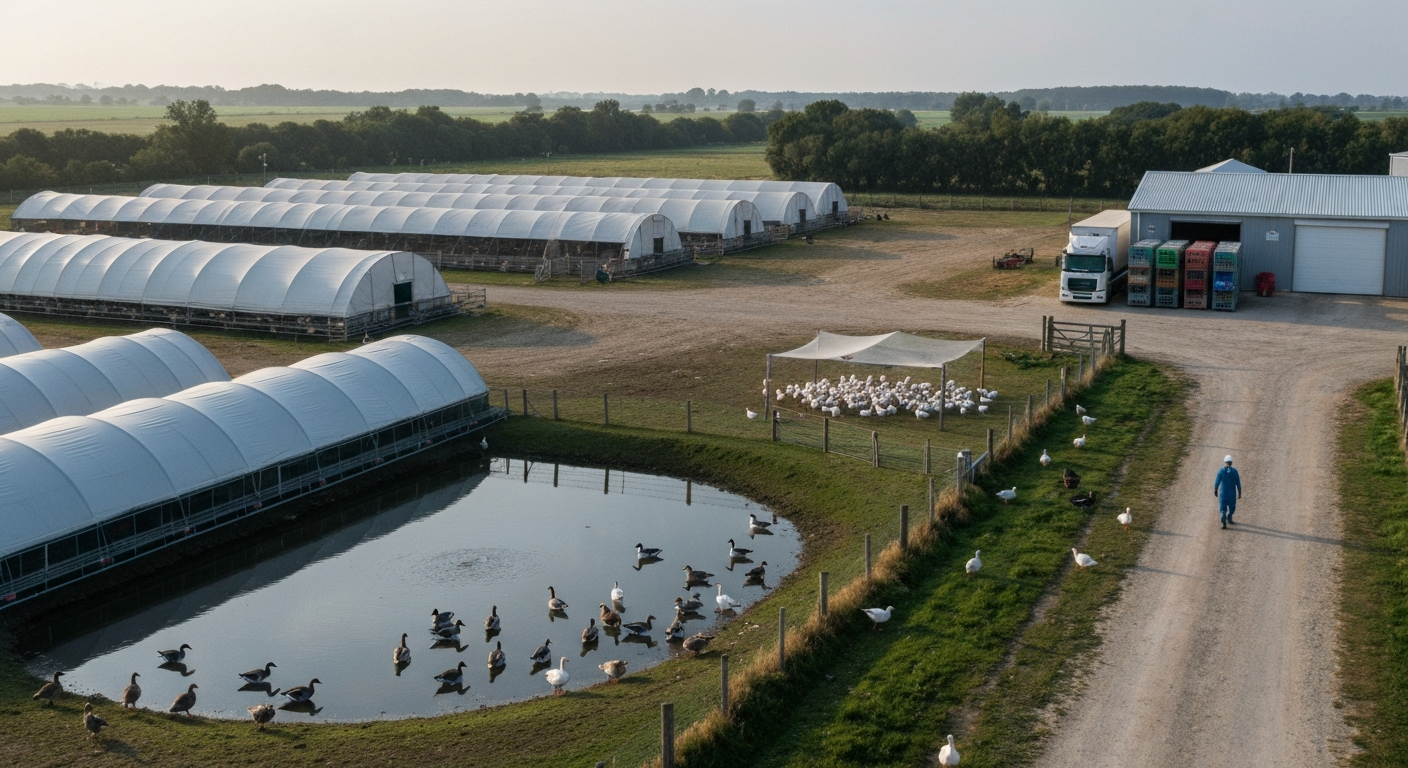
This is by far the most common primary introduction route. Molecular sequencing of outbreak strains in the Netherlands during the 2020–2021 season showed that most individual farm outbreaks were genetically distinct from each other, pointing to multiple independent wild-bird-to-farm introductions rather than a single farm-to-farm chain. Wild waterfowl deposit virus-laden feces near farm ponds, surface water, and areas where free-ranging poultry graze or where contaminated water is used for drinking or cleaning. You do not need direct bird-to-bird contact, contaminated water or mud tracked into a poultry house is enough.
Contaminated equipment and vehicles
During the 2017 H5N8 epizootic in France, field sampling at duck abattoirs detected the AIV genome on transport crates and trucks before cleaning, and in many cases, residual viral RNA was still detected after cleaning. This is a concrete demonstration that crates and vehicles moving between farms and processing plants are credible cross-contamination routes when cleaning and disinfection are inadequate. The same principle applies to any equipment shared between flocks: water lines, feed augers, egg trays, netting, and catching equipment.
Infected birds in transport
Moving live birds between farms, to live-bird markets, or to slaughter facilities creates concentrated exposure opportunities. Birds stressed by transport shed virus at higher rates. If a vehicle carries subclinically infected ducks and then transports chickens without adequate cleaning, the outcome is predictable. This is why several countries require movement permits and testing before live poultry transport during outbreak periods.
Live-bird markets
Live-bird markets are amplification environments. Multiple poultry species from different farms are held in close proximity, often in stacked cages with poor drainage. Environmental sampling studies in China during H7N9 outbreaks consistently found AIV on market stall surfaces, cages, water troughs, and drainage areas. Ecological analyses showed that market closures significantly reduced both market-level viral activity and human infections with H7N9. The market environment allows a virus introduced by one batch of birds to infect subsequent batches and spread into the broader food system through buyers, traders, and unsold birds returned to farms.
Worker movement between farms and facilities
Network analyses of the British poultry industry identified catching teams, workers who move from farm to farm to catch birds for slaughter, as a significant epidemiological link. Workers who service multiple farms in a day or week can carry virus on their clothing, boots, and vehicles between holdings. The same risk applies to veterinarians, feed delivery drivers, equipment repair teams, and contract service workers. Without farm-dedicated footwear and clothing protocols, each of those visits is a potential introduction event.
Feed and waste contamination
Avian influenza viruses survive in feces and litter for days to weeks under cool, moist conditions. Experimental studies confirm that HPAI H5N1 can persist in poultry feces for weeks at low temperatures, and longer still in cold water. Contaminated litter spread as agricultural fertilizer, inadequate carcass disposal, or contaminated surface water entering farms are all plausible and documented exposure routes. Feed that has been stored where wild birds can access it, or delivered via vehicles with contaminated tires, is another entry point often overlooked in biosecurity planning.
Where in the food chain transmission is most likely to occur
Bird flu does not have a single critical control point in the food industry. Risk is distributed across the entire chain from farm to processor, and understanding where the highest-risk moments occur helps explain why comprehensive controls are needed rather than a single intervention.
- Farms: the point of primary introduction via wild birds, contaminated water, shared equipment, and worker movement. High-density housing concentrates susceptible birds, meaning that once virus enters, it spreads rapidly and causes massive losses.
- Transport vehicles and crates: a frequently underestimated link. Contaminated crates returned to farms after a slaughter run, or trucks that have not been properly washed between loads, can redistribute virus across a region within hours. The French H5N8 field data showing residual contamination post-cleaning is a direct warning about the standards required.
- Live-bird markets: the highest amplification risk in supply systems that include them. Multiple species, high throughput, shared equipment, and the practice of returning unsold birds to farms create a feedback loop that sustains and spreads the virus.
- Slaughterhouses and processing plants: aerosolized particles during slaughter, blood and viscera handling, and carcass chilling water are all potential exposure points for workers and for cross-contamination between batches. PCR-positive frozen duck carcasses identified in Germany in 2007 showed that infected birds can move through processing without detection if screening is absent.
- Cold-chain and distribution: while cooking kills avian influenza virus reliably, contaminated frozen products that are mishandled or improperly cooked remain a theoretical risk. Regulatory batch controls and traceability systems are the backstop at this stage.
Risk factors that make outbreaks more likely or more severe
Not every farm or facility faces equal risk. A 2025 study published in Communications Biology confirmed that poultry farm density and proximity to other farms are significant drivers of HPAI spread, independent of wild-bird pressure. The more tightly farms are packed into a geographic area, the faster a single introduction can cascade into a regional emergency. Beyond density, several other factors consistently appear in outbreak investigations:
- Poor or absent biosecurity infrastructure: open housing that allows wild bird access, lack of controlled entry points, absence of footbaths or hygiene stations.
- High-density housing: large numbers of genetically uniform birds in confined spaces mean rapid amplification once the virus enters. Industrial-scale operations can lose hundreds of thousands of birds from a single introduction.
- International trade and live animal movement: movement of live birds, hatching eggs, or poultry products across borders and long distances creates pathways for novel strains to enter naive poultry populations.
- Inadequate cleaning and disinfection: demonstrated clearly in the French transport-crate sampling data. Cleaning that removes visible contamination but does not reach virucidal disinfection standards leaves residual infectious material.
- Staff practices: workers who do not change footwear between farm areas, share equipment without sanitizing, or move between multiple holdings without decontamination procedures are a direct transmission risk.
- Mixed-species holdings: keeping ducks and chickens together, or sourcing birds from multiple origins without quarantine, dramatically increases the probability of undetected introduction.
What this means for chicken meat, eggs, and consumer safety
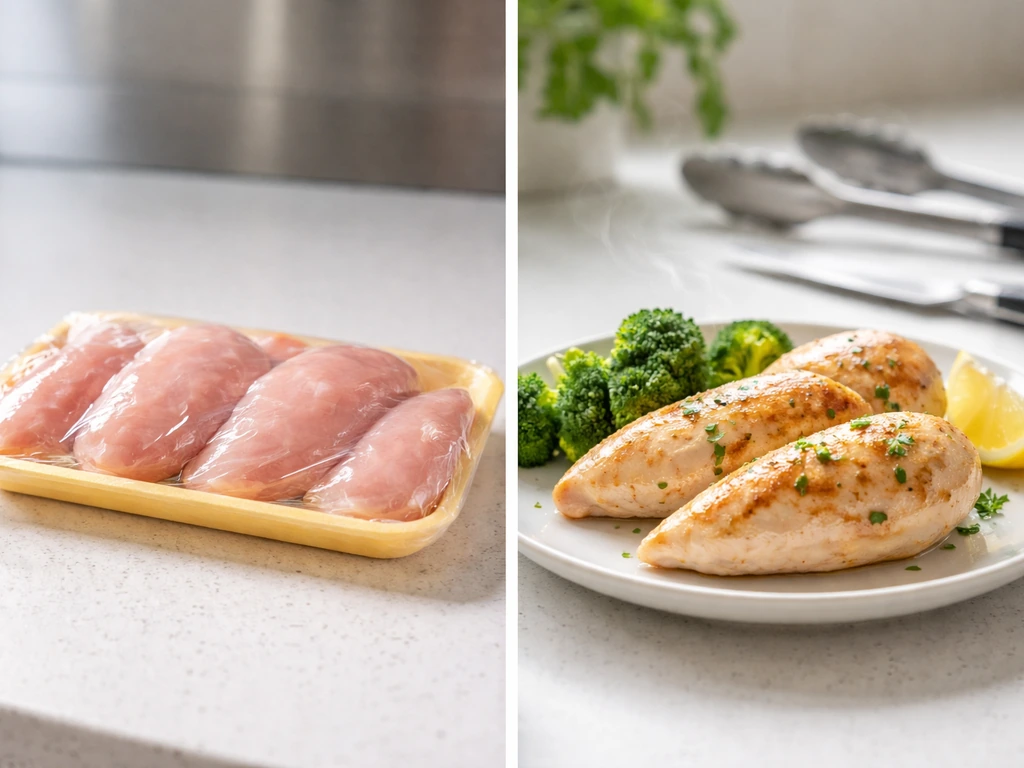
For most consumers in countries with functioning food safety systems, the practical risk from commercially produced chicken or eggs is very low. Many consumers ask "is it safe to eat chicken with bird flu", official guidance is that properly cooked poultry is safe, while the real risks come from handling raw poultry or contact with infected live birds. Avian influenza virus is heat-sensitive and is destroyed by normal cooking temperatures: 70 degrees Celsius (158 degrees Fahrenheit) at the center of the meat or egg is sufficient to inactivate the virus. The risks to consumers arise primarily from handling raw poultry in contaminated environments, consuming undercooked poultry, or direct contact with infected live birds, not from eating properly cooked food.
The question of whether chicken meat or eggs from outbreak-affected regions are safe depends heavily on the regulatory controls in place. In most regulated markets, birds from farms under confirmed outbreak status are not permitted to enter the food chain. Mandatory culling, movement bans, and traceability systems are designed to keep infected birds out of slaughter facilities. That said, no system is perfect, and the 2007 German case of PCR-positive frozen duck carcasses is a reminder that surveillance at slaughter and at cold-chain stages matters. The safe practical advice for consumers remains consistent: cook poultry thoroughly, use separate cutting boards for raw meat, wash hands after handling raw poultry, and follow guidance from national food safety authorities during active outbreak periods.
Eggs from commercially regulated flocks in unaffected zones are considered safe when properly cooked. Runny or raw eggs from backyard flocks in areas with active HPAI detections carry a higher theoretical risk and should be cooked fully. Separate articles on whether chicken meat is affected by bird flu, and whether it is safe to eat chicken with bird flu, address these consumer questions in more detail.
Prevention measures that actually work: what farms and processors do
Evidence from EU, UK, and French outbreak responses confirms that a layered combination of physical biosecurity, operational controls, movement restrictions, and worker practices can substantially reduce outbreak frequency and spread. No single measure is sufficient on its own.
Biosecurity protocols and controlled access
Effective farm biosecurity starts with physical barriers: netting or covered housing to prevent wild bird access, defined entry points with footbaths and hand hygiene stations, and separate clothing and footwear for poultry areas. Farms in high-risk geographic zones or during high-risk migratory seasons are often required by national authorities to house birds indoors entirely, removing the wild-bird contact route. These housing orders have demonstrably reduced primary introductions in EU countries during peak risk periods.
Cleaning, disinfection, and equipment management
The French transport-crate data sets a clear standard: cleaning that removes visible organic material is necessary but not sufficient. Full disinfection with approved virucidal agents, applied at correct contact times and concentrations, is required to inactivate AIV on surfaces, crates, and vehicles. Rest periods between uses allow residual contamination to degrade. Farms should maintain dedicated equipment per house where possible and establish wash-down stations for vehicles before entry.
Feed, water, and waste management
Feed storage in enclosed areas inaccessible to wild birds reduces contamination risk. Surface water from ponds or channels should not be used as drinking water for poultry during high-risk periods without treatment. Manure, litter, and carcasses from affected premises must be disposed of according to approved protocols, usually heat treatment, composting under controlled conditions, or direct landfill in sealed containers, to prevent environmental persistence and further spread.
Movement controls, traceability, and surveillance
Movement restrictions within defined protection and surveillance zones around confirmed outbreaks are a standard tool that modeling and real-world data consistently support. Combined with traceability systems that allow authorities to rapidly identify which farms supplied birds to which markets, slaughterhouses, or retailers, these controls allow targeted rather than blanket responses. Surveillance using oropharyngeal and cloacal swabs from live birds, and environmental swabs from cages, crates, and drain water in markets, allows early detection before clinical signs appear, critical for catching LPAI and early HPAI before mortality starts alerting producers.
Worker hygiene, PPE, and occupational health monitoring
CDC, USDA APHIS, and WHO guidance is aligned on what workers in poultry facilities need during outbreak-risk periods: respirators (at minimum N95/FFP2 class), eye protection, disposable coveralls, gloves, and farm-dedicated footwear. Workers who have had direct exposure to confirmed HPAI birds should be monitored for influenza symptoms for at least 10 days and tested if symptoms develop. Antiviral prophylaxis with oseltamivir may be considered for highly exposed workers according to national protocols. Training matters enormously: workers who understand why these measures exist are more likely to follow them consistently than those who simply receive a list of rules.
A note for backyard flock owners and bird feeders
If you keep backyard chickens, ducks, or mixed flocks, the same principles apply at smaller scale. Minimizing contact between your birds and wild waterfowl, especially during peak migration seasons or when HPAI is detected in your region, is the most effective prevention step. If you notice sudden unexplained deaths or severe illness in your flock, contact your local animal health authority immediately, do not wait. Reporting suspicious bird illness quickly is one of the most important things an individual owner can do to protect both their birds and the wider food system. Questions about wild bird feeding and whether to stop or adapt your feeding practices during active outbreaks are worth thinking through carefully, particularly if you also keep domestic poultry nearby. For practical guidance, consider bird feeder alternatives to reduce avian flu risk in your area. Should I stop feeding birds because of bird flu is a common question; guidance on when to pause or modify wild-bird feeding to reduce spillover risk can help backyard owners protect nearby poultry.
The overall picture here is one where the risks are real and ongoing, but also manageable with the right measures applied consistently. The viruses causing current global outbreaks are not going away soon, clade 2.3.4.4b H5 viruses are now entrenched in wild bird populations on multiple continents. That means farms, processors, regulators, workers, and consumers all have a continuing role to play, not just during declared emergencies but as part of routine practice.
FAQ
What biological agents cause bird flu outbreaks in food industries?
Bird flu (avian influenza, AIV) outbreaks are caused by influenza A viruses. Highly pathogenic avian influenza (HPAI) H5 viruses—especially clade 2.3.4.4b H5Nx (H5N1 and related reassortants)—have driven most recent large poultry outbreaks worldwide. Low‑pathogenic AIVs (LPAI) can also infect poultry and sometimes mutate or reassort into HPAI. (Sources: FAO/WHO/WOAH joint assessment, Journal of Virology review) https://www.who.int/publications/m/item/updated-joint-fao-who-woah-public-health-assessment-of-recent-high-pathogenicity-avian-influenza-a(h5)-virus-events-in-animals-and-people https://journals.asm.org/doi/10.1128/jvi.00424-25
How do these viruses typically get introduced into poultry farms and food chains?
Common introduction routes are: 1) wild‑bird incursions (migratory waterfowl shedding virus into ponds/fields); 2) contaminated equipment, crates and vehicles (fomites); 3) infected birds moved in transport or via live‑bird markets; 4) worker movement between farms and shared staff/contractors; 5) contaminated feed, water or waste and poor disposal of carcasses/litter. Environmental persistence in cool/moist conditions (feces, water, litter) makes indirect introductions likely. (Sources: FAO EMPRES, WOAH, field studies) https://www.fao.org/animal-health/situation-updates/global-aiv-with-zoonotic-potential/en https://www.woah.org/en/disease/avian-influenza/
Which bird species are most commonly involved in introductions and outbreaks?
Wild waterfowl (dabbling ducks, geese, swans) are the natural reservoirs and often introduce AIVs while showing few signs. Domestic ducks can shed virus without severe signs, facilitating silent spread. Galliformes (chickens, turkeys, quail) are highly susceptible and often show severe disease when infected with HPAI. Mixed flocks or multi‑species value chains increase transmission risk. (Sources: FAO, systematic reviews) https://pmc.ncbi.nlm.nih.gov/articles/PMC11083745/ https://pmc.ncbi.nlm.nih.gov/articles/PMC6784017/
What industry sites and practices are common transmission points?
Critical transmission points in the poultry value chain include: on‑farm (open housing, access to wild birds, contaminated litter), catching and transport (crates, vehicles), live‑bird markets (amplification and environmental contamination), slaughterhouses/abattoirs (contaminated surfaces, chilled/frozen carcasses), and processing plants if biosecurity or inspection controls fail. Shared equipment, inadequate cleaning/disinfection and worker movement are frequent drivers. (Sources: outbreak investigations, field studies) https://pmc.ncbi.nlm.nih.gov/articles/PMC7597542/ https://pmc.ncbi.nlm.nih.gov/articles/PMC2657628/
What risk factors increase likelihood and scale of outbreaks?
Key risk factors: poor on‑farm biosecurity, high bird density and farm proximity, multisite contracting or multi‑farm staff, inadequate cleaning/disinfection of crates/vehicles, live‑bird marketing and frequent bird movement, international trade of birds/products, and environmental factors (cold/wet conditions that preserve virus). Modeling and outbreak analyses link farm density and movement patterns to larger outbreaks. (Sources: WOAH, Communications Biology study) https://www.woah.org/en/disease/avian-influenza/ https://www.nature.com/articles/s42003-025-08687-4
Does bird flu make poultry products (meat, eggs) unsafe to eat?
Properly handled and cooked poultry products are safe. Cooking poultry to an internal temperature of 165°F (74°C) kills influenza A viruses. Commercial processing (inspection, chilling, freezing) reduces risk when carried out under regulations. However, raw handling of infected carcasses or cross‑contamination in kitchens can pose a risk to handlers, so safe food hygiene (handwashing, separate cutting boards, thorough cooking) is essential. Authorities also inspect and withdraw visibly infected flocks or contaminated batches from the market. (Sources: WHO/CDC guidance) https://www.cdc.gov/foodsafety/communication/food-safety-and-avian-influenza.html https://www.who.int/
Next Article
Is Chicken Meat Affected by Bird Flu? Food Safety Guide
Learn if bird flu affects chicken meat, how cooking prevents risk, and safe handling steps to protect you.