
If you're worried about bird flu and wondering whether to pull your feeders down, the honest answer is: temporarily stopping or reducing feeding is the single most effective thing a backyard birder can do right now to lower risk. Bird feeders concentrate birds in one spot, and congregation is exactly what accelerates avian influenza spread.
Bird Feeder Alternatives for Avian Flu Risk Reduction

Maya Chen
10 Jun 2026
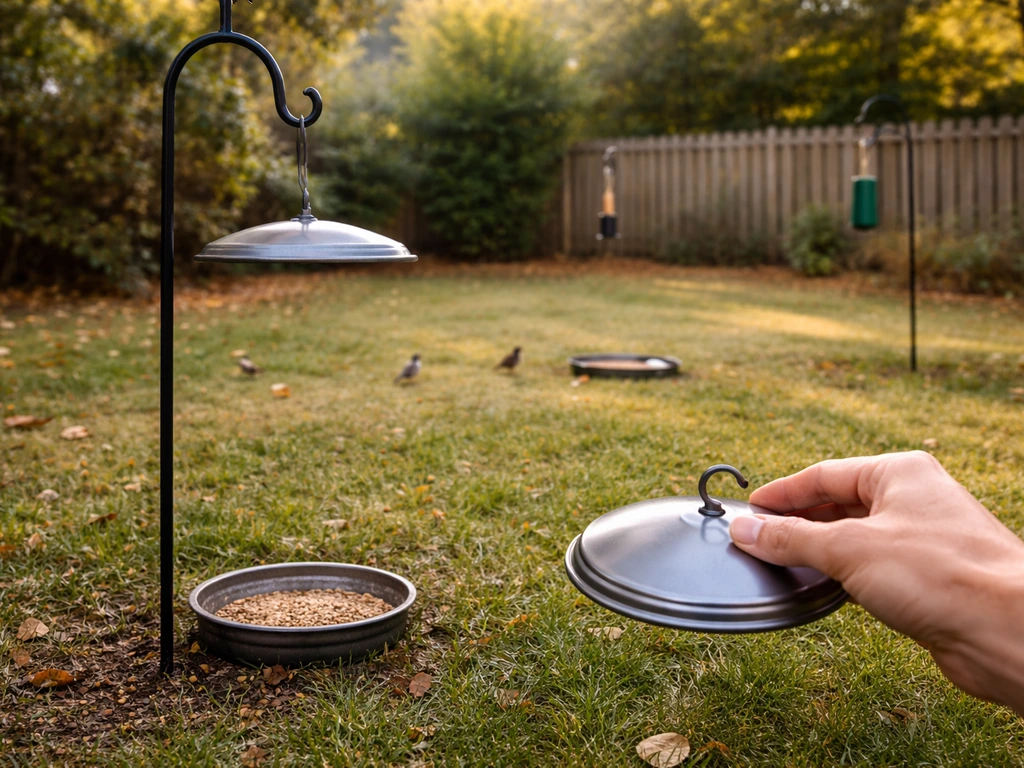
If you keep backyard birds, you might also wonder is chicken meat affected by bird flu, but the practical risk is about handling and sourcing from reliable, regulated supply chains avian influenza spread. That said, you don't have to give up backyard birding entirely. There are practical alternatives and, if you do keep feeding, specific steps that genuinely reduce your exposure and the risk to the birds themselves.
Why bird feeders matter for avian flu risk
Avian influenza spreads primarily through direct bird-to-bird contact and through contact with contaminated environments, which means droppings, secretions, and feathers left on shared surfaces. A busy feeder is essentially a high-traffic communal space where dozens of birds from different flocks land, eat from the same tray, and leave waste behind. USDA APHIS is clear that direct contact between wild and domestic birds is a major transmission driver, and a popular feeder recreates exactly that dynamic.
Here's the good news, and it matters: the U.S. Fish and Wildlife Service notes that the songbirds and finches most attracted to backyard feeders are not the species commonly infected with HPAI H5N1. Waterfowl, shorebirds, and raptors carry the highest risk. So if you live nowhere near a wetland or known waterfowl flyway, your feeder risk is genuinely lower. But during active outbreak periods, even low-risk congregation at feeders can create surface contamination that affects your household, your pets, or any backyard poultry you keep. The precautionary logic still holds.
Bird-feeder alternatives that reduce congregation and contact
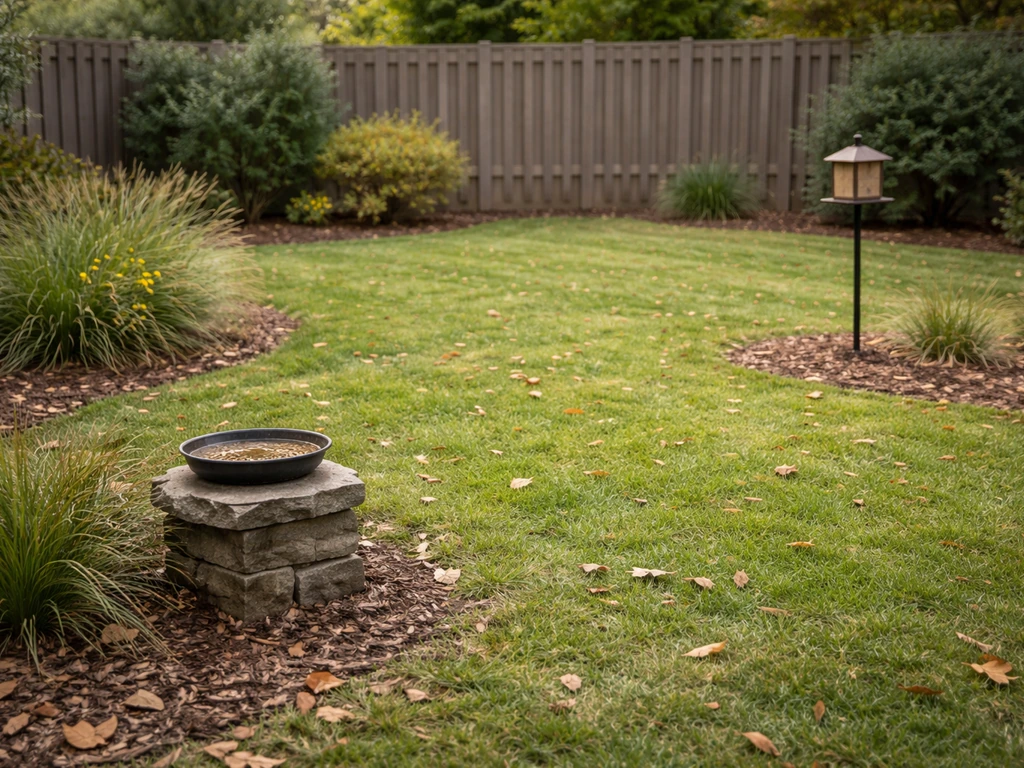
The best alternative to a feeder isn't nothing. It's redesigning your yard so birds still visit but without crowding onto a shared surface. These options actually work:
- Take feeders down temporarily. This is the cleanest solution during a local outbreak. Most songbirds do fine without supplemental feeding, especially in spring and summer when natural food is plentiful. Removing feeders for a few weeks or months is low-cost and immediately effective.
- Switch to native plant landscaping. Plant native berry-producing shrubs (serviceberry, elderberry, holly), seed-bearing wildflowers (coneflower, black-eyed Susan), and insect-supporting trees. Birds forage naturally, spread out across your yard instead of concentrating in one spot, and you don't have shared surfaces to worry about.
- Offer food in very small, single-visit portions. Instead of a large hopper that stays full all day, put out only what a few birds will eat in 30 minutes, then remove it. Less time on the surface means less contamination buildup.
- Replace tray and platform feeders with tube feeders. Tube feeders with individual perches limit how many birds can feed at once, reducing crowding and the buildup of droppings on feeding surfaces.
- Use a ground-feeding area with a hard, cleanable surface. A flat stone or concrete pad (not soil or wood) is easier to disinfect between uses and dries faster, which reduces virus survival.
- Pivot to observation-only birding. Set up a birdbath without food, install a nest box for cavity nesters, or simply spend time watching birds in natural habitat nearby. You get the enjoyment without any feeding-surface risk.
Safer feeding practices if you keep feeding (or while you stop)
If you decide to keep feeders up, some specific choices meaningfully reduce your risk. Placement, feeder type, food type, and your own behavior all factor in.
- Position feeders away from areas where you walk, sit, or let pets roam. Keeping feeder activity in one corner of the yard limits contamination spread.
- Keep feeders well away from any backyard poultry. USDA guidance is explicit: preventing contact between wild birds and your chickens or ducks is critical. Even indirect contact through contaminated footwear tracking droppings is a real pathway.
- Use feeders made of hard, non-porous materials (metal or hard plastic). These are far easier to properly disinfect than wood feeders, which harbor moisture and organic material.
- Avoid foods that attract ground-feeding birds or waterfowl, such as cracked corn scattered on the ground. Stick to tube feeders with sunflower seeds or nyjer, which attract lower-risk songbird species.
- Don't handle feeders, perches, or spilled seed without washing your hands immediately afterward. This goes double if you have any cuts or broken skin on your hands.
- Remove any standing water from feeder trays. Water is a survival medium for influenza viruses. Empty and rinse water-retaining feeder parts daily.
- If you handle a feeder that has visible droppings or looks contaminated, wear disposable gloves and avoid touching your face until you've washed your hands thoroughly with soap and water.
Sanitation and hygiene for backyard birding
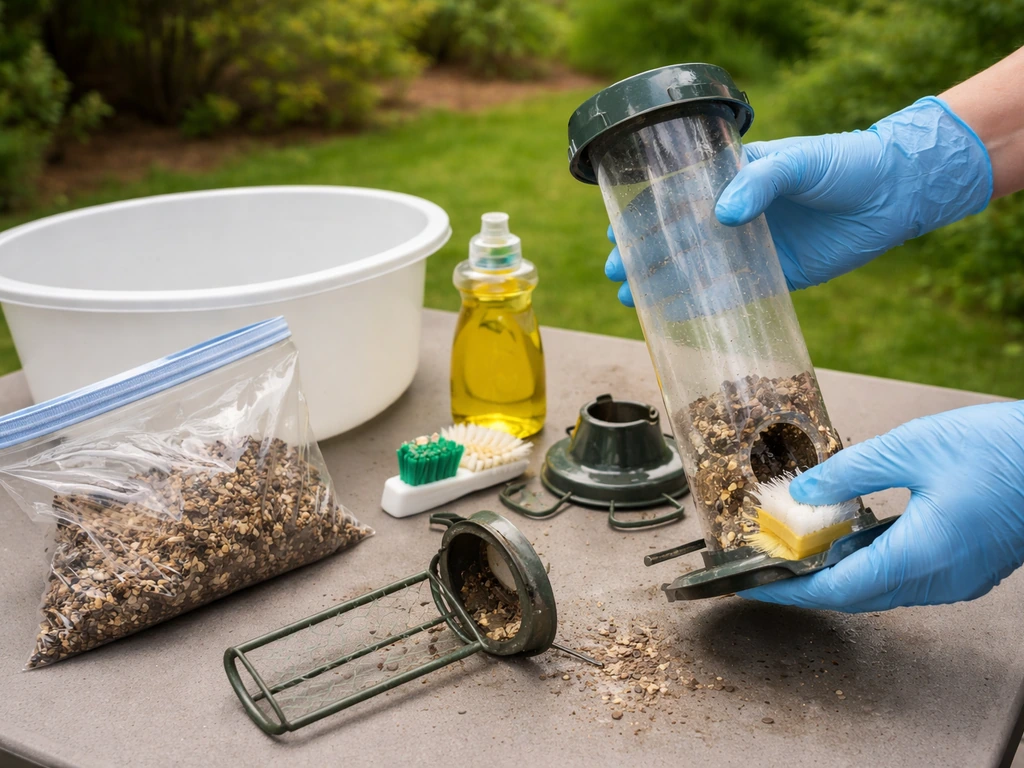
Cleaning matters more than most people realize. Feeders that look clean can still carry viral particles in dried droppings or seed husks. The Iowa DNR recommends cleaning feeders roughly once a month as a baseline, but during an active outbreak period, more frequent cleaning (every one to two weeks) is reasonable. EPA also maintains a list of antimicrobial products registered for disinfection use against avian influenza on poultry farms and other facilities, including products labeled to inactivate avian influenza A viruses on hard, non-porous surfaces cleaning feeders roughly once a month. Here's the process that matches CDC and EPA guidance:
- Empty the feeder completely. Dispose of old seed, husks, and droppings in a sealed bag in the trash. Don't compost bird waste during an outbreak.
- Rinse the feeder with water to remove loose debris before applying any disinfectant.
- Disinfect with an EPA-registered product. EPA maintains 'List M,' a registry of antimicrobial products proven effective against avian influenza viruses on hard, non-porous surfaces. A 10% bleach solution (roughly 1 part household bleach to 9 parts water) is a commonly used option, but follow product label directions for contact time. Don't just wipe and move on: the surface needs to stay wet with the disinfectant for the required dwell time.
- Rinse thoroughly with clean water after using bleach. Residue can harm birds.
- Allow the feeder to dry completely before refilling. Moisture promotes bacterial and viral survival.
- Do all of this outdoors. CDC specifically advises cleaning feeders outside to prevent spreading germs into your home.
- Wash your hands thoroughly with soap and water immediately after the whole process, even if you wore gloves.
One thing to avoid: don't use a high-pressure hose or anything that creates aerosols or disperses dried droppings into the air. CDC guidance for people working around bird waste in general warns against stirring up dust and feathers, because this can put aerosolized material into your breathing zone. A gentle rinse and soak approach is better than blasting debris around.
What to do if you see sick or dead birds
Finding a dead or obviously sick bird near your feeder is unsettling, but your response matters. Don't handle the bird with bare hands, and don't let children or pets near it before you've assessed the situation.
The first step is to report it. USDA APHIS has a toll-free number specifically for reporting sick or dead birds: 866-536-7593. Bird-flu outbreaks in food industries are also identified through early alerts and reporting, which helps authorities trace contaminated sources fast reporting sick or dead birds. You can also contact your state wildlife agency or state veterinarian. A single dead songbird isn't usually a red flag on its own, but a cluster of dead birds or dead waterfowl should always be reported. Local and state wildlife authorities can test birds and will tell you whether the situation warrants further precautions in your area.
If you need to move a dead bird (for example, to keep pets away from it), use thick disposable gloves, place the bird in a sealed plastic bag, and wash your hands thoroughly with soap and water afterward. CDC recommends that anyone who has had direct or close contact with a dead or sick bird monitor themselves for symptoms for 10 days after the last exposure. That monitoring window applies to casual contact, not just farm workers.
Avoid the temptation to photograph or approach sick wildlife closely. Observe from a distance, note the location and species if you can, and make the report. That's genuinely the most useful thing you can do.
Human safety: transmission routes, realistic risk, and when to seek care
The CDC's current assessment is that the risk to the general U.S. public from HPAI H5N1 is low. That framing is important: it's based on the actual transmission patterns seen so far, not just reassurance. Human infections have overwhelmingly occurred in people with prolonged, close, unprotected contact with infected birds or heavily contaminated environments, such as workers on affected farms. A typical backyard birder casually watching birds at a feeder represents a different and much lower level of exposure. If you are asking about eating chicken during a bird flu outbreak, the guidance focuses on proper handling and cooking of poultry, not on touching wild birds or feeders is it safe to eat chicken with bird flu.
That said, the WHO identifies exposure to live or dead infected animals and contaminated environments as the primary human risk factor, and that framing does cover backyard settings in areas with active waterfowl detections. The key variables are how close you get, how long the exposure lasts, and whether you're touching contaminated surfaces and then your face. Minimizing those three things is the core of personal protection.
If you've had direct contact with a sick or dead bird, or with a heavily soiled feeder surface, watch yourself carefully for 10 days. The symptom to know about first is eye redness or irritation. CDC data shows that conjunctivitis (eye redness) has been the predominant symptom in recent U.S. H5N1 cases, and it can appear within one to two days of exposure. Other symptoms to watch for include fever, cough, sore throat, shortness of breath, and body aches, though these overlap with common flu.
If you develop any of these symptoms within 10 days of contact with a sick or dead bird, call your doctor or local health department before going in person. Tell them specifically about the bird exposure. This allows clinicians to take proper precautions and request the right tests. Don't wait to see if symptoms resolve on their own, and don't just show up at an urgent care clinic without calling ahead, because the clinical pathway for possible avian flu exposure is different from a routine flu visit.
Checking local guidance and staying current on outbreaks
National guidance gives you the framework, but what's actually happening in your state or county right now matters just as much. HPAI detections are geographically variable, and recommendations from your state wildlife agency or state public health department may be more specific than anything at the federal level. During periods of active waterfowl detection in your region, your state may explicitly advise removing feeders. During quieter periods, they may not.
The best sources to check regularly are your state wildlife agency's website, the USDA APHIS avian influenza outbreak page (which tracks current confirmed premises and affected species), and your state public health department. CDC updates its guidance as the epidemiological picture changes, so what applied six months ago may not reflect the current situation. This is genuinely one of those topics where the guidance evolves, and keeping a browser bookmark for your state wildlife agency takes about 30 seconds and is worth it.
If your area has seen recent waterfowl die-offs, confirmed HPAI in local wild birds, or an affected poultry operation nearby, treat that as your signal to take the more conservative approach: pull feeders, skip water features, and hold off until you get a clear update from local authorities. If you're in a low-detection area with no recent confirmed wild bird cases, standard hygiene and feeder cleaning practices may be sufficient. The CDC also notes that avoiding sources of exposure whenever possible is the best way to prevent H5N1 bird flu infections blank" rel="noopener noreferrer">avoid sources of exposure whenever possible. The key is making that call based on actual local conditions, not just general anxiety, or general dismissal.
FAQ
What are the best bird feeder alternatives to reduce avian flu risk but still support backyard birds?
Swap shared feeders for “dispersion” options like window feeders with no shared tray, tube feeders with individual perches where birds do not cluster at a single landing pad, or small “scatter feeding” in larger areas to reduce crowding. Also consider native shrubs and grasses (natural cover and seed sources) instead of any point-of-use platform that collects droppings.
If I remove feeders temporarily, how long should I wait before putting them back up?
Use your local guidance, because timing should track local detections, not a fixed national calendar. As a practical rule, wait until your state wildlife or public health site says normal backyard feeding is acceptable again, or at minimum until there has been no new nearby HPAI detection or waterfowl die-off for a couple of weeks.
Does bird feeding risk vary depending on the type of birds that visit my yard?
Yes. The highest-risk visitors include waterfowl, shorebirds, and raptors, while many songbirds and finches seen at typical feeders are generally lower concern. If you notice frequent waterfowl or shorebird activity near your yard, treat that as a signal to stop feeding and eliminate water sources that may attract them.
Are platform feeders or tube feeders safer during bird flu outbreaks?
Platform-style feeding is usually higher risk because it encourages multiple birds to crowd onto the same surface and creates heavy surface contamination. Tube feeders can be lower risk if they prevent pooling on one tray area and are cleaned regularly, but the safest approach during active local outbreaks is still removing feeders entirely.
How should I handle feeder cleaning during active outbreaks to avoid spreading contamination?
Wear disposable or dedicated gloves, remove feeders carefully into a sealed garbage bag if possible, and do a gentle soak and rinse rather than blasting or scrubbing dry waste. Clean in an area where you can prevent runoff from reaching storm drains, and wash hands and exposed skin immediately after.
Is it okay to compost bird droppings or used seed from feeders?
Be cautious. Dried droppings and seed husks can carry contamination, so avoid mixing them into household compost where it can be redistributed. If you collect waste, bag it and dispose of it according to local guidance, then disinfect the area where it was stored.
What should I do if I find multiple dead birds near my feeder?
Treat it as an escalation. Report immediately, and do not handle the birds with bare hands. Keep people and pets away from the area, and avoid sweeping or hosing the area because that can spread dried material. After reporting, follow instructions from your state wildlife agency on whether to remove nearby feeders and whether to cordon off the spot.
Can pets get sick from avian flu around feeders?
Pets can be exposed if they contact contaminated droppings, secretions, or dead birds, especially dogs that sniff, lick, or dig. Prevent access to the area, pick up any carcasses only with gloves if you must move them, and thoroughly wash pet-safe bowls and hands after outdoor exposure.
Should I wear a mask or eye protection when cleaning feeders or touching bird waste?
During active outbreaks, consider at least a well-fitting respirator or mask to avoid breathing disturbed dust, and use eye protection if you expect splashes while rinsing. The key aim is reducing inhalation and face-touching, especially when waste looks dried and dusty.
If I accidentally touch a feeder or bird waste, what is the right cleanup step?
Wash hands with soap and water right away, avoid touching your eyes, nose, or mouth until you have cleaned, and change clothing if it became soiled. If you used gloves, remove them carefully without snapping and then wash hands, because contamination can transfer when removing protective gear.
When should I stop feeding birds permanently rather than just temporarily?
If your area repeatedly shows HPAI detections linked to backyard exposures, or you repeatedly find dead birds after resuming feeding, it may be safer to stop altogether and rely on non-contact habitat options like native plants. Also consider switching to feeding methods that do not concentrate birds if you choose to resume later.
Does the 10-day self-monitoring period apply if I only touched the ground near the feeder?
It generally applies to direct or close contact with a sick or dead bird, or with heavily soiled surfaces like a very contaminated feeder surface or bedding. If you only briefly walked near the feeder without touching contamination, the risk is much lower, but if you touched visible waste or cleaned a heavily soiled feeder, the cautious monitoring window is reasonable.
What symptoms should prompt immediate action beyond waiting?
If you develop fever plus prominent respiratory symptoms, or you notice eye redness/irritation soon after exposure, contact a clinician promptly and specifically mention bird contact. Do not rely on “typical cold” assumptions, especially if symptoms appear within one to two days for eye involvement after exposure.
How can I find out if recommendations in my area specifically require removing feeders?
Check your state wildlife agency and state public health pages for current HPAI alerts, waterfowl findings, and any backyard feeding advisories. Many states update guidance based on nearby detections, so the “right” answer can change even within the same season.