
Yes, a properly fitted, NIOSH-certified N95 respirator does offer meaningful protection against inhaling bird flu virus particles. The filter media meets at least 95% filtration efficiency at the most-penetrating particle size, which covers the size range relevant to influenza virions. The catch is that word 'properly fitted': an N95 worn with gaps, over a beard, or without a seal check offers far less real-world protection than the certification number suggests. For occupational settings like poultry farms, dairy operations, and clinical care of confirmed H5N1 cases, the CDC and WHO both recommend NIOSH-approved respirators as part of a broader PPE package. For the general public with no direct animal or clinical exposure, the risk of inhaling bird flu virus is currently extremely low, and a well-fitted N95 is not something most people need to go hunting for today.
Do N95 Masks Protect Against Bird Flu? Evidence & Guidance

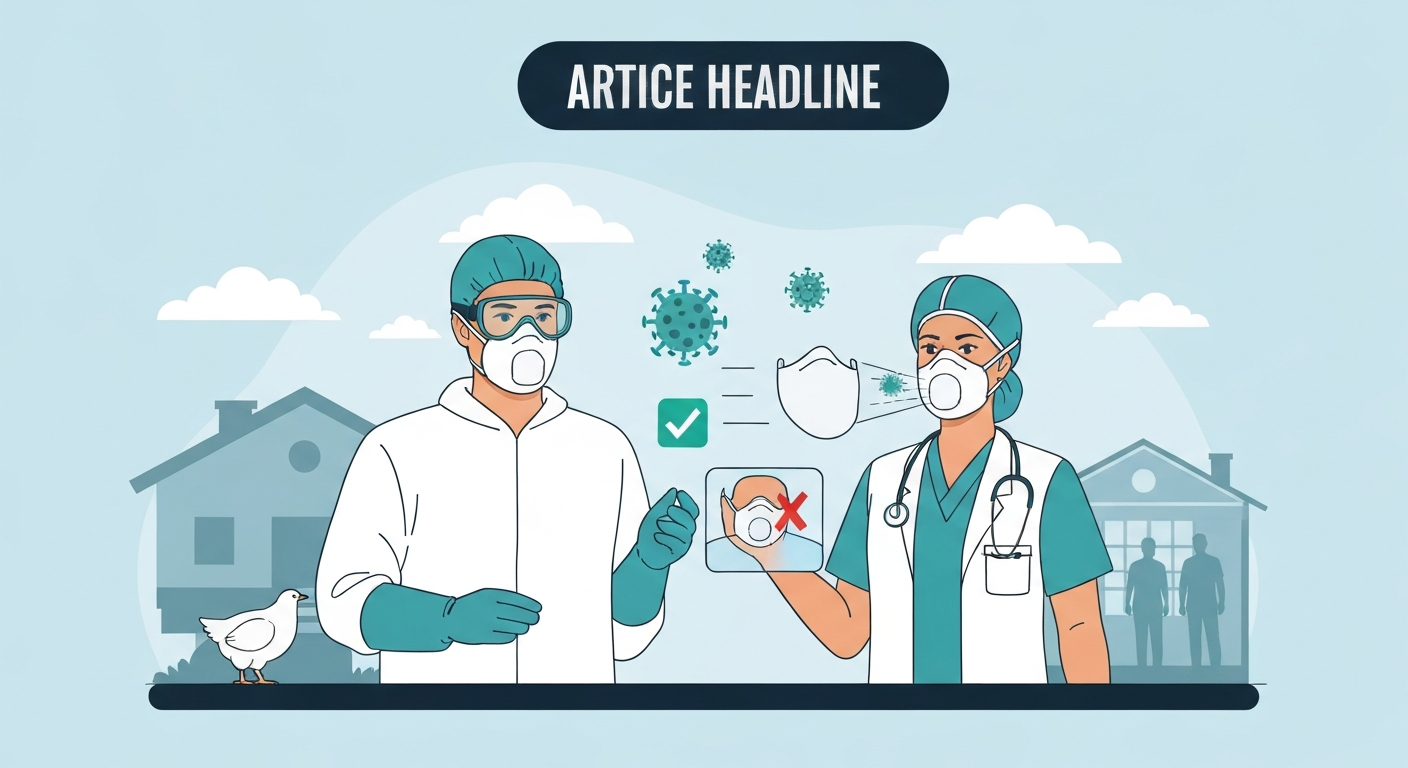
How avian influenza actually spreads, and why that matters for masks
Understanding what you are trying to block is the starting point for deciding whether a mask helps at all. H5N1 and other highly pathogenic avian influenza (HPAI) viruses reach people through a few distinct routes, and not every route involves inhalation.
- Direct contact: touching infected birds, carcasses, or contaminated surfaces, then transferring virus to your eyes, nose, or mouth
- Respiratory droplets and short-range aerosols: generated when infected birds cough, sneeze, or flap, or when infected material is stirred up during slaughter, processing, or cleaning
- Fomite transfer: contaminated equipment, clothing, footwear, or shared tools carrying virus to mucosal surfaces
- Possibly via contaminated water or raw milk in some farm environments, though the primary route for respiratory infection remains inhalation of virus-laden particles
The inhalation route is where respirators and masks provide direct, physical protection. Air sampling studies have detected infectious HPAI virus in airborne particles generated during poultry slaughter and processing, and ferret experiments have documented infection and severe disease from inhaled small-particle aerosols of H5N1, with infectious doses as low as tens to thousands of viral units in animal models. That tells us the aerosol route is biologically real, not just theoretical. For poultry workers or anyone involved in depopulating infected flocks, this is the exposure route that deserves the most engineering and PPE attention. For someone buying eggs at a supermarket, it is essentially irrelevant.
Masks do nothing for the fomite or mucous membrane contact routes. Eye protection (goggles or face shields), gloves, and rigorous hand hygiene cover those gaps. That is why the CDC and WHO frame respirators as one component of PPE for occupational exposure, not a standalone solution.
How inhalation protection actually works: filtration, fit, and exposure dose
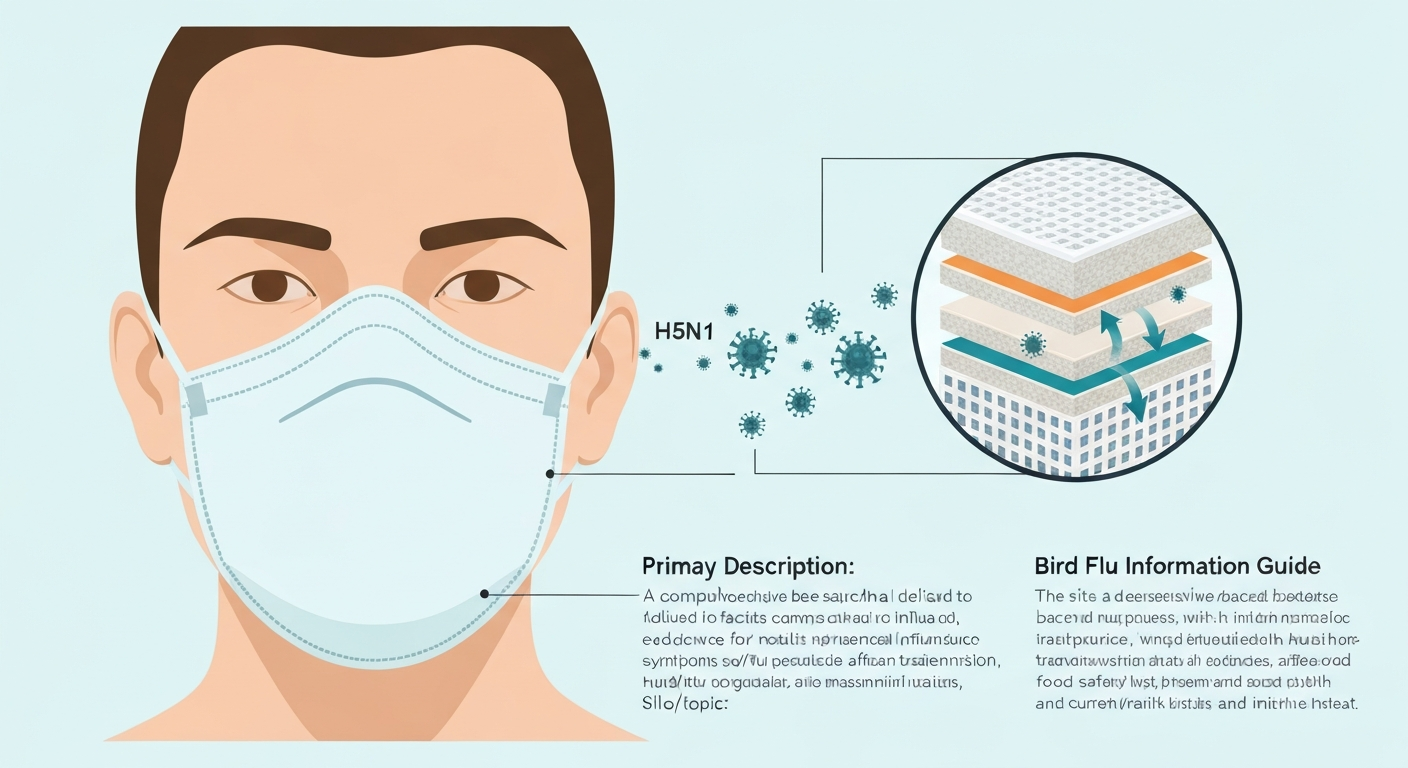
A respirator works by forcing inhaled air through a filter medium before it reaches your airways. NIOSH certifies N95 respirators under 42 CFR Part 84 by challenging the filter media with a sodium chloride aerosol at 85 litres per minute and requiring at least 95% efficiency at the most-penetrating particle size, which sits in the roughly 0.1 to 0.3 micrometre range. Influenza virions are approximately 80 to 120 nanometres in diameter, which sits right in that challenging size window, so the 95% threshold is specifically meaningful for virus-sized particles, not just larger dust or pollen.
But filtration efficiency alone is only part of the story. The total protection you receive depends on three things working together: the filter's efficiency, the quality of the face seal (how much air leaks around the edges rather than through the filter), and the actual exposure dose you encounter. A tight-fitting N95 with an excellent seal can deliver a fitted filtration efficiency close to its rated value. Fitted (in‑use) filtration efficiency depends strongly on fit and leakage: wearer‑worn tests show large reductions in protection for poorly fitted respirators and for surgical/cloth masks because total inward leakage (face seal plus filter penetration) dominates real‑world performance Fitted (in‑use) filtration efficiency depends strongly on fit and leakage.. The same mask worn loosely, or on a face that does not match its geometry, might allow far more than 5% of ambient particles to reach the wearer through gaps. Exposure dose matters too: a worker standing over infected birds for hours accumulates far more potential exposure than someone walking briefly through a farm perimeter.
Mask types compared: N95, KN95, surgical masks, and cloth masks
Not all masks are equivalent, and the differences are meaningful when you are thinking about a virus as serious as H5N1. Here is how the main options compare across the features that matter most for infectious disease protection.
| Mask type | Standard / certification | Filter efficiency (rated) | Face seal tested? | Recommended for bird flu occupational exposure? |
|---|---|---|---|---|
| N95 respirator | NIOSH 42 CFR Part 84 | ≥95% at MPPS (~0.1–0.3 µm) | Yes (tight-fitting; fit-test required) | Yes (CDC, WHO) |
| KN95 respirator | China GB 2626 | ≥95% at similar particle size | Yes (tight-fitting; self-check) | Acceptable alternative where N95 unavailable |
| FFP2 respirator | EU EN 149 | ≥94% at similar particle size | Yes (tight-fitting; fit-test recommended) | Yes (European equivalent to N95) |
| Surgical / medical mask | ASTM F2100 / EN 14683 | Variable; BFE ≥95% at ~3 µm, not MPPS | No (loose-fitting; face seal not tested) | Not sufficient as primary respiratory protection for occupational exposure |
| Cloth / fabric mask | None (no standard certification) | Highly variable; generally lower than surgical | No | Not recommended for bird flu exposure |
A key point about surgical masks: they are tested for bacterial filtration efficiency using larger droplets (around 3 micrometres), and they are specifically not designed or tested for face seal leakage. That means even a high-BFE surgical mask allows substantial inward leakage around the nose and cheeks. For routine clinical care of non-aerosol-generating procedures in seasonal flu seasons, that may be acceptable. For direct handling of HPAI-infected birds or clinical care of confirmed H5N1 patients, it is not. KN95 respirators are a reasonable alternative to N95s when certified N95 products are unavailable, but the GB 2626 standard has seen quality-control variation among manufacturers, so sourcing from reputable, verified suppliers matters.
Fit and seal: the factor that changes everything in real-world use
This is the section that most mask-related articles skip over, and it is arguably the most practically important one. A certified N95 respirator is only as protective as its seal against your face. Fit-testing protocols (OSHA 29 CFR 1910.134 in the United States, and equivalent national standards elsewhere) require workers who wear tight-fitting respirators to be individually tested on specific models before use, aiming for a fit factor of at least 100 on a half-face respirator. That means the concentration of particles outside the mask is at least 100 times the concentration inside when the mask is properly worn. Fail that test, and the certification number on the packaging is largely irrelevant to your actual protection.
Facial hair in the sealing zone is one of the biggest causes of fit-test failure. Even short stubble in the area where the mask rim contacts the face measurably increases face seal leakage and reduces fit factors. Many occupational health programs require workers to be clean-shaven in the seal area when wearing tight-fitting respirators. Facial anatomy also matters: bone structure, nose shape, and face width all affect how well a particular model seals, which is why fit-testing covers specific mask models rather than mask categories in general. Some people need to try several N95 models before finding one that fits well.
User behaviour completes the picture. Touching the outside of the mask, pulling it down to talk, readjusting it frequently, or wearing it under the nose all compromise protection substantially. Before putting on any tight-fitting respirator, performing a positive-pressure check (exhaling gently and feeling for leaks) or a negative-pressure check (inhaling sharply and checking for collapse) takes about ten seconds and significantly improves confidence that the seal is holding.
Real-world effectiveness: what the evidence actually shows
Here is where intellectual honesty requires a nuance that sometimes gets lost. Controlled lab tests show N95 filter media outperform surgical mask media for submicron particles by a significant margin. But large, randomized pragmatic trials comparing N95 respirators to medical masks in healthcare workers for seasonal influenza have generally not found a statistically significant difference in laboratory-confirmed influenza outcomes. A large cluster randomized trial in outpatient healthcare settings (2011 to 2015) is a frequently cited example. Does that mean N95s do not work?
Not quite. Those trials were conducted in general clinical settings where most transmission may occur through large droplets or contact rather than fine aerosols, and they were not designed or powered to detect differences for rare, severe zoonotic strains like H5N1. The real-world effectiveness of any mask also depends heavily on consistent, correct use throughout the entire exposure period, which is difficult to enforce or measure in a pragmatic trial. For avian influenza specifically, where the airborne-aerosol route during bird handling or processing is well documented by air sampling studies, there are stronger biological reasons to expect N95 respirators to outperform surgical masks than exist for routine seasonal flu in outpatient care. The uncertainty in the seasonal flu trial data does not transfer directly to the H5N1 occupational exposure scenario.
CDC field reports from 2022 to 2024 U.S. poultry and dairy HPAI events documented human infections occurring after close, unprotected contact with infected animals. CDC’s MMWR report “Personal Protective Equipment Use by Dairy Farmworkers Exposed to Cows Infected with Highly Pathogenic Avian Influenza A(H5N1) Viruses, Colorado, 2024 (MMWR)” documents human infections after close unprotected contact and recommends PPE (including respirators) and medical monitoring for exposed workers Personal Protective Equipment Use by Dairy Farmworkers Exposed to Cows Infected with Highly Pathogenic Avian Influenza A(H5N1) Viruses — Colorado, 2024 (MMWR). Workers who used recommended PPE consistently were not among those infected in those investigations, though the numbers are too small to draw statistical conclusions. That pattern is consistent with PPE providing meaningful protection when used correctly.
When to wear a respirator versus a surgical or cloth mask
The practical answer depends on your actual exposure risk, not on general anxiety about bird flu. Here is a straightforward framework.
- Poultry workers, veterinarians, or farm staff with direct contact with potentially infected birds or contaminated materials: NIOSH-approved N95 (or equivalent FFP2/KN95) as a minimum respiratory protection, combined with eye protection, gloves, coveralls, and boot covers as recommended by CDC/WHO
- Dairy farmworkers with exposure to H5N1-affected cattle herds: same standard as poultry exposure — N95-class respirator plus full PPE package
- Healthcare workers providing clinical care for confirmed or suspected human H5N1 cases, especially for aerosol-generating procedures: NIOSH N95 at minimum; powered air-purifying respirators (PAPRs) for higher-risk aerosol-generating procedures
- Members of the public visiting farms, petting zoos, or live bird markets during an active local outbreak: well-fitted surgical mask is a reasonable precaution for brief exposures; N95 if extended time around birds or in enclosed poultry houses
- General public with no direct animal or clinical exposure: no mask currently indicated solely for bird flu risk, though following local public health guidance is always appropriate if an outbreak evolves
Masks are one layer in a multi-layer approach. Handwashing with soap and water after any contact with birds or farm environments, avoiding touching your face before washing, not handling sick or dead wild birds barehanded, and staying updated on local public health guidance all matter alongside whatever mask decision you make. The seasonal flu vaccine does not protect specifically against current H5N1 strains, and antivirals like oseltamivir (Tamiflu) have a role in post-exposure treatment rather than as a substitute for PPE, but both topics are worth understanding as part of the full prevention picture. For specifics on whether the seasonal flu vaccine protects against avian (bird) flu, see our guidance 'Does the flu shot protect against bird flu'.
Fit-testing, reuse, storage, and safe disposal: practical steps
Before first use
- Undergo formal fit-testing for your specific N95 model before using it in a hazardous environment — this is a regulatory requirement for occupational use in the U.S. and most other countries
- Try multiple N95 models if the first does not pass fit-testing; fit is model-specific, not category-wide
- Ensure facial hair is trimmed away from the sealing zone before each use
- Inspect the mask before each use for visible damage, deformed nose wire, or degraded straps
During use
- Perform a positive- or negative-pressure user seal check every time you put the mask on
- Avoid touching the front of the mask while wearing it; if you must adjust it, perform hand hygiene before and after
- Keep the mask on continuously throughout exposure — the majority of protection loss from respirators in real-world studies comes from periods when the mask is removed in contaminated areas
- Do not share respirators between individuals
Reuse and storage
N95 respirators are certified for single use in high-contamination environments, but in lower-risk scenarios (routine occupational use without heavy contamination) limited reuse is sometimes permitted under specific workplace protocols. If reusing, store used respirators in a breathable paper bag (not a sealed plastic bag, which can retain moisture and promote degradation), label them with your name, allow them to dry between uses, and inspect for damage or loss of shape. Do not attempt to clean or disinfect a filtering facepiece respirator with liquids or sprays, as this degrades the electrostatic filter media and removes the filtration efficiency that the certification depends on.
Disposal
- Discard immediately if visibly soiled, damaged, wet, or difficult to breathe through
- In farm or clinical settings with confirmed HPAI, treat used respirators as potentially contaminated waste and dispose of them according to your workplace's biological waste protocol
- Remove by the straps, not by touching the filter surface, to minimise contact with any deposited material
- Wash hands immediately after removal and disposal
The bigger picture: masks as one tool, not the whole answer
An N95 respirator is genuinely useful protection against inhaling H5N1 virus particles, provided it is the right certification, worn correctly, fitted properly, and used as part of a complete PPE approach that also addresses eye, hand, and body protection. For a focused discussion of whether masks protect against bird flu, see the article titled "do masks protect against bird flu". For occupational high-risk groups, it is a recommended and evidence-supported tool. For the broader public, current risk remains very low, and the more important steps are staying informed through sources like the CDC and WHO, practicing good hand hygiene around birds, and not handling sick or dead wild birds barehanded.
If you want to go deeper on specific comparisons, the performance differences between N95 and KN95 respirators are worth understanding before purchasing, and the question of whether any mask type meaningfully protects the general public involves nuances worth unpacking separately. For a practical buying guide on the best masks for bird flu, see our comparison of N95, KN95, surgical, and cloth options. On the treatment and prevention side, understanding what antivirals like oseltamivir can and cannot do is a practical complement to knowing how PPE works. All of those details fit together into a coherent, practical picture of how to reduce your personal risk based on your actual situation, not on general alarm.
FAQ
Do N95 masks protect against bird flu (avian influenza)?
Yes—properly fitted NIOSH‑approved N95 respirators reduce inhalation of small airborne particles and can help protect against avian influenza exposure. N95 filter media are certified to remove ≥95% of test aerosol at the most‑penetrating particle sizes in laboratory tests. Real‑world protection depends heavily on fit (seal), correct use, and the exposure setting; public‑health guidance (WHO, CDC) recommends respirators for people with occupational or clinical exposure to avian influenza.
How does avian influenza (bird flu) spread and why does that matter for masks?
Human infections occur primarily after close contact with infected birds or contaminated materials, and can happen via inhalation of virus‑laden droplets/aerosols or via contamination of the eyes, nose or mouth. Some H5 and H7 avian viruses can be shed into the air during poultry handling and have caused infection in animal inhalation models, so inhalation protection (respirators) is relevant for people doing high‑risk tasks like slaughtering, culling, or close clinical care.
Are N95 respirators better than surgical masks, KN95, or cloth masks for bird flu?
Laboratory filtration: N95 (NIOSH) respirators have certified filtration performance (≥95% at test conditions). KN95/FFP2/FFP3 standards are broadly similar when legitimately certified. Surgical masks are designed mainly for source control and fluid protection and generally have lower filtration of submicron particles and worse face seal. Cloth masks vary widely and typically offer the least protection. However, in some clinical trials for seasonal influenza, differences in measured infection rates between N95s and medical masks were small—likely because fit, compliance, and exposure types matter a lot. For high‑risk occupational exposures to infected birds or patients, respirators (N95/FFP2 or higher) are recommended.
Does a KN95 protect as well as an N95?
Properly certified KN95s (meeting national standards and quality controls) can have similar filter efficiency to N95s, but performance varies due to differences in test methods and potential counterfeit products. NIOSH‑approved N95s have a well‑established certification process; when choosing KN95s, verify legitimate certification and supplier traceability. Regardless of standard, fit is crucial.
Do surgical masks protect against bird flu?
Surgical masks can reduce exposure to larger droplets and provide some barrier against splashes, but they do not seal to the face and offer limited protection from small aerosol particles. For routine public interactions where risk is low, a surgical mask may reduce risk modestly; for occupational or clinical exposure to infected birds or patients, a fitted respirator is preferable.
Does the seasonal flu (influenza) vaccine protect against bird flu?
No—seasonal influenza vaccines target circulating human influenza strains and do not reliably protect against novel avian influenza viruses (e.g., H5N1). Vaccination remains important to reduce co‑infection and overall influenza burden, but it should not be relied on as protection against avian strains unless a vaccine specific to that avian strain is developed and recommended.
Do KN95 masks protect against bird flu? Evidence-based comparison, practical guidance for public and workers.

Find out if Tamiflu oseltamivir can treat bird flu in humans, when it helps, timing, and what to do next.
Evidence on do masks protect against bird flu, plus which mask types help, fit tips, and safer next steps.