Yes, sunlight does kill bird flu, but it is not a guaranteed or fast-acting solution you can rely on to disinfect contaminated surfaces or environments. The UV-A and UV-B radiation in natural sunlight damages avian influenza virions and accelerates their inactivation, particularly when the virus is suspended in aerosols or surface water. Laboratory experiments using simulated sunlight showed the half-life of aerosolized influenza A dropped from about 31 minutes in darkness to roughly 2.4 minutes under full-intensity simulated sunlight. That is genuinely significant. However, shade, cold temperatures, winter latitudes, and thick organic matter like feces or feathers can extend viral survival from hours to months, meaning sunlight alone is never a substitute for proper disinfection, biosecurity, and heat-based food safety measures.
Does Sunlight Kill Bird Flu? Evidence, Risks, and Guidance

How sunlight and UV light affect avian influenza
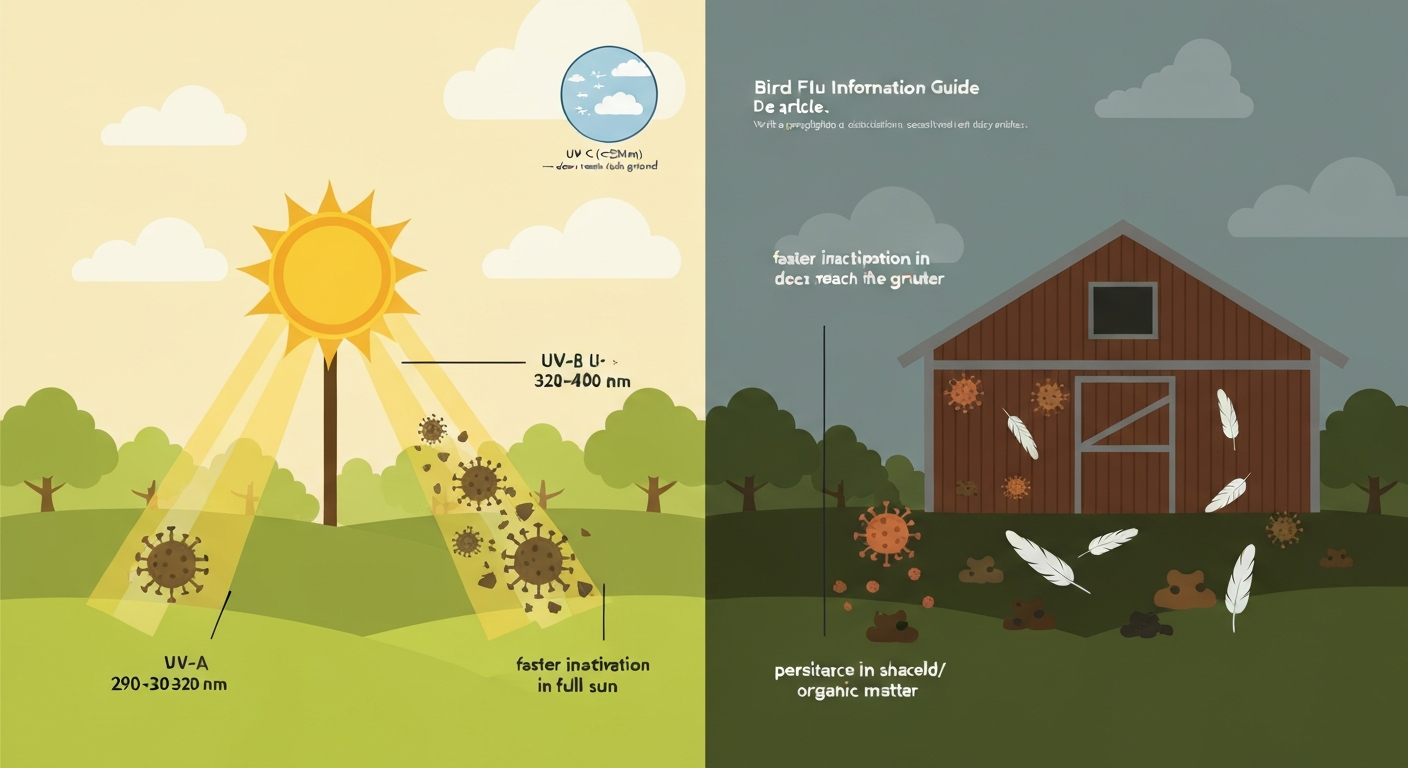
Natural sunlight reaching the ground is a mix of visible light, UV-A (320 to 400 nm), and a smaller fraction of UV-B (290 to 320 nm). The short-wavelength UV-C around 254 nm, which is the most potent germicidal wavelength used in laboratory sterilizers and hospital air systems, is almost entirely absorbed by the atmosphere and never reaches us at ground level. So when you hear that "UV light kills viruses," it is worth asking which kind of UV light, because the answer matters a lot for practical outdoor situations.
UV-A and UV-B still inactivate influenza viruses through a combination of direct photochemical damage to viral RNA and proteins, and through indirect oxidative processes driven by reactive oxygen species generated in the surrounding medium. The Schuit et al. (2020) study published in the Journal of Infectious Diseases is probably the clearest controlled demonstration of this: aerosolized H1N1 influenza A decayed at a mean rate of just 0.02 per minute in darkness but jumped to 0.29 per minute under full simulated sunlight, cutting the half-life from about 31 minutes to under 2.5 minutes. That is roughly a 12-fold acceleration in decay rate, which is meaningful for understanding outdoor transmission risk on a bright summer day.
The catch is that this acceleration is highly variable in the real world. Modeling work shows solar UV inactivation rates ranging from negligible up to around 21 per day depending on season, latitude, time of day, and cloud cover. In winter at high latitudes, rates can fall below 2.3 per day, meaning aerosolized virus could theoretically persist outdoors for one to several days. This is one reason bird flu outbreaks tend to cluster in colder months and why northern hemisphere winters are particularly high-risk periods for poultry flocks.
Artificial UV-C: more powerful but not what sunlight delivers
UV-C lamps (germicidal lamps) used in hospitals, laboratories, and some air-handling units emit radiation at wavelengths around 254 nm and can inactivate influenza viruses and many other pathogens very efficiently. Portable UV-C wands sold for home use and "UV sterilizer" boxes work on this same principle. Because UV-C is filtered out before it reaches the ground, the virucidal data from UV-C lamp studies cannot be directly applied to natural sunlight. Do not assume that sitting a contaminated item in a window or outdoors on a sunny day achieves the same result as UV-C treatment. The mechanisms overlap but the doses and wavelengths are quite different.
How heat, temperature, and humidity change viral survival
Temperature is probably the single biggest environmental factor governing how long avian influenza stays infectious outside a host. For specifics on heat thresholds that inactivate avian influenza, see what temperature kills bird flu. The virus survives far longer in cold, moist conditions than in warm, dry ones. Some H5N1 studies have found viable virus in water at 17°C for roughly 17 days (T90 value, meaning 90% reduction). A WHO review of available evidence notes that virus persistence in surface waters is strain- and condition-dependent and cites T90 values of about 17 days at 17°C for some H5 viruses WHO review found virus persistence in surface waters is strain‑ and condition‑dependent, reporting a T90 ≈17 days at 17°C.. Surface studies published in Emerging Infectious Diseases in 2025 measured H5N1 half-lives in wastewater at 22°C at about 12 hours, while on polypropylene surfaces at the same temperature the half-life was around 2.5 hours, on stainless steel around 3.3 hours, and on rubber around 3.3 hours. These are meaningful persistence times in a poultry house or a rehabilitation setting.
Humidity also plays a role, though its interaction with temperature is complex. Low relative humidity tends to favor persistence of enveloped respiratory viruses on surfaces, while very high humidity combined with heat accelerates inactivation. The practical upshot for poultry owners and rehabilitators is that cold, damp, shaded environments, exactly the kind found in many poultry houses in winter, are worst-case scenarios for virus persistence. Hot, dry, sun-exposed surfaces in summer represent the best natural conditions for virus die-off, but still not reliable enough to skip disinfection.
What the lab and field data say about survival times
One of the most important things to understand about avian influenza survival data is that RT-PCR tests detect viral RNA, not necessarily infectious virus. Confirming the virus is still capable of causing infection requires actual virus culture, typically egg inoculation or cell culture. That distinction matters when you read headlines about "bird flu detected" somewhere weeks after an outbreak. Detecting RNA is not the same as detecting a live threat.
With that caveat in mind, here is a practical summary of what peer-reviewed and agency data report about survival times for avian influenza in different materials.
| Matrix / Surface | Temperature | Approximate Survival / Half-Life | Notes |
|---|---|---|---|
| Aerosols (indoors/dark) | Room temp | Half-life ~31 minutes | Full simulated sunlight cuts this to ~2.4 min |
| Aerosols (direct sunlight) | Ambient outdoor | Half-life ~2.4 minutes | Schuit et al. 2020; varies by season/latitude |
| Surface water | 17°C | T90 ~17 days | WHO review; strain- and condition-dependent |
| Surface water (solar exposure) | Ambient | Rapid inactivation | Solar simulator studies; colored water may attenuate UV |
| Wastewater | 22°C | Half-life ~12 hours (0.48 days) | H5N1; Emerging Infectious Diseases 2025 |
| Polypropylene (dry surface) | 22°C | Half-life ~2.5 hours | H5N1; Emerging Infectious Diseases 2025 |
| Stainless steel (dry surface) | 22°C | Half-life ~3.3 hours | H5N1; Emerging Infectious Diseases 2025 |
| Rubber (dry surface) | 22°C | Half-life ~3.3 hours | H5N1; Emerging Infectious Diseases 2025 |
| Hard surfaces (general, non-porous) | Room temp | Up to ~24 hours (H1N1 data) | Non-porous surfaces persist longer than porous |
| Wood / porous materials | Room temp | Up to ~48 hours (H1N1 data) | More variable; matrix absorbs virus |
| Duck/chicken feathers | 20°C | ~15 days | H5N1 infectivity in detached feathers |
| Duck/chicken feathers | 4°C | 160 to 240 days | H5N1; major risk from litter/feather debris |
| Feces (direct sunlight, 32–35°C) | 32–35°C | ~30 minutes | H5N1; shaded samples persisted several days |
| Feces (shaded, 25–32°C) | 25–32°C | Several days | H5N1; shade dramatically extends survival |
The feather and feces data deserve special attention. Feathers detached from infected birds are a documented persistence reservoir. At refrigerator temperatures (4°C), H5N1 has been found in detached feathers for up to 160 to 240 days. This is clinically relevant for anyone handling dead birds, litter from poultry houses, or birds brought in for wildlife rehabilitation. The feces data similarly show that direct sunlight at summer temperatures can reduce infectious virus in droppings to negligible levels within about 30 minutes, but shaded droppings in a barn or under dense vegetation can remain infectious for days.
Does bird flu kill birds, and which species are most affected?
Avian influenza viruses exist in two pathogenicity categories for birds: low pathogenic (LPAI) and highly pathogenic (HPAI). Most bird flu discussion in recent years centers on HPAI H5N1, which can kill domestic poultry with terrifying speed. In chickens, turkeys, and other gallinaceous poultry, HPAI can cause near-total flock mortality within 48 to 72 hours. Sudden death without prior signs is common. When signs do appear before death they include severe respiratory distress, neurological symptoms, marked swelling of the head and wattles, discoloration of the comb, and cessation of egg production. The case fatality rate in unvaccinated domestic poultry flocks can approach 100%. For a clear overview of mortality and susceptible species, see Does bird flu kill birds.
Wild bird susceptibility is more nuanced. Ducks, geese, and other waterfowl have historically been natural reservoir hosts for low pathogenic strains and can carry and shed LPAI with few or no visible symptoms. However, the contemporary H5N1 clade (2.3.4.4b) that has been circulating globally since 2021 to 2022 has shown unusual lethality even in wild waterbirds. Mass mortality events in bar-headed geese, great skuas, and multiple gull species have been documented across Europe, Africa, and North America. Raptors and scavenging birds like eagles and ravens are also highly susceptible and are frequently infected through predation or scavenging of infected carcasses.
Common clinical signs in wild birds before death include disorientation, loss of flight ability, circling behavior, head tremors, and inability to hold the head upright. Any wild bird showing these signs, particularly waterfowl or raptors, should be treated as a potential HPAI case and handled with full protective precautions.
Human risk and food safety: eggs, poultry meat, and safe handling
Human infections with H5N1 are rare relative to the scale of animal outbreaks, and virtually all documented human cases have involved direct, close contact with infected birds or their environments, not consumption of properly cooked food. There is no documented evidence that properly handled and cooked poultry or egg products have transmitted avian influenza to consumers. WHO, FAO, and CDC are consistent and unambiguous on this point.
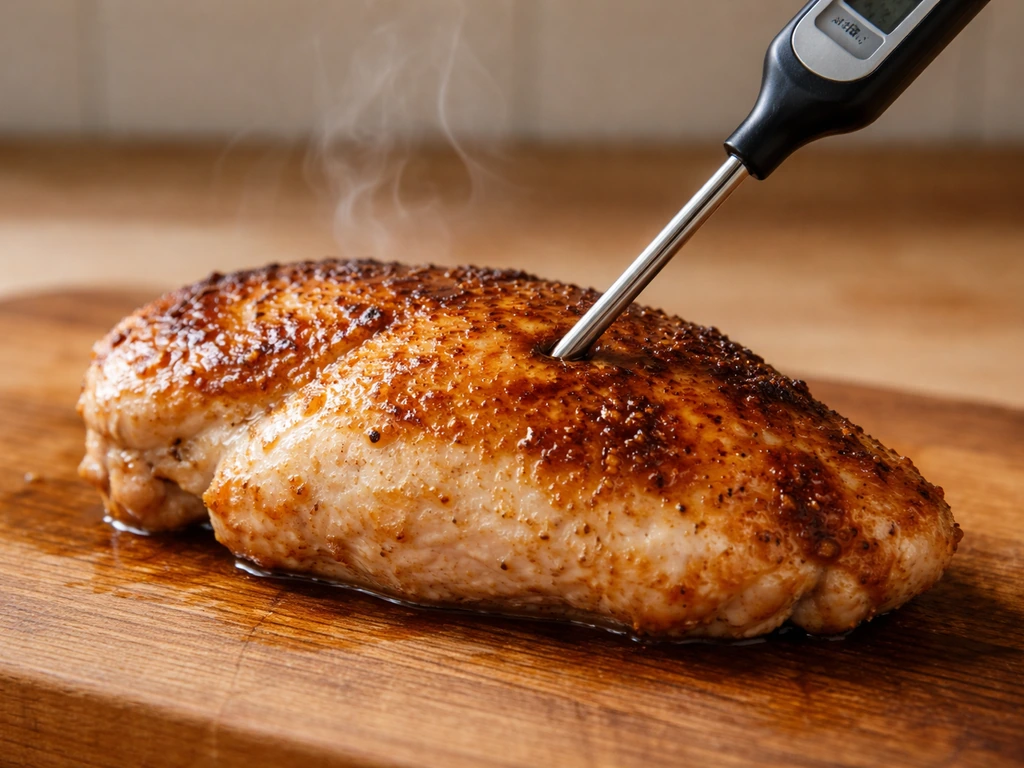
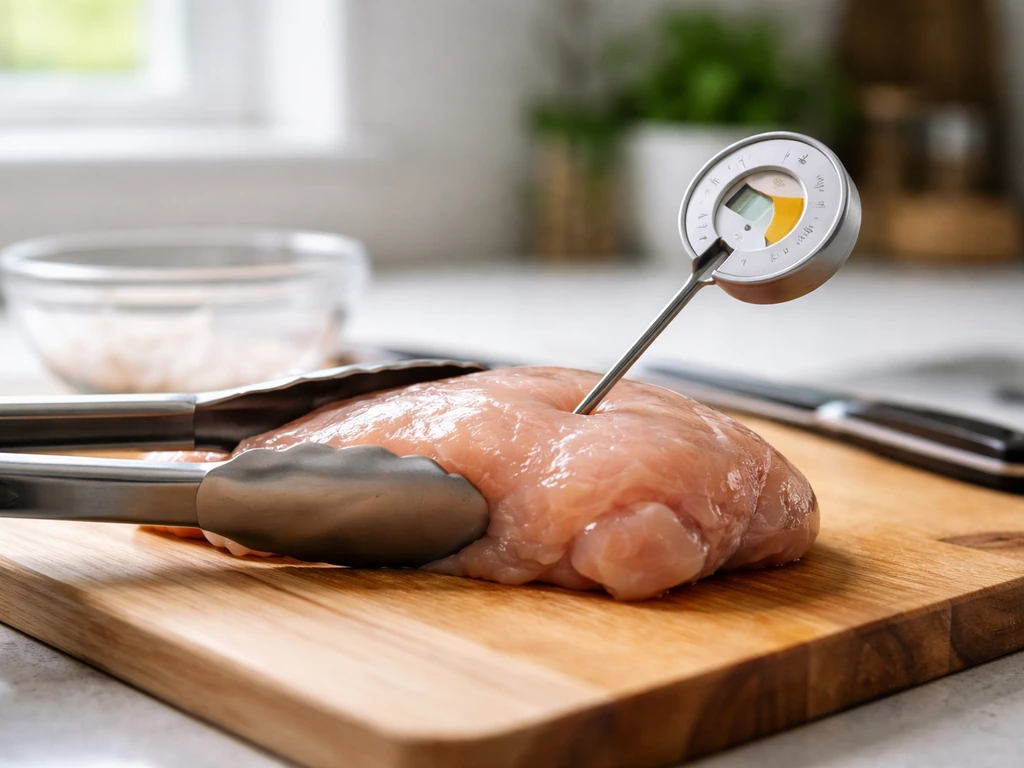
The reassurance is grounded in straightforward food science. Avian influenza viruses are heat-sensitive. For clear guidance on whether heat kills bird flu, see does heat kill bird flu. Cooking poultry to an internal temperature of at least 70°C (158°F) inactivates the virus. WOAH (formerly OIE) publishes specific time-temperature combinations for industrial egg and meat processing, such as whole-egg blends treated at 61.1°C for 94 seconds. Standard consumer cooking temperatures well exceed these thresholds. The risk is not in the cooked meal; it is in the handling of raw, contaminated product.
- Never handle visibly sick or dead poultry without gloves and ideally a face covering.
- Wash hands thoroughly with soap and water after handling raw poultry or eggs.
- Do not allow raw poultry juices to cross-contaminate ready-to-eat foods.
- Cook poultry to a minimum internal temperature of 74°C (165°F) for whole birds and pieces.
- Cook eggs until both yolk and white are firm, or use pasteurized egg products for dishes where runny eggs are preferred.
- Do not consume eggs from sick birds or eggs with cracked shells from an outbreak-affected flock.
- Avoid contact with live poultry at markets or farms if you are immunocompromised.
Farm workers, poultry processors, and veterinary staff have the highest occupational exposure risk. If you develop flu-like symptoms within 10 days of direct contact with infected or suspected birds, notify your healthcare provider immediately and mention the potential exposure. Early antiviral treatment (oseltamivir/Tamiflu) is most effective when started quickly.
Proven disinfectants, concentrations, and contact times
The EPA maintains a registry called List M, which identifies registered antimicrobial products with label claims effective against avian influenza. For a concise guide to effective products and methods, see what kills bird flu on surfaces. This is the most practical starting point for anyone choosing a disinfectant for a poultry house, vehicle, or rehab facility. See what kills bird flu for a concise summary of proven methods and practical disinfection options. The critical rule is to always follow the label: the concentration and contact time specified on the product label are what was tested and validated, and cutting corners on either undermines efficacy.
Chlorine-based disinfectants are well-studied against HPAI H5N1. A 2007 study in Emerging Infectious Diseases showed that maintaining a free chlorine residual of roughly 0.52 to 1.08 mg/L produced greater than 3 log10 (99.9%) inactivation within approximately one minute under tested conditions. This makes dilute bleach solutions highly practical for surface and equipment decontamination, provided organic load is removed first. Heavy organic matter like feces, feathers, and blood dramatically reduce the effectiveness of chlorine and most other chemical disinfectants, which is why cleaning before disinfecting is not optional.
| Disinfectant Class | Examples | Typical Use Concentration | Key Notes |
|---|---|---|---|
| Sodium hypochlorite (bleach) | Household bleach (5–8% stock) | 0.05–0.1% free chlorine (1:100 to 1:50 dilution) | Organic matter destroys efficacy; pre-clean first; corrosive to metals |
| Quaternary ammonium compounds (QAC) | Numerous EPA List M products | Per label (typically 0.1–0.5%) | Effective on clean surfaces; inactivated by organic matter and hard water |
| Citric acid (2%) | Commercial farm-use products | 2% solution | WHO/FAO field-endorsed; less corrosive; effective HPAI inactivation |
| Formaldehyde / glutaraldehyde | Specialized veterinary/lab use | Per label; typically 0.5–2% | High efficacy; significant safety hazards; restricted use settings |
| Iodine-based (iodophors) | Povidone-iodine compounds | Per label | Effective; organic load reduces activity; useful for footbaths |
| Peracetic acid | Commercial poultry house disinfectants | Per label (typically 0.02–0.3%) | Broad spectrum; effective in cold conditions; corrosive; ventilation needed |
The general decontamination sequence for a poultry house after an HPAI event is: remove all birds and litter, dry-clean all surfaces and equipment, wet-wash with detergent and water (pressure washing where possible), apply disinfectant at label-specified concentration, allow full contact time (often 10 to 30 minutes minimum), rinse if required, and allow thorough drying before restocking. A second disinfection round after drying is standard in many national protocols. Footbaths at entry and exit points should be maintained with fresh disinfectant and changed when visibly fouled.
Biosecurity for wildlife rescuers and rehabilitation centres
"Does rescue kill bird flu?" is a question that comes up in a slightly different sense than the others on this site, and it is worth addressing directly. The concern is whether wildlife rescue and rehabilitation operations, by handling potentially infected wild birds, spread H5N1 further or put human workers at risk. The honest answer is: they can, if biosecurity is poor, but well-run rehabilitation centres with appropriate protocols do not need to be a significant transmission node.
The core principle for rehab operations is triage before contact. Any bird showing neurological signs, severe respiratory distress, or found dead in an area with known HPAI activity should be treated as suspect HPAI until proven otherwise. In many jurisdictions, suspected HPAI in wild birds is a notifiable event and the bird must be reported to wildlife authorities rather than simply admitted for rehabilitation. In active outbreak areas, it may be appropriate to decline admission of high-risk species like waterfowl, gulls, and raptors entirely, rather than risk exposure to staff or spread to other animals in care.
- Before approaching any sick or dead wild bird: put on gloves and a minimum of a surgical mask (ideally an N95/FFP2 respirator). Add eye protection if close contact or risk of splash is likely.
- Use a double-bag system for dead birds: inner bag sealed before removing gloves, outer bag sealed after glove removal.
- Do not transport suspect birds in the passenger compartment of a vehicle; use sealed containers in a separate cargo area.
- Isolate any admitted suspect bird from all other animals in a negative-pressure space if available, or in a separate building with its own airflow.
- All equipment, clothing, and surfaces that contacted a suspect bird must be treated as contaminated: disinfect with an EPA List M product at label concentration and contact time.
- Staff who handle suspect birds should monitor for flu-like illness for 10 days and report any symptoms promptly.
- Coordinate with your state/national wildlife authority: they can provide testing, guidance, and in many cases will take responsibility for HPAI-suspect birds.
Common internet claims examined: sunlight myths, UV lamps, vinegar, and Reddit tips
There is a recurring cluster of home-remedy and DIY-disinfection claims online related to bird flu, and they range from partially true to actively misleading. Community discussions like the Reddit thread titled 'what kills bird flu on surfaces' compile user tips and experiences, but they should be weighed against official guidance and peer-reviewed evidence what kills bird flu on surfaces (Reddit). Here are the most common ones, assessed against the evidence.
"Just leave it in the sun for a few hours and it will be fine." Partially true in specific circumstances, misleading as general advice. Direct, intense summer sunlight can inactivate virus in feces within around 30 minutes under ideal conditions. But this only applies to thin layers directly exposed to full sun at warm temperatures. Thick accumulations of feces, shaded areas, feathers, and cold weather all dramatically extend survival. Sunlight is a contributing factor in natural environmental cleanup, not a disinfection protocol.
"A UV lamp or UV wand will kill bird flu on surfaces." Misleading without critical context. Consumer UV-C wands can inactivate surface viruses if used correctly at very close range with sufficient dwell time on clean surfaces. However, organic matter, shadows from surface geometry, and inadequate exposure time all undermine efficacy. These devices are not a substitute for EPA-registered disinfectants in agricultural or clinical settings, and many consumer products deliver insufficient UV-C dose for reliable virucidal claims. For a concise FAQ on whether UV light kills bird flu, see does uv light kill bird flu.
"Spray with vinegar to kill bird flu." Not supported by evidence. White vinegar (typically 5% acetic acid) has not been validated as effective against influenza A at concentrations available in the home. Some organic acids do have virucidal properties at higher concentrations (citric acid at 2% has been endorsed for HPAI field use by WHO and FAO), but household vinegar is not an EPA-registered disinfectant for this purpose and should not be used as one.
"I read on Reddit that bleach diluted to X strength works instantly." Bleach can work well, but the ratio matters and so does organic load. Undiluted bleach is not more effective on organic-laden surfaces and is corrosive and potentially harmful. The 2007 chlorine inactivation research showed that very low free chlorine concentrations (under 1 mg/L) achieved excellent kill on clean surfaces within a minute, but that is on pre-cleaned surfaces. The standard recommendation is to clean first, then apply disinfectant at the label concentration and wait the full contact time.
Practical step-by-step guidance for poultry owners, rescuers, and the public
PPE: what to wear before you approach
- Disposable nitrile or latex gloves (double-glove if handling multiple birds or carcasses).
- N95 or FFP2 respirator as a minimum for close contact with sick or dead birds; a surgical mask is a second-best option if a respirator is unavailable.
- Safety goggles or a face shield if there is any risk of splashing (fluids, pressure washing).
- Disposable coveralls or dedicated clothing that stays outside and is washed immediately at 60°C or higher.
- Rubber boots or boot covers that can be disinfected at exit; maintain a boot-dip footbath at all access points.
Cleaning and disposal
- Remove all organic material (litter, droppings, feathers, feed) before applying any disinfectant.
- Wash all surfaces and equipment with detergent and water. Pressure washing is effective but creates aerosols: use respiratory protection.
- Apply an EPA List M-registered disinfectant at the label concentration. Do not dilute more than specified.
- Maintain contact time as stated on the label (typically 10 to 30 minutes for most products on non-porous surfaces).
- Bag dead birds in sealed double plastic bags for disposal. Do not compost, burn openly, or leave carcasses where scavengers can access them without notifying authorities first.
- Bag all protective equipment and contaminated disposables before removing them from the work area.
- Wash hands with soap and water immediately after removing gloves. Hand sanitizer alone is insufficient when hands may be heavily contaminated.
Reporting and when to seek veterinary or public health help
Suspected HPAI in domestic poultry is a notifiable disease in almost every country. Do not wait for laboratory confirmation before reporting. Contact your national or state animal health authority immediately if you observe sudden high mortality in poultry, multiple birds with severe neurological or respiratory signs, or unusual die-offs in wild birds near your property. Timely reporting is the single most effective tool for containing outbreaks and protecting neighboring farms.
For human health concerns: if you have had unprotected contact with a sick or dead bird and develop fever, respiratory symptoms, conjunctivitis, or muscle aches within 10 days, call your healthcare provider before visiting a clinic in person so they can take appropriate infection-control precautions. Mention the specific exposure. Antiviral treatment is most effective when started early.
- WHO Global Influenza Programme (who.int/influenza): international guidance, outbreak updates, H5N1 situation reports.
- CDC Avian Influenza (cdc.gov/bird-flu): U.S.-focused human case surveillance, worker guidance, outbreak maps.
- WOAH/OIE (woah.org): international animal health standards, WAHIS outbreak database, Terrestrial Animal Health Code.
- FAO Animal Health (fao.org/animal-health): field guidance for low-resource settings, disinfection protocols.
- National Veterinary Services Laboratories (NVSL) or equivalent national lab: submitting samples for confirmation.
- Your state or national poultry health authority: fastest route to official response and financial compensation schemes.
Quick reference checklist: what to do right now
| Situation | Immediate Action | Who to Contact |
|---|---|---|
| Dead or dying poultry in your flock | Isolate remaining birds, put on PPE, do not move birds off property | State/national animal health authority or veterinarian |
| Dead wild bird on your property | Double-bag without bare-hand contact, do not dispose in household waste | State wildlife agency or USDA Wildlife Services (U.S.) |
| Sick wild bird showing neurological signs | Do not handle without PPE; if rehabilitation is considered, call ahead first | State wildlife authority; licensed wildlife rehabilitator |
| Unprotected contact with sick/dead bird | Wash hands and exposed skin immediately; monitor for symptoms 10 days | Healthcare provider if any symptoms develop; mention the exposure |
| Poultry house decontamination needed | Remove organic material, clean, disinfect with EPA List M product at label dose | Veterinarian or state animal health authority for official protocol |
| Concern about eating poultry or eggs | Cook thoroughly (poultry to 74°C/165°F internal); buy from inspected sources | Local public health department or CDC/WHO websites for guidance |
| Rehab centre receiving suspect bird | Triage before admission, isolate immediately, notify wildlife authority | State/national wildlife and animal health authority |
Essential supplies to keep on hand
- Box of disposable nitrile gloves (multiple sizes).
- N95 or FFP2 respirators (sealed, unexpired).
- Safety goggles or a face shield.
- Disposable coveralls or a designated set of washable coveralls.
- Rubber boots dedicated to the poultry area.
- Heavy-duty plastic bags (for dead birds and contaminated waste).
- An EPA List M-registered disinfectant appropriate for your setting (check the label for poultry facility use).
- Clean sprayer or dosing equipment calibrated for the correct dilution.
- A footbath container for boot dipping at entry/exit points.
- Contact numbers for your state veterinarian, local poultry health authority, and nearest public health department posted in a visible location.
FAQ
Short answer: does sunlight kill bird flu (avian influenza)?
Sunlight can inactivate avian influenza viruses, but effectiveness varies widely. Solar UV (mainly UV‑A and some UV‑B at ground level) and sunlight‑driven photochemistry accelerate virus decay outdoors—sometimes reducing infectivity in minutes under strong sun, but in other conditions (shade, low sun, cold temperatures) viruses can persist for hours to days or longer. Laboratory and field data show large dependence on dose (intensity × time), temperature, humidity, matrix (water, feces, feathers, surfaces) and season/location. (Sources: Schuit et al. J Infect Dis 2020; WHO review; solar photoinactivation studies: https://academic.oup.com/jid/article/221/3/372/5645407, https://cdn.who.int/media/docs/default-source/wash-documents/review-of-latest-available-evidence-on-transmission-of-h5n1.pdf).
How does sunlight inactivate influenza viruses? What about UV‑C vs. natural sunlight?
Natural sunlight inactivates viruses primarily via UV‑A/UV‑B and indirect photochemical (oxidative) processes; germicidal UV‑C (~254 nm) is highly effective in controlled settings but does not reach the ground because the atmosphere filters it out. Therefore, lab studies using UV‑C show strong inactivation but are not directly equivalent to natural sunlight; solar simulator and field studies using UV‑A/UV‑B are more representative of outdoor inactivation. (See Schuit et al., J Infect Dis 2020; review: https://www.ncbi.nlm.nih.gov/pmc/articles/PMC7112701/).
How fast does sunlight or simulated sunlight inactivate influenza in aerosols and water?
Simulated full‑intensity sunlight markedly increased aerosol decay: one study (Schuit et al.) showed aerosol half‑life fell from ~31.6 minutes in darkness to ~2.4 minutes under simulated sunlight. In surface water, solar photoinactivation studies reported rapid loss of infectivity under strong sunlight spectra, but rates depend on water color, depth, and other factors. Location, season and weather produce large variation—winter or high‑latitude conditions may give much slower loss. (Sources: Schuit et al.; rapid solar photoinactivation study: https://academic.oup.com/jid/article/221/3/372/5645407, https://pubmed.ncbi.nlm.nih.gov/41671530/).
How do temperature and humidity affect avian influenza survival?
Higher temperatures generally speed viral inactivation; low temperatures markedly prolong survival (days to months in some matrices). Humidity effects are complex: for aerosols some lab work shows intermediate RH may be more favorable for decay than very low or very high RH, but outcomes vary by strain and experimental setup. Environmental persistence is therefore a function of temperature, humidity, UV exposure and the material the virus is in. (See WHO review: https://www.ncbi.nlm.nih.gov/pmc/articles/PMC7112701/ and experimental studies cited therein.)
How long can bird flu survive on surfaces, feathers, feces and in water?
Persistence is matrix‑dependent and variable by strain and conditions. Representative findings: - Feathers: infectious H5N1 has persisted for weeks to months in detached feathers at low temperatures (reports of ~15 days at 20°C and 160–240 days at 4°C in experimental studies). - Feces/manure: sunlight and higher temperatures can inactivate virus in minutes to days; shaded cool samples can retain infectivity for several days. - Surface waters: T90 (90% reduction) can be many days at low temperatures; photoinactivation can be rapid in sunlit water. - Common surfaces: a 2025 study found H5N1 half‑lives at 22°C ≈2.5–3.3 hours on polypropylene, stainless steel and rubber; wastewater half‑life ≈12 hours. Non‑porous surfaces often retain viable virus longer than porous materials. Note: RT‑PCR detection of RNA does not equal infectivity—virus isolation is needed to confirm viable virus. (Sources: feathers study https://www.ncbi.nlm.nih.gov/pmc/articles/PMC2918962/; feces study https://www.ncbi.nlm.nih.gov/pmc/articles/PMC2670273/; water and surface persistence reviews https://cdn.who.int/...; 2025 stability study https://www.ncbi.nlm.nih.gov/pmc/articles/PMC11950256/).
Which disinfectants and concentrations are proven for poultry houses and rescue operations?
Use registered products and follow label directions. Agencies (EPA, WOAH/OIE, national authorities) list effective products and required contact times. Examples and principles: - Chlorine (sodium hypochlorite): free chlorine residuals in the 0.5–2 mg/L range can inactivate AIV rapidly in water; higher concentrations (e.g., 0.1%–0.5% available chlorine solutions for surfaces depending on organic load) are commonly recommended—ensure correct dilution, contact time, and avoid corrosion. - Quaternary ammonium compounds, phenolics, peracetic acid, hydrogen peroxide‑based disinfectants and strong acids/bases: many commercial formulations are effective when tested to standards (EN 14476, ASTM methods). - EPA List M (registered antimicrobials effective against avian influenza) gives product‑specific use instructions and contact times: https://www.epa.gov/pesticide-registration/epas-registered-antimicrobial-products-effective-against-avian-influenza - OIE/WOAH cleaning & disinfection guidance and standards provide recommended procedures: https://www.oie.int. Key practice: remove organic matter first (feces, litter, feathers), clean with detergent, rinse, then apply disinfectant at labeled concentration and allow full contact time; protect workers with PPE. (Sources: EPA List M; WOAH/OIE Terrestrial Animal Health Code https://www.oie.int/fileadmin/Home/eng/Health_standards/tahc/2024/en_chapitre_avian_influenza_viruses.htm; chlorine study https://wwwnc.cdc.gov/eid/article/13/10/07-0323-t1).