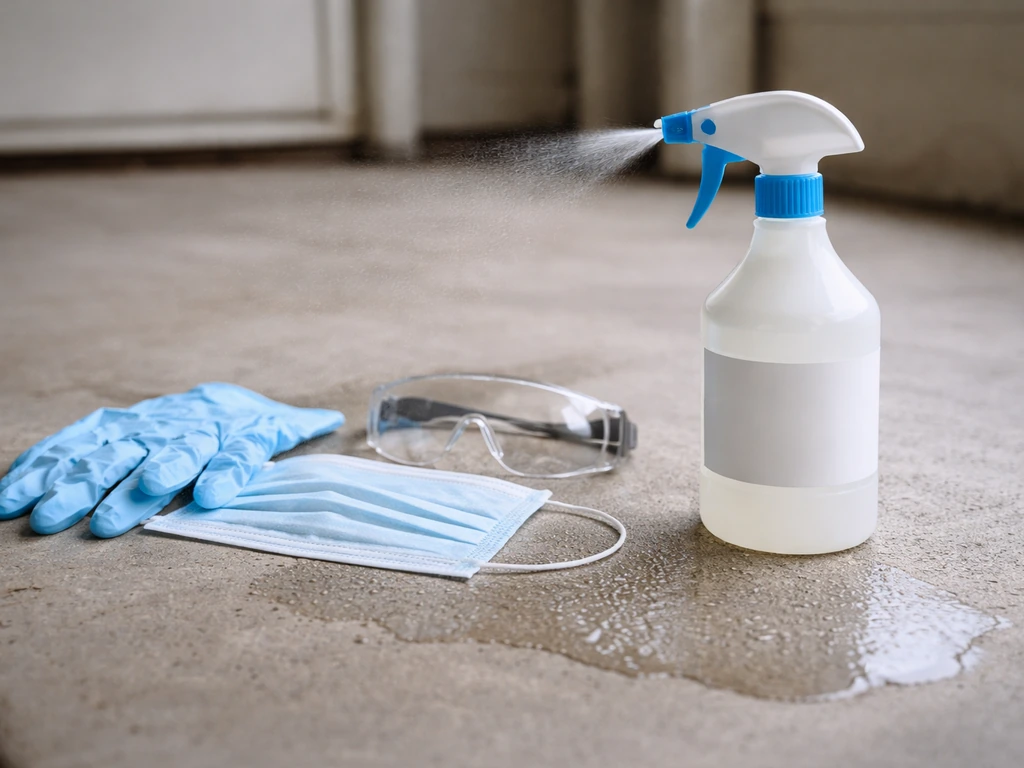
Yes, certain Microban-branded disinfectant products can kill bird flu (avian influenza A). Two specific products, Microban's Firebird F130 (EPA Reg. No. 42182-9) and Ironman Wipe (EPA Reg. No. 42182-13), appear on the EPA's List M, which is the agency's official registry of disinfectants with accepted evidence against avian influenza. Both products are registered with contact times as short as 0.16 minutes (roughly 10 seconds) under label conditions. That said, there is an important distinction to understand before you run out and buy anything with the Microban name on it: 'Microban' is used both as a brand name for legitimate EPA-registered disinfectants and as a marketing label for long-lasting antimicrobial surface treatments that are built into products like cutting boards, countertops, and textiles. Those antimicrobial treatments are not the same as a disinfectant, and they will not reliably kill avian influenza. Knowing which type you have matters a great deal.
Does Microban Kill Bird Flu? Evidence, Limits & Guidance

Why influenza viruses are actually vulnerable to disinfectants
Avian influenza viruses, like all influenza A strains, are what virologists call enveloped viruses. Their outer surface is a lipid (fat) bilayer membrane rather than a tough protein shell. That membrane is the virus's Achilles heel. Disinfectants that disrupt lipid membranes, including alcohols, quaternary ammonium compounds (QACs), sodium hypochlorite (bleach), hydrogen peroxide, and hypochlorous acid, essentially dissolve or destabilize that outer envelope, preventing the virus from attaching to and entering host cells. The virus is, in a structural sense, relatively fragile compared to non-enveloped viruses like norovirus or parvovirus, which need harsher chemistry to destroy their hard protein coats.
This fragility is good news from a disinfection standpoint, but it does not mean any cleaner will do. Efficacy depends heavily on four things: the active ingredient and its concentration, the amount of organic material (dirt, feces, grease) present on the surface, the contact time the product actually sits on the surface, and the surface type itself. A disinfectant that works perfectly on a clean stainless steel bench can fail on a dirty wooden floorboard in a poultry house. Organic load is the single biggest real-world variable that lab suspension tests often underestimate, so always treat cleaning as a necessary first step, not an optional one.
Reading an EPA product label the right way
In the United States, disinfectants are regulated as pesticides by the EPA under FIFRA (Federal Insecticide, Fungicide, and Rodenticide Act). That means every legitimate virucidal claim on a product label must be backed by EPA-accepted test data. Here is what to look for before you trust a product for avian influenza control.
- EPA Registration Number: This appears as 'EPA Reg. No. XXXXX-XX' on the label. If it is not there, the product is not a registered disinfectant. You can cross-check any number on EPA List M (disinfectants for avian influenza) at the EPA's website.
- Approved organisms or claims: The label must specifically list avian influenza A, influenza A, or a related strain among the pathogens the product kills. A general 'kills 99.9% of bacteria' claim does not cover viruses.
- Required contact time (dwell time): This is the amount of time the surface must remain visibly wet with the product for it to work. For List M products, this ranges from under a minute to 10 minutes depending on the formula. If the surface dries before that time, the disinfection step is incomplete.
- Concentration and dilution instructions: Some products are ready-to-use; others require dilution. Using a lower concentration than specified on the label can leave the product sub-virucidal, meaning it will not reliably inactivate the virus.
- Listed surfaces: Labels specify whether a product is tested for hard nonporous surfaces, porous surfaces, food-contact surfaces (which require a post-rinse), or laundry. Using a product on a surface type not listed on its label means you have no evidence it works there.
- Emerging Viral Pathogen (EVP) claim: Some products carry an EPA EVP designation, meaning they have been evaluated or are reasonably expected to work against emerging enveloped viruses. This is relevant for novel or newly circulating avian influenza strains.
What 'Microban' actually means, and why the distinction matters
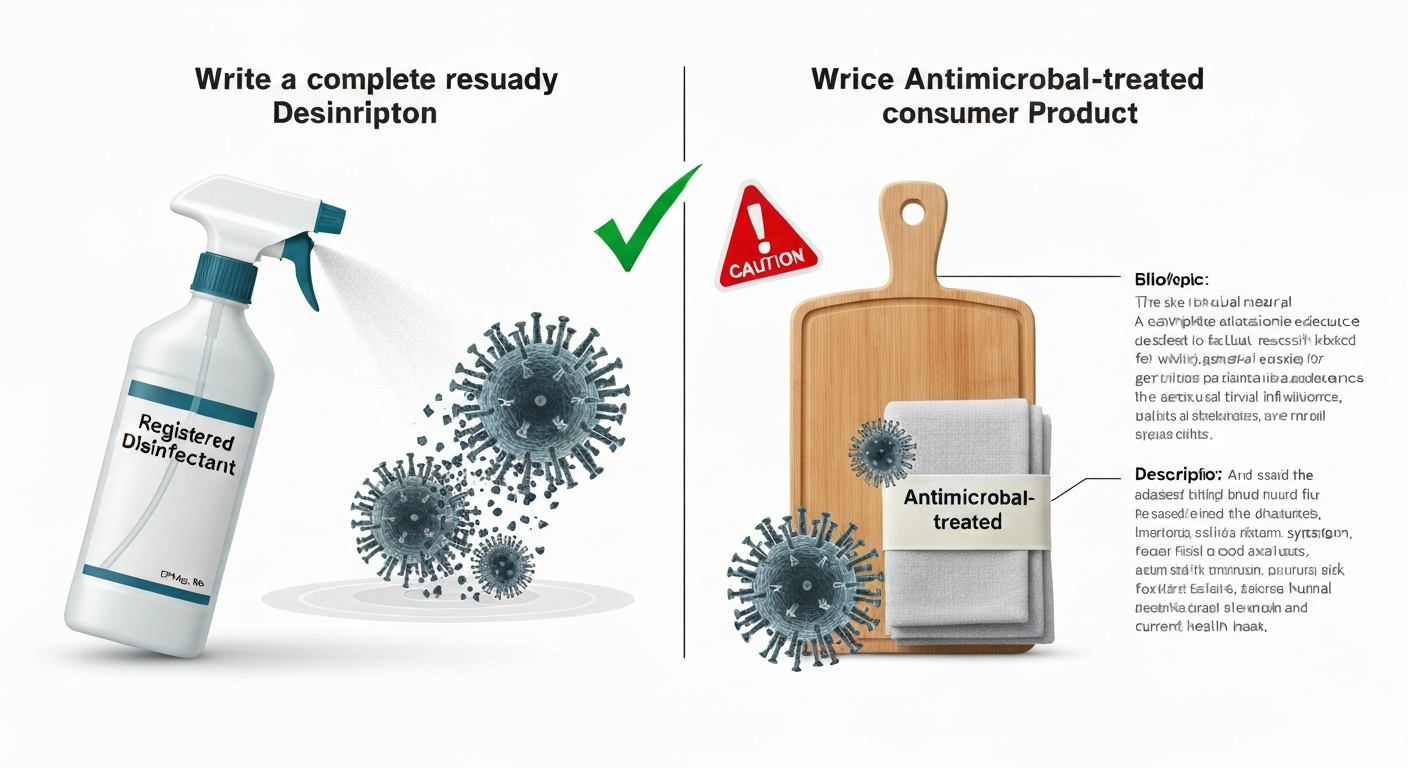
Microban International operates in two very different product categories, and confusing them is an easy mistake to make. On one hand, the company manufactures and registers genuine EPA-listed disinfectant formulations, including Firebird F130 and Ironman Wipe, which are professional-grade products sold primarily for institutional and industrial cleaning. These are the Microban products with legitimate List M standing for avian influenza.
On the other hand, 'Microban' is also a licensed antimicrobial technology that manufacturers embed into consumer products: cutting boards, yoga mats, paint, textiles, HVAC filters, and even countertop surfaces. This built-in treatment typically uses silver ions, zinc, or QACs bound into the material itself. It is designed to inhibit bacterial growth and odor on the product's surface over time. It is not a disinfectant. It does not replace disinfection, it does not meet EPA disinfection standards, and it has not been tested or listed as effective against avian influenza viruses. A cutting board that says 'protected by Microban' will not neutralize bird flu virus if contaminated poultry is prepped on it. You still need a proper EPA-registered disinfectant applied at the right concentration and contact time.
In practice, most households will not have Firebird F130 or Ironman Wipe on hand. Those are commercial/professional products. The practical takeaway for most people is to look for the EPA Reg. No. and a specific influenza A claim on whatever disinfectant you are using, rather than relying on a brand name alone. For specifics on EPA-registered products and label guidance, see what disinfectant kills bird flu.
How Microban compares to other common disinfectants for bird flu
Most people thinking about bird flu disinfection are comparing a handful of familiar products: bleach, Lysol sprays or wipes, Clorox wipes, hypochlorous acid, hydrogen peroxide, and Pine-Sol. Here is an honest, evidence-based look at each, which also helps explain where the Microban professional products fit in.
Bleach (sodium hypochlorite)
Diluted bleach is one of the most reliably effective, widely available, and cheapest options for avian influenza. It appears on EPA List M and is a workhorse in commercial poultry operations. A standard household dilution for disinfection is roughly 1/3 cup of 5–6% bleach per gallon of water (about 1,000 ppm sodium hypochlorite). It works quickly on clean hard surfaces and inactivates the virus well within 10 minutes. The major limitations are that it is strongly inactivated by organic matter (the surfaces really must be clean first), it corrodes metal over time, it is irritating to the respiratory tract at higher concentrations, and it degrades in sunlight and with heat. Fresh solution should be mixed daily. It is not appropriate for food-contact surfaces without a thorough rinse.
Lysol (quaternary ammonium and alcohol formulations)
Several Lysol products appear on EPA List M for avian influenza. Lysol formulations typically contain quaternary ammonium compounds (benzalkonium chloride, alkyl dimethyl ammonium chlorides) sometimes combined with ethanol. The QAC-plus-alcohol combination tends to outperform QAC-alone in realistic dirty conditions because ethanol acts fast while QAC provides residual activity. A 2022 CDC Emerging Infectious Diseases study confirmed that 40–80% ethanol completely inactivated avian influenza A (including H5N1 strains) on human skin within 15 seconds. However, benzalkonium chloride alone was less consistently effective depending on concentration and contact time. Lysol-type products are practical for household hard surfaces but always check the specific product's EPA Reg. No. against List M.
Clorox wipes
Clorox Disinfecting Wipes use quaternary ammonium chemistry (not bleach, despite the Clorox name). They are convenient for hard nonporous household surfaces and some specific formulations appear on EPA List M. The practical limitation with any wipe product is ensuring the surface stays wet for the full listed contact time. A quick wipe-and-dry does not constitute proper disinfection. If you’re asking do Clorox wipes kill bird flu, look for the specific product on the EPA List M or an EPA registration that explicitly lists influenza A rather than relying on the brand name alone. For heavy-duty or large-surface applications, spray or liquid formats are more practical.
Hypochlorous acid (HOCl)
Hypochlorous acid is a newer consumer and professional disinfectant that appears on EPA List M. It is generated by electrolyzing a saltwater solution and is notable for being non-toxic, non-irritating, and safe around children and animals when used as directed. It inactivates enveloped viruses effectively and is appearing more frequently in backyard poultry and agricultural settings. Contact times on List M are typically 1–10 minutes depending on formulation and concentration. The limitation is that it degrades relatively quickly with heat and UV exposure and has a short shelf life, so freshness matters.
Hydrogen peroxide
Hydrogen peroxide-based disinfectants (such as Accelerated Hydrogen Peroxide or AHP products like Oxivir) are well-represented on EPA List M and are common in veterinary and agricultural settings. At 0.5–3% concentrations in AHP formulations, they are effective against influenza A with contact times typically in the 1–5 minute range. AHP products perform notably well in the presence of organic load compared to bleach or QAC-alone products, which makes them particularly useful in farm environments. Standard 3% drugstore hydrogen peroxide is a different matter as it is not formulated as a registered disinfectant, so check for an EPA Reg. For more detail, see our guide does hydrogen peroxide kill bird flu. No.
Pine-Sol
Pine-Sol products are EPA-registered disinfectants (pine oil or glycolic acid formulations depending on the specific product line) and some appear on EPA List M for avian influenza. Original Pine-Sol (with sufficient pine oil content) has documented virucidal activity. However, not all Pine-Sol products in the current line are equivalent, as the formulation has changed over the years, so the same rule applies: check the specific product's EPA Reg. No. on List M rather than assuming the brand covers you.
Side-by-side disinfectant comparison
| Product / Chemistry | Active Ingredient(s) | Typical Contact Time | Pros | Key Limitations |
|---|---|---|---|---|
| Microban Firebird F130 | QACs + ~68.6% ethanol | ~0.16 min (per label) | EPA List M, fast acting, dual-mechanism | Commercial/professional product; not typically sold retail |
| Microban Ironman Wipe | QACs + ethanol | ~0.16 min (per label) | EPA List M, convenient wipe format | Commercial product; wipes may dry before contact time on large surfaces |
| Bleach (sodium hypochlorite) | Sodium hypochlorite (~1,000 ppm dilution) | 1–10 min | Cheap, widely available, List M listed | Inactivated by organic load; corrosive; degrades quickly; fumes |
| Lysol (spray/wipes) | Benzalkonium chloride ± ethanol | Varies (2–10 min typical) | Consumer accessible, many List M products | QAC-alone less effective under organic load; must verify specific product on List M |
| Clorox Disinfecting Wipes | Quaternary ammonium | Varies (4 min typical) | Convenient, widely available | Wipes may dry before contact time; not suitable for large porous surfaces |
| Hypochlorous acid (HOCl) | Hypochlorous acid (HOCl) | 1–10 min | Non-toxic to animals/humans, List M, farm-friendly | Short shelf life; degrades with UV/heat; less widely available |
| Hydrogen peroxide (AHP formulations) | Accelerated hydrogen peroxide (0.5–3%) | 1–5 min | Good organic-load tolerance, List M, vet/ag standard | Drugstore H2O2 is not the same; must use registered formulations |
| Pine-Sol (original) | Pine oil or glycolic acid | Varies by product | List M listed, consumer accessible | Formulations vary; not all Pine-Sol products qualify; check specific EPA Reg. No. |
Cleaning and disinfecting your home to reduce bird flu risk
For most households, bird flu risk centers on handling wild birds, backyard poultry, or contaminated surfaces (shoes, clothing, equipment brought in from affected areas). The protocol below follows CDC and USDA guidance and applies to kitchens, entryways, and any indoor space where contamination may have occurred.
- Put on PPE first: Disposable gloves, eye protection, and a well-fitting mask (at minimum an N95 if there is any chance of aerosolized contaminated material) before you touch anything. Change and dispose of gloves between areas.
- Remove visible contamination first (cleaning phase): Use soap or a detergent solution and warm water to physically remove dirt, droppings, feathers, or organic debris from surfaces before any disinfectant is applied. Disinfectants are inactivated by organic load and cannot substitute for this step. Wipe or scrub, do not dry-sweep or blow, to avoid aerosolizing particles.
- Rinse thoroughly: Rinse surfaces with clean water to remove soap residue, which can also interfere with disinfectant performance.
- Select an EPA List M disinfectant: Check that your chosen product has an EPA Reg. No. and lists influenza A or avian influenza A on its label. For household hard nonporous surfaces, a Lysol-type spray, properly diluted bleach solution, or AHP-based product are all reasonable choices.
- Apply the disinfectant and respect the contact time: Apply enough product to keep the surface visibly wet for the full listed contact time (do not wipe it dry immediately). For bleach solution (1/3 cup of 5–6% bleach per gallon of water), aim for a minimum 1-minute wet contact on a clean surface, but 5–10 minutes is safer in practice.
- Ventilate the space: Open windows or run exhaust fans during and after disinfection, especially with bleach or any product with strong vapors. Never mix bleach with ammonia-containing products as this creates toxic chloramine gas.
- Wipe or rinse per label instructions: Food-contact surfaces (cutting boards, countertops where food is prepared) must be thoroughly rinsed with clean water after applying any non-food-safe disinfectant.
- Wash clothing and footwear: Any clothing worn during contact with potentially contaminated birds or areas should be washed immediately in a normal hot-water laundry cycle with detergent. Footwear should be scrubbed with soapy water and then disinfected with a bleach or QAC solution.
- Dispose of materials properly: Bag used disposable PPE, cleaning cloths, and any waste materials in sealed plastic bags before placing in the trash.
- Wash hands thoroughly: Wash hands with soap and water for at least 20 seconds after removing PPE. Hand sanitizer with at least 60–70% alcohol is a secondary measure, not a substitute for handwashing.
Cleaning and disinfecting backyard poultry premises and farms
The stakes are higher on poultry premises because avian influenza viruses can persist in feces and contaminated water for days at warm temperatures and for weeks to months in cold or frozen conditions. Multiple experimental studies show avian influenza viruses can remain infectious in feces and water for days to months depending on temperature, for example, infectivity can last days at 20–30°C in feces but weeks to months at 0–4°C in water or frozen samples, depending on the strain PMC — Persistence of Avian Influenza Viruses in Lake Sediment, Duck Feces, and Duck Meat (Hohenheim study). A thorough, ordered approach is not optional here. USDA APHIS and CDC guidance for backyard flock owners, as well as the NAHEMS farm response protocols, all share the same core framework: clean aggressively first, then disinfect.
If your birds are sick or dying, do not start cleaning until you have contacted your state veterinarian or USDA APHIS (1-866-536-7593). On premises confirmed or suspected to have HPAI, cleaning and disinfection must be coordinated with animal health authorities. Doing it yourself without notification can complicate official response and traceability. The steps below apply to general biosecurity maintenance and suspected-exposure situations for backyard flocks.
- Notify authorities if birds are sick or dead: Contact your state veterinarian or USDA APHIS before proceeding if you suspect HPAI. For general biosecurity cleaning after a potential exposure (e.g., contact with wild waterfowl), you can proceed with the steps below.
- Gear up with appropriate PPE: For poultry premises, this means a fitted N95 respirator or better (not just a dust mask), safety goggles or face shield, waterproof gloves (nitrile or heavy rubber), coveralls or dedicated clothing, and rubber boots. Power washing and heavy cleaning can aerosolize virus-laden particles.
- Prepare the area (dry cleaning): Remove and properly dispose of all litter, feed, feces, and loose organic material. Bag heavily contaminated litter in sealed plastic bags. For HPAI-confirmed premises, USDA guidance may require specific disposal methods coordinated with authorities. Do not compost potentially contaminated litter without guidance.
- Wet cleaning with detergent: Apply a detergent solution (farm-grade or household dish soap diluted in warm water) to all surfaces of the enclosure: floors, walls, feeders, waterers, and nesting areas. Scrub thoroughly. A stiff brush is essential for rough or porous surfaces. The goal is to remove all visible organic material. This step is not optional and cannot be skipped.
- Rinse thoroughly: Rinse all surfaces with clean water and allow excess water to drain. Any detergent residue will reduce disinfectant performance.
- Apply an EPA List M disinfectant: Select a product with a specific influenza A claim and one suitable for agricultural or poultry settings. Accelerated hydrogen peroxide products and hypochlorous acid are popular in this setting because of their safety profiles around animals and their tolerance for residual organic load. Bleach solution works well on clean hard surfaces. Follow dilution and contact time instructions exactly.
- Set up footbaths at entry points: Footbaths containing an appropriate disinfectant (diluted bleach at 1,000–2,000 ppm, or a QAC or AHP solution per label) should be placed at the entrance to any poultry area. Boots should be scrubbed to remove visible debris before stepping into the footbath. Change footbath solutions frequently as organic matter rapidly degrades disinfectant activity.
- Disinfect shared equipment: Any equipment shared between enclosures or brought in from outside (shovels, feeders, transport crates, vehicle tires) should be cleaned and disinfected before and after use. This is one of the most common routes for spreading avian influenza between flocks.
- Leave the premises empty and allow to dry: USDA's checklist specifically recommends leaving enclosures empty and allowing them to dry completely before reintroducing birds. Dry conditions and time reduce viral viability substantially.
- Handle carcasses with care: Dead birds should not be handled without PPE. If depopulation has occurred or you have unexplained deaths, bag birds in double plastic bags and contact your state veterinarian or USDA APHIS for guidance on disposal. Never dispose of potentially HPAI-infected carcasses in household trash without authorization.
- Shower and change before leaving the premises: Ideally, change out of all farm clothing and footwear before leaving the property to avoid carrying contaminated material to other locations. Bag contaminated clothing for washing separately.
Food safety: poultry, eggs, and cooking temperatures
Properly cooked poultry and eggs pose no risk of avian influenza transmission. USDA FSIS guidance is clear: cooking poultry to an internal temperature of 165°F (73.9°C) inactivates avian influenza viruses to negligible levels. USDA FSIS, Food safety and cooking guidance (cooking temperatures inactivating viruses) states that cooking poultry to an internal temperature of 165°F (73.9°C) inactivates avian influenza viruses to negligible levels USDA FSIS — Food safety and cooking guidance (cooking temperatures inactivating viruses). Standard food safety practices (separate cutting boards for raw poultry, washing hands after handling raw meat, cooking eggs until both yolk and white are firm) are fully adequate. There is no evidence of transmission through eating properly cooked poultry or eggs, and this has remained true through the current HPAI H5N1 outbreaks. If you keep backyard hens and are concerned about a potential exposure, the precaution is to apply the cleaning protocols above, not to stop eating your eggs.
When to call your vet or public health authorities
Report unexplained deaths or sudden illness in your flock to your state veterinarian or USDA APHIS promptly. Early reporting is critical for containing outbreaks and for getting you access to official response resources. From a human health standpoint, the CDC recommends that anyone who has had close, unprotected contact with birds confirmed or suspected to have HPAI should monitor themselves for symptoms (fever, cough, sore throat, eye redness or discharge, muscle aches) for 10 days and contact their local or state health department. Human infections with avian influenza remain rare, but they have occurred in agricultural workers during the current H5N1 outbreak, and early antiviral treatment (oseltamivir/Tamiflu) is effective when started promptly.
Practical dos and don'ts
- Do verify any disinfectant's EPA Reg. No. on EPA List M before relying on it for avian influenza control.
- Do clean before you disinfect. Always. Organic material stops even the best disinfectants from working.
- Do respect the contact time on the label. The surface must stay wet for the specified time.
- Do use PPE appropriate to the task, including an N95 or better for any work that generates aerosols or dust.
- Do notify USDA APHIS and your state veterinarian if you suspect HPAI in your flock before beginning remediation.
- Don't assume any product with the Microban name is an EPA-registered avian influenza disinfectant. Check the label for an EPA Reg. No. and a specific influenza A claim.
- Don't skip dilution instructions. Using bleach or QAC products at the wrong concentration (too dilute or, for some products, too concentrated) reduces efficacy.
- Don't mix bleach with ammonia, other cleaners, or vinegar. The resulting gases can cause serious respiratory injury.
- Don't dry-sweep, dry-blow, or use compressed air to remove debris in contaminated poultry areas. This aerosolizes virus-containing particles.
- Don't eat undercooked poultry or runny eggs from flocks with a suspected HPAI exposure. Cook to 165°F (73.9°C) internal temperature.
FAQ
Short answer: Can Microban products inactivate avian (bird) influenza in household and poultry settings?
Yes — some Microban‑branded disinfectants (for example, EPA‑registered products on the EPA’s List M) include label claims showing they inactivate Influenza A / Avian Influenza when used exactly as directed. That said, real‑world performance depends on following the product label (surface type, contact time, concentration) and on removing organic material first. Lab test data support likely effectiveness against enveloped influenza viruses, but effectiveness in the field can be reduced by heavy organic load, porous surfaces, incorrect dilution/short contact time, or using a product on an unlisted surface.
Why do many disinfectants work against influenza viruses? How do they act?
Influenza A viruses are enveloped — they have a lipid membrane that is vulnerable to chemical disruption. Alcohols (ethanol/isopropanol), oxidizers (hydrogen peroxide, hypochlorite, hypochlorous acid), and many quaternary ammonium compounds (QACs) disrupt that envelope or oxidative‑ly damage viral proteins/genome, rapidly inactivating the virus. Efficacy depends on active ingredient, concentration, contact (dwell) time, formulation (e.g., QAC+alcohol often better than QAC alone), and the presence of organic matter.
What limits should I understand about 'lab kills' versus label claims and real use?
Laboratory tests vary (suspension vs carrier tests, clean vs soiled conditions). A disinfectant that 'kills' virus in a controlled lab suspension test may perform less well on a dirty or porous surface. Only claims on the EPA‑registered product label are enforceable guidance for use; labels specify organisms tested, surfaces, required contact times, and application methods. Use the product exactly per label for the listed organisms and surfaces.
What should I look for on an EPA disinfectant label to know if it’s appropriate for avian influenza?
Check for: (1) EPA registration number; (2) an explicit claim against Influenza A or avian influenza on the label or inclusion on EPA’s List M/List Q/List N as appropriate; (3) surfaces listed (hard, nonporous or porous); (4) required contact/dwell time and required wetness period; (5) dilution instructions (if concentrate) and allowed use scenarios (household, agricultural equipment, animal housing); and (6) any precautions (PPE, pre‑cleaning). If the product isn’t on the label or lists only suspension tests, choose a product with direct Influenza A claims or an EPA‑approved alternative.
How does Microban compare with common alternatives (bleach, Lysol/QAC/alcohol, Clorox wipes, hypochlorous acid, hydrogen peroxide, Pine‑Sol)?
Summary comparison: - Microban (some products): typically QACs with or without alcohol; several Microban formulas are EPA‑registered with Influenza A claims and short listed contact times when used per label. - Sodium hypochlorite (household bleach): active = hypochlorite; broad, fast virucidal activity; effective on many surfaces but corrosive, inactivated by organic matter, needs proper dilution (commonly 1:50–1:10 for outbreak use depending on guidance) and ventilation. - Lysol / QAC or alcohol sprays: Lysol brand has multiple chemistries (QAC or alcohol); many have virucidal claims and are convenient; check label for contact time. - Clorox wipes: typically contain bleach or other actives depending on product; many Clorox wipes have influenza claims and are convenient for small nonporous surfaces but can be less effective if wipes dry or are used on porous surfaces. - Hypochlorous acid (HOCl): effective and less corrosive at proper concentrations, but stability varies by product — verify EPA registration and label claims. - Hydrogen peroxide (accelerated H2O2 products like Oxivir): effective against influenza; generally good for organic soils and short contact times; check label. - Pine‑Sol (pine oil formulas): some Pine‑Sol products contain QACs or pine oil; effectiveness varies by formula — check label for influenza claims. Limitations common to all: organic load reduces activity; porous surfaces are harder to disinfect; follow label contact times. For exact contact times and approved surfaces, always read the product label or the EPA list entry.
Practical step‑by‑step cleaning and disinfection for homes (if you suspect contamination from backyard poultry or handling sick birds)
1) Protect yourself: wear disposable gloves, eye protection, and a mask if aerosolizing tasks are likely; wash hands thoroughly afterward. 2) Remove gross dirt and manure first (shovel, brush, dry removal). 3) Clean surfaces with soap/detergent and water until visible dirt is removed. 4) Rinse and let surfaces drain so disinfectant can remain wet for the label‑specified contact time. 5) Apply an EPA‑registered disinfectant with an influenza A claim or one on List M/List Q per label (correct dilution, application method). Ensure the surface stays visibly wet for the stated contact time. 6) After contact time, if label requires rinsing for food contact surfaces, rinse with potable water; otherwise follow label directions. 7) Dispose of cleaning materials and used PPE safely (double‑bag and discard or launder reusable items separately). 8) Ventilate area during and after disinfectant use.
Does Hydrogen Peroxide Kill Bird Flu? Safe Disinfection Guide
Does hydrogen peroxide kill bird flu? Learn effective concentrations, contact times, safe cleanup steps, limits, and saf